

“O Hell, open your gates—Hafez al-Assad is among your beloved.”
Zainab Sayed still vividly remembers the phrase her father uttered when commenting on the death of Hafez al-Assad. It was an unbearably hot summer day that those present in the house described as “a breeze from hell to welcome the damned.”
With this memory, the physician from the city of Idlib recalls the political conversations that used to take place in her family home before Syrians rose up against the rule of the Assad family in March 2011 when political discussion was effectively forbidden, and talk of politics was rare, if not almost nonexistent.
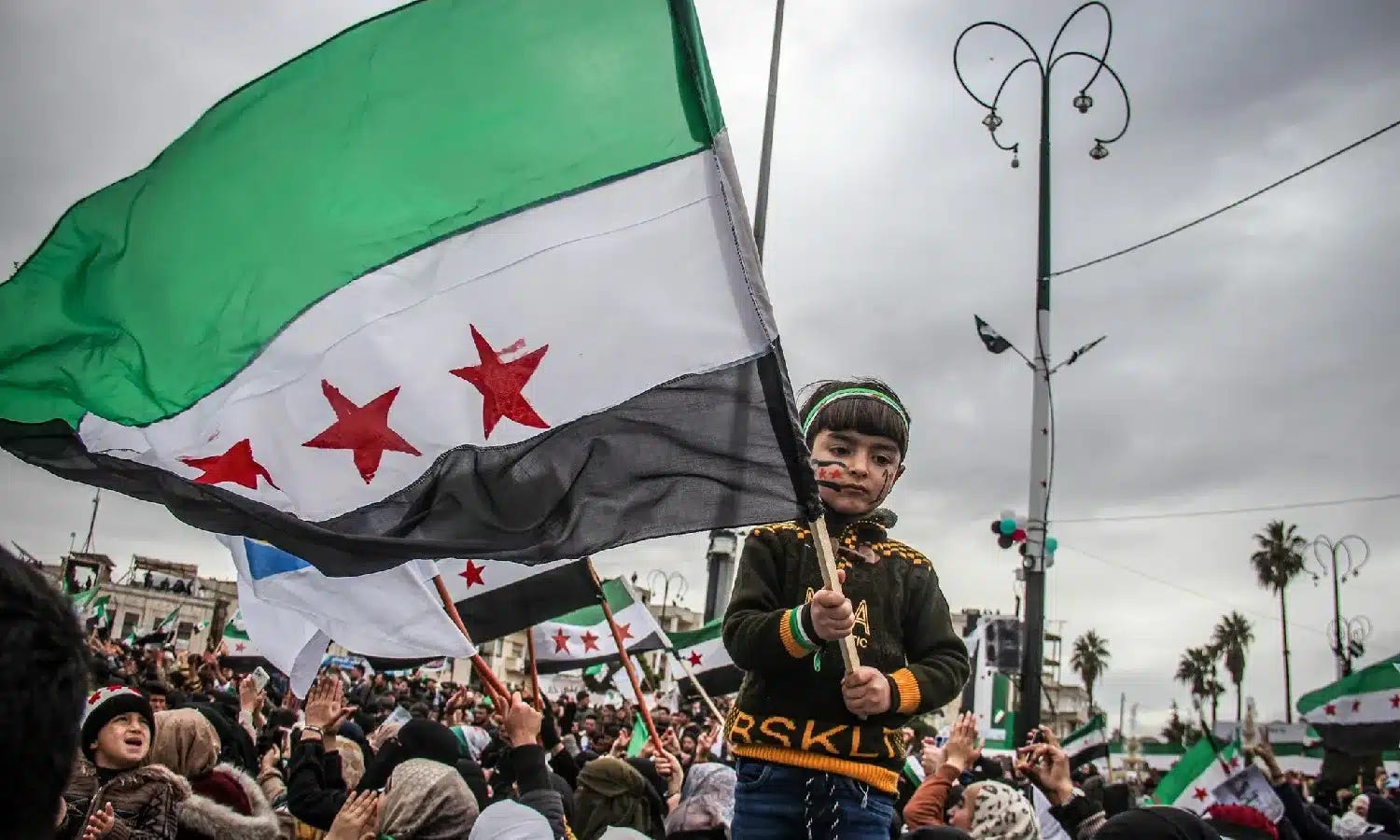
Today, however 15 years after the first chant against Assad’s rule shattered the barrier of silence politics has become a living topic and a natural part of everyday life in Syrian households. Political debates now appear around dining tables, in the streets, and across social media platforms.
Through this report, Noon Post seeks to understand how the revolution reshaped Syrians’ political consciousness transforming it from silence and fear into debate and personal analysis by surveying the views of individuals from a generation that lived through politics before the revolution and another whose awareness was shaped afterward.
Conversations Shrouded in Fear and Caution
Speaking to Noon Post, Zainab says that political conversations in her family home before the revolution often revolved around criticizing the Assad family and recounting its history of crimes, violations, and manipulation of historical narratives. Yet such discussions were confined to her parents and conducted with extreme caution. Children were warned never to repeat what they heard, out of fear of potential consequences.
These conversations stemmed from the family’s opposition to the Assad dynasty, shaped by painful experiences tied to the events of the 1980s in Hama and Idlib.
After the revolution, however, political discussions became clearer, sharper, and more complex yet also more engaging. At the same time, the family experienced disagreements with acquaintances who adopted ambiguous or “gray” positions.
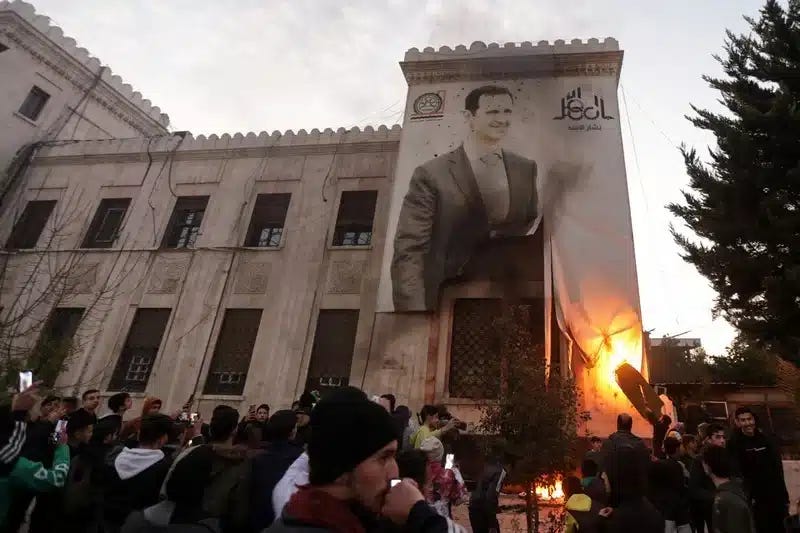
The physician adds that politics has become central to nearly every aspect of life. It has also become an important benchmark for evaluating people’s intellectual and moral standing, as well as determining the nature of relationships with them.
For her personally, this has translated into a clear stance: she does not welcome anyone who supports the regime within her social circle, believing that backing the regime contradicts conscience, moral values, and fundamental principles.
Zainab also notes that political discussions are now especially prevalent among young men and women within households. Topics frequently include postponement of military service and the recurring anxiety surrounding March 15 the date associated with the renewal of deferments from mandatory conscription.
Young people also debate the country’s conditions, education, employment, unemployment, and prospects for marriage all issues deeply intertwined with politics, particularly during the years of the revolution.
The Impact on Youth Awareness
A similar story emerges from the family of Muslim Badawi, a young man from the countryside of Idlib and the son of a former detainee in Assad regime prisons. The revolution pushed him to follow politics more closely, because events were no longer distant news but a direct part of the lives of those around him, as he told Noon Post.
Badawi believes the revolution made his generation far more politically aware than previous ones, largely because they experienced the changes firsthand and followed them daily through media outlets and social media platforms. He recalls that the outbreak of protests against Assad’s rule in 2011 was the first moment he realized that what was unfolding in the country would shape the future of an entire generation.
The March Revolution as a Gateway to Understanding
Rim Abu Halawa, originally from Damascus, grew up in a household attentive to politics and regional affairs, given the long-standing tensions affecting neighboring countries. As for domestic affairs, she was aware of the corruption and injustice practiced by the regime against the Syrian people, yet like many others she felt powerless to change it.
Abu Halawa tells Noon Post that the March revolution prompted her to delve more deeply into political understanding in order to grasp what was happening and answer questions posed by residents of the host country where she later moved. Many of them lacked adequate knowledge of events in Syria and often framed them simply as a “civil war,” rather than as systematic violence against those who demanded freedom.
She believes the revolution—and the displacement and injustice that accompanied it—helped strengthen political awareness among her generation. This awareness, she says, did not remain confined to Syria but extended to understanding the conditions of other countries that have faced or continue to face oppression.
Before the revolution, a limited segment of society possessed political awareness, she notes. But widespread helplessness and the absence of active political actors largely defined that period.
The Older Generation’s Perspective
What, then, does the older generation say and how do they perceive this transformation? How did they feel when their children became more politically engaged?
Mousa Abu Daher, a physician originally from the Qalamoun region in the Damascus countryside, told Noon Post that political discussions did exist within his family before the revolution, but within a very narrow space and under strict limits. The revolution, he says, expanded that space significantly.
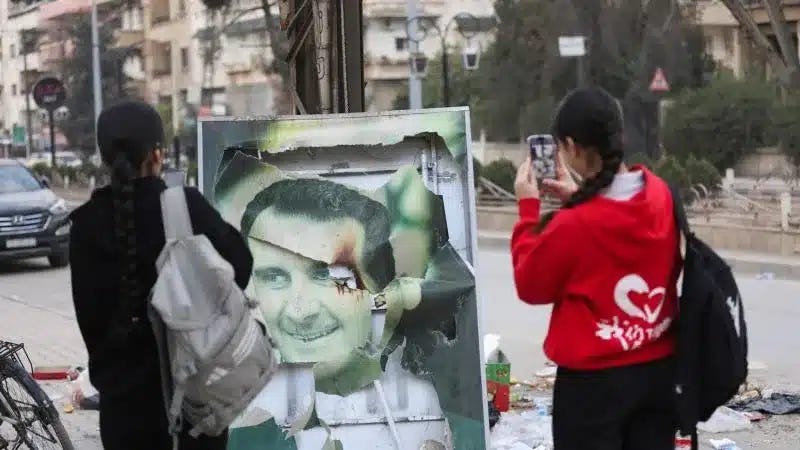
The doctor adds that the new generation, aided by social media and constant exposure to unfolding events, has become far more aware of what is happening around them. Political discussions are now more common in his home and others, though differing levels of knowledge and experience sometimes create differences in viewpoints between generations what he describes as the contrast between “the wisdom of the elders and the fervor of youth.”
He observes, however, that his children have not necessarily followed politics more closely than he has. Their focus, he says, has been on overcoming suffering and forced migration through perseverance, education, and determination in order to reach higher achievements. Their struggle now, he explains, is to build awareness and ultimately rebuild the nation.
Abu Daher also emphasizes that politics is not limited to public affairs; it also encompasses economics and the management of daily life. For that reason, he argues, it is important for everyone to discuss politics and express their views in order to better understand reality and engage with it constructively.
The Barrier of Fear Has Not Broken for Everyone
Ibrahim al-Ghadir, originally from Deir ez-Zor, says he comes from a village where roughly 90 percent of residents support the regime. Before the revolution, his family had little interest in politics, the Baath Party, or national affairs. Syrian society in general, he recalls, rarely discussed politics at the time.
But with the start of the revolution, attitudes changed. Conversations within the family gradually shifted, and its members began supporting the course of the revolution.
Speaking to Noon Post, al-Ghadir says that the political thinking of the older generation had been heavily shaped by the ideology of Hafez al-Assad “in an unnatural way.” After the revolution, however, the younger generation appeared far more politically aware, with interests extending beyond Syria to global affairs.
He admits he never expected this generation to possess such levels of awareness, openness, and political experience.
He also notes that his children—over the past three or four years—have begun following politics and sometimes discussing it more than he does, or at least at the same level. Their discussions now often revolve around global politics rather than Syria alone.
Al-Ghadir believes the revolution broke the barrier of fear surrounding political discussion in most Syrian families but not all. Some families, even after the fall of the regime, still fear political debate. This may stem from lingering loyalty to the regime or from deeply ingrained fears, while the majority now speak with greater freedom.
Social and Political Transformation After the Revolution
According to Hala Haj Ali, a social researcher at the Omran Center for Strategic Studies, the transformation in Syrians’ relationship with politics since 2011 particularly in conversations between parents and children has been significant.
Speaking to Noon Post, she says that the sharp disagreements and political divisions that once existed within many families between regime supporters and opponents have gradually begun to recede.
In the past, it was common for families to hold divergent political views, with some members supporting the regime and others backing the opposition. Some opponents were forced to leave the country or were displaced, resulting in prolonged separation from their families and contributing to a degree of social fragmentation within certain households. Today, however, social relations have regained a measure of stability even among those who once held opposing political positions.
Haj Ali attributes this to the fact that the center of these conflicts was tied to the Assad regime itself. With that central point removed, the intensity of the divisions has diminished. Discussions of political issues within families have become more common, with some criticizing the new government while others support it without such differences leading to estrangement or family rifts.
She explains that this transformation has had a positive effect on social relations in general and on family dynamics in particular. It reflects an expansion of the space for free discussion. People now talk about politics in their homes and public gatherings more spontaneously, whereas fear of arrest or informants once posed a major barrier. At times in the past, that fear ran so deep that relatives—even siblings and cousins—grew wary of one another.
Haj Ali believes that differing opinions are healthy because they open the door to dialogue and allow for multiple perspectives. Syrians, she notes, were not accustomed to a culture of dialogue for many years. What is happening today, therefore, can be seen as a gradual beginning in building such a culture within families and everyday conversations among relatives and friends.
Daily Challenges Keep Politics at the Forefront
Daily hardships also keep political discussions present in people’s lives. Economic and security concerns have become recurring topics in everyday conversations. While crises existed in the past, the prevailing sentiment was that change was impossible many believed that replacing governments would not bring any real improvement.
Today, however, interest in public affairs has grown. People follow officials’ statements and pay attention to ministers’ positions something that was not common before.
Social media and digital openness have also played a crucial role in this transformation. Access to multiple sources of information and exposure to diverse viewpoints have expanded political knowledge. Previously, information sources were limited and often confined to the regime’s media outlets. Today, public criticism is far more visible, especially on social media platforms.
Differences Between Syrians Inside and Outside the Country
Haj Ali also highlights differences in political awareness between Syrians inside the country and those abroad. Syrians who have lived outside the country often had greater opportunities to access information and participate in seminars and workshops, which helped strengthen their political awareness.
By contrast, such spaces were not available to those living under Assad’s rule, where civil activities and public discussions were either banned or heavily monitored. Civil society organizations were often used as tools of the regime rather than platforms for building political awareness.
Nevertheless, the researcher notes that political awareness has begun to develop among those who remained inside the country as well especially after earlier restrictions eased allowing them to attend seminars and engage in discussions without fear.
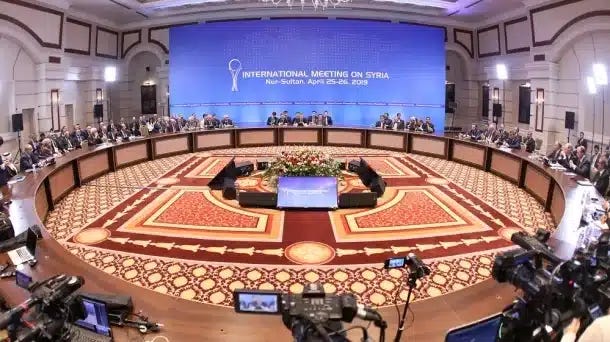
She adds that the development of political awareness should be understood within a broader cultural framework shaped by diverse experiences. Some experiences emerged abroad through the refugee experience and exposure to other societies, while others formed inside Syria despite repression. The interaction between these internal and external experiences has helped strengthen Syrians’ political awareness.
Still, a gap remains shaped by geography. Digital infrastructure and access to information are stronger abroad, while such opportunities remain more limited inside the country. Field experience from seminars and workshops also suggests that many young people inside Syria have a genuine desire to acquire broader political knowledge.
The challenge, however, often lies in limited access channels, which sometimes confine political awareness programs to elite circles instead of making them available to all segments of society.