

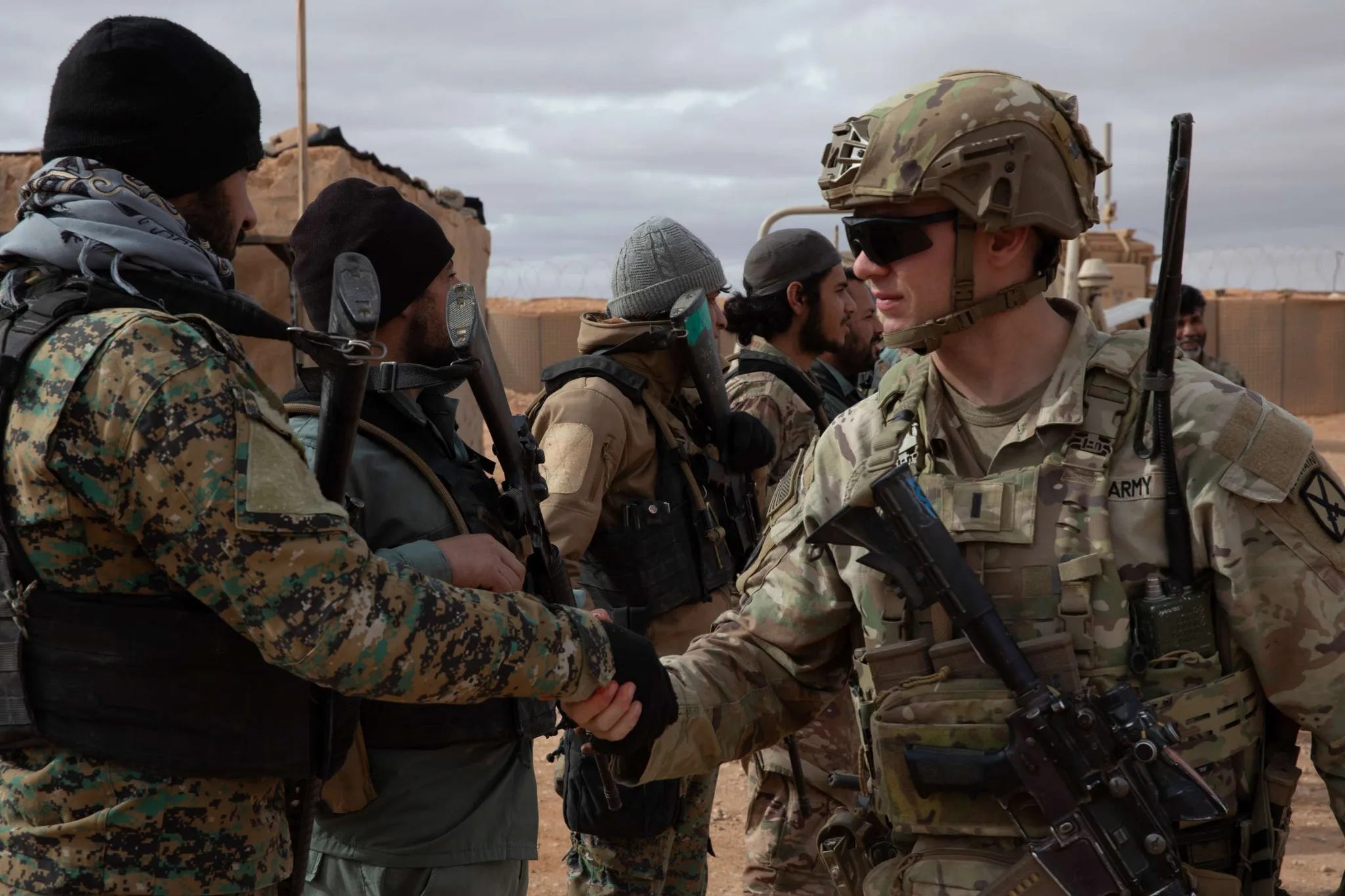
The United States Central Command (CENTCOM) launched a new mission on January 21 to transfer Islamic State (ISIS) detainees from northeast Syria to Iraq, in a move aimed at ensuring the prisoners remain in secure detention facilities, according to a CENTCOM statement.
U.S. forces relocated 150 ISIS detainees who had been held in a detention facility in al-Hasakah, Syria, to a secure site in Iraq. Admiral Brad Cooper, commander of CENTCOM, said that “facilitating the orderly and secure transfer of ISIS detainees is critical to preventing any escape that could pose a direct threat to the United States and regional security.”
More than 5,700 fighters have reportedly been transferred from detention facilities in Syria to Iraq, including 3,543 Syrian detainees. Despite being Syrian nationals detained on Syrian territory, U.S. authorities opted to move them to Iraq for trial.
Noon Post spoke with legal experts and researchers to examine the legality of transferring Syrian detainees from Syria to Iraq, as well as the motivations behind Washington’s decision to move them rather than keep them in Syria.
The Legal Perspective
On February 18, Major General Saad Maan, head of Iraq’s Security Media Cell, announced that the coming months would see the trial of ISIS detainees. He noted that preliminary investigations had been completed for 500 of the prisoners.
After the completion of the initial investigations and in accordance with Iraqi law and established procedures, trials will proceed under Iraq’s Penal Code, Maan said, adding that sentencing and implementation would take place inside Iraq.
Article 6 of Iraqi law grants the country full authority to investigate, prosecute, and carry out sentences against any detainees present on Iraqi territory, regardless of nationality, according to Maan.
For his part, Adnan Faihan, First Deputy Speaker of Iraq’s Parliament, stated that prisoners who committed crimes against the Iraqi people must be tried under Iraqi law.
However, Syrian lawyer and international criminal law researcher Mohammed Harbali told Noon Post that Syrian courts retain jurisdiction over all Syrians accused of committing crimes, whether inside or outside the country, under the principle of active nationality jurisdiction.
Accordingly, he argued, there is no legal basis for transferring Syrian defendants from Syrian territory to be tried in another country, regardless of the gravity of their alleged crimes, as doing so would constitute an infringement on the jurisdiction of Syrian courts.
Yet Harbali acknowledged that current conditions may not allow for trials inside Syria. “The circumstances in the country are not presently conducive to such proceedings,” he said, noting that otherwise the Syrian government would not have permitted their transfer to Iraq.
In principle, he added, there is no explicit international legal obligation requiring a state to repatriate its nationals involved in criminal activity. Nonetheless, this does not preclude the Syrian government from later requesting that Iraq hand over Syrian detainees accused of ISIS affiliation, based on the personal and territorial jurisdiction of Syrian courts.
As for appeals, Harbali explained: “In theory, Syrian detainees have the right to challenge Iraqi jurisdiction on the grounds that, as Syrians, they should be tried before Syrian courts. In practice, however, they now fall under Iraqi jurisdiction particularly as Iraq considers itself competent to prosecute ISIS members if their crimes were committed on its soil or against its citizens.”
Fragile Trust or Burden-Sharing?
Syria joined the Global Coalition to Defeat ISIS in November 2025. The United States signaled openness toward the new leadership in Damascus, marked by three meetings between Syrian President Ahmad al-Sharaa and U.S. President Donald Trump, the lifting of economic sanctions imposed under the Caesar Act, and U.S. pressure on Security Council members to remove the Syrian president from terrorism lists.
The decision to transfer ISIS detainees followed chaos triggered by fighting that erupted on January 17 between the Syrian army and the Syrian Democratic Forces (SDF) in northeast Syria. The two sides traded accusations over the release of ISIS detainees from al-Shaddadi prison, which had been under SDF control during the clashes.
The move has raised questions about the depth of U.S. trust in its new partner in Damascus and why Washington chose to transfer the detainees to Iraq—including Syrians among them rather than hand over prison administration to the Syrian government, as had reportedly been planned last year.
Political analyst Ayman al-Dasouqi argues that the U.S. national security doctrine announced by the Trump administration in late 2025 rested on several key principles: burden-sharing, strengthening allies’ capacities, and building partnerships.
In this context, al-Dasouqi told Noon Post, the transfer of ISIS detainees to Iraq can be understood as part of a broader approach to distributing responsibilities between Syria and Iraq—particularly as the Syrian government has expanded its control following recent developments in northeast Syria.
He added that the relative newness of Syria’s security institutions, and their need for time and regional and international support to rebuild their structures in policing and counterterrorism, make this arrangement a pragmatic transitional solution.
Meanwhile, academic and researcher on Islamist movements Abdulrahman al-Haj believes the transfer of ISIS detainees to Iraq is driven by several factors:
Security concerns: To ensure that security lapses or military operations against the SDF do not result in prisoner escapes.
Political considerations: Distrust of the SDF, which previously used detainees in Raqqa as leverage against both the United States and the Syrian government.
Fears of infiltration: Concerns about breaches within Syrian government security forces, amid resentment among some former members of Hay’at Tahrir al-Sham over al-Sharaa’s political direction and his alignment with the coalition. A similar breach occurred in the Palmyra incident.
Stability: Reducing the burden on the Syrian government, consolidating control over the Jazira region, facilitating national unification, and easing pressure during a fragile transition.
How Will Syria Handle the File?
The Syrian Foreign Ministry welcomed the transfer of ISIS detainees from Syria to Iraq. On January 21, a Foreign Ministry source told Al Jazeera that Syria views the step as significant for enhancing security and stability and is committed to providing the necessary logistical and security support for the operation.
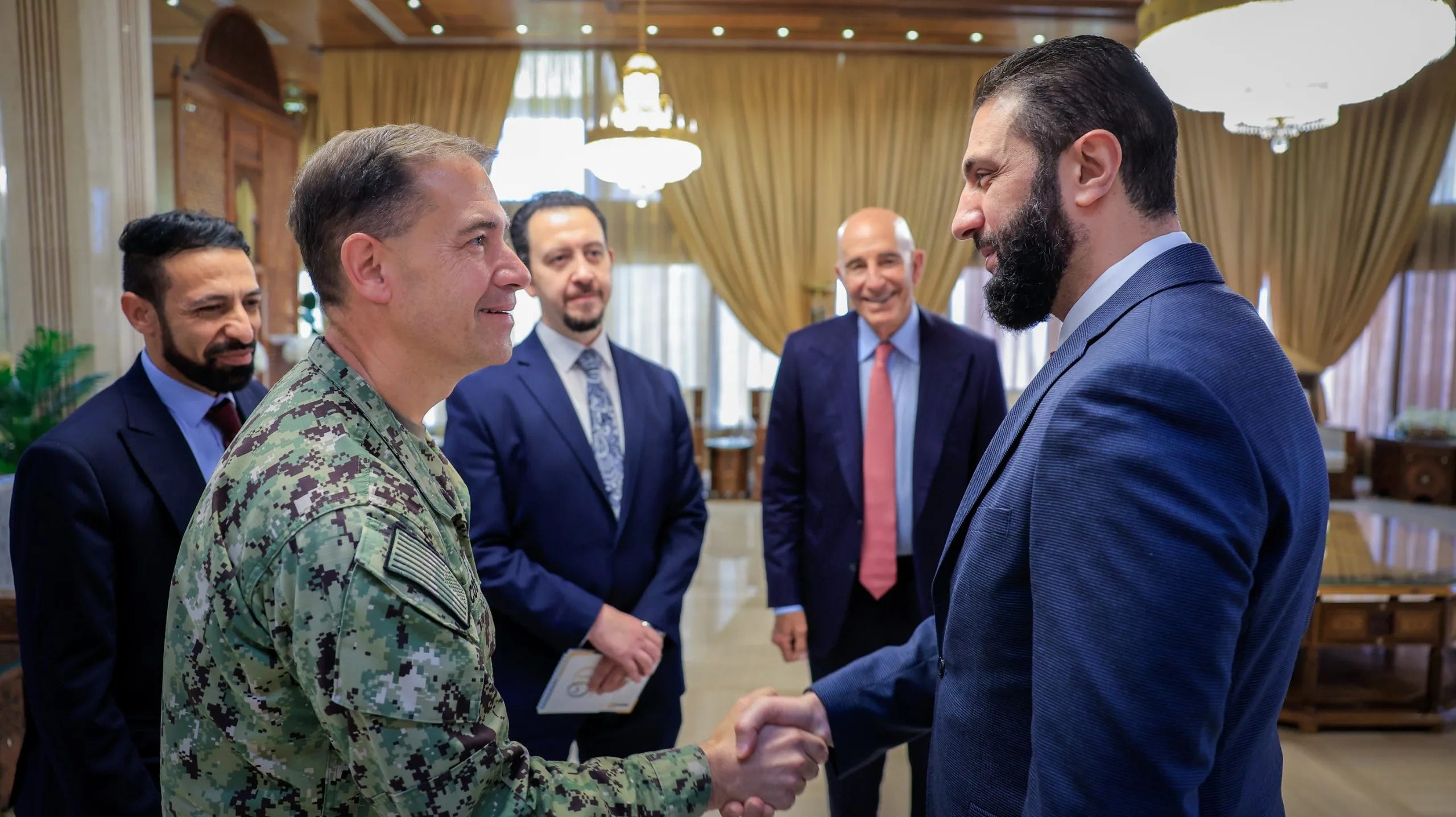
Syrian Foreign Minister Asaad al-Shibani also welcomed Iraq’s agreement to receive the detainees, stating, “We thank Iraq for sharing the burden with us regarding the terrorist ISIS detainees.”
Iraq, however, clarified that receiving and holding the detainees is temporary and that countries must take back their nationals. On January 25, Iraqi Prime Minister Mohammed Shia’ al-Sudani said the transfer of ISIS detainees from Syria to Iraqi prisons is “temporary,” urging concerned states to repatriate their citizens and put them on trial to ensure they receive just punishment.
Iraq has engaged in active discussions with Turkey and Russia regarding the repatriation of nationals involved with ISIS. The Russian ambassador expressed Moscow’s readiness to proceed with an agreement to retrieve Russian inmates held in Iraqi prisons, while Turkey agreed to repatriate Turkish citizens among the ISIS-affiliated detainees transferred from Syria to Iraq.
As of the time of publication, no official statement had been issued by the Syrian government regarding the fate of Syrian nationals transferred to Iraq.
Al-Dasouqi argues that managing this file requires developing institutional structures and clear legal frameworks, necessitating joint Syrian-Iraqi efforts to establish sustainable arrangements.
Counterterrorism, he said, represents a shared strategic interest for both countries and demands a long-term approach based on security coordination, intelligence-sharing, and strengthening institutional capacities to safeguard regional stability and prevent extremist groups from reconstituting.
Harbali, for his part, maintains that Iraqi courts lack jurisdiction to try these detainees and that Iraq does not have a special tribunal dedicated to ISIS crimes. Establishing an international tribunal akin to those for Yugoslavia or Rwanda would require a UN Security Council resolution an unlikely prospect amid current political divisions.
The preferable solution, he suggested, would be the creation of a special court through a multilateral agreement among several states such as coalition members modeled on the Nuremberg Tribunal, which was established by the Allied powers under the 1945 London Agreement to prosecute Nazi war criminals after World War II.
Abdulrahman al-Haj believes that returning Syrian fighters for trial in Syria hinges on a security agreement guaranteeing fair proceedings under conflict-of-laws principles a scenario that appears distant, given that the conditions prompting their transfer remain in place.