

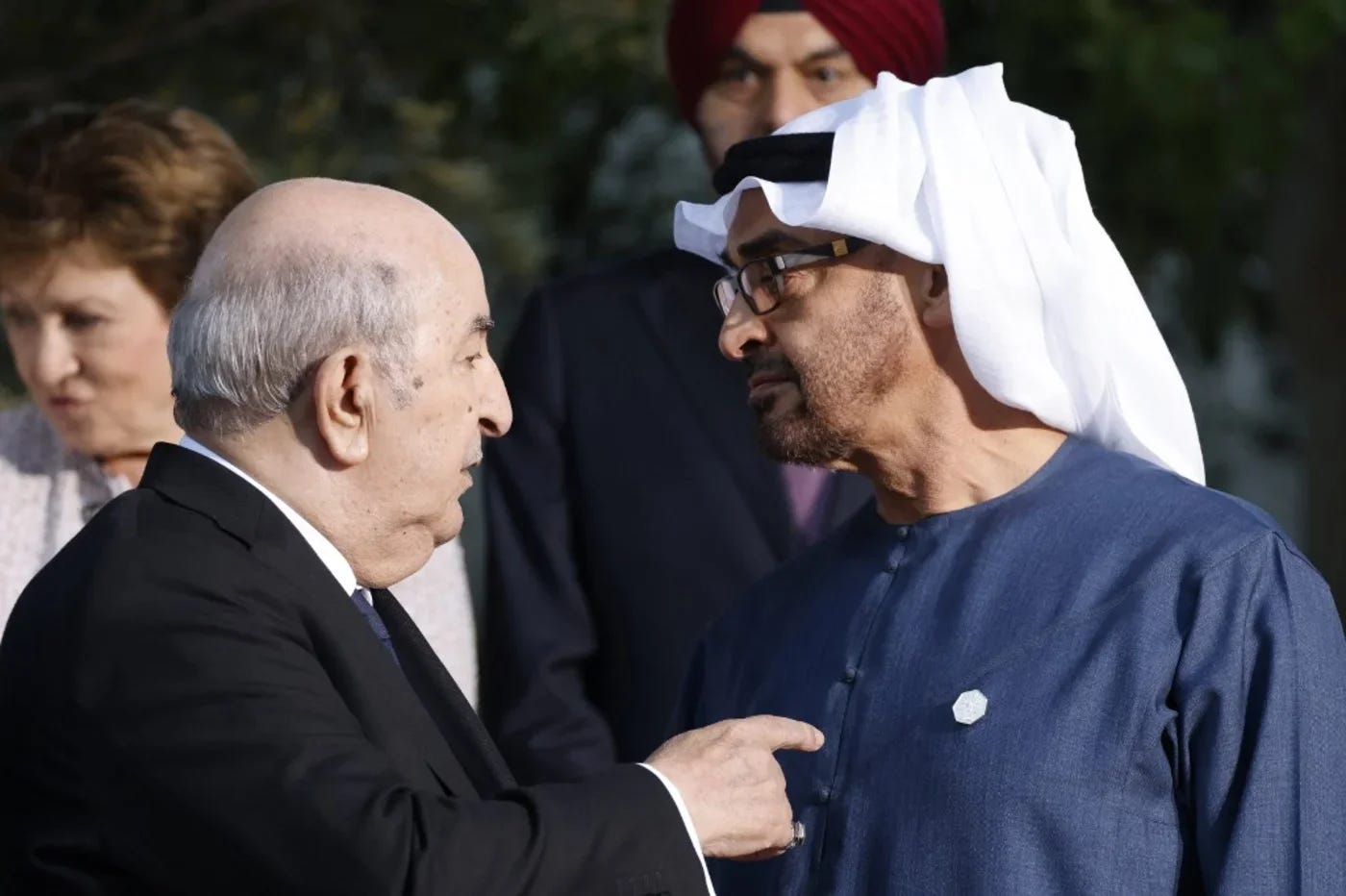
The decision by Algeria on February 7, 2026, to initiate the cancellation of its air services agreement with the United Arab Emirates was far from a routine aviation policy shift it was a political message. With this move, Algiers escalated long-standing tensions from subtle diplomatic signals to overt action.
The termination of the agreement, originally signed on May 13, 2013, effectively ends air travel between the two countries. It also marks another nail in the coffin of a bilateral relationship that has been steadily unraveling for years.
Although Algeria has not officially disclosed the motives behind the decision, it aligns with an ongoing pattern of friction fueled by diverging regional positions and what Algeria perceives as Emirati interference in its internal affairs. So, how did this decline begin and what lies at its core?
1. UAE-Morocco Alliance After Normalization
In August 2020, the UAE, Morocco, and several other countries normalized relations with Israel under the Abraham Accords, abandoning the longstanding Arab consensus that normalization should follow the creation of a Palestinian state.
Algerian President Abdelmadjid Tebboune responded firmly, declaring that Algeria would neither support nor participate in what he called the “rush toward normalization.” For Algeria where the Palestinian cause is considered sacred this shift represented a betrayal and sparked fresh discord, especially amid widespread allegations that the UAE, alongside Morocco and Israel, aimed to isolate Algeria regionally.
Relations between Algeria and Morocco have been severed since 2021. Algeria accuses both Rabat and Abu Dhabi of acting against its interests in the Sahel, particularly in southern neighbor Mali, with which Algeria shares a 1,400-kilometer border. This vast frontier magnifies the strategic and security stakes for Algiers.
2. The Western Sahara Dispute
In October 2020, the UAE became the first Arab nation to open a consulate in Laayoune, a city in the disputed Western Sahara territory. Algeria, which backs the Polisario Front and advocates for a referendum on self-determination, viewed this as a provocation.
For Morocco, the move signified explicit support for its sovereignty claims. Emirati investments in the territory and alleged technological support for Moroccan espionage against Algeria only deepened tensions. According to the Algerian daily El Khabar, senior Emirati officials were accused of supplying Morocco with advanced surveillance systems targeting Algeria.
3. Diverging Foreign Policy Stances
In Libya, the UAE backed renegade General Khalifa Haftar’s 2019 offensive on Tripoli, offering air and military support. Algeria, by contrast, opposed any military solution and pushed for a political settlement putting the two nations at odds.
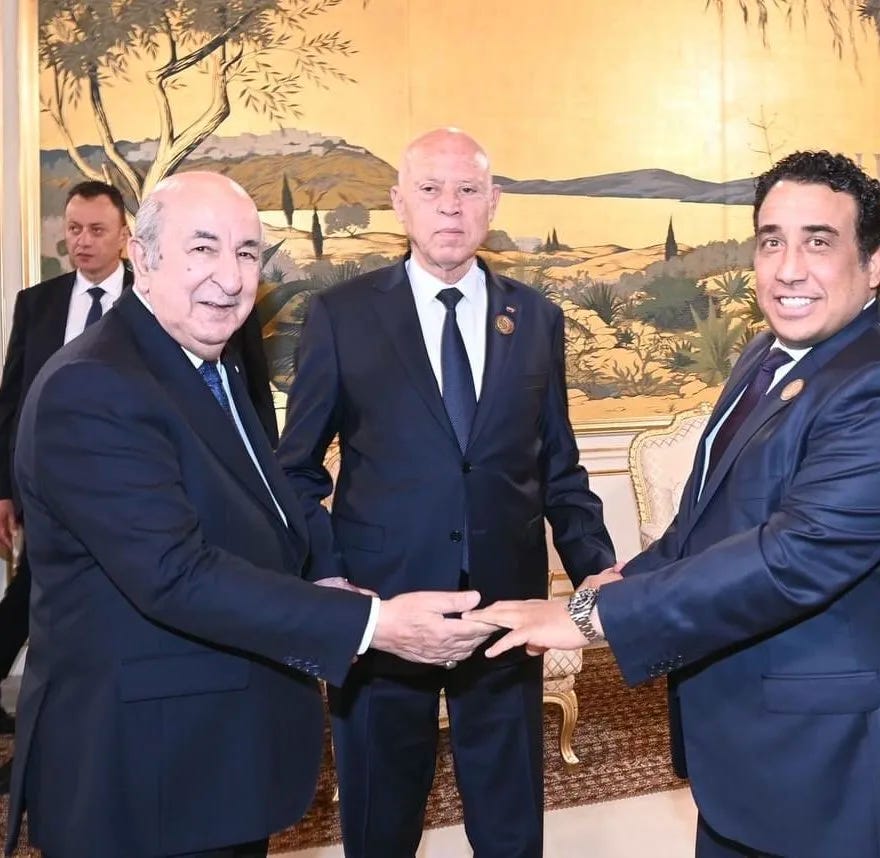
Algeria has also sought to form a regional bloc with Tunisia and Tripoli to counter Moroccan influence, though the initiative has yet to materialize.
Tensions extended to Sudan, where a brutal conflict erupted in 2023 between the army under Abdel Fattah al-Burhan and paramilitary forces led by Mohamed Hamdan Dagalo (Hemeti). Algeria backed Burhan, while the UAE was perceived as supporting Hemeti. During Burhan’s visit to Algiers in January 2024, Tebboune reiterated Algeria’s support for Sudan in “resisting hostile forces.”
4. Meddling in Domestic Affairs
During the 2019 Algerian Hirak protest movement, demonstrators held banners accusing the UAE of obstructing democratic transition and backing counterrevolutionary elements. Reports from Middle East Eye documented slogans denouncing perceived Emirati sabotage.
These accusations became part of a broader narrative within Algeria, suggesting Emirati “subversion.” Local media hinted at suspicious activities within the UAE’s embassy in Algiers.
In October 2025, President Tebboune expressed astonishment at the interference of an unnamed Gulf country in Algeria’s internal affairs. He reiterated this in February 2026, specifying that Algeria enjoyed cordial ties with all Arab nations except for a “small state” intent on stirring trouble. He also highlighted Algeria’s strong bonds with Saudi Arabia, Egypt, Kuwait, and Qatar.
5. BRICS Membership Veto
Algeria had high hopes of joining the BRICS economic bloc in 2023, especially with visible Russian backing. However, when South African President Cyril Ramaphosa announced the admission of six new members including Egypt, Saudi Arabia, and the UAE Algeria was notably absent.
Sources close to the Algerian government described the exclusion as a betrayal, reportedly orchestrated by the UAE in coordination with India. President Tebboune allegedly claimed in an off-air media interview that the UAE lobbied India to veto Algeria’s accession.
6. Foreign Incitement
On January 10, 2024, Algeria’s High Security Council issued a statement lamenting “hostile acts by a brotherly Arab country.” According to the International Crisis Group, this was a veiled reference to the UAE, which Algeria accuses of colluding with Morocco and Israel to marginalize it, while also funding anti-Algerian media in the Sahel and supporting the coup in Niger.
In a related development, El Khabar reported that Abu Dhabi had provided backing to the Movement for the Autonomy of Kabylia (MAK) a separatist group. The article even suggested that Algeria might consider severing diplomatic ties with the UAE over these “hostile acts” that allegedly aim to fragment Algeria and divide the Arab world.
Algeria also perceives the UAE’s deepening ties with Morocco and its economic ventures in Mauritania and Mali as part of a larger strategy to undermine Algeria’s traditional regional influence especially as Libya, once an Algerian stronghold, falls further under foreign sway.