


Two decades after the evacuation of four Israeli settlements in the northern West Bank under the 2005 “Disengagement Plan,” Israel’s current government is moving ahead with a controversial new settlement scheme that would return settlers to these areas.
Israeli Defense Minister Yoav Gallant and Finance Minister Bezalel Smotrich have reached an agreement signaling full coordination between the military and the settler movement. The plan aims to officially resettle Israelis in the former settlement of Sa-Nur by March 2026, coinciding with the Jewish holiday of Purim.
Sa-Nur will be the first evacuated settlement to see a formal return of settlers. It will be followed by the reconstruction and repopulation of three other settlements Ganim, Kadim, and Homesh all located in the Jenin and Tulkarm regions of the northern West Bank.
How Was the Decision Made?
In recent years, Homesh has witnessed an informal and gradual settler return, beginning with the establishment of a religious school (yeshiva) on the site. Settlers have refused to vacate the area, while far-right ministers in the government have pushed for legal and political steps to formalize the return.
To advance these plans, it was necessary to undo the legal framework established by the 2005 withdrawal and legitimize settlement activity in the evacuated zones. In March 2023, the Knesset passed an amendment repealing the ban on settlement construction in the areas evacuated under the Disengagement Plan.
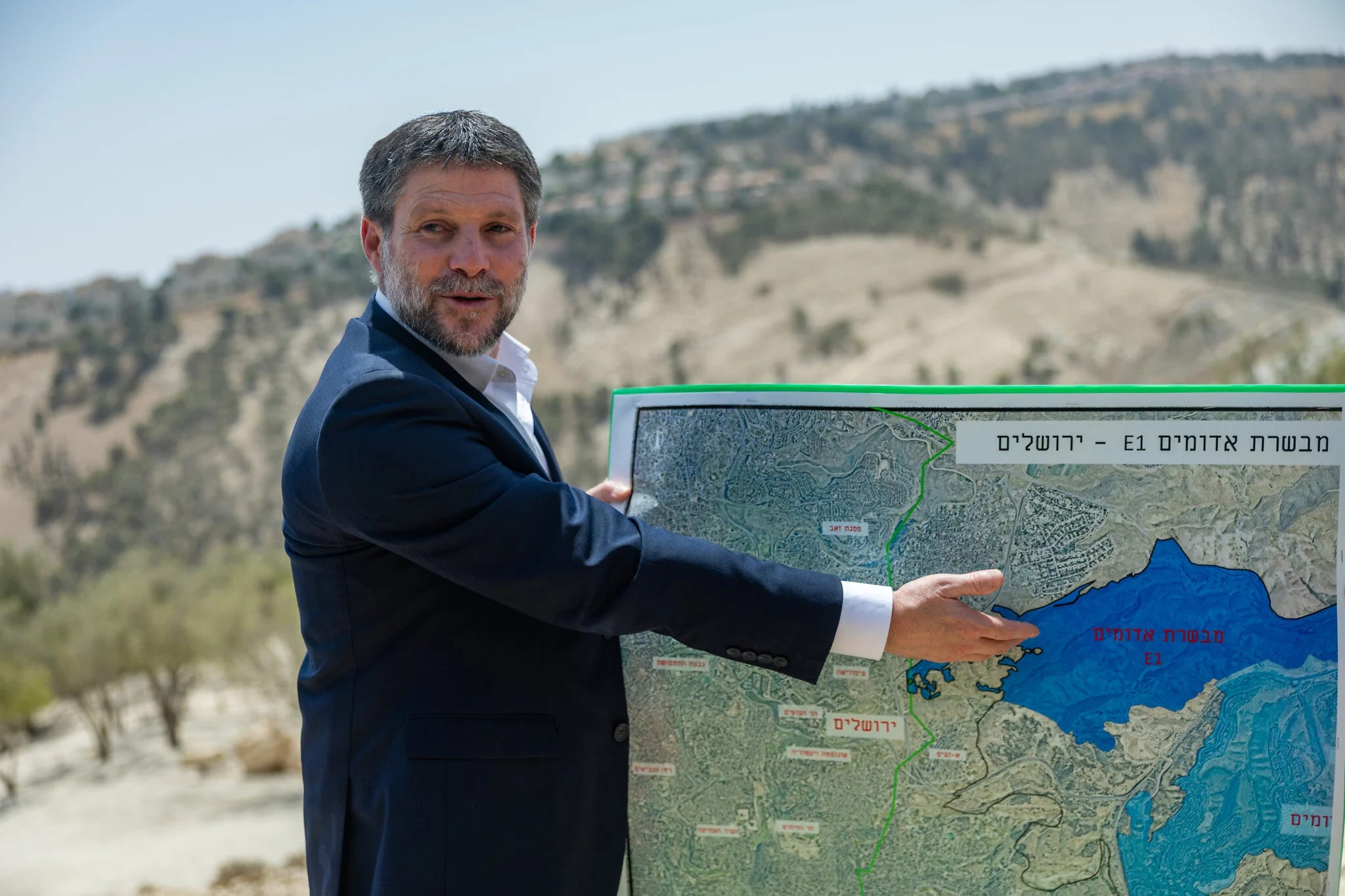
This paved the way for the practical implementation of the return. In December 2025, Gallant and Smotrich formalized an agreement to resume settlement in Sa-Nur. The Israeli government also recently approved plans to establish new settler outposts at the former sites of Ganim and Kadim.
During the Hanukkah holiday, settlers celebrated by lighting candles at Sa-Nur a symbolic act underscoring the revival of these settlements.
Why Is This Step So Dangerous?
The Israeli government’s move marks a dangerous turning point for several key reasons:
It effectively nullifies the 2005 Disengagement Law, signaling a total retreat from previous political commitments.
It transforms settlement activity from political rhetoric into concrete facts on the ground.
It opens the floodgates for a formal and systematic expansion of settlements across the northern West Bank.
It entails the expansion of military deployment around Palestinian communities, increasing the risk of violent confrontations.
Since coming to power in late 2022, Prime Minister Benjamin Netanyahu’s government has approved thousands of new settlement units and retroactively legalized several settler outposts built without authorization.
Homesh, in particular, holds a unique and alarming significance. The settler return did not begin with housing construction but with the establishment of a radical religious school. This yeshiva receives government funding and is affiliated with the religious Zionist movement, which views settlement in the West Bank as a sacred religious duty.
This case illustrates the deep alliance between religious extremism, state institutions, and the broader colonial-settler project closing off any remaining prospects for a negotiated political solution.
On-the-Ground Preparations
Preparations are already underway to accommodate returning settlers. At Sa-Nur, intensive infrastructure and security plans are being implemented:
The Israeli army has begun constructing a new bypass road called the “Silat al-Harithiya Bypass,” with a budget of 20 million shekels (roughly $6 million).
A military battalion (the Menashe Brigade) has been relocated to the Sa-Nur area to strengthen “security control.”
A new military unit is scheduled to be deployed by January 15, 2026, to secure the area in advance of settler families’ arrival.
Consequences for Palestinians
The return of settlers to densely populated Palestinian areas poses a serious threat of renewed violence and confrontation. The Jenin region home to the former settlements of Sa-Nur, Homesh, Ganim, and Kadim is already one of the most volatile areas in the West Bank.
Over the past two years, the region has seen repeated Israeli military incursions and fierce clashes with Palestinian resistance groups, most notably the large-scale raid on Jenin Refugee Camp in mid-2023.
Given these conditions, many observers fear that resettling the evacuated settlements will spark a new round of escalation. Armed factions in northern West Bank have repeatedly vowed to target any settlement expansion in the area.
Indeed, the past two years have already seen shootings and attacks on illegal settler outposts such as Homesh, in response to settler efforts to reoccupy the sites.
The Palestinian Ministry of Foreign Affairs has denounced the move as a “dangerous” step toward deepening colonial control over Palestinian land, warning that it will encourage further settler violence against Palestinians and their property.
Is a Palestinian State Still Possible?
Meanwhile, each new wave of settlement expansion further undermines the Palestinian Authority’s already diminished presence in the area, eroding its ability to govern or influence local dynamics.
The areas targeted for renewed settlement Sa-Nur and Homesh among them fall within Area C of the West Bank, which is under full Israeli military and administrative control. The revival of these sites brings a pressing question back into focus: Is the two-state solution still viable under current conditions?
Israel’s latest moves deliver a direct blow to the very notion of a Palestinian state something that several right-wing Israeli leaders now openly admit.
In December 2025, Bezalel Smotrich stated explicitly, when unveiling new settlement construction plans, that the goal was to “bury the idea of a Palestinian state” and prevent its establishment on the ground.
This policy seeks to impose a geographic reality that fragments the territory envisioned for a future Palestinian state. The land claimed by the Palestinian Authority—including the West Bank, East Jerusalem, and Gaza is being steadily eroded by expanding settlements and settler outposts.
Today, over half a million Israeli settlers live in the West Bank (excluding East Jerusalem), surrounded by approximately three million Palestinians.
This demographic and geographic entrenchment means that the two-state solution is no longer merely “complicated” it is being systematically dismantled on the ground. The scale of settler penetration into the West Bank’s landscape has made territorial separation nearly impossible.
In addition, Israel’s construction of bypass roads and security zones to protect settlements has carved the West Bank into a patchwork of disconnected enclaves, turning Palestinian towns into isolated pockets.
In this context of deepening Israeli expansionism, the fate of the two-state solution is more precarious than ever.