

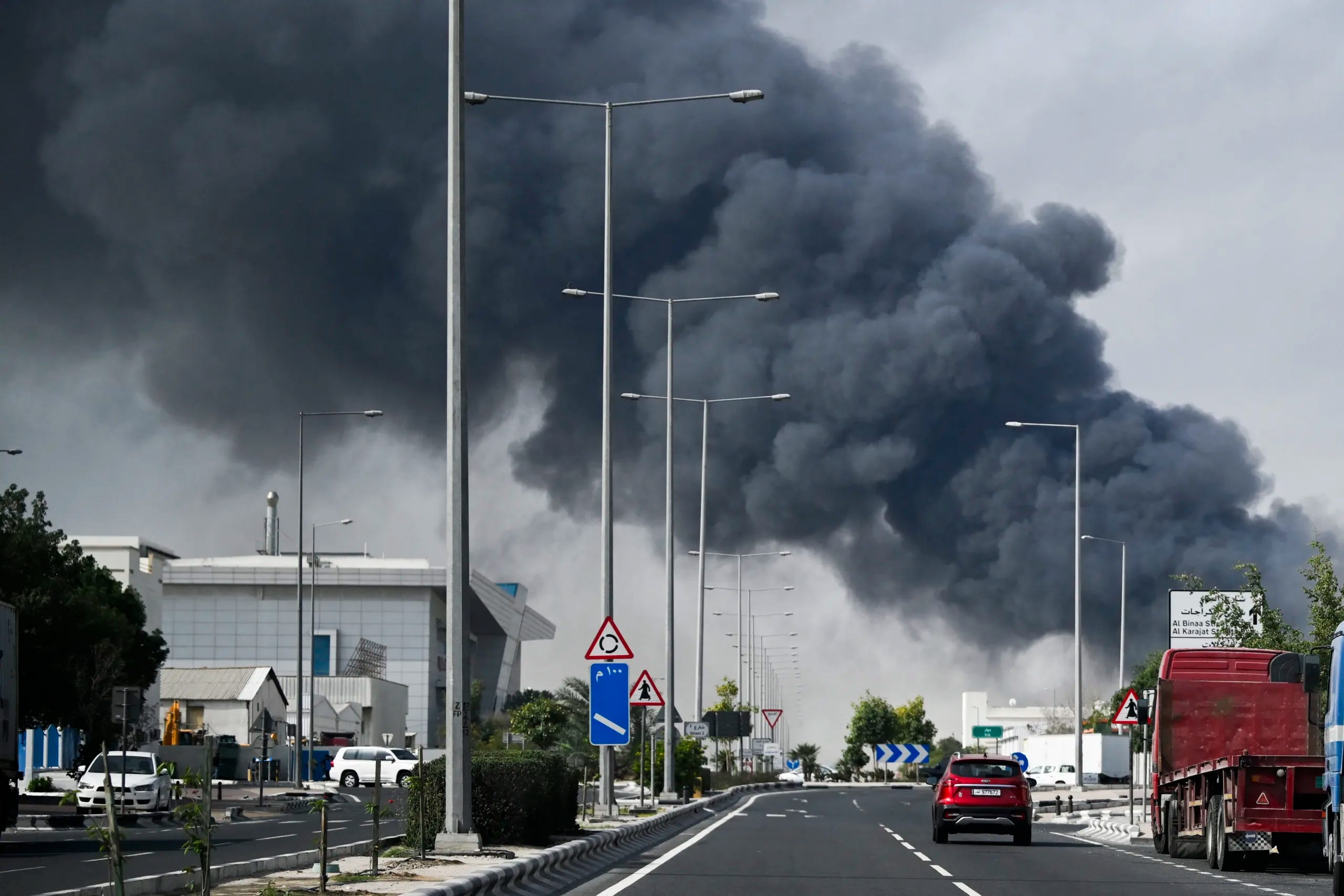
Are the Gulf states moving toward direct military engagement against Iran? The question has gained urgency as Tehran expands its response to U.S. and Israeli strikes, targeting civilian and military infrastructure across the region from energy facilities and ports to airports.
In recent days, signals have been mixed: calls for de-escalation and caution on one hand, and rhetoric affirming the “right of self-defense” and the need for deterrence on the other. Yet any shift from defensive interception to direct retaliation could open a sensitive political precedent one that may be seen as a practical alignment with Israel in pursuing similar objectives.
A Shifting Tone
The tone in Gulf capitals began to change after Iran broadened its attacks beyond U.S. bases and installations in Gulf Cooperation Council (GCC) countries to include airports, ports, and critical oil facilities.
In the face of this escalation, some Gulf states including the United Arab Emirates and Saudi Arabia are reportedly considering “active participation” in strikes against Iran after coming under attack. The U.S. news outlet Axios cited Arab sources on March 2 as saying such discussions were underway.
Another Axios report said the UAE is contemplating military action, while Israeli officials believe Saudi Arabia may take similar steps. The report also claimed that Qatar shot down two Iranian fighter jets, while Kuwait, Bahrain, and Oman were subjected to repeated strikes.
The latest attacks prompted the UAE to recall its ambassador from Tehran and close its embassy there, describing the strikes as “terrorist acts.” Qatar’s Foreign Ministry spokesperson, Majed Al-Ansari, said Doha would respond “if the attacks continue,” though he did not specify the nature of that response.
Meanwhile, Qatar’s State Security Service announced it had dismantled two espionage cells linked to Iran’s Islamic Revolutionary Guard Corps (IRGC), arresting ten suspects who allegedly confessed to collecting coordinates of vital civilian and military facilities and receiving training to conduct sabotage operations using drones.
The announcement marked a departure from the region’s usual language of quiet diplomacy, signaling a shift toward a more assertive internal security posture over attempts at de-escalation.
In Saudi Arabia, after an Iranian missile targeted the U.S. embassy in Riyadh on March 2, the Saudi Cabinet declared that the kingdom “will take all necessary measures to defend its security and protect its territory,” language widely interpreted as implying the right to retaliate.
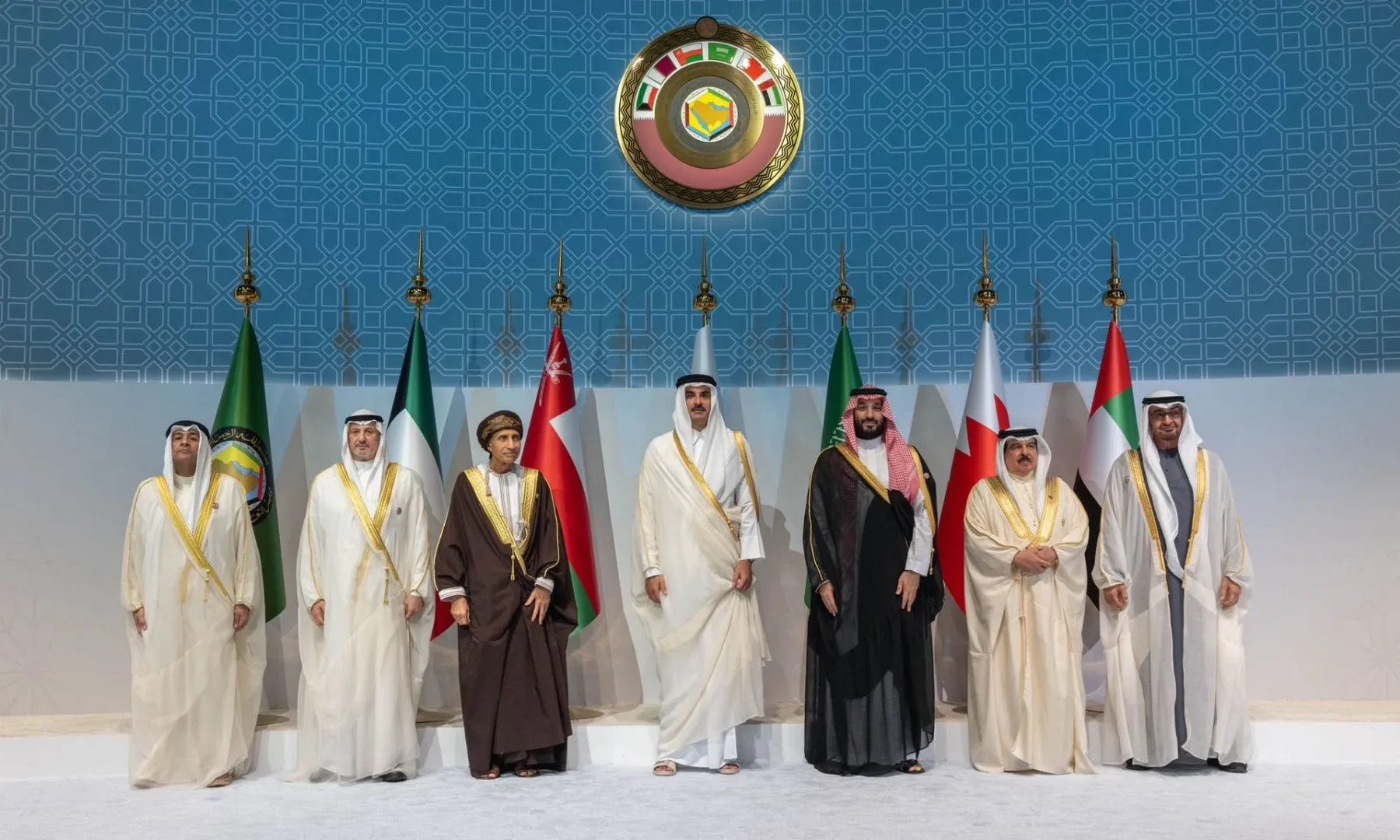
On the same day, GCC foreign ministers convened and invoked Article 51 of the United Nations Charter on collective self-defense. They also set what they described as “red lines” for Iran, warning that continued attacks could transform the Gulf from a “defensive shield” into a “theater of response.”
The statement suggests that Gulf states are increasingly coordinating collective defense efforts and hinting at a joint response should the strikes persist especially as condemnation statements from most Gulf governments now emphasize the right to retaliate.
Calls for De-escalation
At the same time, the British outlet Middle East Eye reported that Saudi Crown Prince Mohammed bin Salman urged the leaders of Bahrain, Kuwait, Qatar, and the UAE not to take steps that might provoke Iran, calling instead for restraint and avoidance of escalation.
The report also pointed to phone calls by Saudi Foreign Minister Prince Faisal bin Farhan with his Gulf counterparts to stress unity of position and promote de-escalation.
Former Qatari Prime Minister and senior statesman Hamad bin Jassim wrote on X: “GCC states must not be dragged or slip into a direct confrontation with Iran, even though Iran has violated the sovereignty of the Council’s states and initiated attacks against our countries.”
He added: “There must be a position regarding the attack, but despite everything, GCC states must carefully consider the issue in all its dimensions. There are forces that want GCC countries to clash directly with Iran.”
According to Bin Jassim, those forces understand that the current confrontation between the United States and Israel on one side and Iran on the other will eventually end. However, a direct clash between the Gulf states and Iran—should it occur—would drain the resources of both sides and allow other powers to intervene under the pretext of helping to end the crisis.
“Once the battle intended to erupt before peace negotiations conclude ends, new powers will emerge and Israel will gain greater influence in our region,” he wrote. “Therefore, GCC states must remain united as one hand to confront any aggression and reject attempts to impose dictates or exploit them.”
Prince Turki Al-Faisal, the former head of Saudi intelligence, told CNN that this is “Netanyahu’s war” and that Saudi Arabia should not be dragged into the conflict.
Russian Foreign Minister Sergey Lavrov, meanwhile, said that “one objective of the U.S.-Israeli war on Iran is to drive a wedge between Tehran and the Gulf states.”
A Sensitive Precedent
If Gulf states decide to openly join the war in an offensive capacity, they would create an extraordinarily complex geopolitical reality: direct combat against a neighboring Muslim state as part of a coalition or operational theater whose interests intersect and tactically align with those of Israel.
According to a former U.S. officer speaking to the Jerusalem Post, the current war represents the first real test of integrating Israel into the U.S. Central Command (CENTCOM).
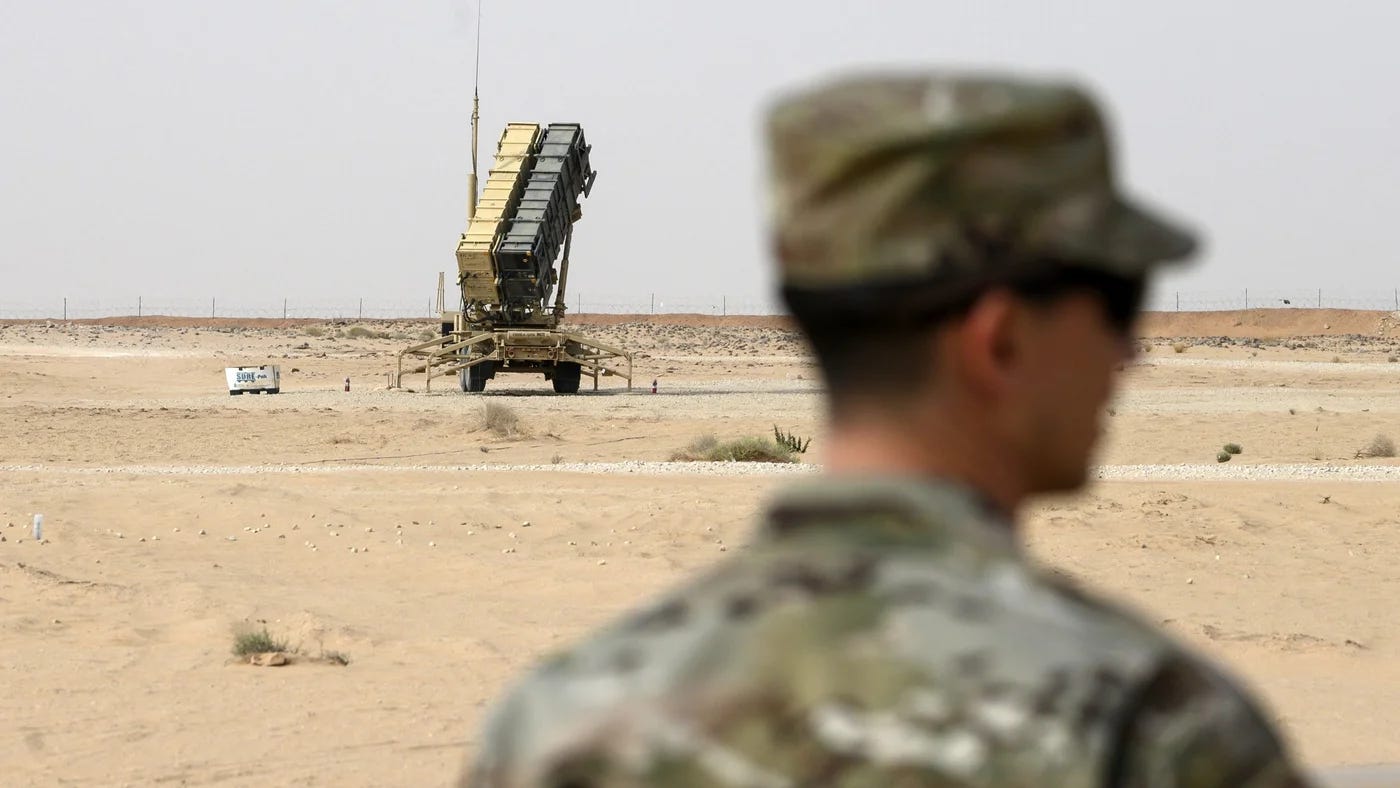
He said Washington and Tel Aviv had “changed the rules of the game,” with Arab militaries now training and planning alongside Israel. Those plans are now being executed, he said, as hundreds of U.S., Israeli, and Gulf aircraft operate in the same airspace.
Some Israeli officials view the current war as an opportunity to integrate Gulf states into a long-term security alliance that would extend beyond the Palestinian issue, the newspaper reported.
Yet such alignment would come with a steep symbolic cost particularly after Israel’s devastating two-year offensive on the Gaza Strip. Any Arab alignment with Israel on shared military objectives would pose a profound challenge to public opinion across the Arab world.
This moral and political dilemma was evident in recent remarks by Prince Turki Al-Faisal, who sharply criticized U.S. plans aligned with Israel’s far-right vision for Gaza. He described Washington’s proposals as “nothing short of ethnic cleansing,” stressing that the root problem remains the occupation.
The desire to deter Iran on the one hand, and the categorical rejection of Israeli-American plans for Palestine on the other, leaves Gulf capitals facing an unprecedented political dilemma as they weigh the prospect of war.
Hamad bin Jassim underscored this point in an interview with Fox News, saying that the “only winner” from Iran’s recent attacks on Gulf states is the policy of Israeli Prime Minister Benjamin Netanyahu “a policy we do not agree with.”
Three Possible Scenarios
Amid the conflicting signals surrounding Gulf actions, three possible scenarios emerge:
1. Defense Without Attack
Gulf states continue intercepting missiles and protecting their territory while activating a joint air-defense system, but refrain from launching strikes inside Iran. This scenario aligns with official Saudi and Qatari statements emphasizing the “right of defense” without offensive participation. It relies on the ability of the United States and Israel to neutralize Iran’s arsenal independently. Continued calls for de-escalation would signal this path.
2. Limited and Conditional Retaliation
Under this option, Gulf forces could strike missile launch platforms in Iran or Iraq using their own aircraft or by allowing coalition forces to operate from their bases. The aim would be deterrence rather than regime change. This scenario may emerge if Iran continues targeting civilian infrastructure or energy routes, and if Washington provides political and military cover. Indicators might include official statements about “proportionate responses” or the deployment of Saudi and Emirati aircraft to forward bases.
3. Broad Engagement
In this scenario, Gulf states openly allow the use of their airspace and bases for coordinated strikes and actively participate in air or naval operations. This could occur if Iranian attacks intensify and economic losses mount, or if major strikes hit Gulf capitals. However, it carries significant domestic and regional risks due to the political sensitivity of fighting alongside Israel.