

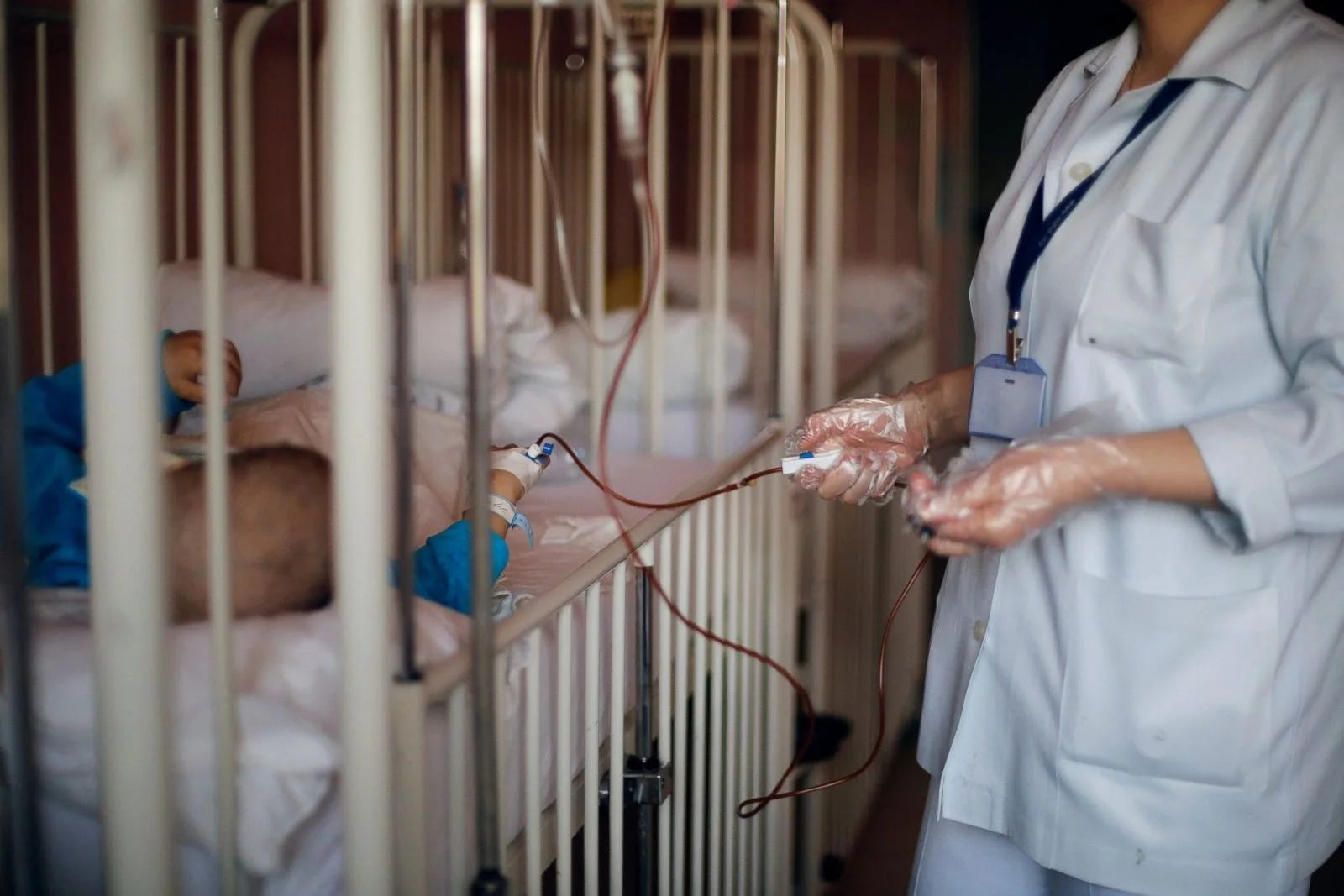
For six years, Zainab al-Mohammad has been undergoing treatment for leukemia. Yet despite the inherent hardship of her illness, the experience has grown increasingly difficult amid the irregular availability of medication, forcing her in recent months to purchase it at her own expense more often than not.
Like Zainab, cancer patients across Syria are grappling with mounting challenges in securing treatment. A shortage of essential drugs has escalated from a medical concern into a full-blown emergency within a healthcare system already strained by weakened infrastructure, a lack of basic equipment, and mounting pressure on the few operational centers.
Costly and Scarce Treatment
Zainab’s ordeal began seven years ago. A native of Damascus, she was diagnosed with chronic myeloid leukemia after doctors observed significant enlargement of both her liver and spleen particularly the latter, which had swollen to nearly three times its normal size. A treatment plan was outlined during the first year, though it did not begin immediately.
Speaking to Noon Post, Zainab—who receives care at Al-Biruni Hospital—recalled suffering from persistent fever. Initially, she believed she might be pregnant. However, after undergoing multiple tests, including blood smears and two bone marrow biopsies, she was diagnosed with leukemia, marking the start of her chemotherapy journey.
Unable to receive intravenous treatment, she instead relied on oral medication. In the past, she explained, the drug was intermittently available sometimes disappearing for one or two months, with the longest interruption lasting three months before supplies resumed.
But the situation has deteriorated significantly since the fall of the former regime. Since then, she has received the medication from the hospital only once, forcing her to purchase it independently the rest of the time. Its cost ranging between 800,000 and 850,000 Syrian pounds (depending on exchange rates) has made it prohibitively expensive.
Zainab added that she is often unable to afford the medication and has turned to numerous charities for assistance. Most, however, have been unable to help, leaving her without a consistent source of support for either treatment or necessary medical tests.
The financial burden extends beyond medication. The PCR test required every six months is particularly expensive and must be paid for out of pocket due to the high cost of materials and their unavailability in hospitals. Meanwhile, the monthly complete blood count (CBC) test is available at the hospital at a cost of around 35,000 Syrian pounds.
Even so, PCR tests remain entirely patient-funded, and the medication remains both costly and scarce. Zainab noted that she has been purchasing it herself for over a year. While shortages existed before the country’s “liberation,” obtaining the drug was never this difficult, she said.
A Long-Standing, Escalating Crisis
On a broader level, Syria’s cancer drug shortage is not new, though it became particularly visible in March 2025 when the Ministry of Health through Zuhair Qarat, Director of Planning and International Cooperation appealed to the international community for support.
At a press conference, Qarat confirmed that Syria is facing a severe shortage of oncology medications, describing the situation as both a health and humanitarian crisis affecting one of the most vulnerable segments of society.
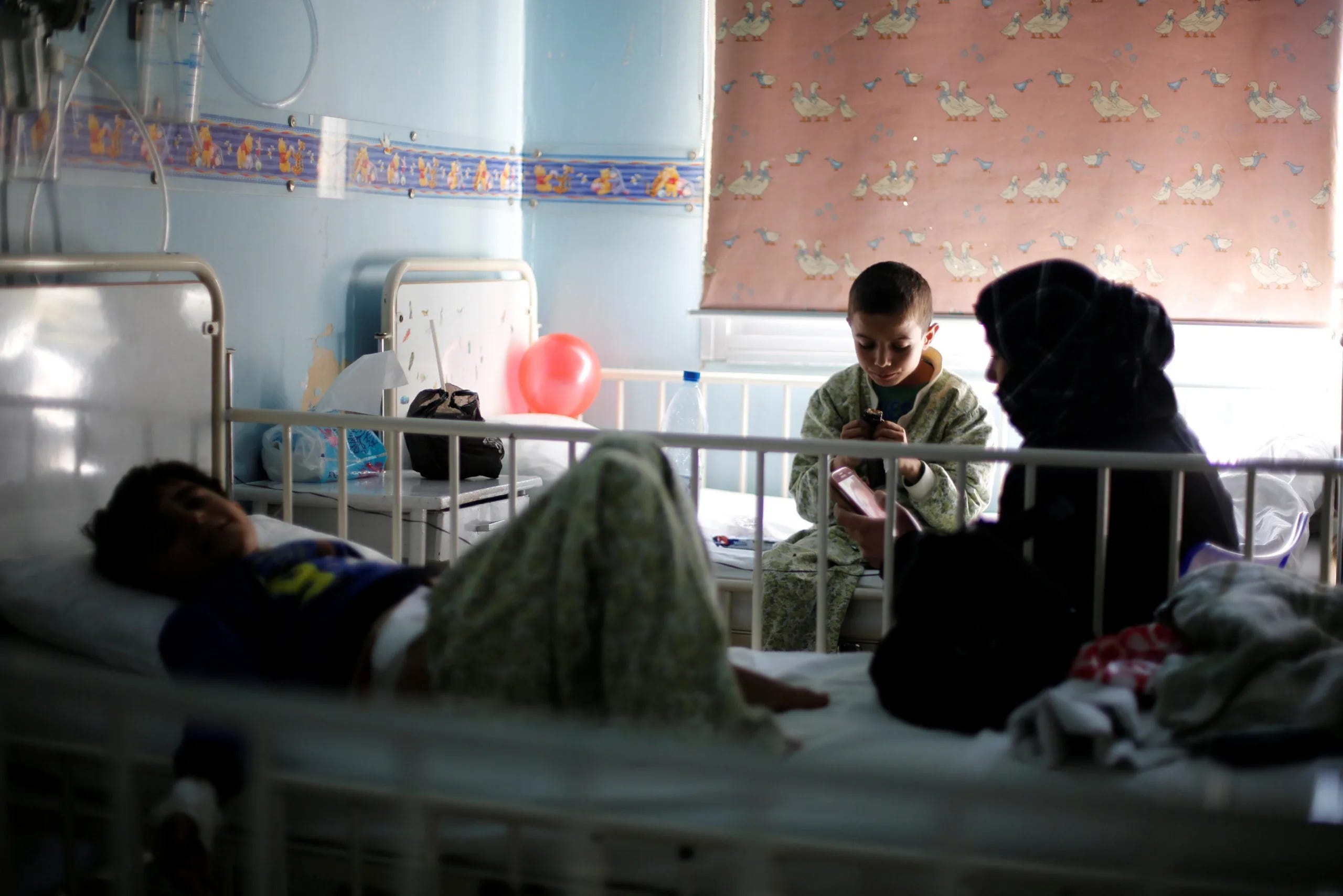
He called on the United Nations, the World Health Organization, UNICEF, EU humanitarian funds, allied nations, and international NGOs to provide the necessary pharmaceutical support to sustain cancer treatment, stressing the need to ease international restrictions that hinder the import of medicines.
For his part, Jamil al-Dabl, head of the National Advisory Committee for Blood and Oncology, stated that the Ministry of Health currently has only 20 percent of the actual required supply for certain cancer drugs, while stocks for other types have been completely depleted warning of a looming health catastrophe affecting both children and adults.
The crisis stems from a complex web of factors, including economic sanctions, deteriorating living conditions, political and military upheavals over more than a decade, damage to the healthcare system, difficulty in securing medications, and hospitals’ limited capacity to deliver essential services.
These conditions leave patients facing stark choices: discontinue treatment due to lack of medication or resort to less effective alternatives both of which can lead to worsening health outcomes and rising mortality rates.
Beyond Drug Shortages
The cancer crisis in Syria extends beyond medication shortages, reflecting broader systemic weaknesses in oncology care. This is underscored in a report by the International Atomic Energy Agency (IAEA), conducted under its imPACT Review program in collaboration with the World Health Organization and the International Agency for Research on Cancer.
The report highlights the extensive damage inflicted on Syria’s cancer care system by years of conflict, resulting in diminished capacity to provide comprehensive diagnostic and treatment services.
It notes that inconsistent access to medication disrupts chemotherapy schedules and prevents some patients from completing treatment protocols. Significant regional disparities in access further undermine patients’ chances of recovery and survival.
Additionally, the report points to shortages in equipment, laboratories, and medical technologies, alongside deficiencies in diagnostic tools, radiotherapy, and nuclear medicine capabilities. A lack of specialized oncology and radiotherapy personnel further strains the limited number of functioning centers, leading to delays and uneven quality of care.
The report warns that cancer incidence and mortality rates are likely to rise between 2020 and 2030, driven by weak early detection programs and the frequent diagnosis of cases at advanced stages making treatment more difficult and increasing reliance on medication.
It also highlights deficiencies in cancer registries, national data collection, and evidence-based planning, complicating efforts to accurately assess the scale of the crisis or develop effective policies to address it.
Although the last comprehensive assessment of Syria’s cancer care system dates back to 2021, updates from the IAEA in 2024 and 2025 indicate that the same challenges persist, with growing emphasis on improving diagnostics and treatment through initiatives such as “Rays of Hope.”
While the IAEA has announced expanded cooperation with Syria to support cancer care and equip hospitals with training and equipment, local hospitals continue to face daily shortages of even the most basic treatment necessities from medication to advanced diagnostic tools.
This disconnect between international plans and on-the-ground realities creates a clear gap in oncology care, where patients’ access to treatment depends more on the availability of drugs and resources than on stable treatment protocols.
Grassroots Efforts to Fill the Gap
Amid this landscape, grassroots initiatives have emerged to bridge part of the gap. Among them is the “Friends of Cancer Patients – Syria” campaign, which notes that current assistance is largely limited to modest financial support due to the high cost of treatment and the difficulty of covering all cases.
Munif Abazid, the campaign’s communications and survey officer, told Noon Post that cancer treatment can require doses costing thousands of dollars, making any expansion of aid dependent on substantial funding beyond current capabilities.
He explained that a specialized medical committee within the campaign prioritizes the most urgent cases to ensure fair distribution of assistance particularly given that some patients receive partial coverage from other organizations while others receive none, creating disparities in access to treatment.
Abazid identified funding as the campaign’s greatest challenge, noting that adequate resources would allow for the import of medications from abroad when unavailable locally—an urgent need given the acute shortages of certain drugs despite partial provision by official bodies.
He linked the campaign’s emergence directly to the crisis, as some patients have been forced to purchase treatment themselves, while others manage to secure support through institutions or organizations such as SAMS.
He also pointed to alternative coping mechanisms adopted by patients, including reliance on informal networks to obtain medication or the exchange of drugs among patients and the families of deceased or recovered individuals an indication of the immense strain on the healthcare system and the ongoing nature of the crisis.
Between limited grassroots campaigns and repeated official appeals for support, the suffering of cancer patients in Syria remains suspended, awaiting urgent solutions to the drug shortage sustained by a fragile hope that their voices will be heard and that their treatment can continue before their conditions deteriorate further.