
“If you had ever tasted grief, you wouldn’t speak of strength so easily… words are easy, and those who give advice are not like those who have lived it.” With these words, a bereaved woman confronted a guest at one of the psychological support sessions unaware that she was speaking to a survivor who had only just begun to regain her ability to stand in the face of loss.
A survivor who emerged alive from beneath the rubble after a massacre that took her husband, her son, her mother, her brother, and more than twenty loved ones leaving her temporarily blind and unable to move.
Hanadi Skeik, Director of the Consultation and Training Unit at the Mariam Foundation and Head of Psychological Support at the Samir Foundation, when she breathed life again, realized that her personal pain could become support for women who resemble her. She chose to walk the path of support not from a place of preaching, but from the heart of experience itself.
At Noon Post, we spoke with Hanadi Skeik about the lives of the wives of martyrs in Gaza as she sees and lives them daily amid an ongoing genocide that has lasted more than two years, during which the Strip lost nearly 70,000 of its sons, leaving behind incalculable grief and 211,93 widows according to the government media office.
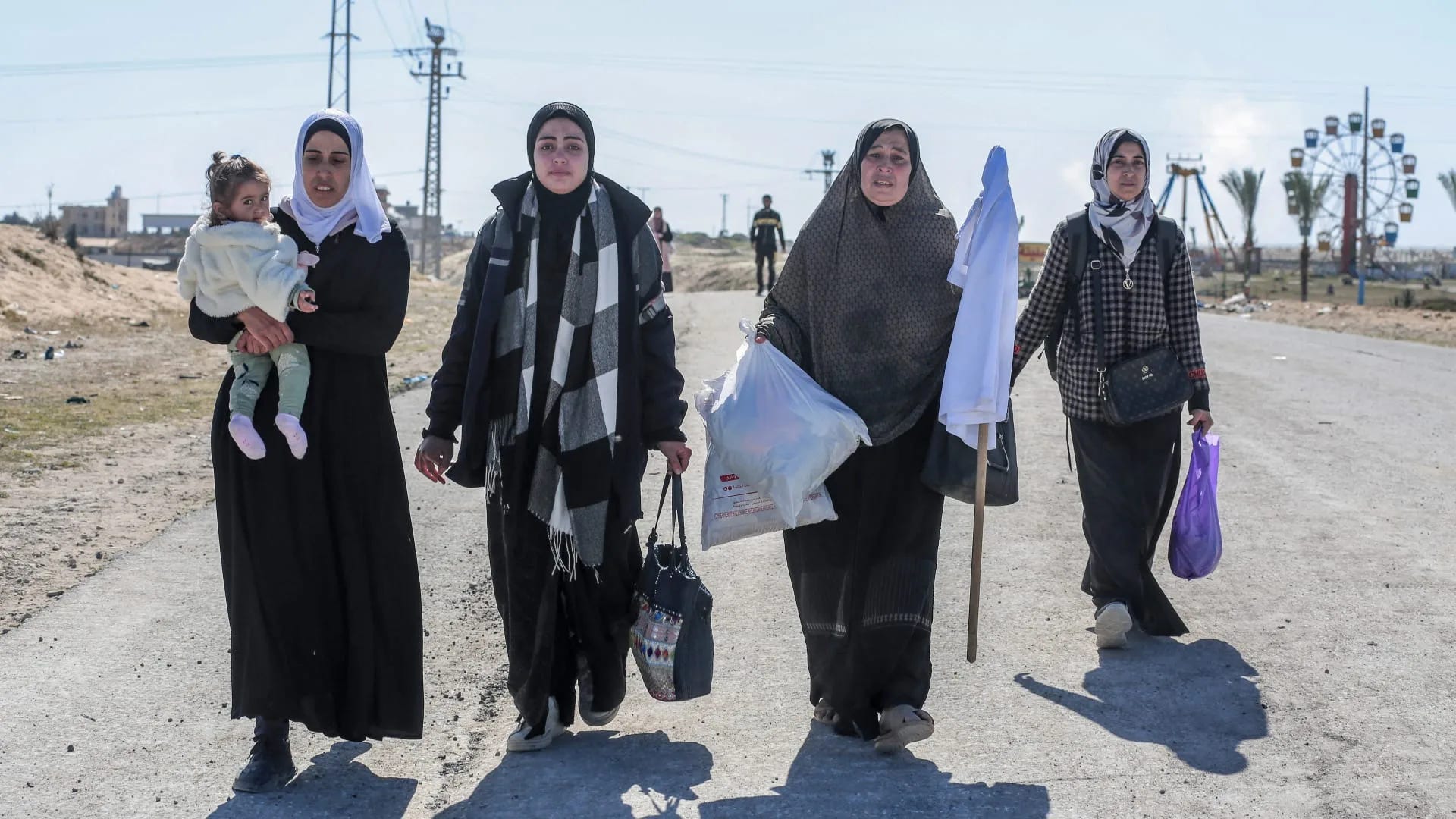
These women experience loss as a full life of accumulating pains. The pain begins at the moment of the husband’s martyrdom and does not end there. Heavy responsibilities, displacement, famine, economic hardship, and insecurity follow, as if the departure alone were not enough. A life imposed upon them with all its cruel details in a time when there is no space left for sorrow.
The Phoenix Returns
Our guest lived a comfortable life with a loving husband in what everyone around her described as a “happy family.” She longed for twins after her firstborn and looked forward to Wednesdays to prepare the most delicious foods for her children at home until November 13, 2023, when the occupation targeted her family’s home where she had taken refuge.
She spent two hours under the rubble, unconscious, before regaining awareness in the hospital. The next day she learned that only two people came out alive from the building she was one of them. Everyone else was gone, and many remain under the debris to this day.
Despite the enormity of the event, she understood from her survival that she had a mission to fulfill. She felt that God had chosen her for this role, preparing her with visions she saw in her dreams and details she lived through before the massacre. From this, she decided to emulate the phoenix a mythical bird reborn from its ashes.
Hanadi the phoenix soared again after three months, when she began to regain her sight and mobility. Her first steps were toward an institution providing support to children with amputations and their families. There she met a woman whom she described as speaking from a place of “comfort and emptiness” because she had not experienced loss.
Skeik’s eyes fill with tears as she continues the story mentioned at the beginning. She replied to the woman: “What would you say if I told you that I am a martyr’s wife, a martyr’s mother, a martyr’s sister, a martyr’s daughter, a grandmother and aunt of martyrs; that I emerged wounded from under the rubble after two hours, nearly losing my eye and leg; and that my first steps were toward this institution?”
Shock took hold of the woman, and she asked in astonishment, “How can you talk with strength and support people? My relative who advised me to visit you told me you were very strong!”
At this point, Skeik felt she had to break one of the most important rules of her work. She explains: “One of the rules of providing service is that the specialist should not complain to the person seeking consultation but I had to tell her because she saw strength and therefore needed to know what lay behind it to realize she could do the same.”
The woman asked again: “Where did you get the strength?” Skeik replied: “From God Almighty, from the Qur’an I completed memorizing during the war, from His words: ‘And We will surely test you with something of fear and hunger, and a loss of wealth and lives and fruits—but give good tidings to the patient’ God gave us a promise that eases every pain for us.”
Skeik’s resilience becomes clear when her eyes water and her voice cracks with longing as she speaks of her beloved martyrs. She appears like a young bride when she says that morning coffee with her husband was one of the most important moments of her day, and walking with him at night in Gaza’s streets was one of the most beautiful things they could do.
The model of strength that Skeik embodies positively reflects on the wives of martyrs she supports. Some are ashamed because of how many they have lost, and she tells them: “We are not numbers this is an open wound in the soul. Take your time in your grief.”
The positive effect runs both ways; Skeik feels comfort when she supports the wives of martyrs, as helping others helps recharge her personal energy.
It is notable that Skeik engaged in work before complete recovery. She spent months treating her injuries, and the effects of her concussion lasted nearly a year. From this she advises the wives of martyrs: “Keep yourself occupied and begin at the earliest opportunity do not wait for improvement, for you are the one who improves and changes it. Life is as it is, and people shape it into happiness and hope or into sorrow and grief.”
Dimensions of Suffering
Moving from the personal to the general, we asked Skeik about the conditions of the wives of martyrs as she sees them in her direct work. She says the first aspect of suffering that appears for a martyr’s wife is the loss of a dear person—the partner with whom she lived a part of her life, with all its details and emotions.
She adds: “Alongside the sorrow, a woman loses her spouse’s participation in life and its burdens. The impact of loss varies from one wife to another depending on her degree of reliance on him before his departure. Some women depended entirely on their husbands for everything big or small, like shopping, securing household needs, and overseeing their children’s education. These women find it harder than those who shared roles with their husbands.”
She continues: “Those who relied completely on their husbands find great difficulty managing the household without him, especially since life now is harder than before, with much hardship like displacement and high prices.”
The war has imposed many new roles on Gazans, and all are borne alone by a woman who has lost her husband. For example, securing flour during famine was one of the harshest experiences for the widows who must support children, according to Skeik.
Shelter is another major challenge facing widows today amid widespread destruction and repeated displacement since the start of the genocide. Wives of martyrs have entered a cycle of searching for a place to stay for themselves and their children a grueling task due to the scarcity of homes, the lack of tents in markets at times, and the high cost of rent and tents, compounded by the pains of moving from place to place during displacement.
Skeik highlights another dimension of suffering related to living arrangements. Often extended families share shelter so the widow lives with her own family or her husband’s, sometimes with other relatives. This happens as she tries to build a new life. This closeness often eliminates privacy and creates many issues related to child‑rearing and family interference in the mother’s interactions with her children.
Interference in child rearing is one of the greatest concerns of the wives of martyrs, Skeik has observed, to the extent that entire consultations focus on this subject. Providing money and family needs is a nightmare for most widows, who find themselves suddenly without a provider or income source, many losing their home and some relatives who would have shared the burden with them had they survived.
Skeik explains: “The number of widows is large while services are few. Organizations operate in a scattered manner with no unified database or coordinated effort. So one woman benefits from multiple sources while another receives no help.”
The financial side is not limited to securing money it sometimes becomes a problem because much of it arrives as “orphan money,” with inheritance rules applying to the entire family. In principle, there are specific religious guidelines for managing such funds, with the guardian typically being the child’s grandfather or paternal uncle but errors happen intentionally or unintentionally.
According to Skeik, some mistakes include a wife avoiding asking her husband’s family about her children’s money out of embarrassment, or hiding what she receives from the guardian for fear he will take control, as well as the guardian abusing his authority over the money or pressuring her to marry her husband’s brother to keep the money within the family. She notes that such problems are less common during the war due to everyone’s preoccupation with their own burdens.
Some exploit the widow’s need and blackmail her this kind of exploitation happens to women everywhere. With the growing number of widows in Gaza, talk about blackmail has increased, with some exaggerating it as a widespread phenomenon while others deny it to preserve the image of society and the dignity of martyrs’ wives. So what is the reality of blackmail?
Skeik answers: “Blackmail falls under violence, and it certainly exists but it is by no means a phenomenon. I met women who were blackmailed with job offers or assistance in exchange for immoral requests, beginning as friendship and ending far beyond that, with attempts to convince them with harassing phrases like ‘you are still young and beautiful.’”
She explains that some organizations help women deal with blackmail through awareness and guidance for those affected, but there is no authority to monitor and hold blackmailers accountable, especially since some operate online from outside the Strip.
From her observations, she estimates that awareness and correct handling of blackmail stands at around 70%. She emphasizes that alertness against it is one of the main cautions she gives the wives of martyrs, especially since many are young with insufficient life experience. Blackmail is often the start of moral downfall, which is typically used for security recruitment. Moral collapse and threats of scandal are among the occupation’s tactics to recruit agents.
A particular form of suffering affects the wives of resistance martyrs, Skeik explains: “Many people refuse to shelter the families of fighters for fear of occupation targeting them, and it gets worse if the woman was known before the war for her religious activity or held a government position.”
She adds: “But goodness still exists in our society some secretly shelter her, permitting her to stay in the house under restricted movement so people do not notice her presence.”
It’s also worth noting that a group lives similar suffering wives of the missing. Skeik confirms this and adds that their suffering can sometimes be harder due to waiting and anticipating news about the missing, fearing that they may be prisoners undergoing torture, plus other religious and legal complexities between a martyr and a missing person.
All this accumulates on a woman along with responsibilities amidst sorrow she barely has time to honor. She may have been injured in the same event she lost her husband in, and possibly lost other loved ones who would have helped her had they survived.
Not to mention the harsh reality and the many people in need of help, widows among them, spreading the efforts of organizations and benefactors across great numbers highlighting the differences between life now and before for a martyr’s wife.
On this subject, Skeik says: “Before the war, the number of martyr’s wives was smaller. In my own close circle, 18 women lost their husbands. Now everyone needs help.” She adds: “The numerous widows, despite its hardships and consequences, give each woman a feeling that she is not alone, increasing her patience and endurance.”
What has been discussed so far is only part of the many burdens that begin with the martyrdom of the husband and continue, perhaps growing with more difficult challenges. So what are the appropriate solutions for building a new life in this harsh reality? What is their feasibility amid so many challenges? From where do widows draw strength and motivation to continue?
Skeik says: “As someone who supports martyr’s wives, I carry a bigger burden than before. We used to resolve issues with solutions like small projects for women. But today we need to help women psychologically so they can continue and provide, then focus on social empowerment which is more important than economic empowerment. For example, they must learn money management and proper handling of their children’s orphan funds.”
She adds: “A woman needs initial psychological first aid to absorb the pain, then psychological rehabilitation to recharge her strength so she can continue. Social life isn’t easy she needs to be strong to live for herself and those under her care. People help for a period and then stop, especially with so many in need. So she must take charge and learn project management and financial responsibility.”
In this context, Skeik is working on an integrated project that includes small enterprises to employ a number of martyr’s wives within their residential vicinity reducing the burden of transportation while providing an incubator that meets their needs. It includes a childcare center, a sweets-making project, a learning point, a sewing workshop, and a beauty salon all within a single geographic space where the targeted women live.
They can offer services, benefit from various resources, earn a salary and profit share, strengthening their sense of belonging, and eventually operate their own businesses independently.
She notes that financial aid and sponsorships for martyrs’ children significantly ease the financial burden and can be sufficient to provide decent support if managed properly. However, organizational efforts are scattered with no coordination in aid distribution, and many women do not know how to access assistance, especially with intermittent internet outages in some areas. Therefore, specialists must go into the field to find and assist those in need.
She believes that intelligence and social adaptability solve many problems such as cooperation with the orphan fund guardian and absorbing family interference in child rearing so long as it remains within acceptable bounds. “We must not make a woman live under the illusion of independence when she has no space,” she says. “She must walk two paths: independence and adaptation.
This is based on social intelligence creating privacy for herself without alienating those around her. She must be flexible and understanding because family involvement often stems from care for the children. She can accept it without implementing it if it undermines her position in her home and with her children.”
But child rearing itself apart from interference is difficult, especially under these circumstances. So Skeik advises mothers to seek a support figure for their children like an uncle or aunt who can be close to them, support them, and whom they can turn to.
She explains: “A mother may control her children in their early years, but as a child grows, the need for a father figure forms. If it’s a daughter, she needs a male figure for empathy. Here the support figure plays a role. The feeling of loss never disappears but companionship fills some gaps.”
Before the War Is Not Like After
The first thought that might come to mind about advice for a woman dealing with the consequences of losing her husband from grief to life’s hardships is to develop herself through education and work. Many widows used to do this before the war. Today, however, opportunities are limited and responsibilities are so overwhelming that attempts become exhausting.
For example, how can a woman enroll in university when she is caring for children in a tent, striving to provide them with water and food, her time and health drained by navigating aid organizations, cooking with firewood, and perhaps lacking a phone or internet to access online education?
Not only that, but the occupation contributes to the scarcity of opportunities. Skeik explains: “Opportunities are limited because the number of widows is large and the need is great. Most projects are relief efforts due to the occupation. If they allow aid to enter, they prevent what we need to establish employment projects like equipment for cooking or sewing to empower women.”
She clarifies: “Because transitioning from relief to development means that a woman runs her life and home without needing help from anyone which would reduce social problems. And that is something the occupation does not want.” She added that some organizations intentionally remain in relief work rather than development to ensure their continued operation, without regard for the interests of beneficiaries or society.
She explains that work for martyr’s wives should be divided into relief, development, and preventative efforts. The relief side provides necessary assistance like tents and winter clothing. The development side helps them become self‑reliant through small projects. Preventative work offers guidance and reinforces values and is essential, but cannot come before basics are provided.
On practical steps to help the wives of martyrs, Skeik says: “If I meet a woman shortly after the event or on her first visit, I give her the chance to cry. I don’t stop her I encourage it if she tries to hold back tears. After weeping and venting, she feels relief before any guidance from me.”
She adds that at the start of sessions she asks women: “What do you have?” to begin working with what is present, differing from one woman to another. Some have children, work, or education. The important thing is focusing on what exists, not what was lost.
She continues: “I always link pain with faith, for raising a martyr’s wife’s spirituality achieves psychological peace, helping her accept everything and think positively.” She emphasizes: “I don’t say to her: ‘Don’t be sad.’ Instead, we observe the etiquette of the grieving person with God. This balance brings great comfort.”
“Reframe the event within yourself,” she urges. “Ask yourself: Why did I lose my husband and my social support? Surely for good. God knows what is best for us. He tells us in His Book: ‘And it may be that you dislike a thing while it is good for you.’” Thinking this way is one of Skeik’s earliest pieces of advice.
She clarifies: “When you reframe the event, focus on what remains, and receive tailored guidance, your strength begins to emerge and this reflects on your family and your ability to fulfill your role.”
She also emphasizes that a widow should seek support even if she has lost close relatives. Support might be her relative, friend, or trusted psychological counselor someone she can turn to in times of hardship and who helps her shoulder the burden.
Results vary among individuals. Skeik says differences in resilience stem from the strength of faith and personality. Some women rise and achieve what partners could not. Others do not show the desire for change, and in such cases, work with them usually stops after eight sessions sufficient time to show readiness for improvement or continued dependence.