

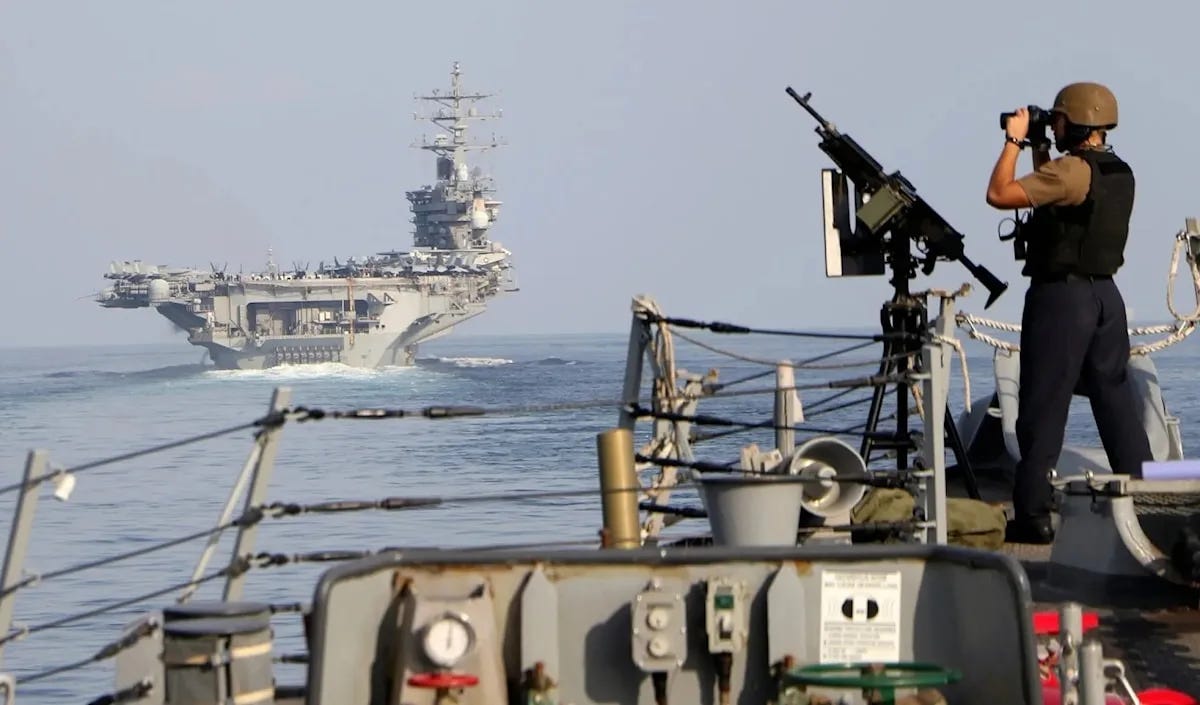
Within less than 48 hours of the outbreak of the US-Israeli war on Iran, global markets and the maritime and aviation sectors began pricing in geopolitical risk almost immediately.
War-risk insurance premiums climbed, tankers altered their routes away from the Strait of Hormuz, and numerous flights were canceled. This report tracks the most immediate economic repercussions of the attack.
1. A Surge in Insurance Costs
Commercial shipping in the Gulf region was dealt an immediate blow, reflected in a sharp spike in marine insurance costs. War-risk insurers swiftly issued cancellation notices for existing coverage agreements on vessels transiting the Strait of Hormuz.
The procedural step is designed to reopen negotiations at rates commensurate with the new risk environment. The global insurance broker Marsh announced that hull insurance rates had risen from 0.25 percent to roughly 0.375 percent an increase of up to 50 percent.
For a vessel valued at $100 million, that translates into a jump in per-voyage insurance coverage from approximately $250,000 to $375,000.
Insurance premiums for ships docking at Israeli ports previously estimated at around 0.1 percent may also rise by as much as 50 percent.
In container shipping, data from Xeneta, which tracks air and sea freight rates, show that average shipping costs from China to the UAE have increased by 5 percent since February 15, reaching $1,572 per 40-foot equivalent unit (FEU), as tensions prompt carriers to avoid the Gulf.
Some multinational companies have been forced to offload containers at alternative ports and transport them overland, adding both cost and time.
2. Shipping Routes Disrupted
Parallel to the insurance shock, the Strait of Hormuz entered a de facto state of near-closure after Iranian forces reportedly issued radio warnings to commercial vessels barring passage through the strategic waterway.
The direct threat prompted major oil traders and tanker operators to suspend voyages immediately. Data from S&P Global indicate traffic fell by 40–50 percent by the evening of February 28 and later dropped by around 75 percent.
Tracking data show numerous vessels either turning back or idling off the coast of Fujairah in the UAE, awaiting clarity to avoid potential targeting.
As for alternative routes, the Indian Exporters Federation noted that rerouting ships around the Cape of Good Hope, for example, adds 15–20 days to a single voyage, raising expenses and delaying deliveries.
This comes as the Suez Canal has yet to return to full capacity following Israel’s war on Gaza and the accompanying Houthi attacks in the Red Sea.
A report by Xeneta found that container shipping rates from China to the United States have declined by 32–35 percent since the start of 2026. Yet they remain 48–79 percent higher than pre–Red Sea crisis levels.
The figures underscore the fragility of global supply chains, particularly as concurrent crises in the Red Sea and the Gulf expose shipping to heightened volatility.
3. Energy Markets in Turmoil
Security concerns had already filtered into oil pricing hours before the strike began. On the day prior to the attack, Brent crude closed at $72.87 per barrel, while West Texas Intermediate settled at $67.29.
According to Capital Economics, prices could climb to $80 if the conflict remains contained, and potentially to $100 should the war drag on.
Analysts expect Asian markets to open on Monday, March 2, with a sharp upward price gap as traders incorporate a geopolitical risk premium into both spot and futures contracts particularly amid the absence of Iranian supply and ongoing threats to the world’s most critical energy transit chokepoint.
Other analysts told Reuters that the risk premium could range between 10 and 25 percent, potentially reaching 50 percent if the Strait were fully closed.
In anticipation of possible supply disruptions, OPEC+ member states are set to convene on March 1 to discuss increasing oil production beyond earlier expectations.
Sources on February 28 indicated that OPEC+ is considering a larger output increase of up to 411,000 barrels per day or possibly as much as 548,000 barrels per day at a time when Saudi Arabia and the UAE have already been ramping up exports.
Such a move would mark the end of a temporary freeze that began in January, following a quota increase of 2.9 million barrels per day in 2025.
The threat extends beyond oil. Roughly 20 percent of global liquefied natural gas (LNG) trade transits the Strait of Hormuz.
Tracking data show that at least 14 LNG carriers have slowed, halted, or altered course posing serious risks to Qatari gas exports, a cornerstone of energy security in Asian and European markets.
4. Aviation Paralyzed
The aviation and travel sector has also been dealt a severe blow as military strikes expanded, prompting aviation authorities across several countries to issue closure notices for 11 airspaces in the Middle East, including Iran, Israel, Lebanon, Iraq, and several Gulf states.
The sweeping closures effectively paralyzed regional air traffic, forcing global airlines to cancel hundreds of flights. Air India alone announced the cancellation of 180 flights to the region as a precautionary safety measure.
According to data from aviation analytics firm Cirium, approximately 24 percent of flights to the Middle East were canceled on the first day of the strikes. Half of flights to Qatar and Israel were scrapped, along with 28 percent of flights to Kuwait a pattern that continued into the second day.
Some flights have been rerouted along longer corridors via Iraq and Turkey, adding hours to travel time and increasing fuel consumption and insurance costs.
These cancellations translate into losses for airlines and oil companies reliant on business travel, while also placing pressure on tourism and hospitality sectors across the Gulf.
They also disrupt fast-moving supply chains tied to air freight, delaying sensitive cargo such as pharmaceuticals and electronics.
In sum, the first two days of war demonstrate how swiftly markets and maritime and aviation industries respond to geopolitical shocks. The sharp escalation in marine insurance premiums and tankers’ avoidance of the Strait of Hormuz reveal the scale of economic risk.
While alternative pipelines exist most notably Saudi Arabia’s East-West pipeline, which stretches 746 miles and carries up to 5 million barrels per day to the Red Sea, and the UAE’s Habshan–Fujairah pipeline with a capacity of 1.5 million barrels per day their limited capacity means any prolonged closure of the Strait would disrupt millions of barrels per day and intensify upward pressure on oil prices.