

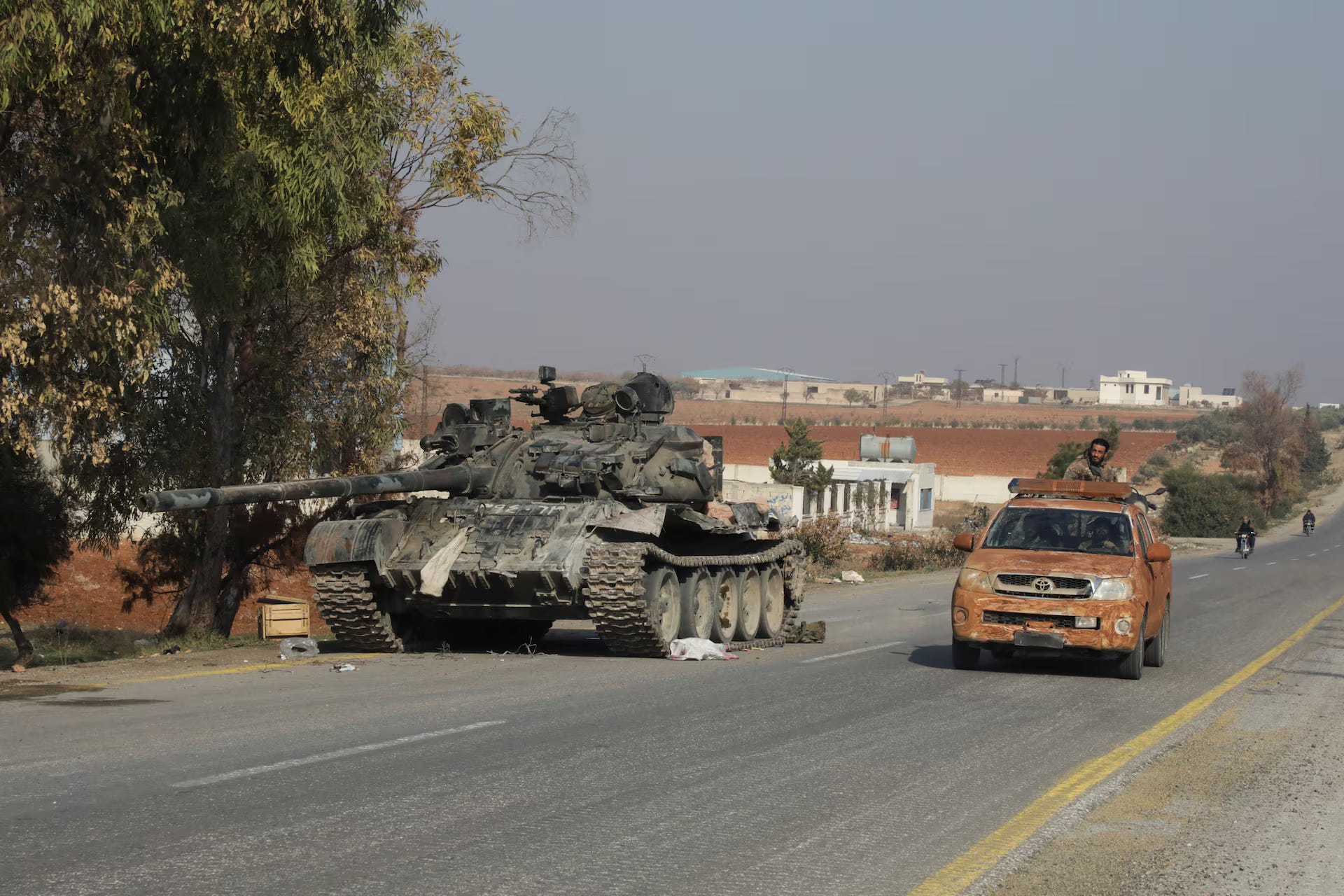
Since the outbreak of the Syrian revolution in March 2011, the involvement of Iranian-backed militias marked a turning point in the conflict. As Assad’s forces faltered in the face of rapid territorial gains by the Free Syrian Army and armed opposition groups starting in early 2013, Tehran opened supply routes and funneled fighters from Iraq, Lebanon, and Afghanistan through transnational formations such as Hezbollah, Liwa Fatemiyoun, Liwa Zainebiyoun, and Iraq’s Popular Mobilization Forces (PMF), all along sectarian lines.
These groups played a decisive role in bolstering the Syrian regime in some of the bloodiest battles in Rif Dimashq, Aleppo, and Deir Ezzor including the battles for Qusayr, Aleppo, and others. They were also directly implicated in large-scale massacres against civilians, particularly in Sunni-majority regions.
Without this sweeping intervention coordinated by Iran’s Islamic Revolutionary Guard Corps (IRGC) and led personally by Quds Force commander Qassem Soleimani the Assad regime would likely have collapsed under the pressure of the revolution, which by then had seized control of nearly three-quarters of Syria’s territory.
The Militia Mosaic: Hezbollah, Fatemiyoun, Zainebiyoun, and the PMF
In 2013, following the opposition’s territorial expansion, Iran escalated its support from political and economic backing to full-blown military involvement. It deployed IRGC officers and Quds Force units under Soleimani’s command, and began establishing cross-border armed factions from Lebanon, Iraq, Afghanistan, and Pakistan.
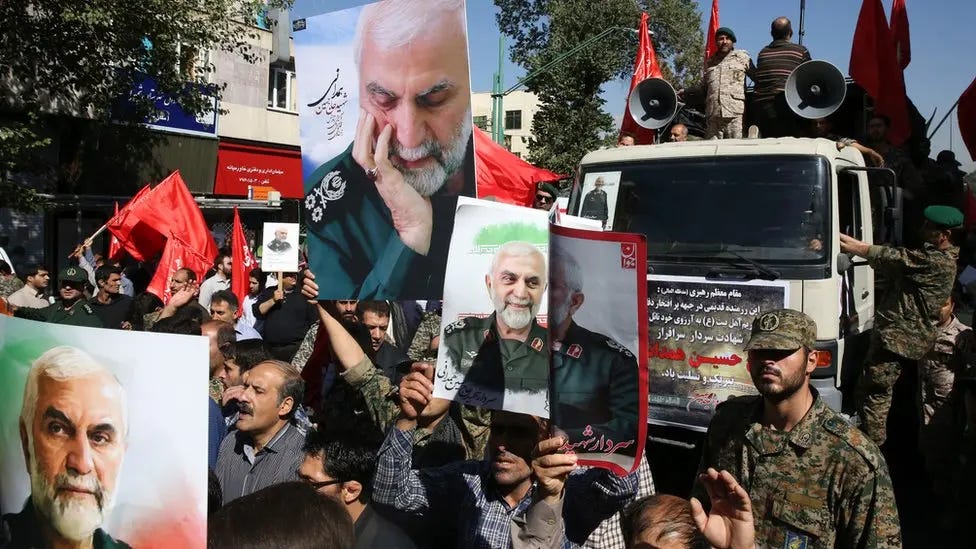
Soleimani effectively became the de facto commander of the main operations rooms in key battles from Qusayr and Qalamoun to Aleppo and Deir Ezzor and was granted broad authority to oversee Syria’s military and economic files.
Iran’s strategy centered on diversifying its manpower:
Hezbollah acted as the spearhead on sensitive frontlines (Rif Dimashq, Qusayr, Qalamoun, southern Aleppo countryside, Daraa, and Quneitra), given its high level of training and ideological alignment with Iran.
Liwa Fatemiyoun (Afghan) and Liwa Zainebiyoun (Pakistani) recruited thousands of fighters, mostly refugees in Iran, through financial incentives (salaries, residency status) and sectarian appeals (protecting Shiite shrines). These units were often used as shock troops or “cannon fodder” in high-casualty battles.
Iraqi militias (Nujaba, Badr, Asaib Ahl al-Haq, and other PMF factions) secured overland supply lines from Iraq to Deir Ezzor and Al-Bukamal, and participated in eastern and desert campaigns.
At their peak, Iran-backed militias in Syria numbered in the tens of thousands including over 10,000 Hezbollah fighters alone, in addition to thousands of Iraqi, Afghan, and Pakistani combatants.
As Assad’s army weakened, these militias functioned as a parallel military force, effectively dictating battlefield decisions. Soleimani became the de facto ground commander, and Iran built local economic networks through loyal agents to exert control over certain regional economies.
From Dominance to Target: Israeli Strikes and Regional Pressures
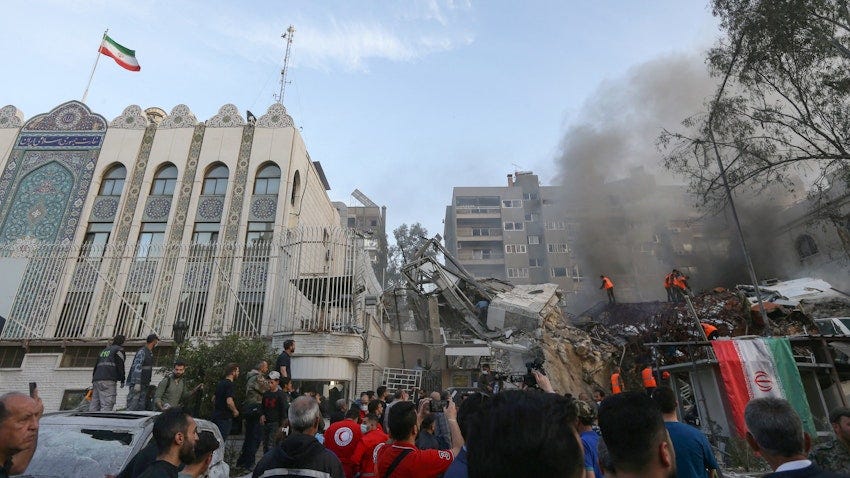
Once the internal battles subsided, Syria transformed into an arena for regional power struggles. Since 2017, Israel has launched an expansive air campaign targeting IRGC and Hezbollah bases, weapons depots, and training centers across Syria a response to Iran’s growing military entrenchment.
These strikes intensified amid the undeclared war between Tehran and Tel Aviv, killing numerous senior field commanders, including prominent Iranian officers. After the outbreak of the Gaza war in late 2023, the conflict escalated into a broader confrontation that extended to Iranian proxies in Lebanon, Syria, and Iraq.
Withdrawals Under Pressure
Amid relentless Israeli airstrikes and a quiet US-Russian consensus on the need to curb Iranian influence in Syria, many of these militias began vacating key positions.
Entire units retreated toward Iraq, while Hezbollah scaled down its presence along the southern border after dozens of its fighters were killed in precision strikes. No formal agreement was reached with the Syrian regime regarding their exit; instead, the withdrawal appeared to result from mounting military and political pressure, amid growing regional calls to “cut off Iran’s arms,” which had made the militias a strategic liability even for Assad.
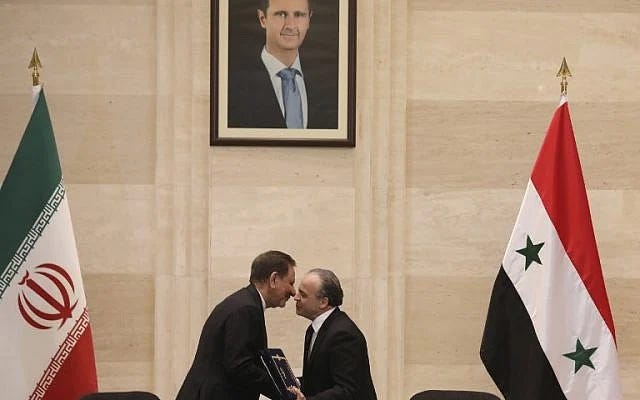
A former Syrian officer who worked at an IRGC-linked intelligence facility in Damascus recounted receiving a call from his Iranian superiors on December 5, 2024 three days before the fall of the previous government instructing him to report to the operations headquarters in Mezzeh Villas East the next morning for an “urgent matter.”
Upon arrival, he and about 20 Syrian officers and soldiers serving under the IRGC were told by the Iranian commander that “as of today, there will be no more IRGC presence in Syria,” adding: “We are leaving.”
The Iranian official ordered them to burn and destroy sensitive documents in front of him, and to remove all hard drives from their computers. They were informed: “It’s over we are no longer responsible for you. You will receive your civilian IDs in a few days.”
Losing the Ground Game
Fawaz Al-Attiyah, a Syrian journalist specializing in eastern Syria, told Noon Post that during the launch of Operation Deterrence Against Aggression, Iranian militias went on high alert across several regions and began recruiting local fighters with monthly salaries of $200 and a food basket per family.
The militias tried to reassure their members through Telegram that the events unfolding were “a trap set for the deterrence forces.” However, when the opposition-led forces captured Aleppo, the psychological blow to the militias was immense. They began withdrawing heavy and advanced weaponry including drones and spare parts and moved them toward Iraq and Damascus in preparation for eventual transfer to Lebanon.
By December 6, 2024, as opposition gains continued, the militias began pulling out in groups. They told local recruits they were heading to “battlefronts,” not leaving Syria, to avoid revenge attacks. These units withdrew under cover of night through both smuggling and official crossings, including in Al-Bukamal and Qusayr. Some retreated to Iraq, others to Lebanon.
No Exit Deal, No Guarantees
Speaking to Noon Post, economic analyst Younes Al-Karim denied the existence of any formal agreement with Iran regarding the militias’ withdrawal. He argued the primary concern was a devastating joint US-Israeli military strike not the expansion of Operation Deterrence Against Aggression, which no one expected to extend beyond Aleppo.
This is evidenced by the initial failure to remove large stockpiles of Iranian weapons. But as the fighting spread toward Hama, Iran began concealing its arsenal and reportedly asked Turkey to mediate to protect its positions.
Karim added that once Aleppo was lost, Iran realized Russia would not intervene. This led to a shift in priorities within Operation Deterrence, allowing for a more orderly withdrawal. Iran and Hezbollah tried to hold onto Qusayr but suffered a major blow from Israeli air raids.
Positions held by Hezbollah’s elite Radwan Unit were struck in the Homs desert, and a convoy from Lebanon was destroyed effectively neutralizing Hezbollah’s presence in Syria and accelerating the opposition’s battlefield momentum.
Abandoned Fighters and Lingering Dangers
Local fighters remained behind after the withdrawal of their commanders. IRGC leadership evacuated only senior advisers and officers via Hmeimim airbase and Damascus International Airport. No action was taken against the abandoned Syrian fighters. Religious figures also fled alongside military commanders to Iraq and elsewhere, with some militias relocated to third countries.
Karim warned that after a warming of ties between Syria and the US, Iran tried to re-activate some of its proxy elements in anti-regime areas particularly in SDF-held zones and along the Syria–Lebanon border. However, the greatest concern lies in the possible handover of Iranian weapons, apparently facilitated by Tehran itself, to Islamic State (ISIS) cells, which have shown signs of renewed activity in the Syrian desert.
The danger also stems from dormant militia members who may be reactivated if instability returns. Their loyalty to their former factions and fear of retribution makes them vulnerable to recruitment. Some of these individuals even appeared during recent unrest in Sweida alongside their ex-commanders.
A Quiet Collapse
In summary, Iranian militias were hastily dismantled. Their leadership was transferred to Iraq, Iran, and Lebanon. Lower-ranking fighters were redeployed to SDF-controlled areas, while many local affiliates stayed behind after disarming.
With the shifting military and political landscape, Iran’s leadership seems to have recognized that the role its militias once played in saving Assad has come to an end. Their swift withdrawal from frontlines marked a dramatic shift in Syria’s balance of power.
No longer capable of defending the regime or shaping a post-war settlement, their disappearance revealed a stark truth: the same Iranian presence that once ensured Assad’s survival had become a source of weakness, hastening the unraveling of his allies and hastening their flight.