

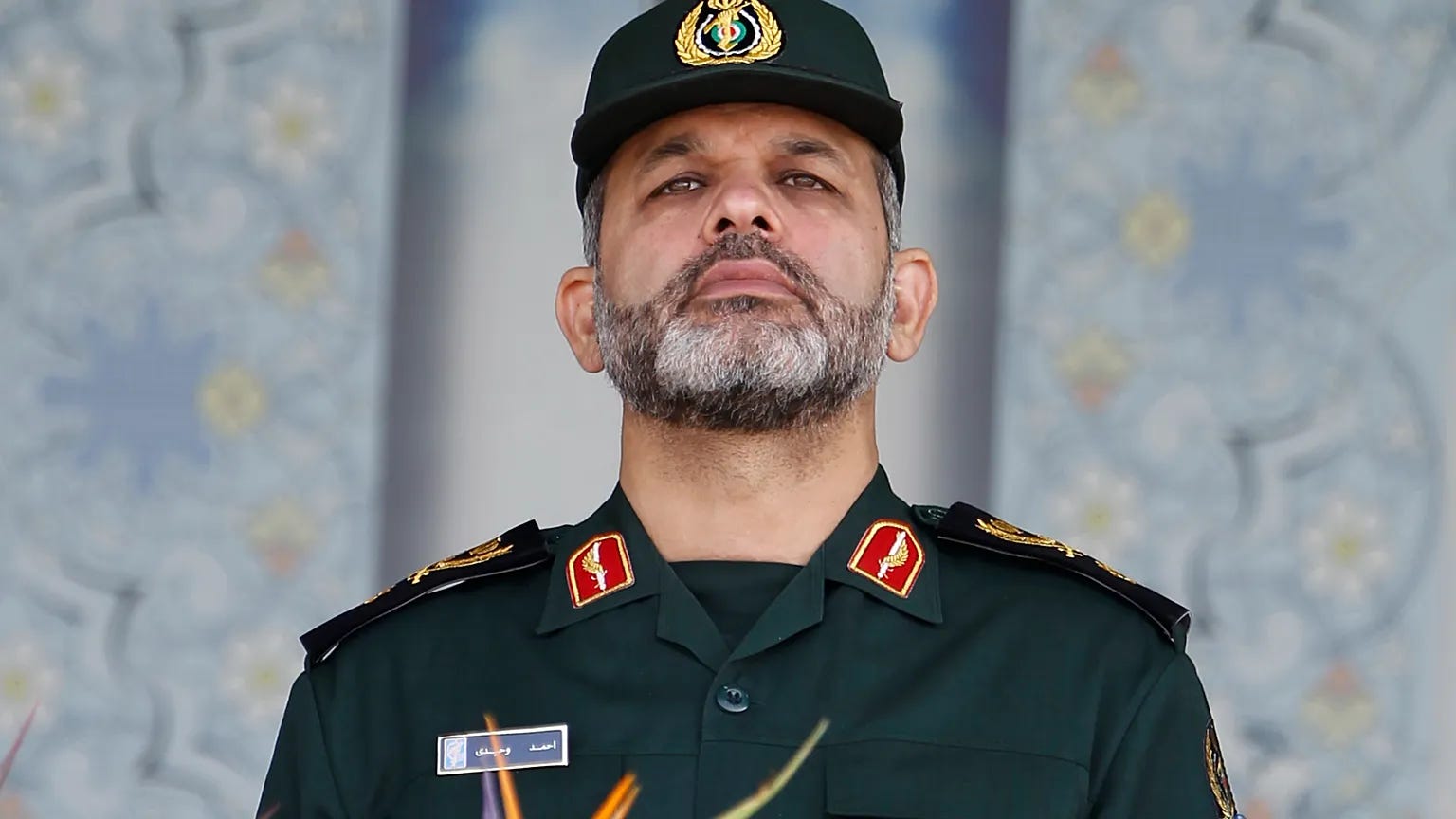
In Iran’s political landscape, public-facing figures often take center stage, while the real balance of power is managed behind the scenes. Names such as Mohammad Bagher Ghalibaf in negotiations, Mojtaba Khamenei within religious power circles, and Masoud Pezeshkian in the presidency recur in public discourse. Yet the true center of gravity lies elsewhere where Ahmad Vahidi stands as the holder of real power.
On March 1, 2026, Vahidi assumed command of the Islamic Revolutionary Guard Corps (IRGC) following the assassination of his predecessor, Mohammad Bagheri, in joint U.S.-Israeli strikes. His appointment came under intense pressure, reflecting the nature of the phase Iran is navigating, where leadership shifts under the weight of targeted attacks and decision-making centers are rapidly reengineered to match the tempo of confrontation.
Vahidi was no newcomer to this role. He has long been regarded as one of the principal architects of Iran’s extraterritorial presence and a deeply rooted figure within the IRGC’s structure. His decades-long involvement in the most sensitive files granted him a prominent position within the decision-making apparatus even before stepping into the spotlight.
The Son of Shiraz Who Chose the Rifle
Ahmad Vahidi was born in 1958 in Shiraz under the name “Vahid Shah Cheraghi,” in a city steeped in cultural heritage and regarded as a cornerstone of Persian identity. Within this geography of poetry and history, a personality took shape that gravitated early toward security and militarization reflecting the broader transformations Iran was undergoing at the time.
His youth coincided with the political upheavals of the 1970s, culminating in the 1979 Iranian Revolution, which marked the true beginning of his career. He joined the IRGC at its inception, becoming part of a generation that helped build the institution and define its early contours.
During the Iran-Iraq War, Vahidi accumulated early field experience and quickly became associated with intelligence and organizational work within the IRGC. In 1981, following Mohsen Rezaei’s appointment as commander, Vahidi became deputy head of the intelligence unit, contributing to its structure and the development of its operational tools, alongside helping establish training camps.
Parallel to his military career, Vahidi pursued academic studies, earning degrees in electronics and industrial engineering, and later a PhD in strategic studies from Imam Sadiq University. He eventually served as president of the National Defense University—a trajectory reflecting a comprehensive approach to warfare that integrates technical, planning, and strategic dimensions.
Over four decades, Vahidi moved through pivotal positions within the state structure, including leading the Quds Force in its formative phase, serving as deputy defense minister for planning and programs, minister of defense, a member of the Expediency Discernment Council, minister of interior under President Ebrahim Raisi, and later deputy commander-in-chief of the IRGC.
These transitions reflect a distinct pattern of power-building in Iran one rooted in long-term accumulation within the security establishment and sustained presence at decision-making junctions. Vahidi exemplifies a generation shaped by war and refined through intelligence and strategic work, resulting in an approach centered on safeguarding the regime’s structure and strengthening its tools against external pressures.
Even the alteration of his surname from “Shah Cheraghi” to “Vahidi” encapsulates this trajectory, signaling a more austere and focused identity. He is widely regarded as a hardline figure deeply embedded within the IRGC, driven by a firm belief in the role of force in protecting the revolution and managing a prolonged confrontation with external pressures.
The Man Who Forged Iran’s Real Weapon
The defining question of Iran’s trajectory over recent decades revolves around its ability to expand regional influence despite economic and military constraints. From Lebanon to Yemen, and from Iraq to Syria, this influence has been anchored in a single instrument: the Quds Force. The early architecture of this tool leads directly to Ahmad Vahidi.
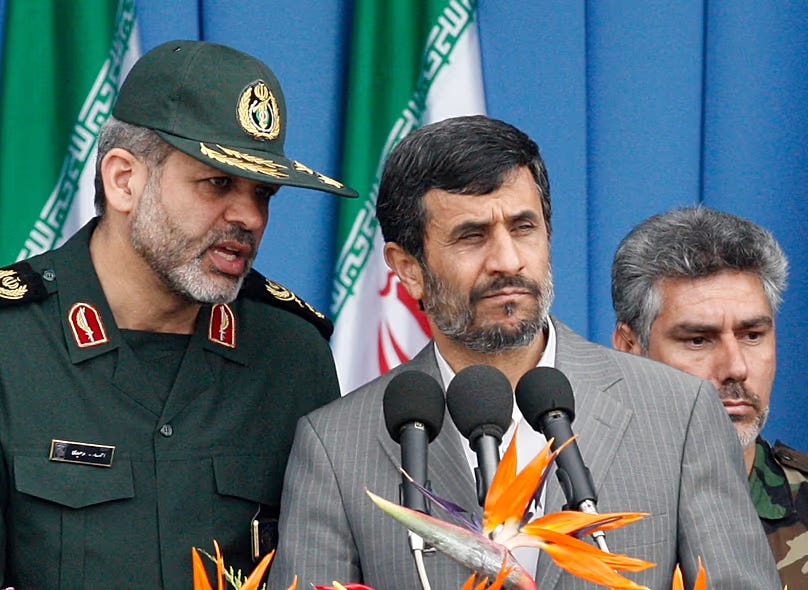
Established in 1988 as part of a restructuring of the IRGC after the Iran-Iraq War, the Quds Force was tasked with external operations. From its inception, Vahidi led the unit, transforming an emerging organizational structure into an apparatus guided by a clear doctrine, expansive networks, and integrated mechanisms combining intelligence and military operations.
Under his leadership, a model emerged based on managing conflict across multiple arenas through local actors tied to Tehran via organizational and ideological links. This approach allowed Iran to exert influence without direct military engagement, enabling the construction of a geographically and functionally distributed network.
Within this framework, the Quds Force became the primary support instrument for regional allies, including Hezbollah in Lebanon, Palestinian factions, the Houthi movement in Yemen, and armed networks in Iraq, Syria, and Afghanistan.
Its operations relied on training, expertise exchange, and capacity-building blending intelligence work with indirect warfare management.
Lebanon served as the model’s primary launching point following Israel’s 1982 invasion, where the Quds Force played a key role in organizing and developing Hezbollah into a comprehensive military, political, and social actor. The model was later adapted to other arenas, tailored to the specific dynamics of each environment.
In the 1990s, the force expanded eastward, supporting the Northern Alliance in Afghanistan against the Taliban and engaging with Kurdish forces in the context of conflict with Saddam Hussein’s regime. This expansion from West Asia to its eastern reaches demonstrated an ability to manage complex networks combining military support with political ties.
Vahidi’s leadership laid the groundwork later expanded by Qassem Soleimani, reflecting institutional continuity. The foundational rules of engagement were established during the formative phase before evolving into more complex forms in subsequent years.
In recent years, this system has faced mounting challenges, as Iran’s allies have come under increasing military and security pressure across multiple arenas, alongside political shifts affecting regional balances including developments in Syria and the fall of Bashar al-Assad’s regime in late 2024. These changes have raised questions about the network’s adaptability, particularly following the decline of the Quds Force’s role after Soleimani’s assassination.
In this context, Vahidi’s rise to lead the IRGC carries particular significance. As one of the chief architects of this structure, his presence at the helm signals the prominence of a security-operational approach and underscores Iran’s continued reliance on both direct and indirect tools in managing its regional conflicts.
An IRGC Commander Wanted Internationally
Ahmad Vahidi occupies a position that combines the apex of Iran’s security power with ongoing entanglement in international legal cases. His career from leading the Quds Force to serving as defense and interior minister, and ultimately heading the IRGC—has been accompanied by legal pursuits and multiple sanctions, making him one of the most controversial figures within Iran’s system.
The most prominent case relates to the 1994 AMIA bombing in Buenos Aires, which targeted a Jewish community center, killing 85 people and injuring hundreds. Argentine investigations linked the attack to a complex network of planning and support, placing Vahidi among those suspected of involvement in decision-making. In 2006, an arrest warrant was issued, followed by Interpol notices, with Argentina continuing to call for his detention.
The case remains open and resurfaced in 2024 when Argentina’s highest criminal court ruled that Iran and Hezbollah were responsible for the bombing, describing it as a politically and strategically motivated act. This ruling reaffirmed Vahidi’s position among those associated with the case, alongside other senior Iranian officials.
One of the most complex chapters of this case concerns the assassination of prosecutor Alberto Nisman, who was killed in 2015 after accusing Argentine officials of covering up Iran’s role. The incident cast a long shadow over the case, further intensifying controversy without reaching a definitive resolution.
Separately, Vahidi has been subject to multiple international sanctions. The European Union listed him in connection with sensitive nuclear activities, while the United States imposed sanctions related to his role in handling domestic protests, particularly those of 2022.
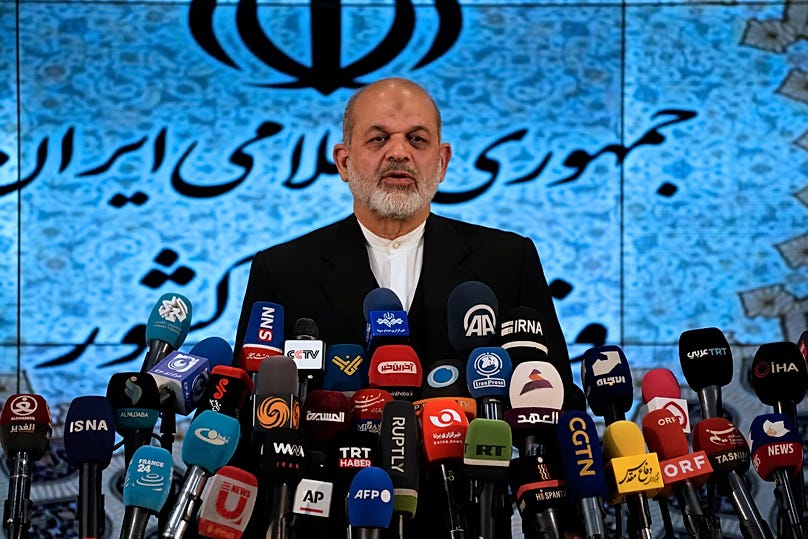
Despite this, he has maintained an uninterrupted presence within state institutions, benefiting from the legal and political dynamics governing Iran’s relationship with the international system. Restrictions have largely remained external, while domestically he has continued to rise to more influential positions.
His name has also been linked to episodes reflecting another dimension of his work, including involvement in covert contacts during the 1980s as part of the Iran-Contra affair, which saw undisclosed communication between Tehran and elements within Ronald Reagan’s administration revealing a pragmatic pattern that combines rigid political rhetoric with quiet backchannel dealings.
The Unseen Man of War
Three commanders have led the IRGC in less than a year amid unprecedented escalation. The assassination of two successive leaders paved the way for Ahmad Vahidi’s ascent to the top of the institution at one of its most sensitive moments since its founding.
On December 31, 2025, Supreme Leader Ali Khamenei appointed Vahidi as deputy commander-in-chief of the IRGC, succeeding Ali Fadavi, in a move reflecting efforts to reorganize leadership ahead of a potentially escalatory phase. He was tasked with enhancing military readiness amid expectations of direct confrontation with the United States and Israel.
Weeks later, war erupted on February 28, 2026, when a strike targeted a meeting of senior commanders, including Mohammad Bagheri, who was killed. Vahidi, absent from the meeting, assumed command immediately upon confirmation of the assassination a swift transition reflecting wartime institutional management.
His rise was not incidental but built on his prior role in preparing the institution for confrontation, his extensive intelligence background, and his role in founding the Quds Force positioning him to manage the intersection between military fronts and regional extensions.
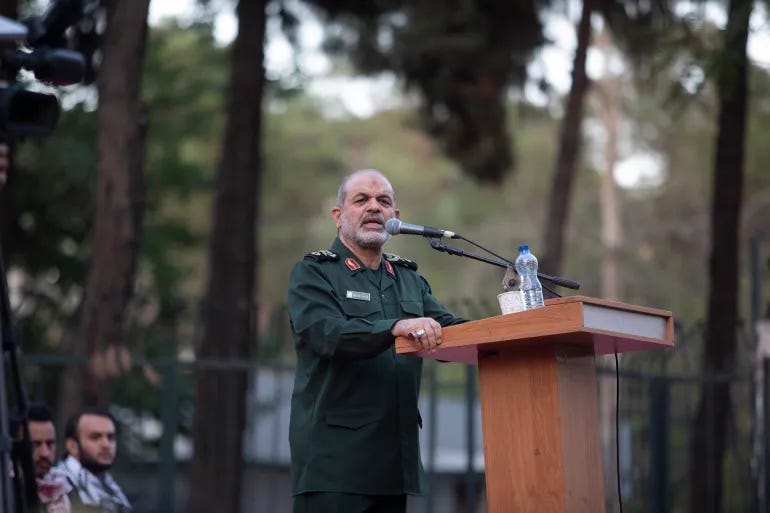
Within this broader power structure, decision-making increasingly centers on figures with IRGC backgrounds, including Mohammad Bagher Zolghadr, Mohammad Bagher Ghalibaf, and Mojtaba Khamenei, reflecting a distribution of roles across politics, religion, and security. Within this equation, Vahidi retains authority over the management and direction of force, with direct influence on military operations and escalation choices.
His public discourse reflects a vision of the IRGC as a central pillar of the state, capable of extending beyond military functions into broader governance. This helps explain the institution’s growing presence in decision-making, particularly during periods of conflict.
Ultimately, Vahidi emerges as a leader who operates away from the spotlight, shaping events from within the institution. His presence at the apex of Iran’s security hierarchy increasingly positions him as the arbiter of escalation and de-escalation signaling a shift toward a military-security approach as the dominant center of gravity within the Islamic Republic, where political decisions are tightly intertwined with their execution on the ground in a moment defined by war and the reshaping of regional power balances.
