

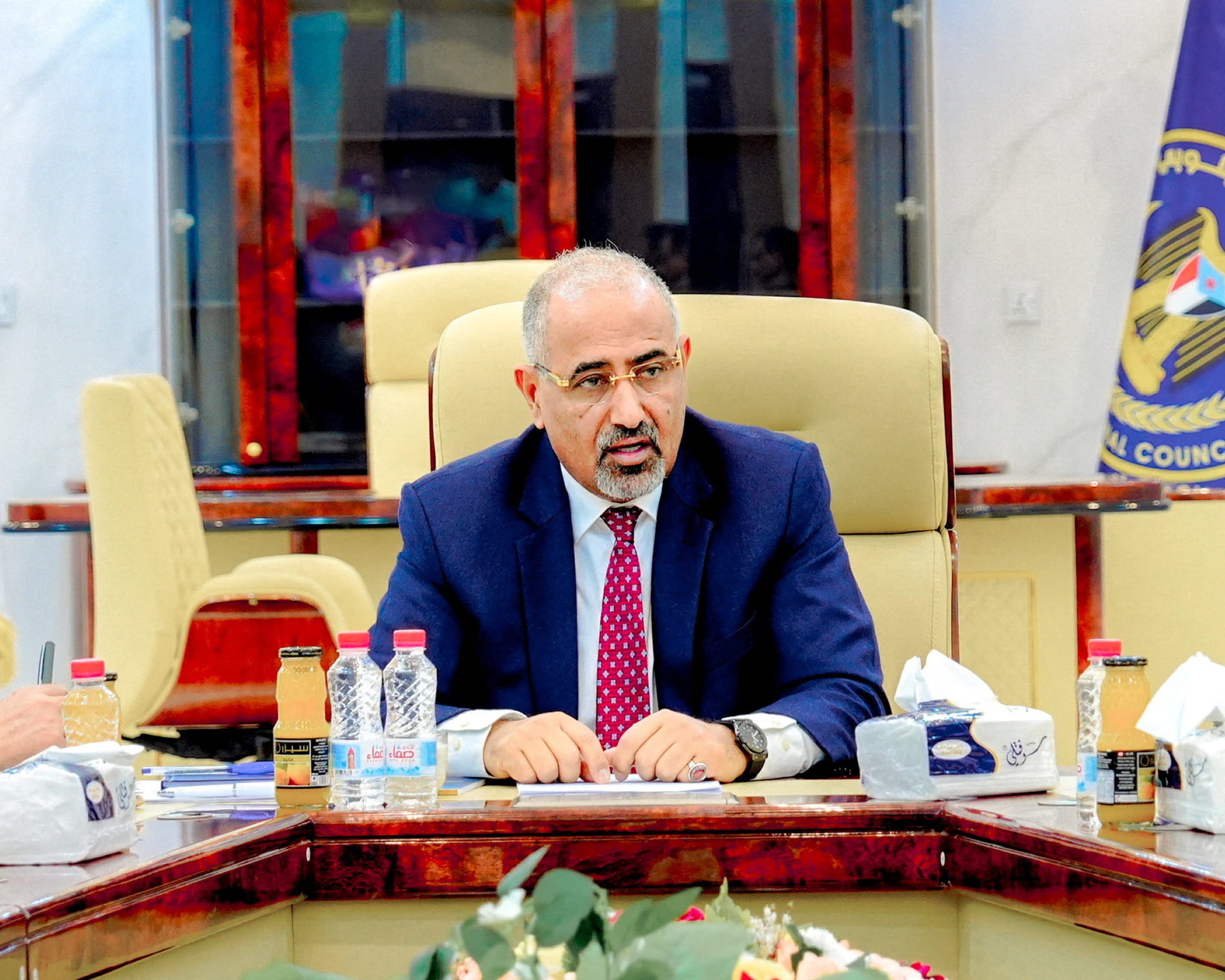
For years, Aidarous al-Zubaidi was the undisputed strongman of southern Yemen a former military officer turned rebel commander and then high-ranking government official. But his trajectory took a dramatic turn in early 2026. Once appointed as a vice president in the Presidential Leadership Council, al-Zubaidi now finds himself dismissed from office and facing charges of “high treason” following deep disputes with his fellow leaders.
These grave accusations emerged after al-Zubaidi led a military escalation aimed at fulfilling his long-held dream of re-establishing an independent South Yemen a political ambition he never abandoned, even while serving in an internationally recognized unity government.
As a result, the leader of the Southern Transitional Council (STC) became the target of an intense military and media campaign by his rivals within the Yemeni government and the Saudi-led coalition. While his opponents claim he fled to an undisclosed location, his supporters insist he remains in Aden.
Origins and Early Background
Aidarous Qassem al-Zubaidi was born in 1967 in Yemen’s southern province of al-Dhalea, during a time of political turbulence in the South.
He joined the military and graduated as an officer from the Air Force Academy in Aden in 1988. However, his early career was cut short by the 1994 civil war between North and South Yemen. He fought on the southern side, which was defeated by the forces of ousted President Ali Abdullah Saleh. Following the collapse of the southern secessionist project, al-Zubaidi fled to Djibouti.

In 1996, he returned to Yemen covertly and founded an armed movement called the “Self-Determination Right Movement,” which claimed responsibility for assassinations targeting northern military officials in support of southern independence. He was sentenced to death in absentia for armed rebellion, but President Saleh issued a general amnesty in 2000.
Over the following years, al-Zubaidi remained active as a southern opposition figure, albeit with limited impact. He reemerged in 2011 during the Arab Spring uprising, when his faction claimed responsibility for attacks on Yemeni army forces in al-Dhalea.
This militant background helped shape al-Zubaidi’s identity as a hardline leader unwavering in his demand for southern secession.
Governor of Aden and Enemy of the Houthis
The Houthi takeover of Sanaa in 2014 and their push into the South in 2015 marked a turning point in al-Zubaidi’s rise. As Yemeni government forces collapsed in the face of the Houthis, al-Zubaidi emerged as a leader of southern resistance forces, playing a key role in driving the group out of al-Dhalea and into Aden.
Due to his growing influence and prominent battlefield role, former President Abed Rabbo Mansour Hadi appointed him governor of Aden in December 2015. During his tenure, al-Zubaidi survived an assassination attempt claimed by ISIS, further solidifying his image among followers as a resilient field commander.
But the honeymoon between him and the Hadi government was short-lived. Tensions soon escalated between Hadi’s administration and southern factions demanding autonomy. These tensions culminated in al-Zubaidi’s dismissal as governor in April 2017.
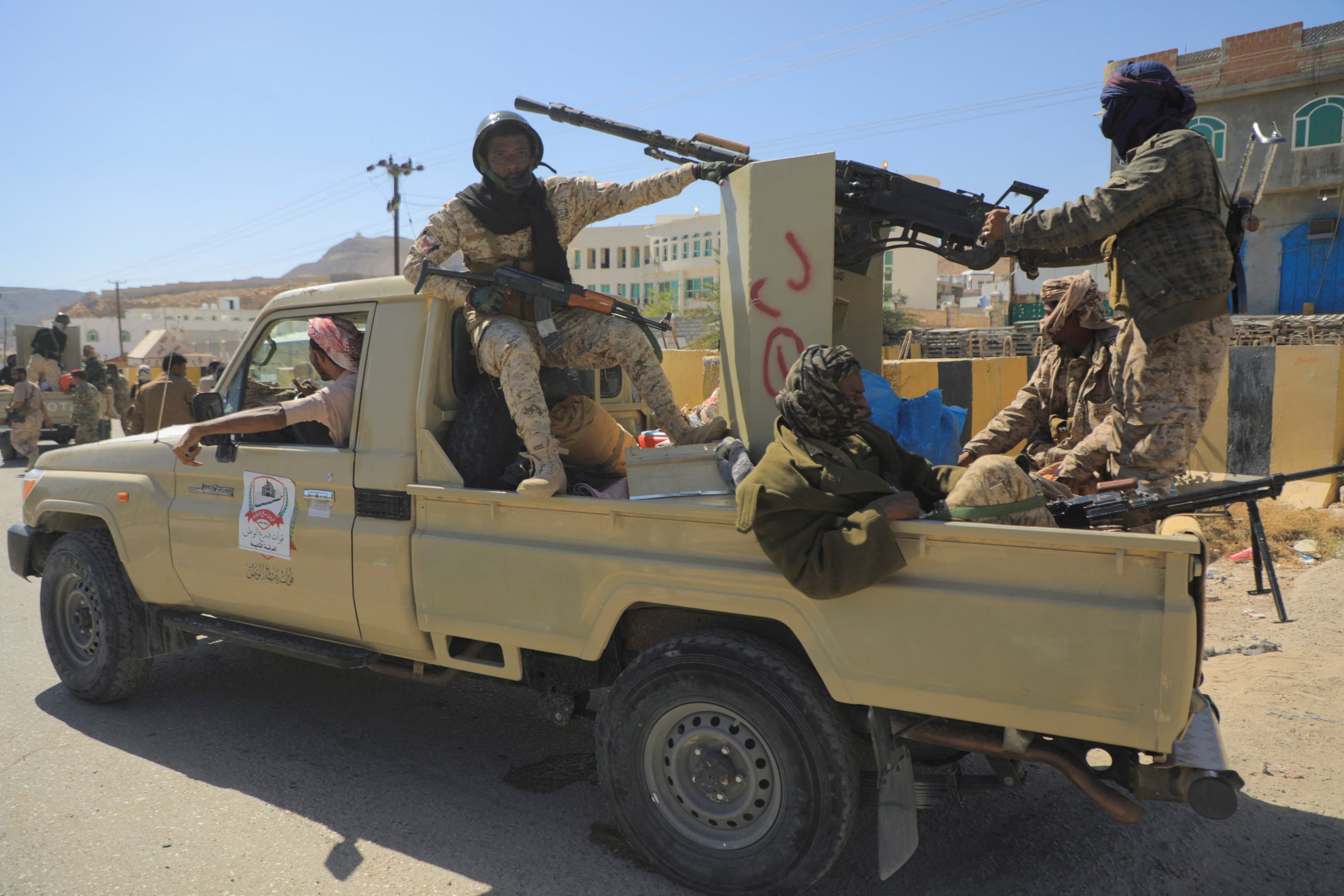
This ousting marked a turning point in his relationship with the central government, cementing his belief that independence could not be achieved through existing institutions, but rather through direct political and possibly military confrontation with the northern authorities.
Founding the STC and the Southern Power Struggle
Less than a month after his removal, al-Zubaidi announced the formation of the Southern Transitional Council (STC) in May 2017, positioning it as the legitimate political leadership of South Yemen and its cause.
From its inception, the STC enjoyed strong backing from the United Arab Emirates, then a key partner in the Saudi-led coalition in Yemen.
With Emirati support, al-Zubaidi quickly built a well-equipped southern military force that, within a few years, established control over large swaths of the South. Emirati involvement went beyond battlefield logistics—it also shaped al-Zubaidi’s political trajectory, including orchestrated foreign visits.
Between 2017 and 2019, the STC clashed repeatedly with pro-government forces. The conflict reached a peak in August 2019 when al-Zubaidi’s militias seized control of Aden after brief but fierce battles with Hadi-loyal forces.
This separatist move created a new internal front within the anti-Houthi camp and nearly triggered a southern civil war averted only by Saudi mediation.
Under Riyadh’s sponsorship, the Riyadh Agreement was signed in November 2019 between the Yemeni government and the STC. It outlined a power-sharing arrangement, including the integration of STC forces into state institutions in exchange for southern participation in a unity government.
But while the agreement raised hopes for de-escalation, implementation faltered. Violations were frequent, and the STC continued expanding its influence on the ground with Emirati support, amid mutual accusations of reneging on the deal.
From the Presidential Council to Open Confrontation
In April 2022, as part of a Saudi-led initiative to unify anti-Houthi ranks, al-Zubaidi was appointed Vice President of the newly formed Presidential Leadership Council, an eight-member body of Yemeni leaders.
Initially, al-Zubaidi sought to present himself as a statesman, participating in high-level political consultations and meeting with Western and regional diplomats in pursuit of a peace deal.
But behind the scenes, he remained committed to his strategic goal of restoring a southern state. He continued building loyal armed forces and strengthening regional alliances to support this vision.
As peace efforts stalled and the STC’s grip on southern territories deepened, fractures emerged within the Presidential Council. By late 2025, STC militias had seized vast areas of the oil-rich eastern provinces of Hadhramaut and al-Mahrah.
On January 2, 2026, al-Zubaidi made a bold move, unilaterally issuing a constitutional declaration launching a two-year “transitional phase” to be followed by a referendum on southern self-determination.
The Presidential Council deemed this a coup and outright rebellion. With a majority consensus, it dismissed al-Zubaidi, and Council President Rashad al-Alimi issued a decree referring him to the attorney general for prosecution on charges of “high treason” and leading an armed insurgency threatening state integrity.
The Saudi-led coalition also accused al-Zubaidi of forming illegal militias and distributing heavy weaponry in Aden to incite chaos. They announced he had fled after failing to respond to a summons to appear in Riyadh within 48 hours.
In response, the STC denied reports of his escape, insisting he remained in Aden and accusing Saudi Arabia of detaining its negotiating delegation and cutting off communication.
Thus collapsed the fragile alliance between al-Zubaidi and the Presidential Council, pushing southern Yemen into a dangerous new phase of open conflict amid renewed fears of internecine war within the pro-government camp.
Regional Tensions and Emirati Backing
Though al-Zubaidi was part of the Saudi-led coalition against the Houthis, his loyalty to Abu Dhabi placed him at the center of a growing rift between Saudi Arabia and the UAE one that erupted into the open by the end of 2025.
As STC forces swept across southern territories, reaching areas near the Saudi border, Riyadh accused Abu Dhabi of backing the offensive and allegedly facilitating al-Zubaidi’s escape from Yemen via boat to a third country, followed by a flight to the UAE.
Tensions reached a boiling point when Saudi warplanes bombed a shipment of Emirati armored vehicles at Mukalla port in Hadhramaut a stark warning against continued military support for the STC. In early 2026, the UAE announced a complete withdrawal of its remaining troops from Yemen.
These developments laid bare al-Zubaidi’s position at the heart of a geopolitical power struggle between two former Gulf allies: Saudi Arabia, which insists on preserving Yemen’s unity and securing its southern borders, and the UAE, which views the STC as a vehicle for extending its influence over southern Yemen and its strategic ports.
With Abu Dhabi effectively stepping back under Saudi pressure, al-Zubaidi lost his most significant regional patron, leaving him increasingly isolated against the broader pro-unity coalition.
Secessionist Rhetoric and Allegations of Foreign Subservience
Al-Zubaidi’s political rhetoric has always been forthright in advocating for southern secession even while holding office within a unity government.
He has consistently stated that his ultimate goal is to restore the former People’s Democratic Republic of Yemen, which merged with the North in 1990.
He envisions a new “State of South Arabia” based on a federal model granting wide autonomy to its regions.
He has declared the Yemeni peace process a failure and called for a two-state solution separating the North and South.
He has even expressed openness to the future southern state joining the Abraham Accords and normalizing ties with Israel.
Critics of the STC view al-Zubaidi as a tool of Emirati influence, promoting Abu Dhabi’s interests in South Yemen at the expense of national sovereignty. These claims were reinforced by reports detailing the extent of Emirati funding, arming, and training of his forces.
The STC’s affiliated forces, including the Security Belt and Elite units, have been accused of human rights abuses in the areas under their control. International organizations have documented cases of secret prisons, suppression of dissent, and targeting of activists and journalists, as well as harassment of civil society groups.
With the latest confrontation spiraling, al-Zubaidi now faces a fateful reckoning: pursued by Saudi Arabia and the Yemeni government, his once-ambitious political project may end in exile, trial for treason or even targeted assassination.