

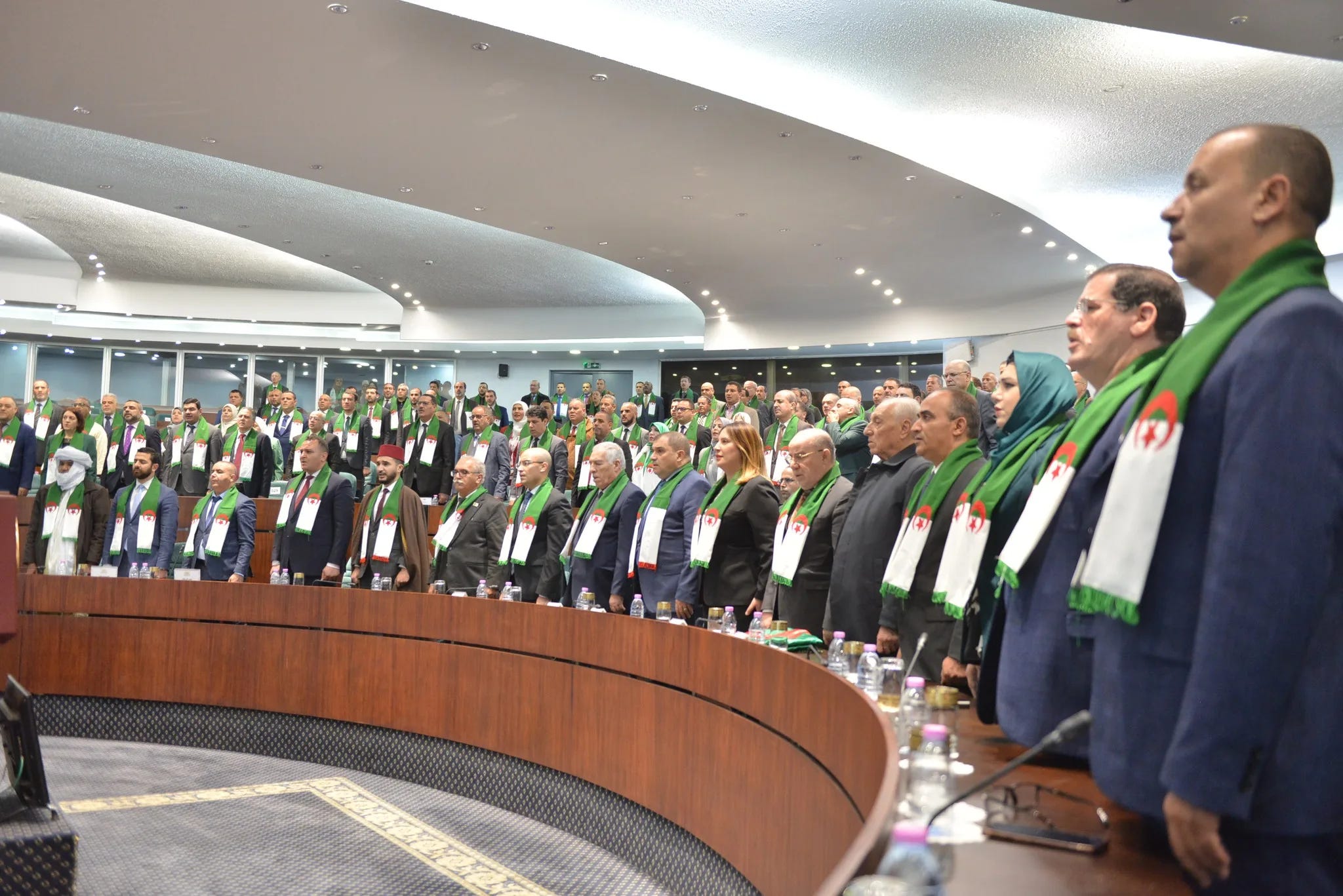
In what was described as a historic session, Algeria’s National People’s Assembly the lower house of parliament voted unanimously to pass a law criminalizing French colonialism, which lasted for more than 130 years between 1830 and 1962. The legislation designates it as a “state crime.”
In late December 2025, lawmakers stood wearing scarves in the colors of the Algerian flag, chanting “Long live Algeria” as the law was passed. The legislation holds France legally accountable for its colonial past and demands a formal apology and reparations for the era of occupation.
The bill is set to be referred to the Council of the Nation, the upper house of parliament, for approval before being published in the official gazette and formally entering into force. But what are its key provisions, why was it passed now, and what are its implications for bilateral relations?
Key Provisions of the New Law
The law provides a comprehensive framework for criminalizing the French colonial period in Algeria, outlining 27 categories of crimes committed during that time. Chief among them are:
Nuclear testing in the Algerian desert
Civilian killings and extrajudicial executions
Systematic physical and psychological torture
Forced displacement
Compulsory military conscription
Expropriation of property
Denial of access to education
Desecration of religious sites
Organized plunder of natural resources and wealth
The law affirms that full and fair compensation for both material and moral damages inflicted by colonialism is an inalienable right of the Algerian people and state. In addition, it obliges France to:
Decontaminate the sites of its nuclear tests conducted in the 1960s in the Algerian Sahara and hand over maps of radiation-affected areas
Return Algeria’s national archives along with all looted property and human remains taken during the colonial period
Issue a formal apology and pay reparations for crimes committed during colonization
On the punitive level, the legislation criminalizes any glorification, justification, or promotion of French colonialism whether through actions, writings, or audiovisual media considering it an affront to national memory. Those found guilty face:
Prison sentences ranging from 5 to 10 years
A fine of one million Algerian dinars (approximately $7,700)
Loss of civil and political rights
Why Now?
The passage of this law comes amid increasingly strained Algerian-French relations, which have deteriorated over the past two years.
1. The Western Sahara Dispute
Tensions peaked in July 2024, when France recognized Morocco’s plan to grant limited autonomy to Western Sahara under Moroccan sovereignty.
The move shocked Algeria, which staunchly supports the Sahrawi people’s right to self-determination and hosts the leadership of the Polisario Front, which seeks independence for the territory.
Algeria saw France’s stance as a clear alignment with Morocco, leading to a sharp diplomatic rift between Algiers and Paris.
2. Colonial Memory
The new law also arises from a broader historical context surrounding the memory of colonialism. This isn’t the first time Algeria has attempted to criminalize it.
The first such initiative dates back to 1984, with several later attempts also falling short before reaching the voting stage.
Notably, a similar effort was made in the early 2000s and again in 2007, as a response to a 2005 French law that praised aspects of colonization.
Another proposal emerged in 2011, and a draft law was submitted by a group of lawmakers in 2021, but it was not adopted by parliament or the government at the time.
Previous failures are largely attributed to political and diplomatic concerns. Successive presidents, particularly Abdelaziz Bouteflika, sought to avoid direct confrontation with Paris, prioritizing economic and security cooperation or holding out hope for an apology through dialogue rather than legislation.
That status quo shifted after 2019. The mass protest movement that ended Bouteflika’s rule ushered in a new political class less inclined to “appease” France and more aligned with public sentiment calling for national dignity.
Additionally, the recent decline of France’s economic influence in Algeria due to diversification of partnerships with other global powers has emboldened Algiers to revisit contentious historical issues.
Impact on Bilateral Relations
The new law has deepened an already fraught relationship between Algeria and France. Paris was quick to officially condemn the move, with the French Foreign Ministry labeling it a “clearly hostile initiative” that undermines efforts to revive bilateral dialogue.
In a statement, the ministry argued that the law obstructs attempts at a calm reconciliation over historical memory and reiterated France’s commitment to pursuing “serious dialogue” with Algeria on shared priorities such as security and migration.
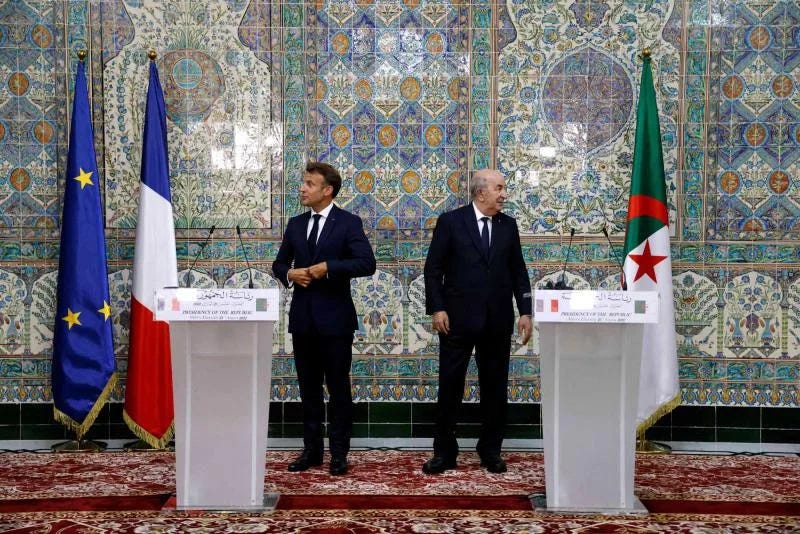
French President Emmanuel Macron has previously tried to contain the deterioration in ties, urging a “measured relationship” between the two nations built on acknowledging past mistakes.
In remarks last month, Macron warned that actors on both sides were using history as a tool for political posturing, cautioning that if “extremists on either side” set the agenda, meaningful progress would be impossible.
Despite such appeals for calm, Algeria holds France responsible for the recent escalation. The Algerian Foreign Ministry accused Paris of choosing “threats and diktats” over dialogue, declaring its categorical rejection of any “pressure or blackmail” from the French side.
The law also comes amid a series of tit-for-tat measures that have widened the diplomatic rift:
France has signaled its intention to review bilateral agreements. In October 2025, its parliament passed—by a single vote—a resolution condemning the 1968 agreement that granted Algerians special residency and employment rights in France.
This move, led by the far-right National Rally party of Marine Le Pen, was hailed as a “historic victory,” reflecting how France’s right-wing factions are leveraging tensions with Algeria to push for tougher immigration policies.In response, Algeria revoked a visa exemption for French diplomats and imposed new entry requirements. It also ended special privileges previously granted to the French embassy in Algiers.
Domestic Reactions and Political Ramifications
Domestically, the law was met with widespread official and popular approval, hailed as a triumph for national memory and a tribute to the blood of the martyrs. The parliamentary vote was described as a “historic” moment that ended decades of debate over the legislation.
On social media, many Algerians expressed joy and pride. One commenter wrote, “This law targets France’s dark past, not the French people. We only seek justice for our martyrs.” Others declared that “history spoke today in the parliament” and that Algeria would “never abandon its memory.”
There have also been calls to continue the battle on the cultural front by breaking remaining ties to France’s colonial legacy. Some noted that “the greatest colonial crime was marginalizing the Arabic language” in favor of French.
The Algerian government emphasized that the law is not an act of vengeance or hatred but an effort to cement historical truth and honor the victims. Lawmakers and former resistance fighters described the legislation as a symbolically and institutionally important step for Algerians.
It provides a legal framework to protect national memory from distortion and sends a message of reassurance to the independence generation and the families of martyrs: that their sacrifices will not be forgotten but defended through binding statutes.
Nevertheless, the law raises questions about its practical implementation within Algeria. Some fear that its punitive provisions could pose challenges to freedom of expression if misused against dissenting voices under the pretext of “offending national memory.”
Supporters, however, insist that France is the real target, citing ongoing attempts by some in France to portray colonialism as having had “positive aspects.”