

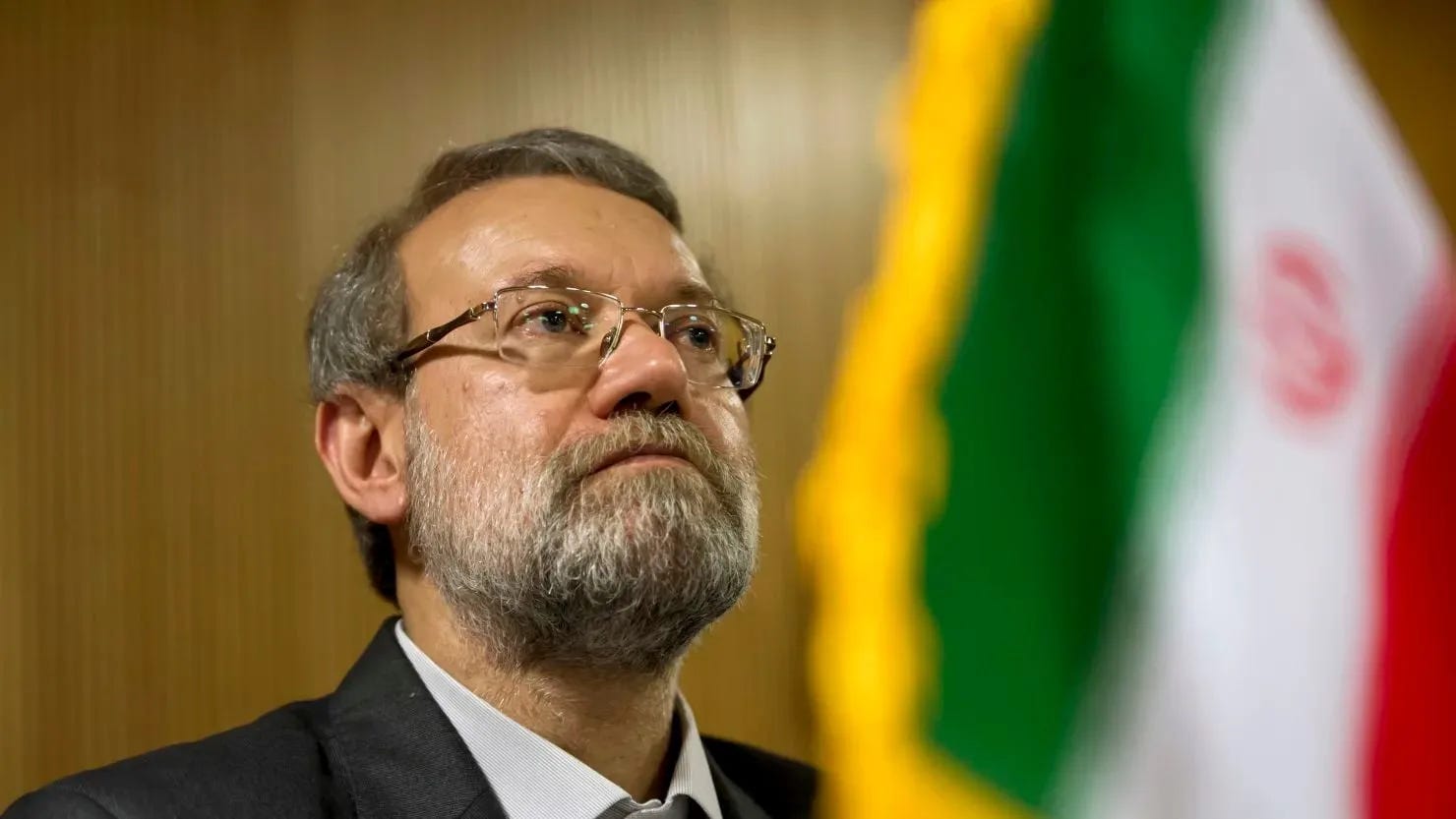
The first voice Iranians heard after the official announcement of the assassination of several Iranian leaders in the joint U.S.-Israeli strike foremost among them Supreme Leader Ali Khamenei was that of Ali Larijani, secretary of Iran’s Supreme National Security Council.
Appearing on state television in a televised address, he vowed that the United States and Israel would face “a lesson they will never forget,” at a moment when Tehran seemed to be confronting the gravest test to the continuity of its system in decades.
The appearance amounted to an implicit declaration that the center of gravity within Iran’s decision-making structure had shifted. As the leadership pyramid trembled, Larijani emerged as the most visible and influential figure on the Iranian stage drawing on a long career that combines philosophical training, executive experience, parliamentary leadership, and stewardship of complex security and strategic portfolios.
Days before the assassination, The New York Times reported, citing six informed sources, that Khamenei had entrusted Larijani with the task of “protecting the Islamic Republic” in the event of harm befalling him. The move was part of contingency planning to confront a potential “decapitation” scenario, ensuring the continuity of the leadership chain and the cohesion of state institutions.
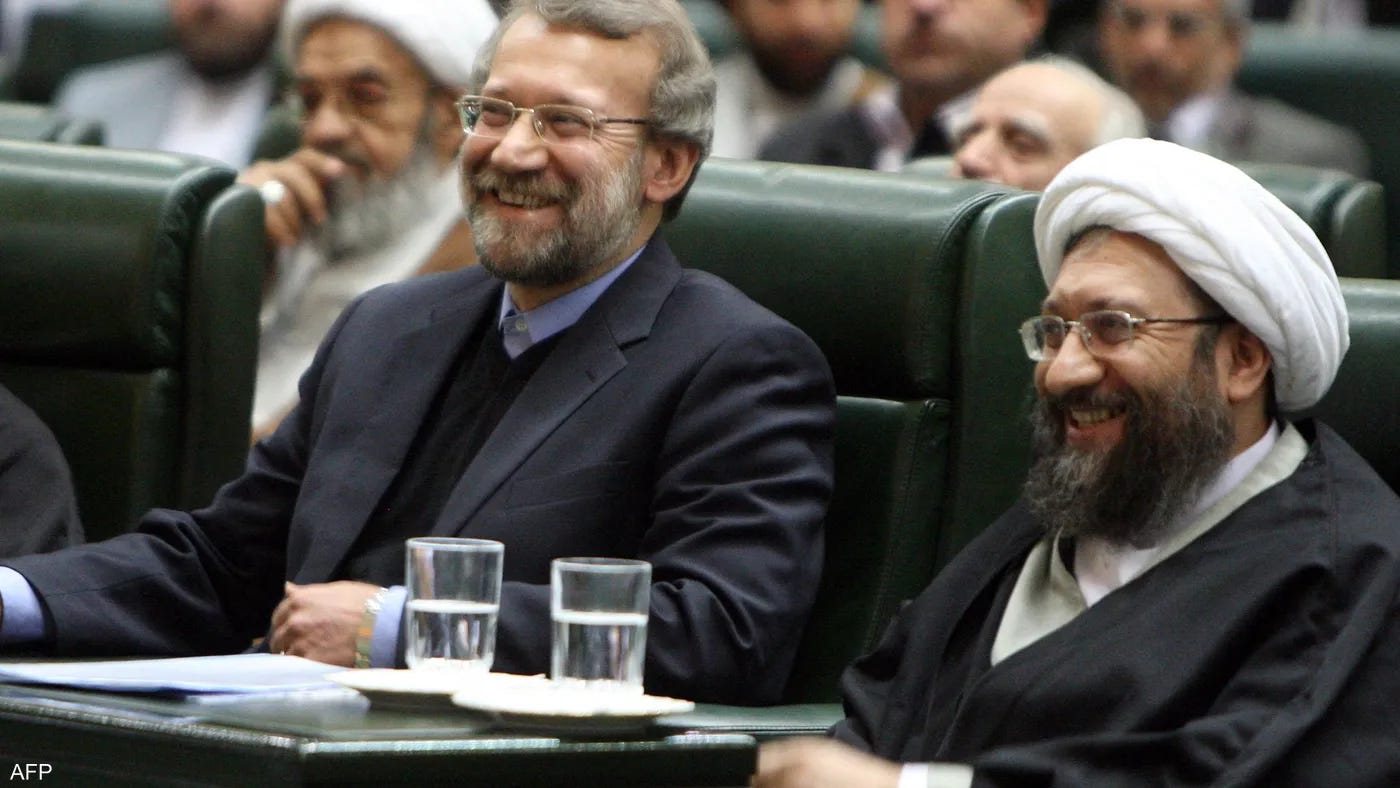
According to the report, Larijani’s mandate extended beyond administering power under exceptional circumstances. It included safeguarding what Tehran considers the “achievements of the revolution” since 1979 and coordinating with strategic allies to prevent the system from sliding into existential disarray.
Yet Larijani cannot be described as a conventional hardliner from the ranks of the Revolutionary Guard’s political class. He is better understood as a pragmatic conservative, adept at operating within the system’s architecture without being captive to confrontational rhetoric.
He presents more as a statesman than as an aggressive military commander positioning him as a plausible steward of a delicate transitional phase, blending firmness in protecting the regime with flexibility in keeping political horizons open to de-escalation or strategic repositioning.
An Early Presence in the Revolutionary Climate
Ali Ardeshir Larijani was born on June 3, 1958, in the Iraqi city of Najaf, to a prominent clerical family originally from Larijan in Iran’s Mazandaran province. His father, Ayatollah Mirza Hashem Amoli, was a well-known seminary scholar. Under pressure exerted by the regime of Shah Mohammad Reza Pahlavi on clerics, the family left the holy city of Qom and briefly settled in Najaf.
The family lived in Iraq until 1961, before returning to Iran while Larijani was still young, amid a volatile regional and political climate. He completed his schooling in Qom and, in 1975, enrolled at Aryamehr University of Technology now Sharif University of Technology where he studied computer science.
He later moved to University of Tehran to pursue graduate studies in Western philosophy, earning a doctorate and eventually joining its faculty.
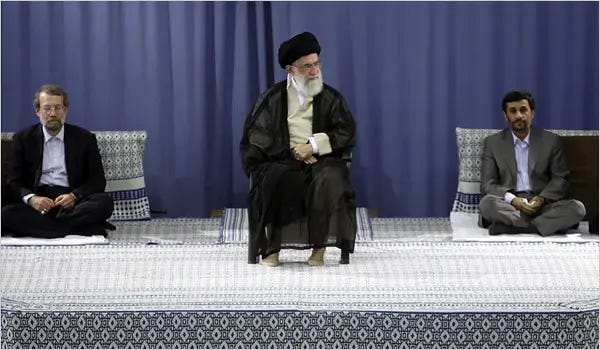
Larijani developed an early interest in philosophy and political thought, profoundly influenced by Immanuel Kant. This influence is evident in his writings on topics such as mathematics in Kant’s philosophy, metaphysics and the exact sciences, and synthetic propositions, alongside other works on statecraft and political thought.
He has also authored more than fifteen scholarly articles. This intellectual grounding later shaped his management style in sensitive portfolios most notably the nuclear file where he has displayed a preference for methodical approaches and precise calculations.
Though relatively removed from direct political activism during his student years, Larijani’s familial ties to the revolution deepened in 1977 when he married Farideh Motahhari, daughter of the influential cleric and thinker Morteza Motahhari, one of the leading theoreticians of the Iranian Revolution and a close associate of Ayatollah Ruhollah Khomeini. The couple has four children: Sara, Fatemeh, Morteza, and Mohammad.
The Larijani family occupies a prominent position within Iran’s political and religious establishment. His brother Sadeq Larijani previously headed the judiciary; Mohammad Javad Larijani serves as secretary-general of the Human Rights Committee; Bagher Larijani has held senior academic roles in the medical field; and Fazel Larijani worked in the Foreign Ministry.
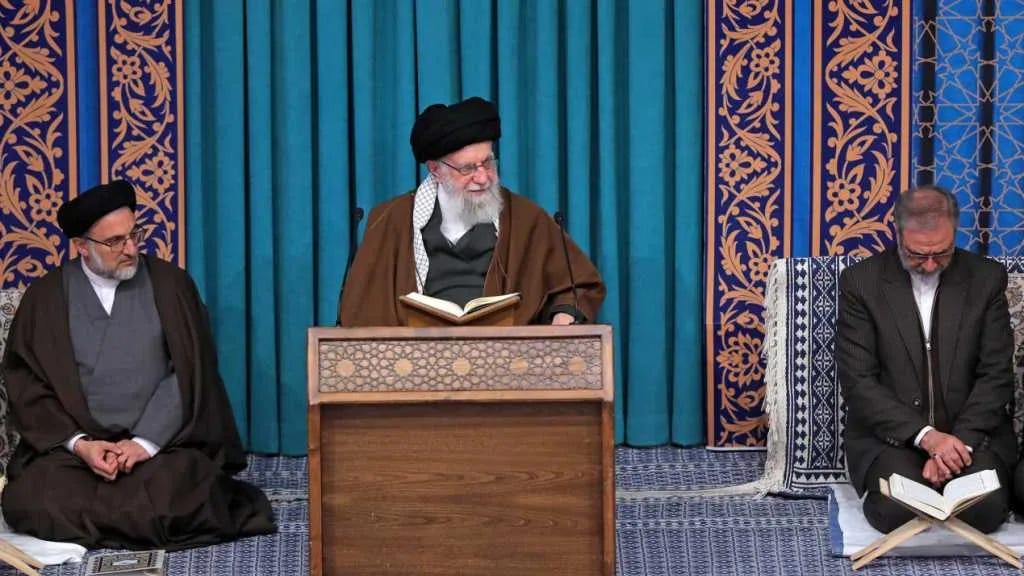
The family is also linked by marriage to influential political figures, including MP Ahmad Tavakoli. This network has anchored Ali Larijani firmly within the institutional power structure of the Islamic Republic, reinforcing his standing through an extended religious and political legacy and a long record in civilian and security posts.
In January of last year, the family name resurfaced internationally when one of his daughters was dismissed from a medical faculty position at Emory University following protests by Iranian American activists criticizing her father’s role in addressing protests inside Iran. The episode underscored how the family’s profile has become entangled in transnational debates over the regime’s image and policies.
A Consistent Official Presence Across Eras
After the revolution’s victory, Larijani joined the Islamic Revolutionary Guard Corps in 1982, at a time when the Islamic Republic was reshaping its security and military architecture. Following the end of the Iran-Iraq War, he rose to the rank of brigadier general and served as deputy chief of the IRGC’s Joint Staff until 1992, securing a senior position within the military establishment during a period of recalibrating power centers.
He later moved through a series of executive and administrative posts, transitioning from the Ministry of the Revolutionary Guard into broader state institutions before entering the official media sphere. Under President Akbar Hashemi Rafsanjani, he was appointed minister of culture and Islamic guidance, succeeding Mohammad Khatami.
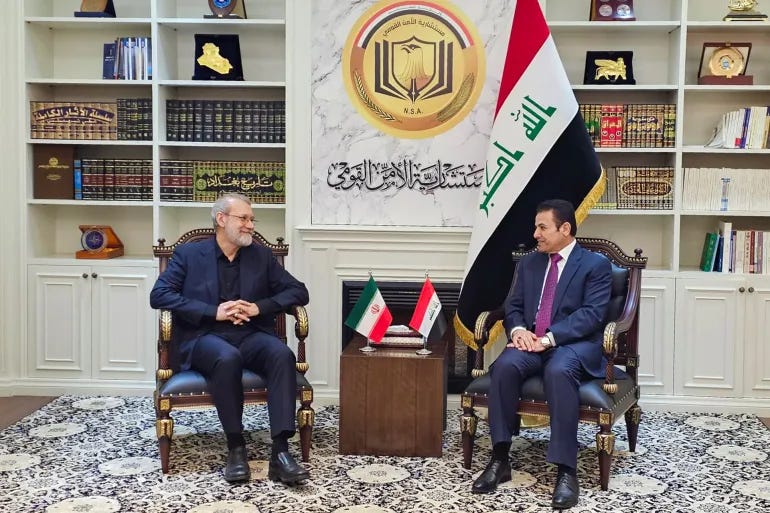
Soon after, Supreme Leader Khamenei appointed him head of the Islamic Republic of Iran Broadcasting (IRIB), the country’s powerful state media conglomerate.
He remained in that position until 2004, becoming one of the longest-serving heads of the organization, during a period marked by recalibrating official discourse and expanding domestic influence.
In August 2005, he was appointed secretary of the Supreme National Security Council, the body coordinating between political and military institutions on strategic matters. His tenure was short-lived, however. He resigned in October 2007 amid disagreements with then-President Mahmoud Ahmadinejad over management of the nuclear file an early sign of internal divergences over negotiation strategies and approaches to confrontation.
In 2008, Larijani entered parliament representing Qom and, in June of that year, was elected speaker of the Islamic Consultative Assembly, a position he held until March 2019 after winning two additional terms making him the longest-serving speaker in the parliament’s history. During that period, his brother Sadeq was serving as judiciary chief, an unprecedented reflection of the family’s institutional influence.
As speaker, Larijani projected a firm institutional persona. He challenged the Ahmadinejad government, summoned ministers for questioning, and presided over the first-ever parliamentary interrogation of a president in the Islamic Republic. He was outspoken in criticizing budgetary and foreign policy irregularities.
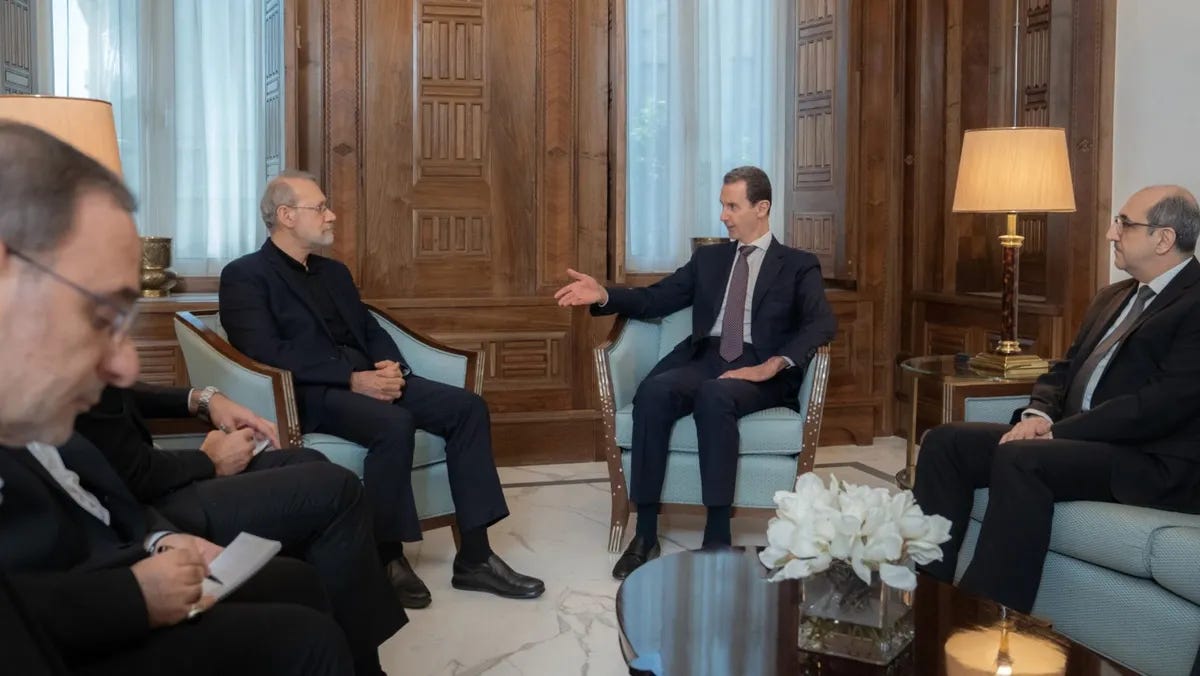
Under President Hassan Rouhani, Larijani publicly supported the nuclear agreement known as the Joint Comprehensive Plan of Action (JCPOA). He oversaw its parliamentary debate and managed the October 2015 vote in a swift and direct manner a move widely interpreted as an effort to prevent the deal from devolving into an arena of internal conflict.
The decision cost him support among segments of the conservative camp, yet he retained his position and continued advocating for a more assertive parliamentary role in foreign policy, seeking to give the legislature a voice in strategic matters traditionally monopolized by senior security circles.
Before his parliamentary tenure, he had already led nuclear negotiations with the P5+1 during his first term at the Supreme National Security Council (2005–2007), after the file moved from the International Atomic Energy Agency to the UN Security Council.
His approach emphasized internal consensus-building, privileging diplomacy, and framing Iran’s nuclear energy program in strategic terms. He held extended talks with EU coordinator Javier Solana and helped craft technical responses to IAEA inquiries. No agreement was reached during his tenure, and the file later passed to a new team led by Saeed Jalili.
Even after his resignation, Larijani remained a member of the Supreme National Security Council as the Supreme Leader’s representative, and later by virtue of his role as parliament speaker ensuring his continued presence at the core of strategic decision-making.
Adviser to the Supreme Leader and a Disqualified Presidential Contender
After leaving the speakership in 2020, Larijani was appointed adviser to Supreme Leader Khamenei and became a member of the Expediency Discernment Council, a body that arbitrates between state institutions and serves as a key node in strategic policymaking.
Yet his institutional stature did not translate into electoral opportunity. He sought to run in the 2021 presidential election, but the Guardian Council disqualified him without publicly providing reasons a decision that sparked wide debate over the boundaries of political competition within the system and whether his exclusion reflected factional balances more than legal considerations.
His name resurfaced prominently in June 2024, when he registered for the early presidential election announced after President Ebrahim Raisi died in a helicopter crash in East Azerbaijan province. The Guardian Council again barred him from the candidate list, in a move Larijani described as “non-transparent,” deepening the impression that he faces a political veto within certain power circles.
Nevertheless, he did not disappear from the scene. He intensified his involvement in sensitive foreign and security files, delivering a message from the Supreme Leader to Russian President Vladimir Putin during a visit to Moscow, and appearing on official television during the escalation with Israel in the summer of 2025 signals that his role extended beyond formal advisory boundaries.
Reports also suggested he made an undeclared visit to Syria ahead of the military operations that culminated in the fall of President Bashar al-Assad, allegedly carrying a direct message from Khamenei. These moves, alongside the election of President Masoud Pezeshkian in the summer of 2024, revived speculation that Larijani could assume a senior executive or security post.
Safety Valve and De Facto Ruler in the Most Perilous Phase
As confrontation between Tehran and Tel Aviv intensified peaking in the 12-day war in June Larijani reemerged as the figure summoned in moments of acute crisis. On August 5, he was reappointed secretary of the Supreme National Security Council, in a move widely read as part of a broader reconfiguration of the decision-making hierarchy at what many describe as the most dangerous juncture since the republic’s founding.
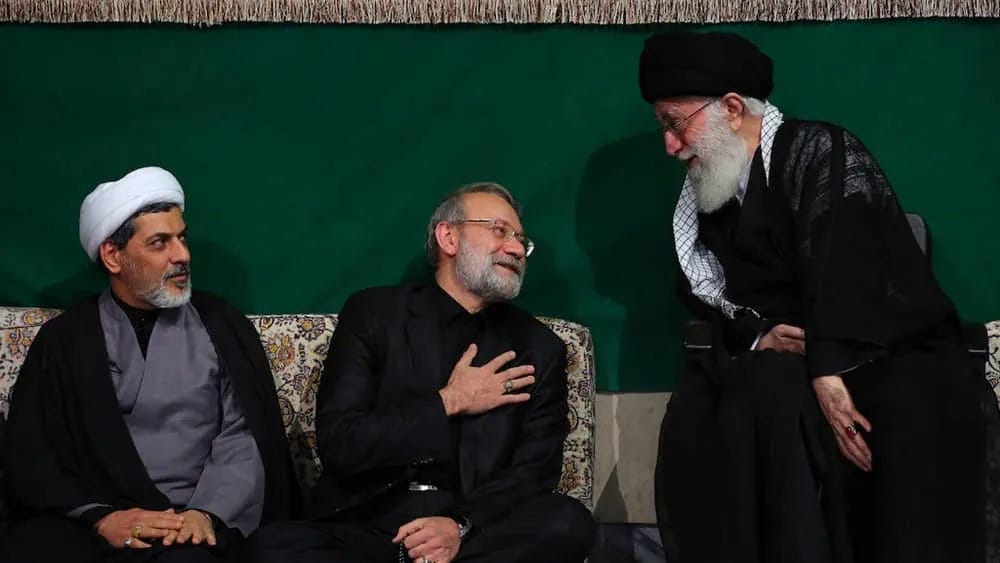
By early 2025, amid escalating U.S. threats and mounting military tensions with Israel, Iran had entered what could be termed an “existential risk” phase. Khamenei turned to Larijani, whose presence appears integral to broader contingency arrangements to ensure regime continuity in the event of harm to the Supreme Leader or a slide into all-out confrontation.
According to reports in The New York Times and Le Figaro, Larijani is now viewed as Iran’s “de facto ruler” a characterization reinforced by indications that sensitive domestic and foreign decisions increasingly pass through him. Some assessments suggest that even President Masoud Pezeshkian has been compelled to coordinate with him on indirect communication channels with Washington, signaling a shift in the center of gravity from the presidency to the Supreme National Security Council.
In a more sensitive development, reports pointed to Larijani’s pivotal role in thwarting a political initiative led by former President Hassan Rouhani and his former foreign minister Mohammad Javad Zarif in January 2026, aimed at restructuring decision-making mechanisms to shield the country from war.
According to those accounts, Larijani contained the effort and imposed measures that curtailed its effectiveness, bolstering his image as the final guardian of systemic cohesion in its most turbulent days.
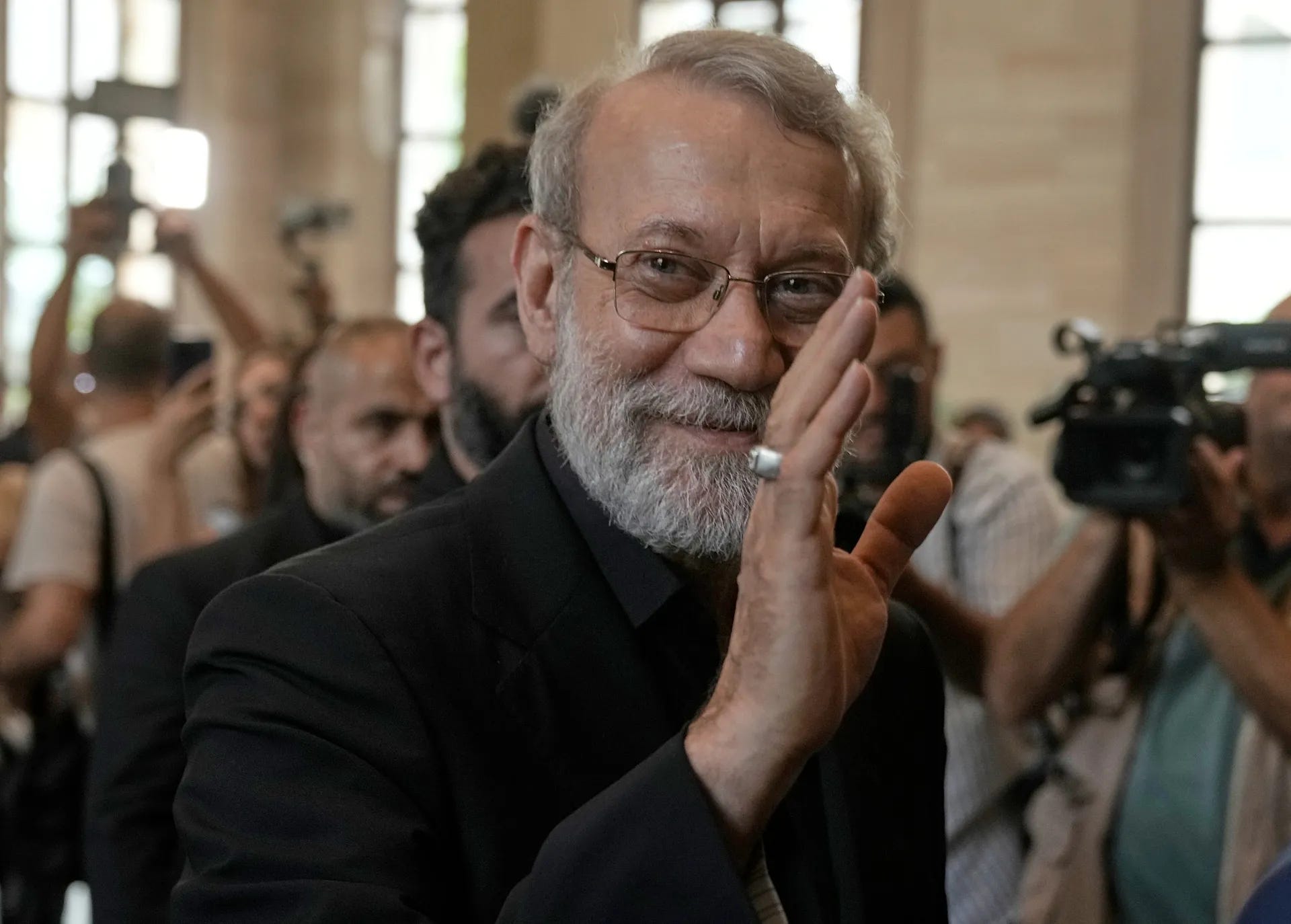
Today, within Iran, Larijani is cast as the “strategic savior” striving to preserve the state amid a U.S.-Israeli storm aimed at regime change in Tehran. This wager rests on the centrality of his institutional position, his extended ties to Moscow and Beijing, and his efforts to keep mediation channels open via Muscat and Doha in search of a ceasefire formula that would spare the country collapse while preserving regime cohesion.
Concurrently, he is expected to play a pivotal role within the Assembly of Experts in selecting a new Supreme Leader ensuring a delicate balance between the influence of the Revolutionary Guard and the religious seminary establishment. Some analyses even suggest the possibility of advancing a more symbolic Supreme Leader, enabling a more technocratic security-executive management structure amid a highly sensitive domestic equation and mounting popular challenges.
In this unfolding tableau, Larijani represents the nexus among the institutions that guarantee regime cohesion the bridge between military and clerical establishments, between domestic and foreign arenas, between the logic of steadfastness and that of strategic repositioning.
In a moment of vacuum, he has transformed from an influential power broker behind the scenes into the primary actor holding the reins of the transitional phase, pending the emergence of a new formula for authority.
