


The case of convicted American sex trafficker Jeffrey Epstein is no longer confined to Western princes, presidents, and power brokers. With the declassification of thousands of new documents in early 2026, the trajectory of the scandal has shifted dramatically, striking deep into the Middle East.
This report examines how Arab capitals, once stations of diplomatic hospitality, became arenas for questionable exchanges of interest, violations of the sacred, and the downfall of major economic figures. It traces the extent of Arab involvement in communications with Epstein.
The Fall of the “Sultan” of Ports
The documents suggest that Epstein’s relationship with the region was far from incidental. He had embedded himself in the arteries of the global economy through influential figures. The most explosive development in this chapter was the stunning fall of one of Dubai’s most prominent businessmen.
On February 13, 2026, the Dubai government abruptly announced the resignation of Sultan Ahmed bin Sulayem as chairman and chief executive of DP World, just hours after members of the U.S. Congress such as Thomas Massie and Ro Khanna revealed his ties to Epstein.
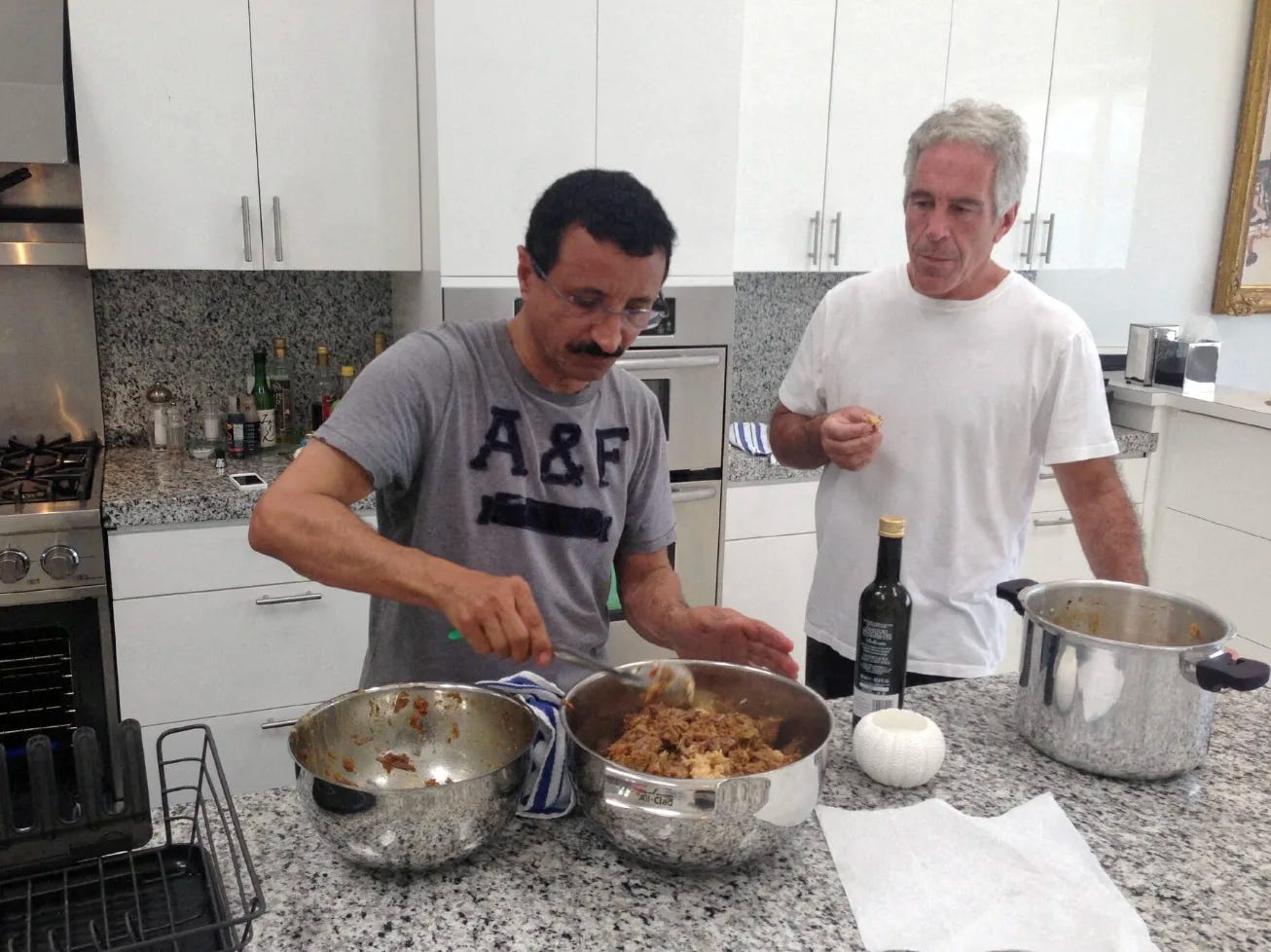
Unredacted files showed that bin Sulayem’s name appeared more than 4,700 times in the Epstein records, surpassing many high-profile Western figures.
The “Torture Video” Scandal: In one of the most alarming messages, Epstein emailed bin Sulayem stating bluntly, “I loved the torture video,” raising disturbing questions about the nature of the material exchanged between the two men.
Explicit Sexual Correspondence: In 2015, bin Sulayem wrote to Epstein describing an encounter with a woman studying at an American university in Dubai: “It was the best sex I’ve ever had… amazing body,” adding, “She was engaged but she’s back with me now.”
A “Trusted Friend”: Their correspondence suggested intense familiarity. Epstein addressed bin Sulayem as “one of my most trusted friends,” to which the Emirati businessman replied by recounting a yacht trip with a “100% Russian sample.”
The disclosures triggered immediate pressure from international partners. Canada’s La Caisse pension fund and British International Investment (BII) suspended cooperation with DP World, making bin Sulayem’s resignation an apparent necessity to salvage the reputation of the economic giant.
Early Normalization Through Investment
Among the published messages was evidence of Epstein attempting to broker contact between bin Sulayem and former Israeli Prime Minister Ehud Barak.
In 2013, Epstein described bin Sulayem to Barak as “the right hand of Sheikh Maktoum (Dubai ruler Mohammed bin Rashid)” and urged him to meet with him.
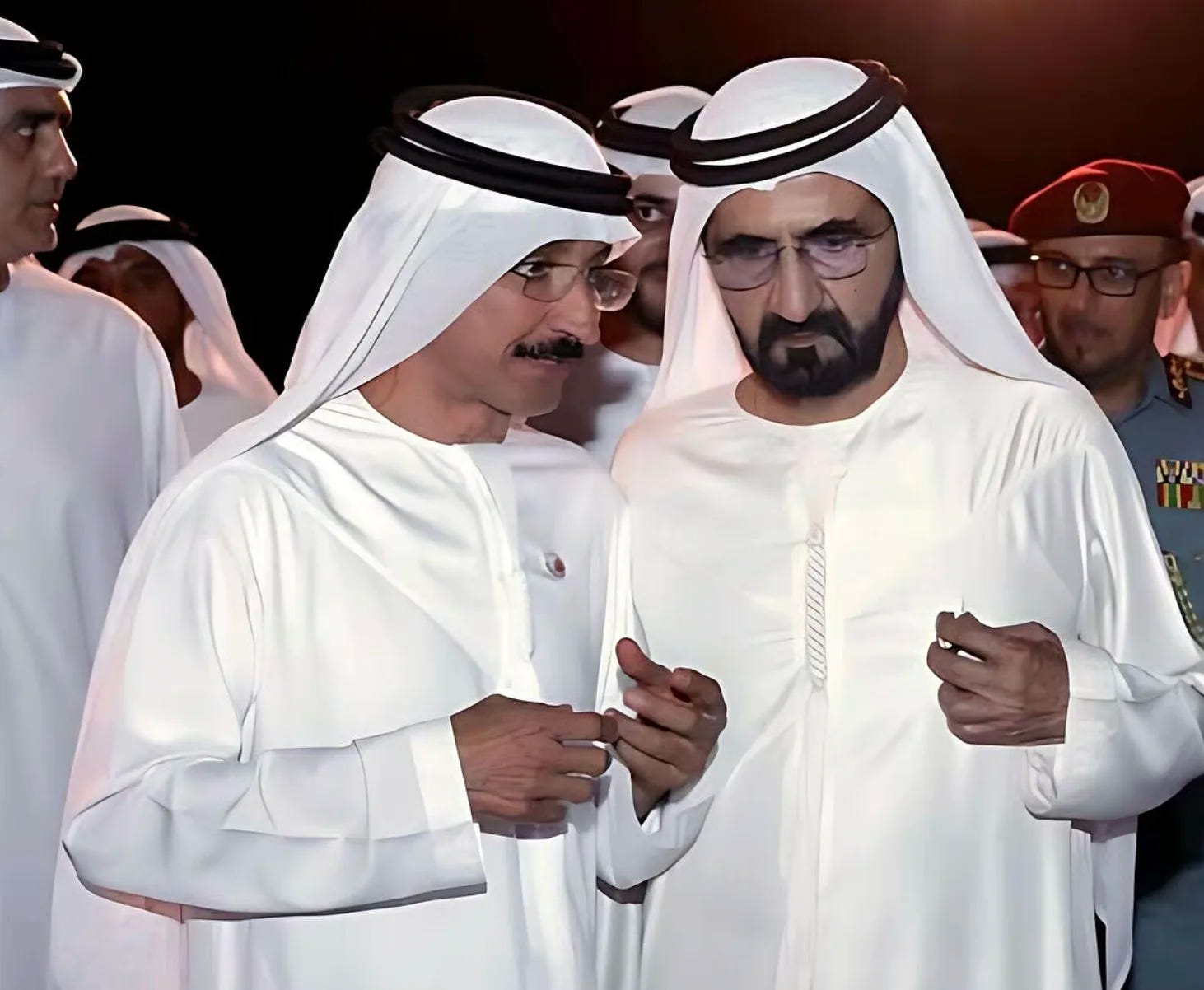
The documents indicate that they met several times and discussed potential investment in an Israeli logistics chain. Barak reportedly responded that the timing was not right and that he preferred to wait.
The episode illustrates how Epstein sought to expand his economic influence by linking Arab businessmen with prominent Israeli figures, even though there is no evidence that such projects were ever implemented.
Desecrating the Sacred Through “Gifts”
Perhaps the darkest layer of the documents lies at the intersection of politics and religion, where sacred symbols appear to have been exploited as “gifts” within the trafficking network.
In a development that sparked widespread outrage across the Muslim world, shipping records and correspondence revealed that in 2017 Epstein received a shipment containing pieces of the Kiswa the cloth covering the Kaaba.
Shipment details: The package included three pieces: a section of the inner covering, a used segment of the outer covering, and a third embroidered piece that had not been used.
The items were reportedly flown from Saudi Arabia to Epstein’s U.S. residence under the customs designation “Artwork,” apparently to evade scrutiny.
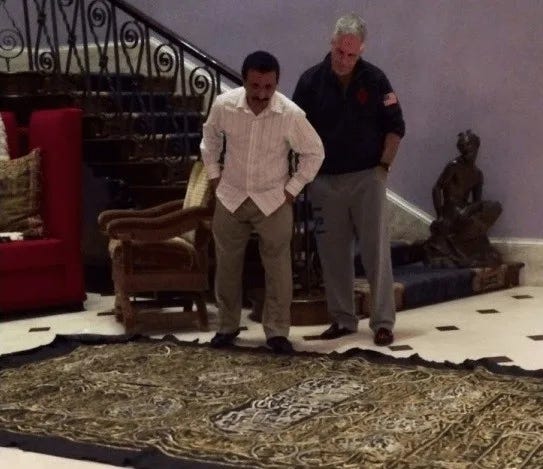
The desecrated image: A photograph documented Jeffrey Epstein and Sultan Ahmed bin Sulayem standing atop a piece of the Kiswa bearing Qur’anic verses embroidered in gold after it had been spread across the floor like a “rug” in the convicted billionaire’s home, in what many viewed as a brazen affront to its religious symbolism.
The supply network: The items did not arrive by chance. Emails pointed to the involvement of a UAE-based businesswoman, Aziza Al-Ahmadi, who coordinated the shipment with an individual identified as Abdullah Al-Merri to secure the removal of the sacred artifacts and their delivery to the American financier.
Attempts at Political Penetration
The files reveal Epstein’s persistent efforts to infiltrate decision-making circles in Riyadh during 2016 and 2017.
He traveled to Riyadh in late 2016 and returned with what he described in emails to American businessman Thomas Pritzker as a “Bedouin tent with its carpets,” claiming it was a gift from Crown Prince Mohammed bin Salman.
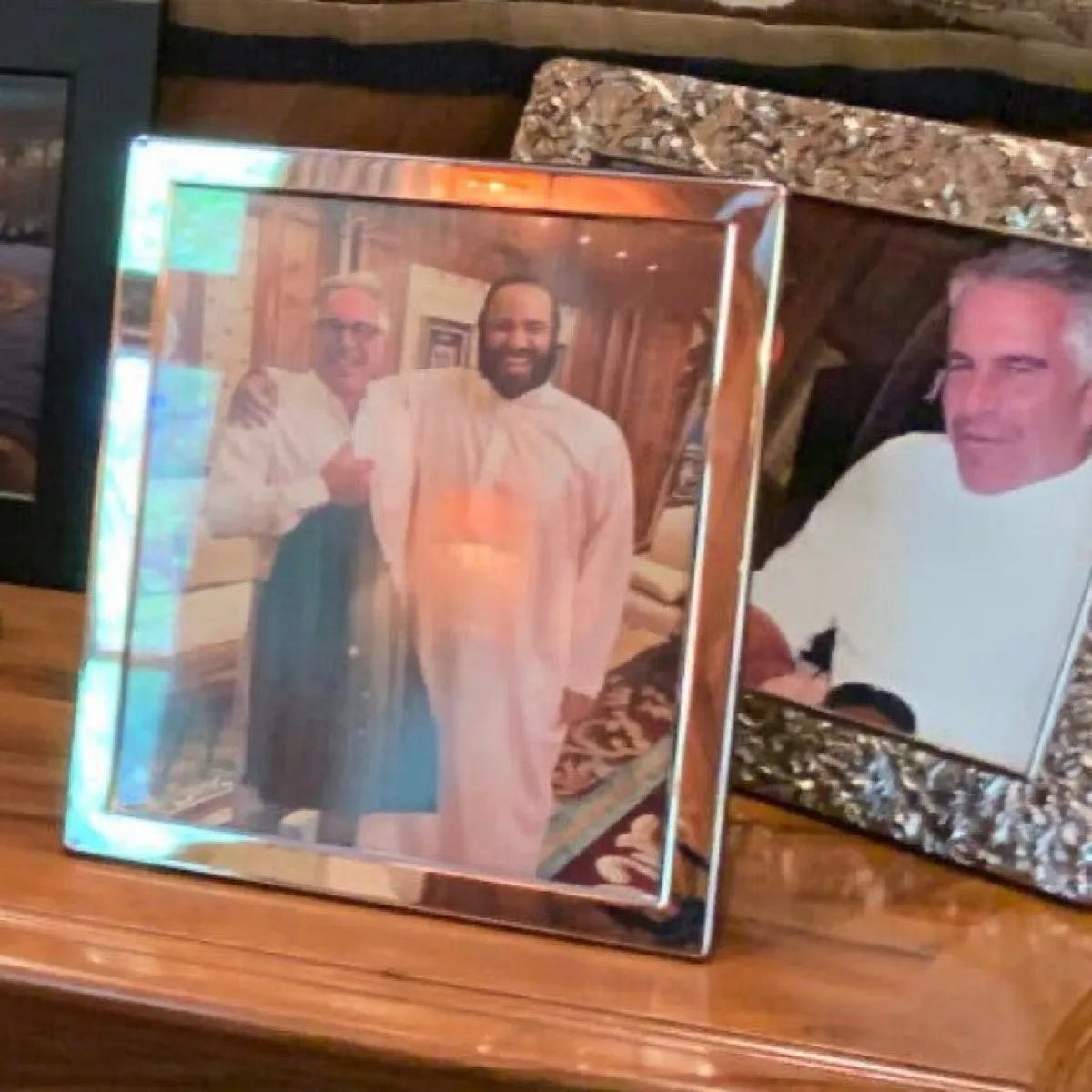
Investigators also uncovered a photograph of the convicted financier with bin Salman at Epstein’s Manhattan mansion, as well as a forged Austrian passport listing “Saudi Arabia” as his place of residence.
The documents further revealed intensive communication between Epstein and Raafat Al-Sabbagh, then an adviser at the Royal Court. The exchanges included crude language and explicit sexual innuendo from the adviser, such as: “I’m sure you’re opening a lot of legs there.”
Politically more consequential was Epstein’s strategic advice to Al-Sabbagh against listing Saudi Aramco on Wall Street. Instead, he proposed selling options to China or creating a petroleum-backed currency suggesting an attempt to position himself as a “shadow adviser” on the kingdom’s most consequential economic decisions.
Messages on the Killing of Jamal Khashoggi
The files also contained correspondence related to the 2018 killing of Saudi journalist Jamal Khashoggi at his country’s consulate in Istanbul.
On October 12 of that year, former Kuwaiti Information Minister Anas Al-Rasheed wrote to Epstein describing the murder as “ugly.” The convicted businessman replied that he “smelled a bigger conspiracy.”
Epstein said he would not be surprised if then-Abu Dhabi Crown Prince and current UAE President Mohammed bin Zayed had “set a trap” for the Saudi crown prince.
The two later discussed whether Khashoggi could be labeled a “terrorist” or whether the killing could be portrayed as a “failed covert operation.”
These exchanges show that Epstein closely followed regional political developments, engaging in speculation untethered to verified facts.
Tainted Arab Diplomacy
The documents expose a stark contradiction between the human rights and diplomatic façade of certain Arab figures and the content of their correspondence with Epstein.
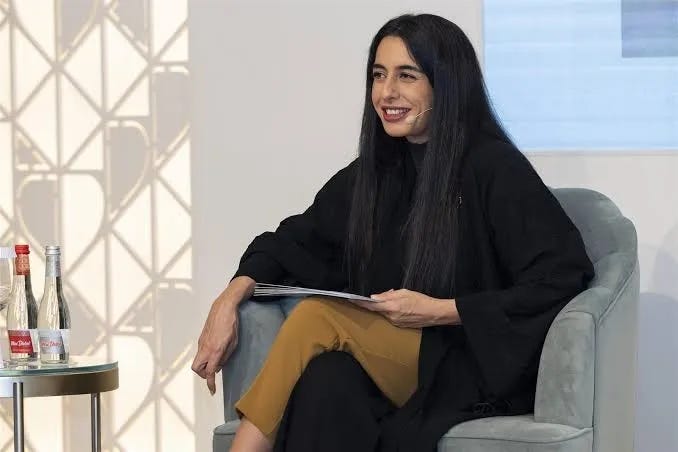
The name of Emirati diplomat Hind Al-Owais who previously held senior positions at the United Nations and the UAE’s Human Rights Committee appeared in 469 emails exchanged with Epstein between 2011 and 2012.
Rather than discussions of women’s empowerment, the emails included troubling logistical coordination. In one message (January 2012), she wrote: “Arranging one girl is hard enough; two, you can definitely call that a challenge.”
In another startling message, she expressed enthusiasm about introducing her younger sister to Epstein, writing: “I’m very excited to see you and introduce you to my sister she’s even more beautiful than I am.”
The leaked files portray a web of relationships at the heart of the Arab world, suggesting that the convicted financier sought to invest in political and economic influence as much as financial returns.
While the documents do not contain evidence that some of the named Arab figures were involved in the sexual crimes for which Epstein was convicted, they open a broader debate about why Arab “elites” maintained dealings with a man whose criminal record and moral conduct were already in question.