

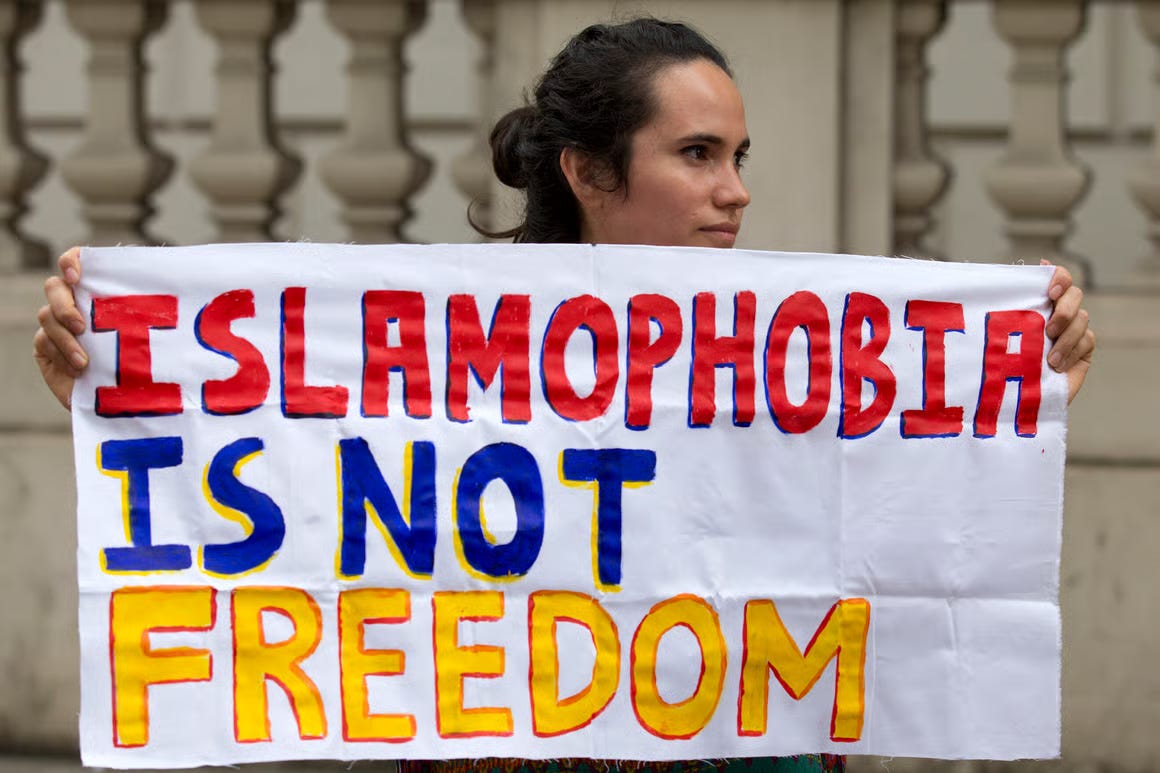
On March 9, the British government announced the adoption of a non-binding guidance definition of “anti-Muslim hatred.” Officials framed the move as part of a broader “social cohesion” strategy, while critics argued that it represents a political and linguistic compromise that once again avoids adopting the term “Islamophobia.”
The decision follows years of debate over the meaning of Islamophobia and comes amid a sharp rise in anti-Muslim hate crimes. Yet the government ultimately opted for a narrower and more cautious formulation. What does the new definition contain? What is its legal status, and what practical difference might it make? And how has it been received?
What exactly did Britain adopt?
The British government announced, through Communities Secretary Steve Reed, that it would adopt a definition of “anti-Muslim hatred” as part of its social cohesion initiative titled “Protect What Matters.”
The definition emerged from the work of an independent commission formed by the government in March 2025 and chaired by former justice secretary Dominic Grieve. The group was tasked with proposing a non-legislative definition that would take freedom of expression into account.
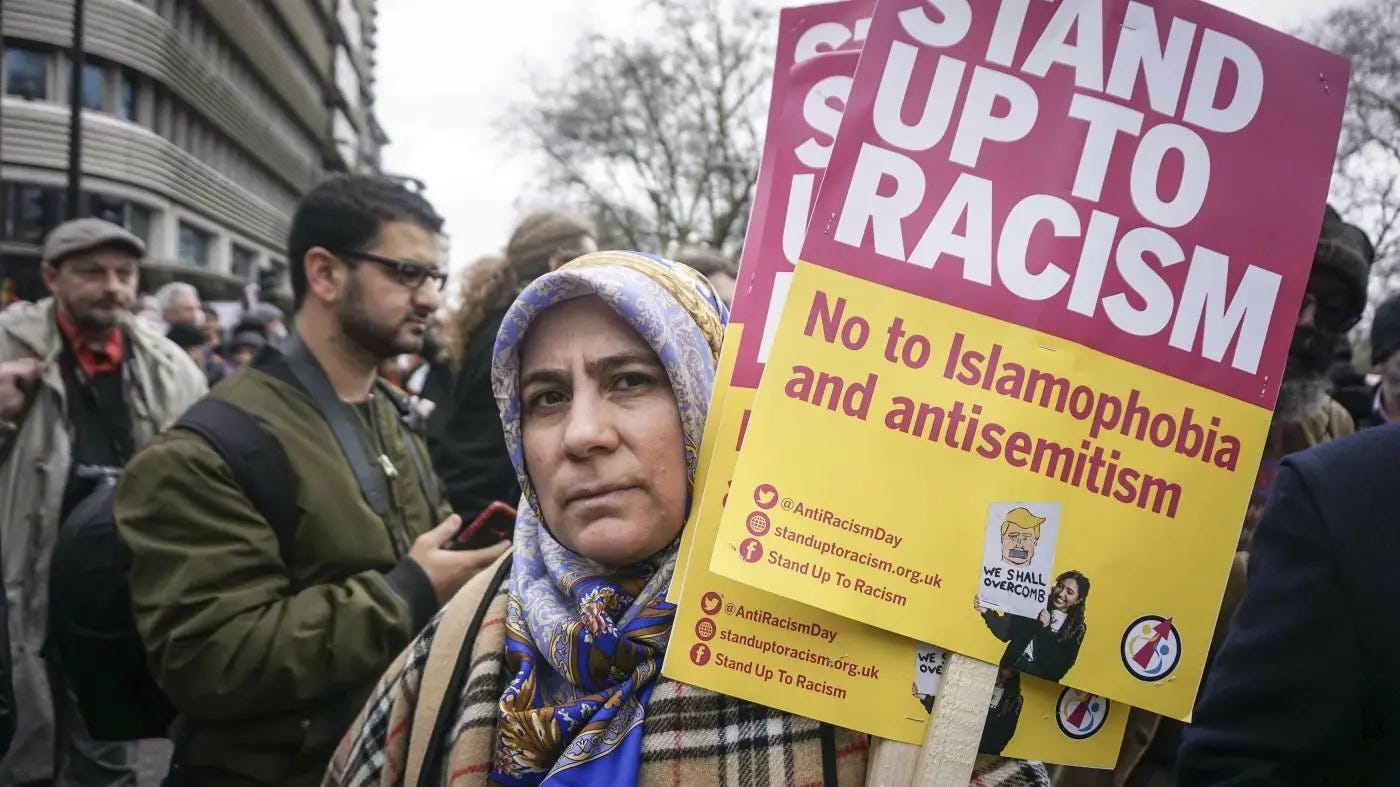
The adopted text defines anti-Muslim hatred as “intentionally engaging in criminal acts such as assault, violence, vandalism, harassment, or intimidation targeting Muslims or those perceived to be Muslim, or assisting or encouraging such acts.”
It also includes the use of biased stereotypes intended to incite hatred and unlawful discrimination aimed at marginalizing Muslims or depriving them of their rights. The definition emphasizes that protection extends to individuals who are perceived to be Muslim, regardless of their actual identity.
The definition is not legally binding. The government made clear that it “does not create new criminal offenses or alter existing criminal or equality law.” Instead, it is intended to serve as guidance for public institutions.
The government also pledged £4 million in funding to support implementation turning the definition into a practical framework within institutions and announced plans to appoint a special envoy to combat anti-Muslim hatred. However, it did not introduce the definition into criminal or equality legislation.
What has changed as a result?
Prior to March 9, 2026, the British government had no formally agreed definition of anti-Muslim hatred. Police forces and official bodies typically relied on broader categories such as “religious hate crimes” or definitions developed by non-governmental organizations.
According to the government, the new definition will provide a common framework for government agencies, local authorities, schools, and universities to better understand and record anti-Muslim hostility. Yet its practical impact remains limited as long as it remains non-binding and does not impose specific enforcement mechanisms on public institutions.
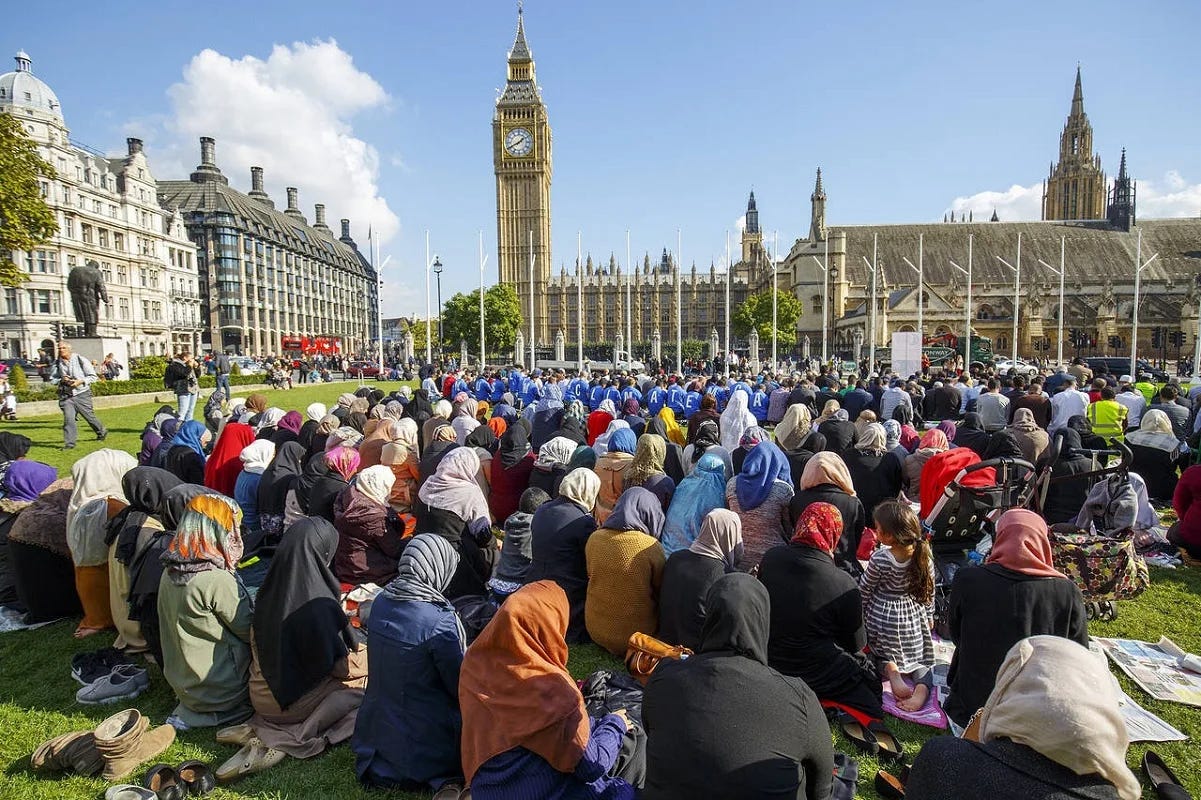
In practical terms, the definition creates no new powers or penalties. Rather, it is intended to improve data consistency and staff training in recognizing patterns of anti-Muslim hostility.
Government departments and policing bodies are expected to use the definition to improve reporting and response procedures, raise public awareness, and develop guidance for schools, universities, and employers.
The government will also appoint a special representative to coordinate work between ministries and affected communities. Even so, critics argue that the move may prove more symbolic than institutional.
Because the definition is not legally binding, it does not guarantee policy changes unless public bodies translate it into concrete actions. Some observers fear that disparities in how hate crimes are recorded and prosecuted may persist despite the existence of a unified guidance definition.
Why now and why after 2025?
Recent years have seen a clear rise in religious hate crimes in the United Kingdom. Data from the Home Office indicates that 4,478 anti-Muslim religious hate crimes were recorded in the year ending in March 2025 representing roughly 45 percent of all religious hate crimes.
That same year saw a 19 percent increase in crimes targeting Muslims compared with the previous year, figures that prompted renewed calls from Muslim communities and civil-rights organizations for more decisive action.
After its formation, the working group conducted consultations with Islamic and human-rights organizations and submitted its recommendations in late 2025.
Adoption of the definition was delayed by debates within the government over which terminology should be used Islamophobia or anti-Muslim hatred and how to craft a definition that protects individuals without restricting discussion about religion.
The government linked the announcement to rising anti-Muslim hostility and growing social polarization. Yet the timing also reflects a belated political effort to fulfill a campaign pledge made by the Labour Party during the 2024 general election, while responding to mounting criticism from British Muslims who argued that the state had long hesitated to name the phenomenon directly.
Why choose “anti-Muslim hatred”?
The exclusion of the term Islamophobia was not a minor linguistic choice but rather the core political decision itself. The government selected the phrase “anti-Muslim hatred” because it is narrower, administratively simpler, and less likely to provoke legal disputes over freedom of expression. It also allows officials to argue that the state is protecting individuals rather than shielding religions from criticism.
Yet this choice has drawn significant criticism. In the British debate, the term Islamophobia often refers not only to individual insults but to a broader pattern of structural racism, institutional discrimination, and stereotyping targeting Muslims or those perceived as such.
The new guidance stresses that the definition focuses on hostile or discriminatory behavior, clearly distinguishing between hatred directed at believers and criticism or discussion of religious ideas, which remain protected forms of expression.
Accompanying notes clarify that criticism, analysis, or satire of a religion or belief remains protected speech. As such, the definition explicitly preserves the right of artists, journalists, and scholars to critique Islam without fear of criminalization.
Supporters of the term Islamophobia, however, argue that it better captures the racialized and structural dimension of anti-Muslim hostility. The word “phobia,” in their view, reflects a systemic or pathological hostility that goes beyond isolated acts.
Still, critics of the term worry that “phobia” could be interpreted as restricting criticism of Islam or suggesting that the state is protecting religion itself.
Members of the working group noted that some participants preferred the phrase “anti-Muslim hatred” because it is clearer to the public and because the inclusion of the word “phobia” could spark linguistic controversy and prove difficult to apply legally.
This tension highlights the gap between the 2018 definition adopted by the All-Party Parliamentary Group (APPG) on British Muslims and the new government formulation.
The earlier definition treated Islamophobia as a form of racism targeting Muslim identity and representation, while the current government narrows the phenomenon to intentional hostile acts and discrimination a scope that is both politically less contentious and administratively easier for the state.
How was the definition received?
The ruling Labour Party presented the definition as an important step in combating hatred. Yet the official endorsement does not obscure the fact that the government opted for the least binding formulation and the one least entangled in the controversy surrounding the term Islamophobia.
Some members of the Conservative Party welcomed efforts to tackle hatred but expressed concern that the definition could be used to “silence religious criticism.”
Conservative MP Paul Holmes accused the government of concealing details of the committee’s work, warning that the definition could create “a backdoor blasphemy law.”
The Liberal Democrats and several independent MPs criticized the definition as a “watered-down” version of the Islamophobia definition adopted in 2018.
The cross-party parliamentary group (APPG) argued that the government had not sufficiently consulted grassroots organizations.
Responses from Muslim organizations were mixed.
The Muslim Council of Britain (MCB) rejected the definition outright, describing it as a retreat from genuine recognition of Islamophobia. According to the council, the government’s approach fails to acknowledge the structural and racialized dimension of anti-Muslim hostility and instead relies on a diluted formulation that does not reflect the depth or political weight of the problem.
The MCB also argued that the definition lacks recognition of structural racism and called for concrete measures, including equalizing security funding for mosques with that provided to other places of worship.
By contrast, some Muslim organizations including Trust British Muslim Council and several Islamic educational institutions supported the definition as “a positive first step,” provided that it is implemented seriously.
Non-religious organizations such as Humanists UK welcomed the definition because it balances the protection of individuals with freedom of expression, though they cautioned against granting preferential treatment to anti-Muslim hatred over other forms of discrimination.
The Board of Deputies of British Jews also expressed support, arguing that confronting hatred against both Muslims and Jews contributes to a more cohesive society.
Human-rights groups, including the Islamophobia Response Unit, criticized the definition for focusing on intentional hostility, which they say raises the threshold of proof and excludes cases involving unconscious bias or institutional discrimination.
Some academics and experts likewise argued that the absence of any reference to institutional racism weakens the definition’s ability to address the deeper roots of the phenomenon.
Ultimately, the new definition appears less a decisive policy shift than a linguistic and political compromise. The British government has acknowledged the growing problem of anti-Muslim hatred but has chosen to frame that recognition in narrower terms than Islamophobia, keeping it outside binding legal frameworks an approach that limits its practical impact and leaves the debate open over whether the phenomenon should be understood as structural racism rather than merely individual hostility.