

As Israel celebrated what it described as a historic gas agreement with Egypt valued at $35 billion and hailed by Prime Minister Benjamin Netanyahu as a milestone another player was watching closely. Not as a distant observer, but as the deal’s biggest beneficiary.
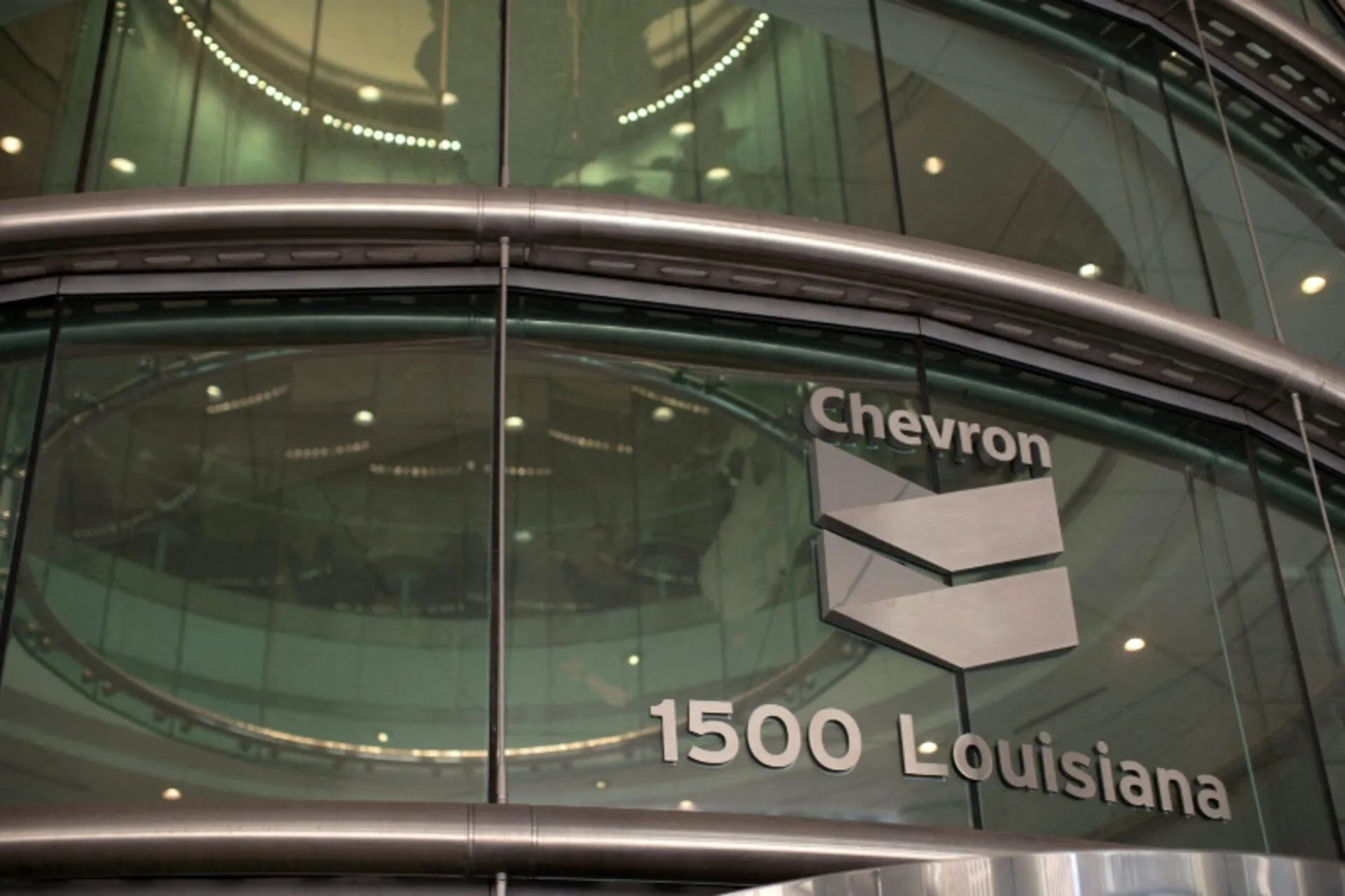
That player is the American energy giant Chevron, which holds a dominant stake in the Leviathan gas field, the main supplier under the agreement. The deal guarantees the delivery of 130 billion cubic meters of Israeli gas to Egypt through 2040, further entrenching Chevron as one of the key power brokers shaping Israel’s energy landscape.
The Egyptian–Israeli agreement, concluded under American sponsorship, support, and pressure, once again cast the spotlight on Chevron as a major force in the global energy market. It also revived scrutiny of the company’s dense network of ties within Israel, particularly amid accusations of its involvement in the “genocidal war” waged by the occupation against the Gaza Strip over the past two years.
A Global Energy Giant
Chevron is a US-based multinational corporation and one of the world’s largest energy conglomerates. Headquartered in San Ramon, California, it operates in more than 180 countries. Its activities span the entire energy value chain, from oil and natural gas exploration and production to refining, marketing, and transportation, in addition to chemical manufacturing and power generation.
Founded in 1879 under the name Pacific Coast Oil Company by Charles N. Felton, Lloyd Tevis, and George Loomis following the discovery of oil in California, Chevron’s history has been marked by a series of major mergers. It merged with Standard Oil in 1900, Gulf Oil in 1984, Texaco in 2005, and most recently Noble Energy in 2020.
In 1984, the name Chevron was officially adopted following the breakup of Standard Oil under the Sherman Antitrust Act. The company became part of what was historically known as the “Seven Sisters” Exxon, Royal Dutch Shell, BP, Total, Gulf Oil, Eni, and Chevron which dominated the global oil industry in the early twentieth century.
By March 2020, Chevron ranked fifth on the Fortune 500 list, with annual revenues of $146.5 billion and a market valuation of $136 billion. It also placed 61st among the world’s largest publicly traded companies.
Chevron’s operations are divided into two main segments: exploration and production averaging around 3.1 million barrels per day in 2024 and refining and marketing of fuels and lubricants. Its key assets include oil and gas fields around the world, most notably Leviathan and Tamar in Israel, Tengiz in Kazakhstan, Gorgon in Australia, and the Permian Basin in the United States.
Close Ties to Trump
Former US President Donald Trump has maintained a close relationship with Chevron, despite occasional tensions in recent years over operating licenses in Venezuela. Several indicators point to the strength and mutual influence of this relationship.
Extensive financial support for the inauguration: Chevron was among the leading fossil fuel companies that contributed millions of dollars to finance Trump’s 2017 inauguration. It spearheaded an energy-sector fundraising drive totaling nearly $2 million, with Chevron alone contributing $525,000, making it one of the largest donors in the oil industry.
The company also participated in a broader fundraising campaign involving more than 1,500 corporations and individuals, raising a total of $107 million for the presidential inauguration committee more than double the amount raised for former President Barack Obama’s inauguration in 2009, which stood at $53 million.
Uninterrupted political backing: Multiple reports have documented Chevron’s involvement, alongside other oil companies, in financing US presidential elections from 2016 through 2024. The oil and gas sector, including Chevron, has overwhelmingly favored Republican candidates and Trump-aligned entities, reflecting a tightly interwoven network of interests.
During the 2023–2024 election cycle, Chevron donated $951,500 to Republicans, compared with $90,500 to Democrats. Indirect support for Trump’s campaign through the oil sector reached $14.1 million.
Backroom deals: According to an October 2024 investigation by The Guardian, the Trump administration struck direct deals with Chevron. During a dinner at Mar-a-Lago in Florida, Trump reportedly asked more than 20 executives from major oil companies, including Chevron, to raise $1 billion. In return, he promised—if re-elected—to roll back drilling restrictions, restore gas export approvals, and abolish vehicle pollution regulations. Democrats described the move as “the definition of corruption,” prompting a congressional investigation.
The Venezuela issue: In a subsequent move, Trump revoked Chevron’s license in Venezuela, portraying it as a concession to Venezuelan President Nicolás Maduro. He later restructured the license to limit cash transfers and imposed restrictions on oil tankers, significantly affecting Chevron’s operations. Eventually, however, the administration reached a compromise with the company to mitigate the fallout.
Israel’s Largest Gas Producer
Chevron owns roughly 40 percent of the Leviathan gas field and a quarter of the Tamar field, in addition to holding operational control over both. This effectively gives the company control over nearly 90 percent of gas reserves in the occupied entity, making it Israel’s largest gas producer.
Chevron supplies around 70 percent of Israel’s energy needs, including those of military bases and settlements. It fully operates both the Tamar field, which contains an estimated 10 trillion cubic feet of gas, and the Leviathan field. The company pays hundreds of millions of dollars annually in fees to Israel, with total payments reaching $820 million in 2023.
In February 2024, Chevron and its partners in the Tamar field announced a $24 million investment to boost natural gas production capacity from the offshore field. The investment is part of a two-phase plan aimed at increasing Tamar’s output to approximately 1.6 billion cubic feet per day, to meet Israel’s energy needs and supply gas exports to Egypt.
Financier of the Genocide in Gaza
According to reports, Chevron controls nearly 90 percent of gas reserves in Israeli fields and supplies about 70 percent of the occupied entity’s energy needs, including settlements, the military, and various political and security institutions.
On this basis, the global Boycott, Divestment, and Sanctions (BDS) movement has classified Chevron as a financier of “genocide and apartheid,” citing its role in supporting the occupation through energy supplies. The Israeli military and settlements rely on gas extracted by Chevron to target, kill, and displace millions of Palestinians.
Dozens of human rights organizations have accused Chevron of directly contributing to the financing of Israeli occupation policies and violations of Palestinian rights, particularly in Indigenous and marginalized communities across the developing world.
As the main extractor of natural gas in the eastern Mediterranean, the company generates hundreds of millions of dollars annually for Tel Aviv through licensing fees revenues that bolster Israel’s military budget and fund its apartheid system, settlement expansion, and military occupation.
In addition, Chevron supports Israel’s efforts to pressure Europe into constructing the EastMed pipeline, a massive fossil fuel infrastructure project backed by the European Union that is expected to exacerbate the global climate crisis.
Human rights groups also argue that the US energy giant is complicit in depriving Palestinians of sovereignty over their natural resources, including through the naval blockade on Gaza and the transfer of originally Palestinian gas to Egypt via pipelines that illegally traverse Palestine’s occupied exclusive economic zone.
These practices, they say, cost Palestinians millions of dollars in transit fees, in addition to losses resulting from Israel’s theft of this critical economic resource.
Despite Chevron’s public commitments to human rights and sustainability, organizations insist that the company is implicated in serious violations of Palestinian rights and in fueling apartheid and genocide, while simultaneously worsening the global climate crisis.
They have called on the international community to hold Chevron accountable for its role in supporting the Israeli occupation and deepening environmental catastrophes.
In July 2025, reports and UN-affiliated organizations listed Chevron among companies complicit in the occupation and the war on Gaza. The UN Special Rapporteur on the occupied Palestinian territories, Francesca Albanese, issued a report detailing the role of corporations—including Chevron—in supporting the occupation and the war on Gaza.
The report asserted that these companies form part of the mechanisms enabling Israel to displace Palestinians and commit grave violations of international law, and urged the international community to hold them accountable for their involvement in human rights abuses.
In March of this year, the global BDS movement, alongside several UN-linked organizations, called for a worldwide boycott of Chevron across all its operations, as part of a broader campaign targeting companies that support Israel.
It is worth noting that in September 2024, during a well-known annual cycling race held every summer in Portland, Oregon and attended by thousands of participants, one of the event’s organizing groups, known as “Molly,” accused Chevron not only of exacerbating the climate crisis and air pollution but also of contributing to what it described as genocide in Palestine.
“The community has remained silent on issues like Palestine,” the group said, “but it is not a distant place everything is connected to what you care about.”
All of this makes clear that Chevron has gone well beyond its traditional role as a global energy corporation. It has openly become an instrument of Trump, his administration, and the Republican Party in advancing US influence in the Middle East and securing exceptional advantages on the global energy map.
At the same time, Chevron has emerged as one of the main suppliers to the occupying entity, supporting it in a war of genocide and in settlement schemes carried out against the Palestinian people. In doing so, Chevron is no longer merely an economic partner it has become complicit in one of the most brutal genocides of the modern era.
