

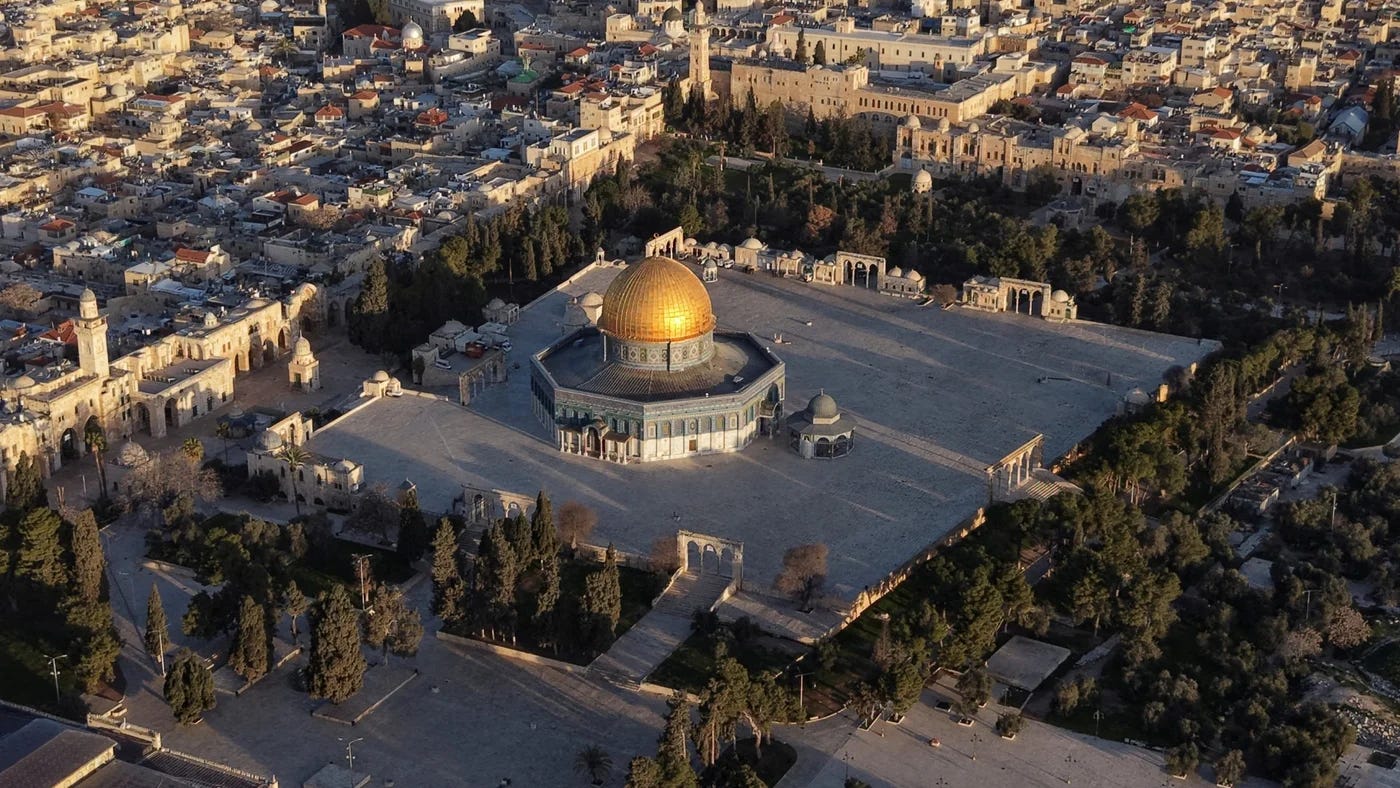
Al-Aqsa Mosque has been closed for nearly a month, with worshippers barred from entry since February 28 marking the longest shutdown imposed on the site since Israel occupied East Jerusalem in 1967. The closure follows an unprecedented surge in incursions: in 2025 alone, approximately 73,000 settlers entered the compound, the highest number recorded since such incursions began.
These visits have been accompanied by mounting violations, acts of desecration, and the increasingly overt performance of Jewish religious rituals within the mosque precincts.
This closure represents the culmination of a deeply troubling trend: the systematic suppression of documentation of violations at Al-Aqsa. Visual evidence has virtually disappeared during the shutdown and had already declined sharply in the preceding months. This erosion became particularly pronounced amid the ongoing war in Gaza and throughout the second half of 2025.
Even before the closure, Palestinians were increasingly unable to monitor settler incursions or record their movements and rituals inside the compound. Most footage circulated by Palestinian sources was captured from outside the mosque, often from considerable distances.
Meanwhile, detailed documentation of violations targeting both the physical structure of the mosque and its worshippers has increasingly emerged from accounts linked to so-called “Temple organizations” on social media.
This shift underscores the inability of worshippers and those stationed at the mosque to monitor violations in real time. In many cases, incidents only come to light long after they occur, often following their disclosure by Israeli authorities themselves. These restrictions have been compounded by the banning of several Jerusalem-based media platforms.
Against this backdrop, this article examines the disappearance of visual documentation from Al-Aqsa and the sharp decline in monitoring violations, including the performance of public religious rituals and the introduction of ritual objects associated with biblical traditions. This enforced invisibility extends from excavations beneath and around the mosque to the near-daily incursions and the actions carried out during them.
Excluding Al-Aqsa Guards from the Scene
Israeli authorities have sought to strip Al-Aqsa of any actors capable of resisting violations or confronting settlers. In recent years, mosque guards have been increasingly targeted through repeated assaults aimed at neutralizing a critical line of defense.
Palestinian sources indicate that this escalation intensified following the Bab al-Asbat protests in July 2017. At that time, Israeli police introduced new measures allowing only two guards to be present during settler incursions—down from ten—and prohibiting them from following or documenting settlers. Guards were required to remain at a distance behind the last accompanying officer, effectively preventing them from recording events.
These measures have intensified over time. Guards have been subjected to assaults within the mosque, repeated arrests, and expulsion orders, significantly diminishing their role. Eventually, Israeli police enforced a 200-meter separation between guards and settlers, before escalating to a complete ban on their proximity.
Parallel to this gradual exclusion, a decision by the Islamic Waqf further exacerbated the problem. In 2020, the Waqf issued an internal directive prohibiting the publication of any news related to Jerusalem endowments or Al-Aqsa without prior written approval from its director-general. This bureaucratization of reporting further undermined documentation efforts at a time when the mosque urgently required greater media coverage.
Despite the passage of years, the situation of Al-Aqsa guards has not improved. They continue to face escalating attacks and are systematically prevented from documenting events inside the mosque.
Emptying Al-Aqsa of Witnesses: Targeting the Muslim Presence
Alongside the guards, worshippers and those maintaining a constant presence at the mosque have played a crucial role in documenting violations. However, since 2015, they too have faced increasing restrictions.
Israeli authorities have imposed a range of measures, including age restrictions at the mosque gates, limiting the number of worshippers during incursions, issuing expulsion orders, and banning religious retreat, particularly during Ramadan and other key Islamic periods.
Palestinian sources report that worshippers are prevented from documenting violations both inside and outside the mosque. Within the compound, individuals attempting to film are detained, and the use of mobile phones to record incursions is effectively criminalized. Israeli forces have also systematically cleared the eastern courtyards during incursions. In recent months, worshippers have been confined to roofed prayer halls, effectively excluding them from witnessing events unfolding in the open courtyards.
Outside the mosque, eyewitnesses told Al Jazeera that many young Palestinians have been summoned for interrogation and threatened for posting images related to Al-Aqsa on social media even when such posts did not document violations.
Media Blackout: Targeting Journalists and Platforms
As repression of Palestinians documenting violations has intensified, so too have attacks on Palestinian journalists. Israeli authorities have increasingly targeted journalists within and around Al-Aqsa in an effort to silence coverage.
According to the Committee to Protect Journalists, violations against Palestinian journalists have escalated significantly, particularly during the war in Gaza. Authorities have used intimidation, arrests, and restrictions to prevent journalists from carrying out their work.
During Ramadan 2025, around ten Palestinian journalists were barred from entering Al-Aqsa, while others were summoned for interrogation and had their equipment confiscated under accusations of “incitement” or posing a “security threat.” The crackdown extends to anyone attempting to document violations, reflecting a broader effort to control the visual narrative emerging from the mosque.
This campaign has also targeted Jerusalem-based digital platforms. On February 23, 2026, Israeli Defense Minister Israel Katz issued a military order designating several Palestinian media outlets as “terrorist organizations” under Israeli law. The ban included platforms such as Al-Asima Agency, Al-Quds Capital, Al-Bawsala, Quds Plus, Mi’raj, and Al-Midan. The timing—coinciding with Ramadan—suggests an effort to preempt anticipated escalation and laid the groundwork for the full closure of Al-Aqsa.
Violations Captured by Settlers’ Cameras
These policies have severely limited Palestinians’ ability to document violations. Most available footage is now captured from outside the mosque using long-range equipment.
By contrast, much of the footage showing settlers performing public rituals such as prostration and religious ceremonies in the eastern courtyards originates from settlers themselves or affiliated organizations. These videos are widely circulated online to demonstrate control over the site and to promote ideological messaging.
Israeli officials have also participated in this visual campaign. National Security Minister Itamar Ben-Gvir has repeatedly filmed himself inside Al-Aqsa, delivering provocative statements. During the May 26, 2025 incursions coinciding with Jerusalem Day—he stated in a video: “Large numbers of Jews are coming here it’s gratifying to see.” He added: “Today, thank God, it is possible to pray and prostrate here.”
Knesset member Zvi Sukkot was also filmed raising the Israeli flag near the Dome of the Rock, declaring that Jewish presence now exceeded that of Arabs.
Other incidents documented in 2025 include attempts to introduce sacrificial offerings, Talmudic wedding ceremonies, celebratory dancing, and the blowing of the shofar within the mosque compound acts widely viewed as provocations.
Total Closure: The Peak of the Blackout
The complete closure of Al-Aqsa marks the culmination of these policies. It has effectively severed the mosque from its Muslim community while granting Israeli authorities near-total control over the site.
Further concerns have been raised following a report by Middle East Eye in mid-March indicating that Israeli police may have installed hidden cameras inside prayer halls, alongside expanded surveillance across the compound. This development underscores a stark contradiction: while Palestinians are prevented from documenting events, Israeli authorities are intensifying their own monitoring of the site.
Ultimately, the closure does not signal the end of efforts to control the narrative it is part of an ongoing struggle. As “Temple organizations” push for expanded rituals, increased settler presence, and longer incursion hours, the battle over Al-Aqsa is set to continue.
At its core, this is a struggle over the visual narrative. Israeli authorities appear intent on monopolizing representation, sidelining Palestinians from documenting or resisting violations, while enabling settlers to showcase what they frame as “achievements.” The longer-term objective is the normalization of these realities and the transformation of Al-Aqsa from a flashpoint of resistance into a controlled and marginalized issue.
Perhaps most concerning is the erasure of visual evidence itself. It creates a protective veil under which future transformations potentially far-reaching and irreversible may unfold unseen, as part of ongoing efforts to reshape the site in line with the vision of a so-called “Temple.”