

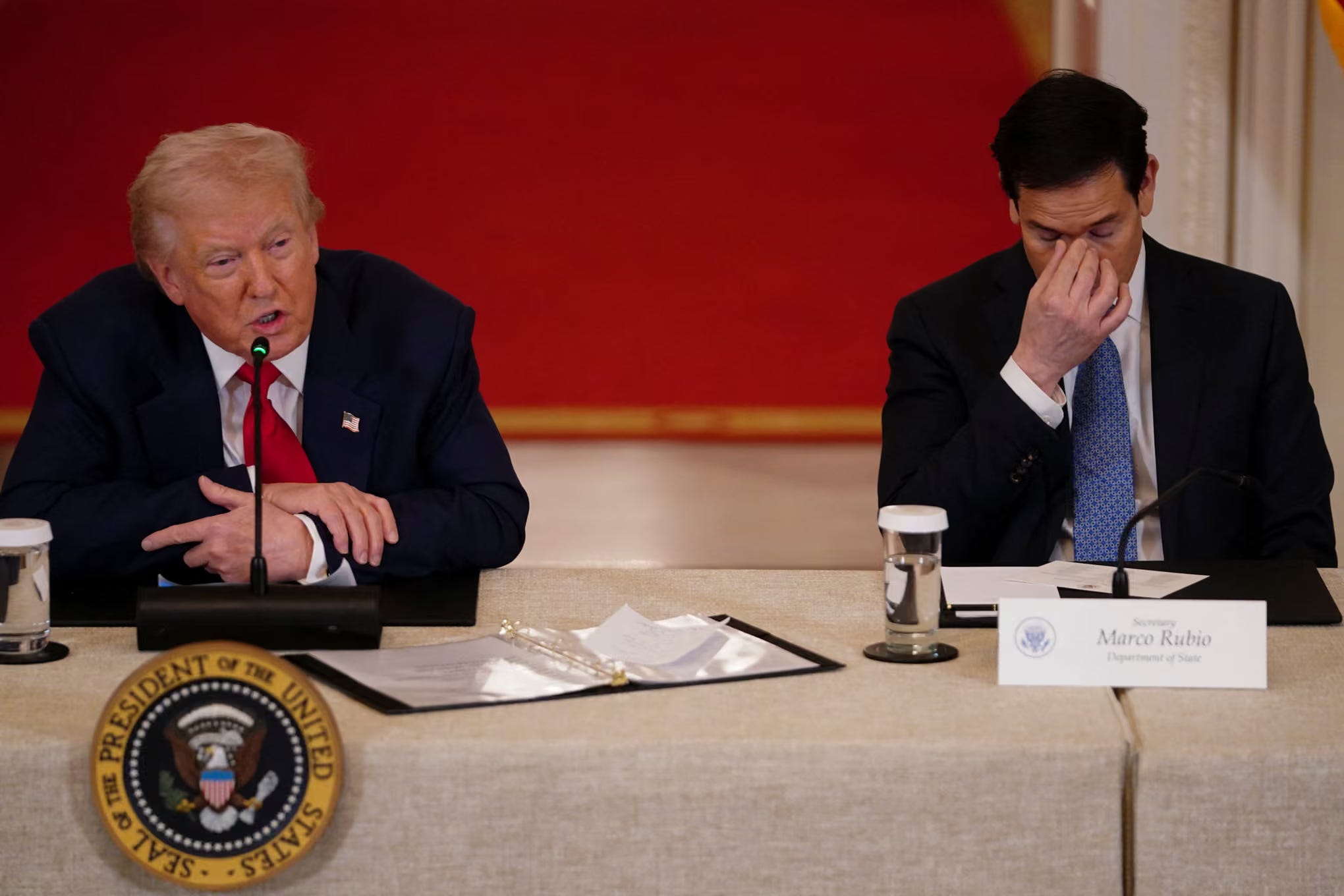
At a moment when all eyes were fixed on the expiration of a U.S. ultimatum threatening strikes on Iranian energy facilities unless the Strait of Hormuz was fully reopened, President Donald Trump surprised observers with a post on the platform “Truth Social,” announcing the existence of serious negotiations with Tehran and, on that basis, postponing the attack by five days.
This delay was preceded by an atmosphere thick with anticipation and anxiety, particularly in light of Tehran’s assertive response. Iran had early on invoked the principle of “reciprocity,” premised on targeting energy sources in response to energy sources an equation through which it sought to establish mutual deterrence since the outbreak of the war. This approach unsettled global energy markets and pushed them to the brink of significant disruption.
Notably, Tehran swiftly rejected the narrative invoked by Trump to justify his decision, stressing that it had engaged in no communication or negotiations with Washington. It insisted that the postponement was not the result of a diplomatic track, as the U.S. president implied, but rather a direct consequence of the pressure created by Iranian threats to ignite the regional energy market should its facilities be targeted.
This stark contradiction between the two narratives raises not only questions about what truly transpired behind the scenes, but also invites a broader reading of the possibility that Trump is retreating from his threats.
It also prompts inquiry into whether this step represents a genuine move toward de-escalation an attempt to climb down or merely a political maneuver designed to buy time, arrange tactical surprises, and prepare a more precise target bank for a potentially more dangerous phase of the confrontation.
The Broader Context
The broader context in which Trump’s statements were issued whether regarding the initial 48-hour deadline or its subsequent extension to five days reveals important aspects of the unspoken motivations behind this sudden decision. The deadline did not emerge in a vacuum; rather, it coincided with an Iranian escalation that can be considered among the most intense since the outbreak of the war.
Tehran managed to inflict significant losses on Israel in both lives and property, while expanding the cost of confrontation by targeting a series of military and energy assets in Gulf states. This shifted the conflict to a more expansive and complex level.
This escalation effectively undermines the narrative promoted by Trump, who had claimed the complete destruction of Iran’s military capabilities and suggested that Tehran had been pushed out of regional equations and to the brink of collapse. Developments on the ground have demonstrated the opposite, placing the U.S. president in a genuine political and military predicament particularly amid growing assessments that Iran still possesses sufficient missile and drone stockpiles to prolong the war, increase its costs, and potentially embarrass the United States if escalation continues.
Amid this exceptional Iranian escalation and under pressure from the Israeli government, which has also suffered heavy losses in recent days, particularly in Dimona and Arad the initial 48-hour deadline was introduced and later extended by five additional days, raising numerous questions about its motives and implications.
Trump Confirms, Tehran Denies
Trump revealed what he described as a negotiation track that had taken place between Washington and Tehran over the past two days, indicating that representatives of the Iranian regime had participated in these contacts. U.S. media reports, citing administration officials, also suggested that Trump’s team was considering outreach to Iranian Parliament Speaker Mohammad Bagher Ghalibaf as a potential partner in future political arrangements, and possibly as a figure to build upon in the post-escalation phase seen in some White House circles as a pragmatic actor capable of managing a complex negotiation process.
In contrast, Tehran swiftly rejected the entire U.S. narrative. Both the Iranian Foreign Ministry spokesperson and Ghalibaf himself denied the existence of any direct negotiations with Washington, describing Trump’s statements as “fake news” aimed at helping the United States and Israel escape their political and military predicament.
However, Iran did not entirely close the door to the existence of indirect communication channels. The Foreign Ministry clarified that what had occurred did not go beyond the exchange of messages through friendly countries, and that Iran’s responses were consistent with its principled positions, accompanied by a clear warning of “grave consequences” for any targeting of its infrastructure.
Why Iranians Do Not Trust Trump
Tehran did not treat Trump’s statements about extending the deadline or pursuing negotiations as credible indicators of an imminent end to the war. Rather, they were received across wide segments of the Iranian system with deep skepticism and caution.
This distrust stems from past experiences that remain vivid in Iran’s political memory. Tehran believes Washington has previously resorted to military escalation at the height of ongoing negotiations whether during last June’s war or in the current conflict reinforcing the conviction that U.S. rhetoric about negotiations may serve as a cover for military action rather than an alternative to it.
From this perspective, the Islamic Revolutionary Guard Corps has adopted a hardline stance, pushing for continued escalation without giving weight to American statements, viewing them as attempts to buy time, reorganize the U.S.-Israeli front, and absorb recent losses.
Four Key Interpretations
Four main interpretations frame the debate surrounding Trump’s statements:
First Interpretation:
Trump is attempting to “climb down” from an escalation whose costs now outweigh its benefits. Facing mounting domestic and international pressures, and amid rising casualties and economic repercussions, he may be seeking a political exit that can be marketed domestically especially with midterm elections approaching.
Second Interpretation:
The delay is a bid to buy time to reorganize militarily and politically. The five-day window could allow for the arrival of additional military supplies, reinforcement of air defense systems, and repositioning of U.S. assets, while also strengthening Israel’s strained defenses ahead of a potentially more dangerous phase.
Third Interpretation:
An effort to minimize the economic cost of the war. Trump’s earlier threats had already driven up oil prices and triggered fears in financial markets. The timing of the delay just hours before the opening of Wall Street suggests a move to calm markets and limit losses, especially as U.S. market losses since late February approach 10%.
Fourth Interpretation:
Targeting Iran’s internal front. The mention of Ghalibaf as a potential negotiating partner may be part of a deliberate attempt to sow doubt and competition within Iran’s political system, destabilizing internal balances and weakening cohesion during a critical moment.
Despite their differences, all four interpretations converge on one point: Trump’s move cannot be separated from a broader state of uncertainty and disarray in managing the confrontation.
Why Tehran Denies Negotiations
In practice, Tehran does not appear interested in prolonging the war indefinitely, given the significant losses it has sustained. However, its capacity to continue escalation without a clear timeline or political horizon remains uncertain.
Recent indicators suggest that communication channels between Washington and Tehran do exist, though they have not yet reached the level of direct negotiations. Instead, they remain confined to message exchanges through intermediaries such as Russia, Turkey, Egypt, Pakistan, and several European capitals.
Tehran’s insistence on denying negotiations is largely tied to its domestic climate, characterized by mobilization and a rhetoric of resistance. A sudden shift toward openly discussing negotiations could undermine public support and weaken the mobilization momentum the regime relies on.
Contradiction Between Statements and Reality
Just hours after Trump’s announcement of a five-day delay, developments on the ground told a different story. Infrastructure linked to gas facilities in Isfahan and Khorramshahr was reportedly struck in U.S.-Israeli attacks, causing damage to facilities and nearby residential buildings.
In response, Tehran escalated further, launching drone attacks targeting energy refineries in Gulf states, including Kuwait. The attacks disrupted multiple power transmission lines due to debris from intercepted drones.
This escalation points to the early contours of what observers have long warned could become a “battle of energy refineries,” with potentially severe consequences for global energy markets and economic stability.
If Trump’s negotiation rhetoric is taken at face value, this contradiction reflects a clear U.S. insistence on pursuing “negotiation under pressure” keeping diplomatic channels nominally open while maintaining the threat of military action.
Amid the contradictions in Trump’s messaging and Iran’s deep skepticism, the remaining days of the deadline remain open to all possibilities. Tehran’s continued operations suggest it is interpreting Trump’s statements through a different lens than in previous confrontations.
The trajectory of the war now hinges on what unfolds in the coming hours, within a highly fluid environment where deterrence calculations, negotiation maneuvers, and the risk of sudden escalation intersect.
