

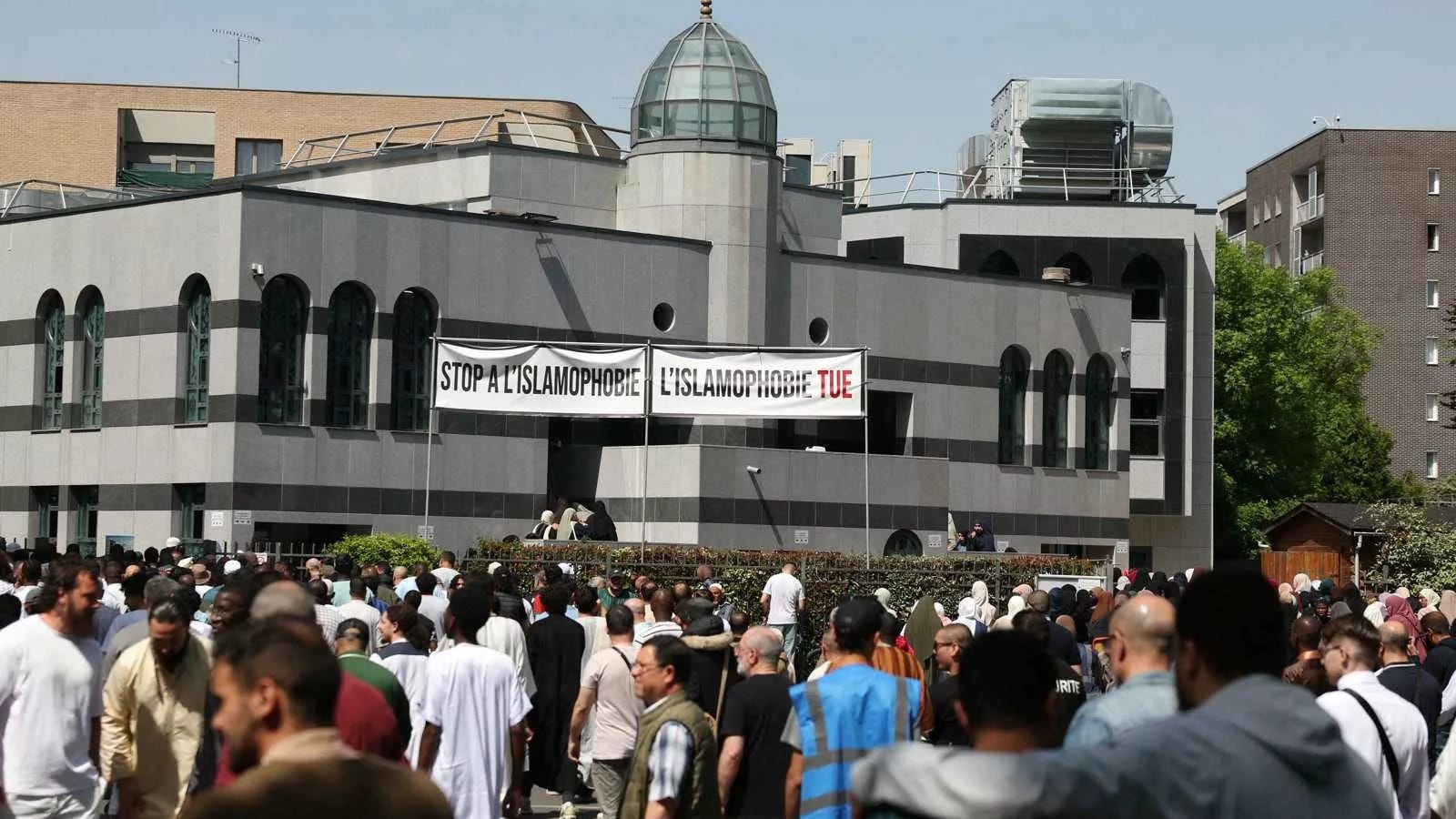
In a politically charged moment, as France edges closer to pivotal elections, a public opinion poll published in November 2025 ignited a fierce debate over the place of Muslims in French society. The survey quickly evolved into a flashpoint for intense political and media clashes.
Conducted by the French polling institute IFOP and released on November 18, the report focused on the realities of young Muslims in the country. It claimed there were “notable shifts” within the community, both in religious practices and identity-related issues.
The study warned of a “growing revival of religious observance” among Muslims, based on phone interviews with 1,005 Muslim men and women. However, critics slammed the survey as “politically charged,” exaggerated, and lacking socioeconomic context suggesting it was driven by electoral motives.
The controversy extended far beyond mere numbers or academic findings. It touched on deeper questions regarding the timing of the poll, the entities behind it, and the messages it conveyed, all against the backdrop of a rising far-right discourse in France.
Key Findings from the Poll
The survey highlighted a rise in religious practice and an increase in religiosity among French Muslims, particularly the youth, compared to previous decades. Notable statistics include:
Worship and Prayer: About 62% of Muslims said they pray daily, a figure that rises to 67% among those under 25. Weekly mosque attendance reached 35% in 2025, compared to just 16% in 1989.
Fasting: In 2025, 73% of Muslims reported fasting the entire month of Ramadan, up from 60% in 1989. Among young Muslims (ages 18–24), the figure jumped to 83%.
Hijab Wearing: Roughly 31% of Muslim women in France now wear the hijab (with 19% wearing it regularly), a rate that climbs to about 45% among young women aged 18–24 nearly triple the level reported in the 1990s.
Islamic Identity: A striking 87% of youth (aged 15–24) identified as religious, while 65% of all Muslims surveyed said Islam offers a more accurate explanation for the origin of the universe than science.
Gender Mixing: Some 43% of Muslims expressed opposition to at least one form of mixed-gender interaction.
Sharia Law: Support for implementing Sharia law in France reached 46% with 15% advocating full implementation and 31% supporting partial application. Additionally, 57% believed that Islamic rulings should take precedence over republican laws.
Sympathy for Islamist Movements: A third of respondents (33%) expressed at least some sympathy for one Islamist current 24% for the Muslim Brotherhood, 9% for Salafism, and 3% for jihadist movements, among others, according to IFOP’s classifications.
Emirati Influence in Question
The poll was commissioned and funded at the request of a little-known quarterly magazine called Écran de Veille, which describes its mission as “combating prejudice.”
The magazine is edited by Atmane Tazaghart, a figure previously linked to Emirati think tanks amid suspicions of funding from the UAE though IFOP has not officially confirmed this connection.
In recent years, the UAE has undertaken several efforts to influence discourse on Muslims in Europe, including:
Advocating tighter surveillance of mosques and funding media outlets and research centers that adopt hostile stances toward what they call “political Islam.”
In 2017, the UAE’s Minister of Tolerance, Sheikh Nahyan bin Mubarak Al Nahyan, criticized Europe’s “lack of oversight” of mosques, linking it to terrorist attacks.
That same year, Foreign Minister Abdullah bin Zayed claimed Arab leaders were more serious than Europeans in fighting terrorism. He warned that “calls for violence and bloodshed are coming from London, Germany, Spain, and Italy.”
In April 2024, he reposted a video of these earlier remarks with the caption: “I told you so.”
Though IFOP is among France’s oldest polling institutes—founded in 1938 and known for using standard research methods—the poll’s timing drew scrutiny, given its release just ahead of the 2026 municipal and 2027 presidential elections.
Beyond timing, methodological concerns were raised. While IFOP applied quota sampling (based on gender, age, and profession) to ensure representativeness, experts flagged flaws.
The French Council of the Muslim Faith (CFCM) described the poll as riddled with “methodological biases” that rendered its findings “approximate and inaccurate.”
IFOP’s head of political research, François Kraus, defended the institute’s methodology, asserting that the survey was conducted “without prejudice and using standard tools of social research.”
Political, Legal, and Media Reactions
Far-right media outlets welcomed the poll with open arms, hailing it as confirmation of their fears about “Islamic infiltration,” and launched campaigns amplifying its findings.
Media close to the far-right framed the poll as proof of an emerging “Islamic threat.”
Politically, leaders of the National Rally (far-right) issued statements insisting the poll showed the “imminent danger” to the republic and called for “tougher repressive measures.”
Laurent Wauquiez, head of the Republicans’ parliamentary group, called the results a “wake-up call” and demanded the acceleration of legislation banning the hijab.
Conversely, the poll sparked widespread disapproval from human rights and civil society groups. The French Council of the Muslim Faith (CFCM) condemned the survey as a “stigmatization attempt” that “feeds Islamophobia.”
It noted the presence of “numerous methodological biases” and denounced the amplification of minority opinions to provoke controversy.
Left-wing parties swiftly attacked the poll upon its release, accusing it of “vilifying Muslims.”
On the legal front, several regional Islamic councils in Loiret, Aube, and Bouches-du-Rhône filed formal complaints, citing violations of France’s election and referendum code (specifically the July 19, 1977 ordinance). Prosecutors have launched a preliminary investigation.
In response, IFOP has filed a lawsuit against two far-left MPs from the France Unbowed party, Bastien Lachaud and Paul Vannier, for allegedly accusing the institute of “manipulation.”
Écran de Veille has also filed its own legal complaint against Vannier for “incitement to murder” after he posted the magazine’s editorial address on social media.