

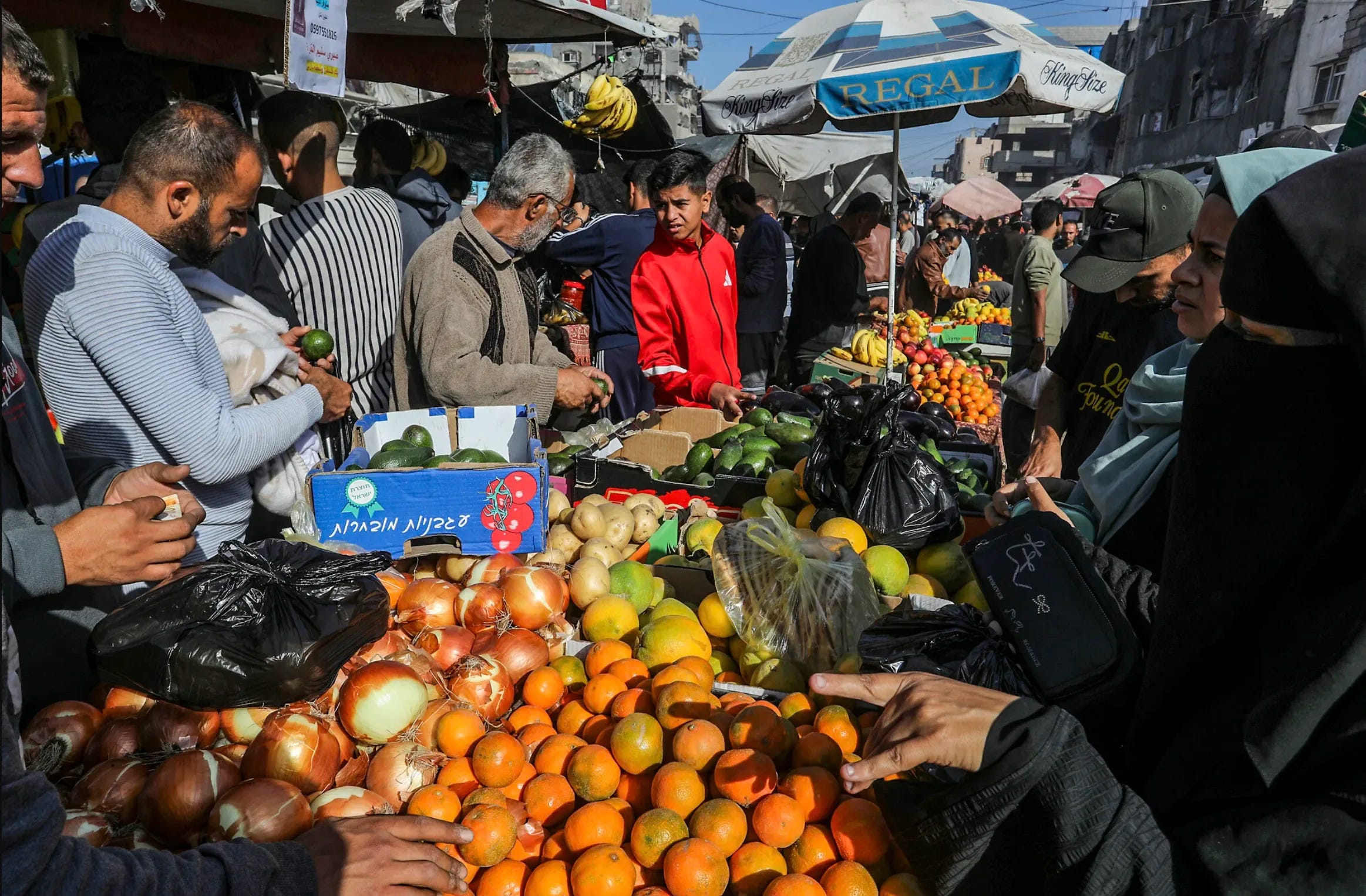
The tightened Israeli blockade on the Gaza Strip dates back nearly two decades, a period during which the enclave has never experienced normal operations at its commercial crossings, all of which remain under Israeli control. Since imposing the siege, Israel has maintained extensive lists of prohibited items barred from entering Gaza under the classification of “dual-use” goods items it claims could serve the Palestinian resistance.
With the outbreak of what Palestinians describe as a war of extermination, the blockade escalated to an even harsher level. Israeli leaders publicly vowed to impose the most severe forms of economic and humanitarian strangulation on the Strip, pledging not to allow “a single aspirin” or “a single grain of wheat” into Gaza even as the territory was subjected to an intense military assault in which Israel deployed the full spectrum of force and lethal tactics, including starvation and the denial of medicine.
When Israeli forces assumed direct control of the Rafah crossing on May 7, 2024, the blockade entered a more suffocating phase. All of Gaza’s crossings came under full Israeli control, both physically and procedurally, effectively dismantling the previous framework governing their operation.
Within this context, Israel introduced new operational mechanisms through a limited number of Gaza-based merchants who were granted special privileges, enabling them to act as intermediaries in determining which goods entered the Strip. This unfolded as Gaza’s population was collapsing under the weight of hunger and disease caused by acute shortages of supplies.
Yet despite the tightening siege, a striking puzzle emerged in recent months: how did certain goods suddenly appear in Gaza’s markets without any announced easing of the blockade or modification to the import mechanisms? Who stood behind their flow within what is ostensibly one of the world’s most restrictive blockade regimes?
Two primary explanatory tracks surfaced. The first was economic, tied to the growing influence of “war traders” cooperating with Israel and reshaping Gaza’s market structure. The second was security-intelligence driven, suggesting that smuggled goods might serve as cover for infiltration operations inside Gaza.
Subsequent investigations and Israeli media reports, however, revealed a far more intricate network of smuggling, corruption, and profiteering at the expense of a suffering population raising deeper questions about what is unfolding within the blockade system itself.
Multiple Signals and “Economic Crimes”
Although Palestinian parties including governmental authorities in Gaza and their security agencies had early on identified signs of corruption, alleging that “senior officers in the Israeli General Security Service (Shin Bet) as well as the Israeli army were involved in facilitating the entry of certain prohibited goods in exchange for substantial bribes,” these accusations long remained confined to the Palestinian narrative, lacking official Israeli acknowledgment.
The landscape began to shift in July 2025, when Israel’s Channel 12 reported that two Israelis one a former Knesset member from the Likud party and the other Yigal Weinberger, deputy mayor of Kiryat Gat had managed over several months to smuggle goods into Gaza via 80 aid trucks under the cover of an “international organization” supporting Palestinians.
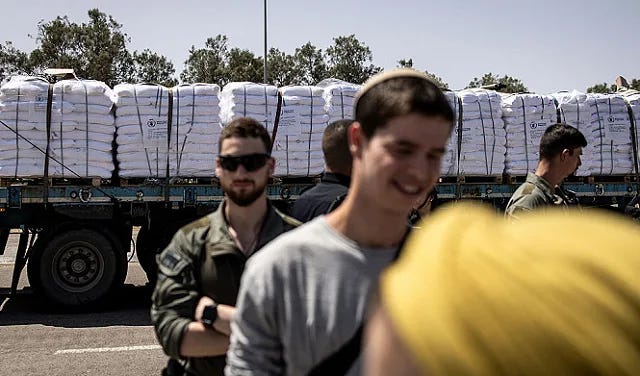
According to the report, cartons of cigarettes and hookah tobacco were substituted for tomato paste, then sold inside Gaza at exorbitant prices. The suspects allegedly solicited a five-million-shekel investment in the international charity’s Israeli branch in exchange for a promised 25% net profit, based on a fictitious partnership agreement.
The true objective, it later emerged, was to secure financing to purchase massive quantities of tobacco and cigarettes for smuggling into Gaza. One truck was halted by the Israeli army; when the organization whose logo had been used was contacted, it denied knowledge of the scheme.
In May 2025, Israel’s public broadcaster reported the arrest of several Israeli soldiers both Jewish and Arab alongside civilians, including Bedouin residents of the Negev, suspected of smuggling cigarettes and narcotics into Gaza through aid trucks entering via the Kerem Shalom crossing.
The seized goods were valued in the millions of shekels. A single pack of cigarettes reportedly sold in Gaza for around 2,000 shekels (with the dollar roughly equivalent to 3.5 shekels), while a carton fetched nearly 20,000 shekels under the suffocating wartime blockade.
In a parallel development, Yedioth Ahronoth acknowledged complicity by Israeli security bodies including the army and police in large-scale smuggling from Israel into Gaza through the Kissufim crossing. Despite uncovering elements of these operations in late 2025, authorities classified them not as a “security threat” but merely as “economic crimes.”
Court-approved information revealed that the smuggling spanned months and included high-value goods such as advanced mobile phones, laptops, batteries, solar panels, construction materials, vehicles, and motorcycles. Military estimates suggested that goods worth 100,000 shekels inside Israel could fetch up to half a million shekels inside Gaza due to blockade-induced price disparities.
Despite mounting indications that these were not isolated incidents, Israeli authorities avoided, for months, pursuing comprehensive investigations into the deeper dynamics at Gaza’s crossings fueling Palestinian concerns even after several smuggling threads came to light.
According to Yedioth Ahronoth’s analysis, despite the scale and nature of the smuggled goods including some categorized as dual-use items potentially bolstering Hamas security agencies refrained from treating the matter as a security issue. Instead, it was relegated to civilian-economic channels, handled by the Tax Authority and customs divisions, in what appeared to be a deliberate minimization of its security and political implications.
Complex Routes and Vast Sums
Israeli indictments allege that several defendants including reservists in the Israeli army systematically smuggled prohibited goods into Gaza. They exploited vulnerabilities at crossings and in military activity, presenting false claims that their entry into Gaza was part of legitimate security operations.
Indictments state that goods were delivered to meeting points, repackaged and disguised, then transported along predetermined routes. Camouflage tactics included wearing military uniforms and projecting the appearance of official army-linked activity.
After crossing into Gaza, goods were delivered to agreed-upon locations in coordination with Gaza-based parties, after which the perpetrators returned to Israel. In some instances, the defendants serving in active reserve duty received payments in exchange for facilitating the smuggling.
Israeli monitoring in December 2025 recorded the seizure of 317,239 cartons of cigarettes, approximately 255 kilograms of tobacco, and 1,983 mobile phones, with a total estimated value of 8.2 million shekels (over $2.5 million).
Another shipment contained 48,260 additional cartons, six tons of tobacco, 535 kilograms of hookah tobacco, 4,400 e-cigarettes, and 38,100 milliliters of vape liquid.
Corrupt Money Stronger Than Ideology
The scale of profits appeared to eclipse ideological commitments and even security considerations among those involved. Israel’s Southern District Prosecutor filed 12 indictments in what was described as a serious security case.

Among the prominent figures was Bezalel Zini, brother of Shin Bet chief David Zini. He and another Israeli reservist serving in “Force Uriah” a unit reportedly linked to systematic demolition operations in Gaza were authorized to escort vehicle convoys into the Strip before allegedly being recruited to carry out smuggling operations in exchange for a share of the profits.
A previous Haaretz investigation in September detailed Force Uriah’s operations, describing widespread building demolitions and the use of Palestinians as human shields under what is termed the “platform procedure,” a practice prohibited under the laws of war.
In a separate development, i24NEWS reported another smuggling case allegedly involving foreign actors operating inside the U.S. civil-military headquarters in Kiryat Gat. Israeli security agencies are investigating suspicions that criminal networks bribed foreign personnel at the U.S.-run office overseeing Gaza reconstruction affairs to facilitate the passage of prohibited goods.
A Calculated Breach or Structural Security Failure?
Despite ongoing investigations, fundamental questions remain about the true scope of these operations. Hebrew-language media quoted field commanders describing chaos in buffer zones and border areas as fertile ground for smuggling.
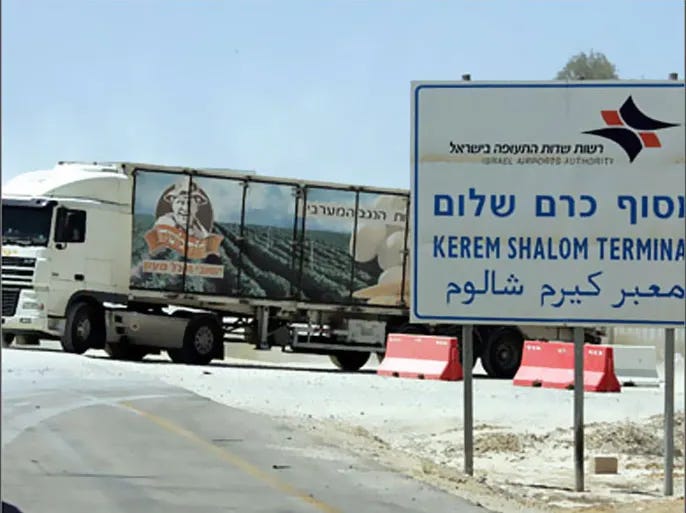
With approximately 600 aid trucks entering daily via Kerem Shalom under agreed arrangements, commanders acknowledge the near impossibility of conducting comprehensive inspections. Any soldier, they concede, could halt a truck and pass goods or even weapons under the pretext of inspection.
As Gaza’s reconstruction estimated in the hundreds of billions of shekels approaches, requiring thousands of trucks carrying cement and steel, concerns grow over the potential expansion of corruption networks.
From the Palestinian perspective, however, the issue cannot be explained solely as security lapses. Gaza-based security sources have previously reported the entry of espionage tools hidden within aid convoys, warning resistance fighters against handling certain electronic devices for fear they may contain tracking or surveillance equipment.
Such warnings lend weight to the hypothesis that some smuggling operations may have originated as a “calculated breach” orchestrated by Israeli intelligence for espionage purposes, alongside efforts to manipulate and reshape Gaza’s economic structure. If so, what began as a controlled operation may have spiraled into a multi-layered corruption network that exceeded control forcing Israeli authorities themselves to pursue investigations and prosecutions.
