

Despite France’s diplomatic rhetoric which at times adopts a humanitarian and moral tone in response to Israeli violations against Palestinians the country’s practical stance remains unwavering in its support for Israel as a political and security partner in the Middle East.
This support endures even during times of war and escalation, exposing a stark contradiction between symbolic posturing and actual policy.
This contradiction reflects the deep-rooted influence of a complex Zionist network entrenched in French politics, media, and economy. These networks command financial resources and shape public opinion, anchoring French foreign policy in alignment with Israeli interests through an accumulated legacy of influence.
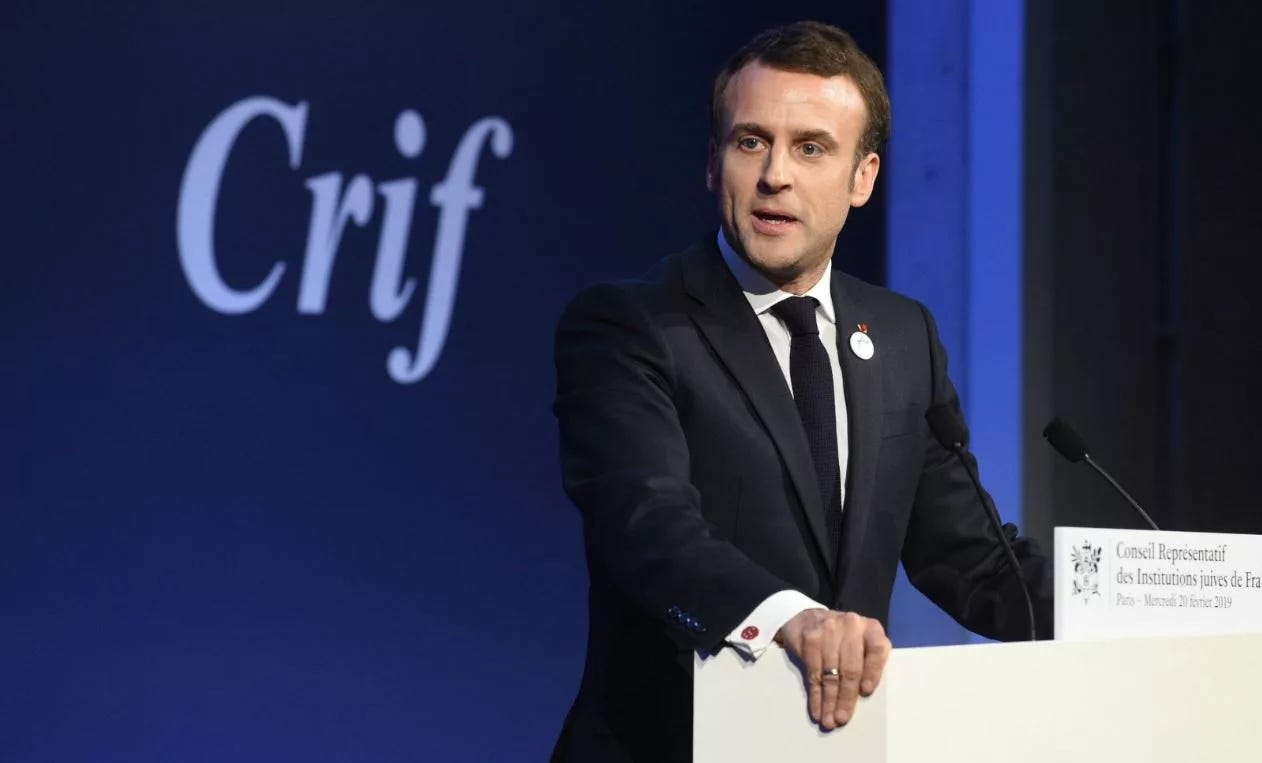
At the heart of this network stands the Representative Council of Jewish Institutions in France (CRIF), a key player in political lobbying. CRIF exercises systematic pressure on French decision-makers and plays a critical role in shaping state positions on Israel and the broader Middle East.
It has thus become a central instrument in steering public discourse and French policy in the region, raising pressing questions about its power, the state’s interaction with lobbying organizations, and the extent of their influence on strategic decisions.
How large is the Jewish community in France?
France is home to the third-largest Jewish population in the world after the United States and Israel, with estimates ranging between 480,000 and 550,000 people. This presence has historical roots dating back to the French Revolution and expanded through successive waves of immigration, particularly during and after the World Wars.
Over time, Jews have become highly influential in cultural, economic, academic, and research institutions, granting the community considerable weight in French societal and political structures.
The power of the Zionist lobby in France is built on an intricate network of interlinked entities. Chief among them is CRIF, the most influential conduit for political and media discourse. Alongside it operates the Union of Jewish Students of France (UEJF), a powerful force on university campuses.
Other, more hardline groups include Betar and the Jewish Defense League. Together, these organizations form a robust lobbying apparatus that helps steer French positions on Israel and Middle Eastern affairs.
When was the Israeli lobby in France established?
CRIF was established in 1944, emerging from the General Jewish Defense Committee formed clandestinely in July 1943 during the Nazi occupation of France. Initially tasked with rescuing and protecting fleeing Jews, CRIF gradually evolved into one of the principal organizational frameworks of the Jewish community.
Today, it claims around 100,000 members and is affiliated internationally with the World Jewish Congress, a staunch supporter of Zionism. It encompasses a wide spectrum of activists and organizations, from traditionalist groups to the most hardline defenders of Israel and its policies.
In political and academic circles, CRIF is regarded as one of the strongest arms of the pro-Israel lobby in France often described as “Israel’s second voice” or “Tel Aviv’s outpost in French politics.”
Since the 1980s, it has consolidated its dominance over Jewish institutional life, merging the roles of community representation with direct political lobbying, aggressively advocating for Israeli narratives on the French stage.
Many researchers consider CRIF the cornerstone of the Zionist lobby in France, its political stances closely aligned with those of Israel’s right-wing governments particularly during the Netanyahu era. In times of crisis and war, CRIF intensifies its activity, effectively becoming a parallel channel to the Israeli embassy in Paris. It promotes identical messages and shapes public discourse to favor Israeli interests.
What are its sources of funding?
There is little documented or transparent information about CRIF’s funding sources. A clear lack of financial transparency persists. However, it is known that the organization receives financial backing from a range of sources, both domestic and international, including Jewish individuals, French donors, and supporters of Israel and Zionism worldwide.
Funding comes in the form of direct donations and grants from Jewish individuals and organizations in France, supporting CRIF’s programs or allied associations. It also benefits from contributions by Jewish businesses and economic institutions on both local and global scales, including donations from business figures who enhance the council’s influence.
CRIF’s high-profile events especially its annual dinner are major fundraising opportunities and are central to its annual agenda.
It is also believed that CRIF may receive implicit or explicit support from foreign pro-Israel institutions, although concrete documentation is lacking. This reflects the complex nature of its financial network, which underpins CRIF’s ability to exert significant political and media influence in France and beyond.
The Annual Dinner
CRIF’s annual dinner is a prominent sociopolitical event attended by top French officials and CRIF leadership. It serves as a platform for announcing key political positions related to Israel, the Jewish community, and Franco-Israeli relations.
Over the years, the dinner has become one of France’s most significant venues of political influence—an event where the highest levels of executive power meet with pro-Israel lobby leaders. It has evolved into a set occasion for articulating official positions on Israel and for delivering sensitive political messages at home and abroad.
Notable political elites who have attended include current President Emmanuel Macron, former Prime Minister Jean Castex, and former President Nicolas Sarkozy who in 2008 became the first sitting president to attend, reaffirming his support for Israel and the Jewish diaspora.
Other high-profile attendees have included former Prime Ministers Alain Juppé and Lionel Jospin, alongside key figures from both the moderate right and left. The far-right and radical left are routinely excluded. International Jewish leaders such as European Jewish Congress President Moshe Kantor have also attended, representing the global Jewish community.
Position in the Political Landscape
CRIF’s relationship with French political parties has undergone notable shifts. From historic partnerships with the left and center, it has moved toward selective alliances with the center-right and right, while firmly rejecting the far right and radical left. The annual dinner serves as a platform to exert pressure, open dialogue channels, and send strategic messages to the government.
Over time, CRIF has cemented itself as a key player in French politics one of the most powerful voices capable of influencing decision-makers. It is increasingly seen as an actor in shaping French foreign policy, particularly on matters concerning Israel and the region.
CRIF makes no secret of its unwavering support for Israel and its outright rejection of what it deems anti-Israel positions. It seeks to strengthen Franco-Israeli relations and casts itself as a bulwark against antisemitism, a term it frequently applies to critiques that go beyond acceptable boundaries of Israeli or Zionist policy.
The council actively counters criticism of occupation or settlement policies with aggressive public statements and counter-campaigns. It opposes what it calls the “delegitimization of Israel” and views the Boycott, Divestment, and Sanctions (BDS) movement as a threat to Jewish life in France and a political incitement against Israel.
CRIF’s stance translates into direct confrontation with Jewish and leftist organizations that support Palestinian rights, making it a potent force within France’s Jewish community shielding Israeli interests and limiting pro-Palestinian activism.
To achieve its goals, CRIF deploys its media, financial, and political assets strategically, using both pressure and incentives. It punishes dissenters and rewards allies, ensuring it remains a central player in drawing the political and media lines that protect Israel’s narrative in France.
And What About the Gaza War?
The recent war in Gaza sparked intense debate within the French Jewish community over CRIF’s unreserved support for Israel. The council maintained its staunch position as the sole representative voice of French Jewry, despite mounting criticism over documented Israeli atrocities.
This monopolization of Jewish representation has drawn criticism from Jewish and non-Jewish voices alike, who argue that CRIF reflects only the perspective of a right-wing Zionist faction, thereby curtailing the community’s ability to express a diverse range of opinions on Israeli policy.
