

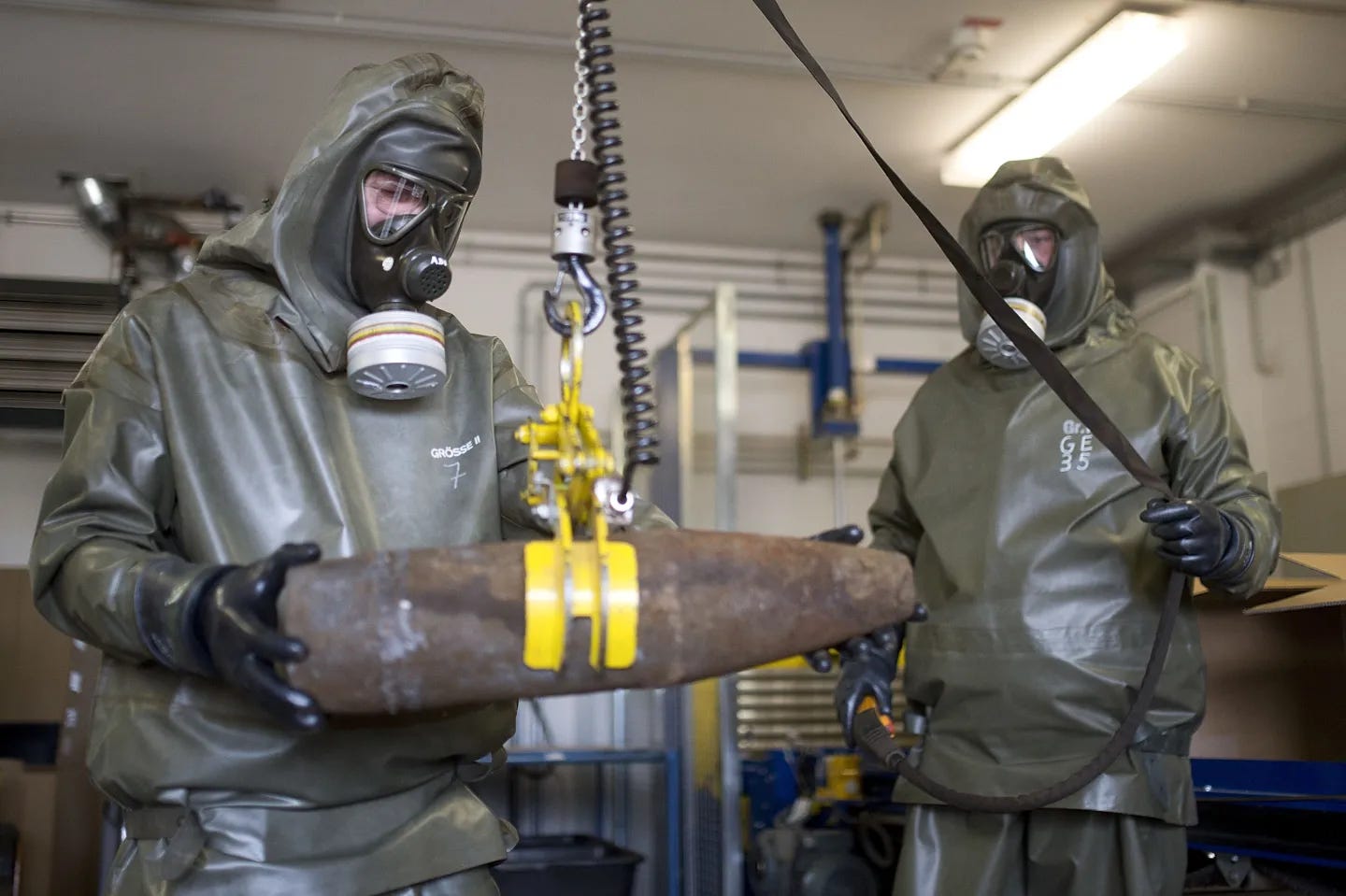
After years of ambiguity left behind by the regime of Bashar al-Assad, Damascus announced on March 18, 2026, a new initiative titled “Breaths of Freedom” aimed at eliminating all remaining chemical weapons.
The effort is being carried out in cooperation with the Organisation for the Prohibition of Chemical Weapons (OPCW), under the sponsorship of countries including the United States, the United Kingdom, France, Germany, Qatar, Turkey, and Canada.
The announcement makes clear that the chemical weapons file widely believed by some to have been closed in 2014 has resurfaced with renewed urgency. This is largely because the new authorities lack a complete map of what the former regime concealed, and because the international watchdog has identified more than 100 additional sites linked to the chemical program that were never declared.
The challenge, therefore, is not merely the removal of known materials, but the uncovering of what remains within a multilayered program dispersed across sites, substances, documents, and expertise.
Mapping Potential Sites
Following Syria’s accession in 2013 to the legal framework of the OPCW, the former regime declared 26 sites linked to chemical weapons, including production facilities, storage depots, and mixing and filling lines. However, the OPCW has since gathered information suggesting the existence of more than 100 additional sites.
This figure is not definitive but rather a fluid estimate based on data provided by current authorities, documents obtained, and interviews with experts from the former program.
Some of these sites were previously declared, while others remain suspected or categorized as dual-use. Still others may be eligible for declaration under the new initiative. In the absence of a publicly released list, reports indicate that potential locations are concentrated in coastal regions, Qalamoun, Homs, and al-Safira near Aleppo.
OPCW reports further suggest that some high-priority sites are located near Latakia, though inspectors have not disclosed names or coordinates.
What Remains of the Chemical Program?
The OPCW confirms that all declared Category 1 chemical agents were destroyed by August 2014. However, this applies only to declared stockpiles. What remains may include toxic substances, precursors (materials used to produce other chemicals), munitions, equipment, documentation, and human expertise:
1. Toxic agents and precursors:
The former regime claimed to have destroyed 300 tons of isopropanol prior to inspectors’ arrival but provided no evidence. It also asserted that bombs designed for nerve agents had been converted into conventional munitions again without proof.
Analytical reports suggest that tens to hundreds of tons of nerve agents such as sarin and VX—or their precursors—may still be undeclared. There are also indications that the Assad regime attempted to procure materials to revive its chemical program.
2. Munitions and delivery systems:
The number of concealed missiles, artillery shells, and aerial munitions remains unclear. Reports indicates to the possible existence of hundreds to thousands of unfilled casings, as well as aerial bombs designed for sarin that were allegedly converted.
3. Equipment and industrial capacity:
OPCW inspectors have identified both fixed and mobile mixing and filling equipment even after Syria joined the Chemical Weapons Convention in 2013. Such infrastructure requires technical expertise and access to advanced precursors, posing a significant risk if repurposed or leaked.
4. Laboratories and program documentation:
The handover of 34 boxes of documents by the new authorities to the OPCW on January 15, 2026, points to the vast scope of the program’s archive. These materials may reveal the identities of experts, supply chains, and potentially additional sites.
More than 6,000 documents and six samples have been collected during visits to 19 sites, with one sample showing traces of a nerve agent.
5. Human expertise:
Inspectors are working to interview scientists and officers involved in the former program, as leaving such expertise unmonitored could enable the reconstitution of chemical capabilities.
Inspection, Verification, and Destruction Mechanism
“Breaths of Freedom” operates as a joint mechanism between Syria, the OPCW, and international partners. Its mandate is to identify and eliminate remaining materials while building Syrian capacity in training, logistics, and destruction. The process unfolds as follows:
1. Information gathering and planning:
The OPCW’s Office of Special Missions (OSM) is analyzing data from documents and interviews to identify priority sites. In 2025, Damascus submitted a list of 17 suspected sites in the capital, and Syrian reconnaissance teams conducted preliminary visits.
2. Field visits:
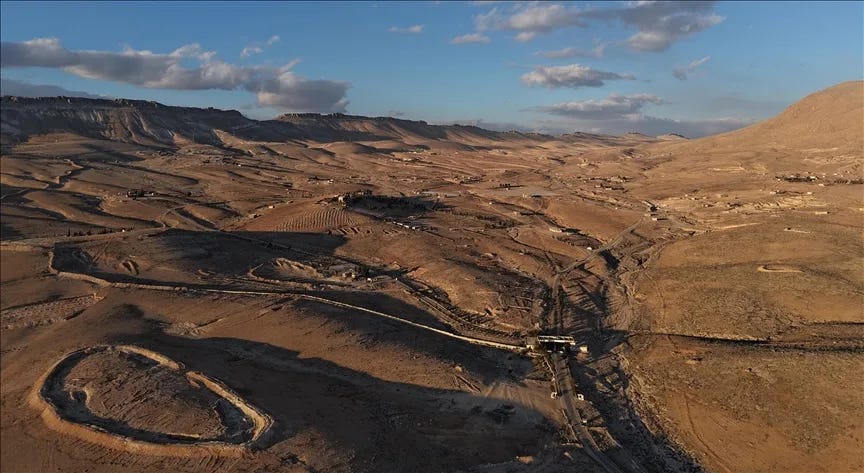
Since March 2025, inspectors have visited 19 sites four previously declared and 15 suspected. Syrian authorities provide security and сопровождение, while the OPCW ensures safety compliance before each visit. Activities include photography, document collection, and sampling.
3. Sampling and chain of custody:
Samples are divided into eight portions: one is given to the inspected state, two are used for on-site analysis, and five are sent to accredited laboratories. Centralized data and analysis ensure a strict chain of custody and prevent tampering.
4. Verification and classification:
If materials or equipment are found to be linked to chemical weapons, the facility is designated “declarable,” obligating Damascus to include it in its official disclosures. The team also distinguishes between civilian and dual-use facilities using engineering maps and expert analysis.
5. Destruction or removal:
According to OPCW protocols, materials may be destroyed in Syria if quantities are limited, or transferred abroad as in 2014. Fixed facilities are dismantled by removing equipment and sealing tunnels, with the OPCW overseeing the process until risks are eliminated and the file is formally closed.
Roles of Key Actors
1. Damascus:
Provides site access, ensures inspector security, and contributes support teams, while committing to declare any newly identified facilities or stockpiles.
The authorities have already handed over thousands of documents and dozens of archive boxes but remain under pressure to facilitate interviews and provide further data.
2. OPCW:
Leads inspection, analysis, and destruction operations, issuing monthly reports to its Executive Council. It re-established a permanent presence in Damascus in October 2025 and has conducted multiple site visits.
3. International partners:
Provide funding and expertise. Washington, London, Berlin, and Paris contribute technical support; Turkey offers demining and training expertise; while Qatar and Canada supply equipment and logistical assistance.
The OPCW has identified additional funding needs of approximately €4.3 million for 2026 and €12.5 million for 2027, underscoring the plan’s reliance on sustained financial backing.
Key Obstacles and Challenges
1. Security and logistical challenges:
Many sites are located in insecure areas littered with landmines and unexploded ordnance, particularly along the coast and in the north. The U.S.-Israeli war on Iran in late February 2026 led to the suspension of inspection visits.
Access requires securing convoys and protecting inspection teams from militia attacks or remnants of the former regime. Any security incident could halt operations entirely.
2. Technical and informational challenges:
The core issue lies in the incompleteness of Syria’s 2013 declaration, which has undergone 20 subsequent revisions. Nineteen outstanding issues remain classified by the OPCW as “serious concerns,” involving large quantities of undeclared agents and munitions.
Delays in providing documents and facilitating interviews further slow verification, while the dual-use nature of many facilities such as fertilizer and petrochemical plants complicates assessments.
3. Financial and organizational challenges:
The success of the plan hinges on sustained funding. The OPCW estimates it requires an additional €4.3 million for 2026 and €12.5 million for 2027.
There is also a need to train Syrian personnel in modern destruction techniques, establish infrastructure for storing seized materials, and manage hazardous waste. The plan further depends on advanced detection equipment and secure transport capabilities.