

By the end of 2025, Europe found itself reassessing its relationship with Washington, a year after Donald Trump returned to the White House. That year was marked by mounting tensions on multiple fronts: security (Ukraine and NATO), trade (tariff wars), and digital sovereignty (clashes with American tech platforms).
This report delves into the details of that transformation how politics, security, economics, and technology intertwined to redefine the transatlantic relationship in 2025, and what these shifts mean for Europe’s future.
1. European Isolation
Throughout 2025, a prevailing narrative emerged among European elites and in the media: that of “Europe’s isolation” and the “death of the West.” There was a growing sense that Washington was treating the continent as just another player in the global power game, with diminishing commitment to defending Brussels.
Former French ambassador to Washington Gérard Araud captured the prevailing mood, stating: “The West no longer exists in any real sense… we are alone in defending our interests.”
On the American side, officials made no effort to hide their disdain, characterizing Europe as a feeble ally “irrelevant due to its weak defenses, failure to control migration, burdensome bureaucracy, and crackdown on conservative national voices to keep them from power.”
Europe was confronted with a bitter truth: the Western alliance, once a pillar of global order, was no longer cohesive. The “Old Continent” now stood alone in facing escalating security challenges, as noted by Le Point, the French magazine.
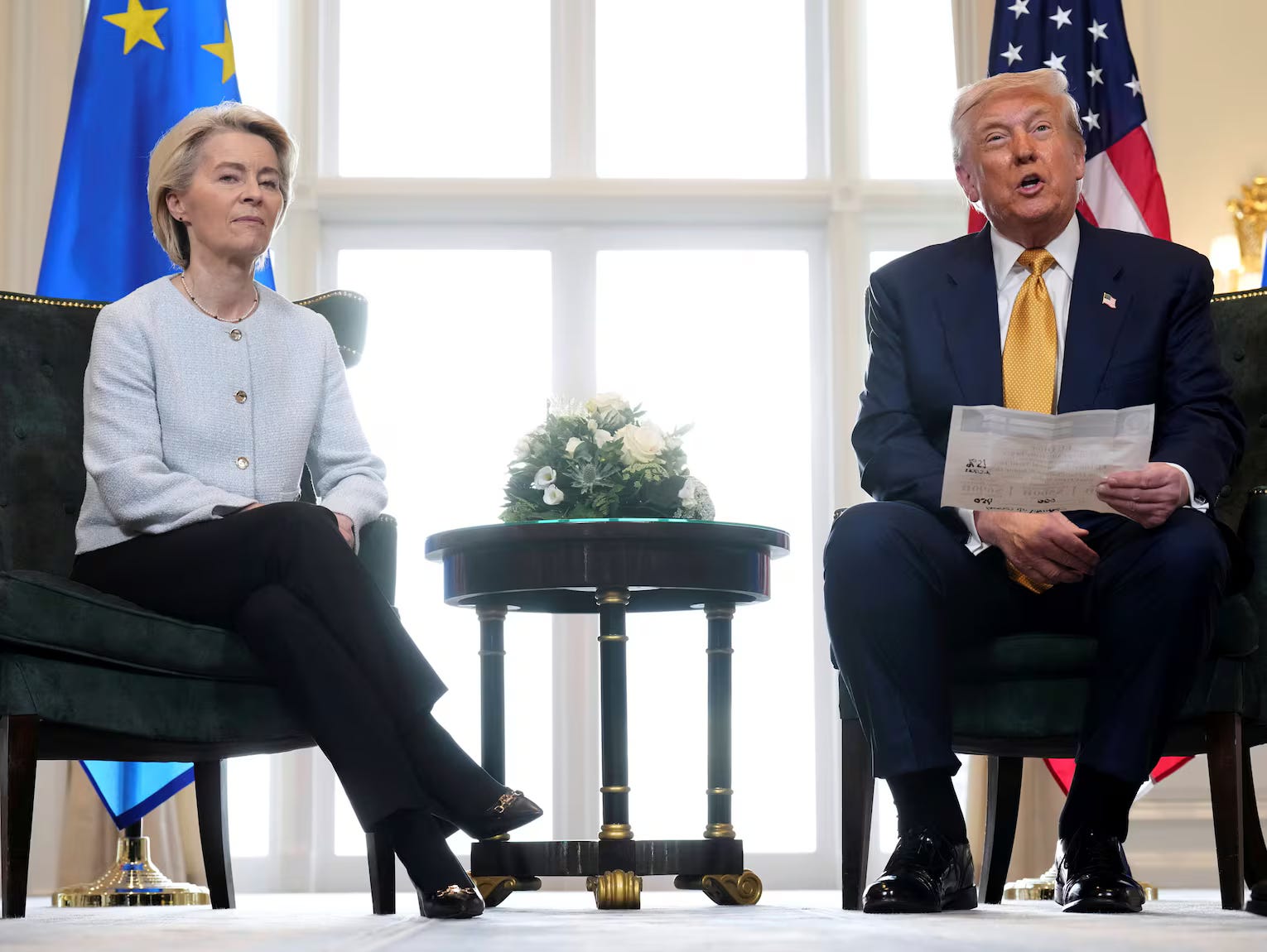
This new reality was made plain from the early days of Trump’s second term. When the US president met European Commission President Ursula von der Leyen in Scotland in July 2025, the encounter was neither cordial nor symbolic, as had often characterized transatlantic summits.
Instead, it marked the culmination of months of escalating tensions. Trump’s actions made that clear:
He questioned the relevance of NATO to the United States and hinted at abandoning the alliance’s mutual defense clause.
He revived talk of purchasing Greenland from Denmark, treating it as a commodity.
He did not hesitate to impose punitive tariffs on EU and UK imports.
2. A Harsh National Security Doctrine
The peak of Europe’s shock came in November 2025, when the Trump administration released its National Security Strategy. The document portrayed Europe as a weak partner in need of “restructuring” and declared that the era of the world relying on the US as a “pillar of the global order” was over. It urged Europeans to shoulder the burden of their own defense.
What rattled Europeans most was the strategy’s bleak portrayal of the continent. According to the document:
Europe’s share of global GDP had dropped from 25% in 1990 to just 14% today.
The continent is suffering from “civilizational erosion” and could vanish as a cultural-political entity within 20 years.
Brussels’ bureaucracy and supranational institutions are undermining national sovereignty.
European migration policies are “altering the continent’s identity and fueling internal conflicts.”
“Censorship of free expression and suppression of dissent” are choking democracy.
In essence, Washington painted Europe as a critically ill patient in denial about its condition. But the administration didn’t stop at diagnosis. It offered a treatment plan published by Le Point with seven priorities, or “orders,” for Europe if it wanted to remain a relevant US ally:
End the war in Ukraine swiftly and at any cost.
Redefine Europe as a union of “sovereign nations” rather than a supranational bloc.
Encourage populist movements to “resist Europe’s current trajectory.”
Fully open European markets to American goods.
Refocus cooperation on “healthy” Eastern and Southern European states.
Halt NATO expansion and admit no new members.
Align with Washington in confronting China economically and technologically.
Thierry Breton, the former EU Commissioner for the Internal Market, remarked that the strategy shattered long-held assumptions about the strength of US-Europe ties. It forced Europeans to urgently consider self-reliance in defense and technology.
3. Tariff Wars and Economic Blackmail
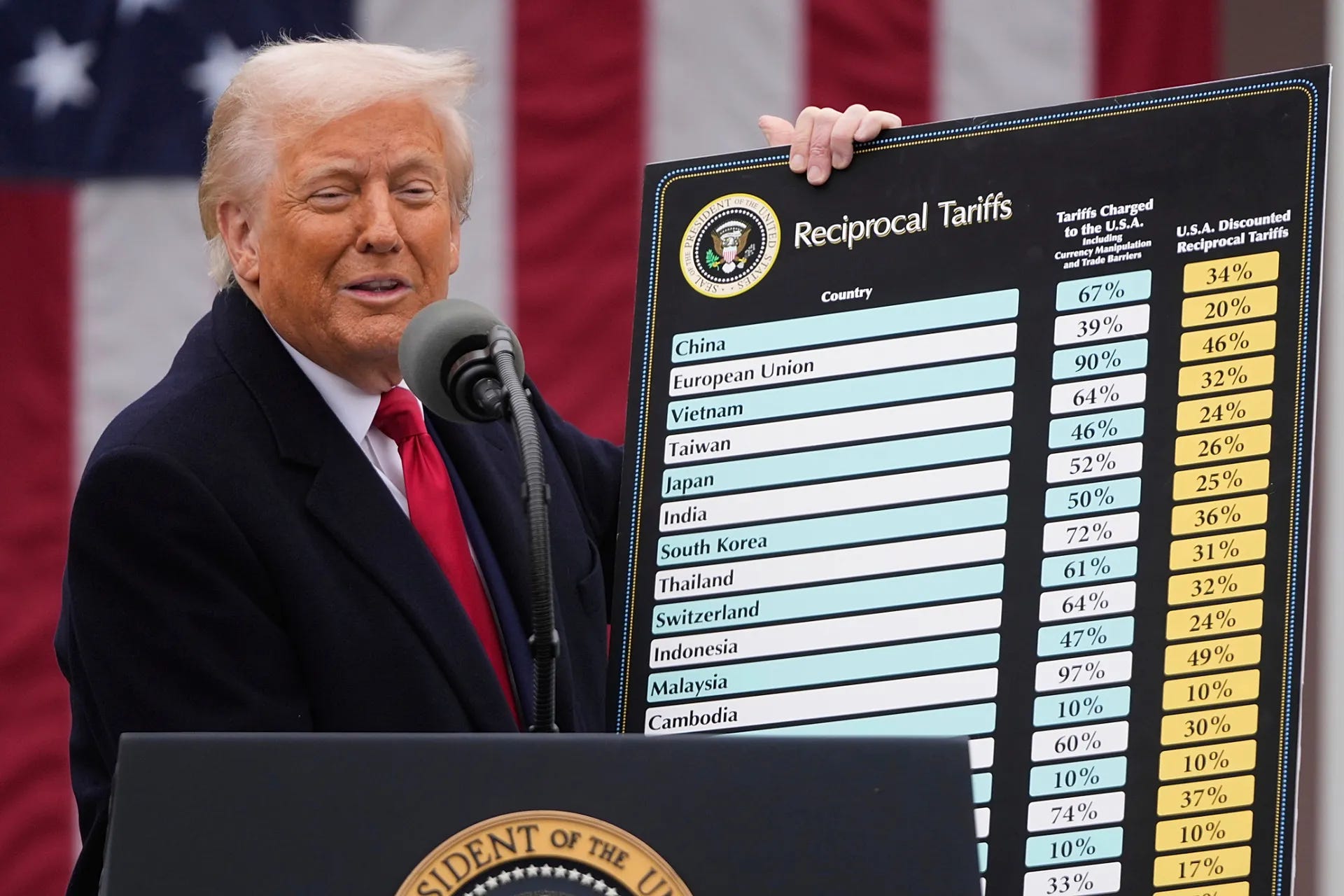
The crisis deepened on the economic front in April 2025 when Trump announced sweeping tariffs on EU imports (20%), and raised duties on steel and aluminum to 25%, then 50%.
In response, the EU introduced retaliatory tariffs on American goods worth €72 billion and threatened to invoke its new “anti-coercion” instrument against the United States.
But Europe’s dependence on the US for security especially amid the Ukraine war narrowed its room for maneuver. The crisis concluded with a deal in July 2025 that European leaders described as humiliating, a clear capitulation to Washington. The deal included:
The EU eliminated most of its industrial tariffs on US products.
The US retained 15% tariffs on European exports triple the pre-trade war level.
Europeans committed to investing $600 billion in the US and purchasing $750 billion worth of American energy by 2028.
In the aftermath, Europe began picking up the pieces, seeking to reduce its reliance on Washington by diversifying partnerships and sidestepping both US and Chinese tariff regimes. Steps included:
Signing agreements with Gulf and Maghreb countries for energy supply and joint infrastructure projects.
Reviving stalled free trade talks with major Global South blocs.
4. A Clash Over Digital Sovereignty
On the digital front, Brussels clashed with American tech giants and the Trump administration backing them. The conflict escalated after the EU implemented the Digital Services Act (DSA) and Digital Markets Act (DMA), launching investigations into disinformation and hate speech especially during the Gaza and Ukraine wars.
The European Commission opened formal proceedings against X, accusing it of failing to remove illegal content. On December 5, 2025, it hit the platform with a €120 million fine for violating European content regulations.
This was part of a broader crackdown on Big Tech. Just months earlier, the EU had levied a record fine of nearly €3 billion on Google over monopolistic practices.
The EU’s moves angered the Trump administration, which saw them as a deliberate attack on US companies and an infringement on internet freedom. Washington responded swiftly:
It linked any reduction in US tariffs such as those on steel to European rollback of digital legislation.
The State Department launched a diplomatic pressure campaign urging European governments to amend or shelve the DSA and DMA.
In September, Trump denounced the X fine as “a vile act,” accusing Europe of “heading down a lunatic path to control the internet.”
In late December, the State Department imposed visa bans on five European officials involved in content regulation.
Secretary of State Marco Rubio justified the move as part of a broader vision that sees Europe stifling right-wing dissent and risking “civilizational erasure” through its current policies. European officials condemned the step and warned of a firm response unless Washington reversed course.
Dependence or Independence?
As this turbulent year draws to a close, Europe stands at a historic crossroads in its relationship with the United States. It has become clear that the American security guarantees once seen as a cornerstone of Europe’s stability and prosperity are now conditional or perhaps even illusory.
In practical terms, the shocks of 2025 have driven Europe toward several decisive measures:
Reviving joint defense projects, accelerating the development of an independent industrial and tech base, and renewing calls for a standalone rapid response force.
Increasing defense budgets across most EU countries, projected to reach a combined €381 billion in 2025 a 19% rise from the previous year.
Relaunching initiatives to support European tech startups and build alternatives to US platforms.
Diversifying raw material and rare earth supply chains through partnerships in Africa and Asia, moving away from both US and Chinese dependencies.
Exploring euro-based payment systems to reduce exposure to US sanctions and pressure.
In Brussels, the push for greater “European sovereignty” has now become a formal strategy though its realization will require unprecedented cooperation among states with divergent interests.
While France and Germany have signaled their willingness to lead on defense and economic initiatives, the path to meaningful integration remains fraught. Eastern European nations still cling to the American umbrella, while Western states advocate for more autonomy.
In the end, the shocks of 2025 were not merely a string of transatlantic disagreements they marked a redefinition of the very terms of the partnership. The question now is whether Brussels can unite its ranks and close the divide or if fractured interests will leave Europe reacting from the sidelines, rather than shaping its own destiny.