

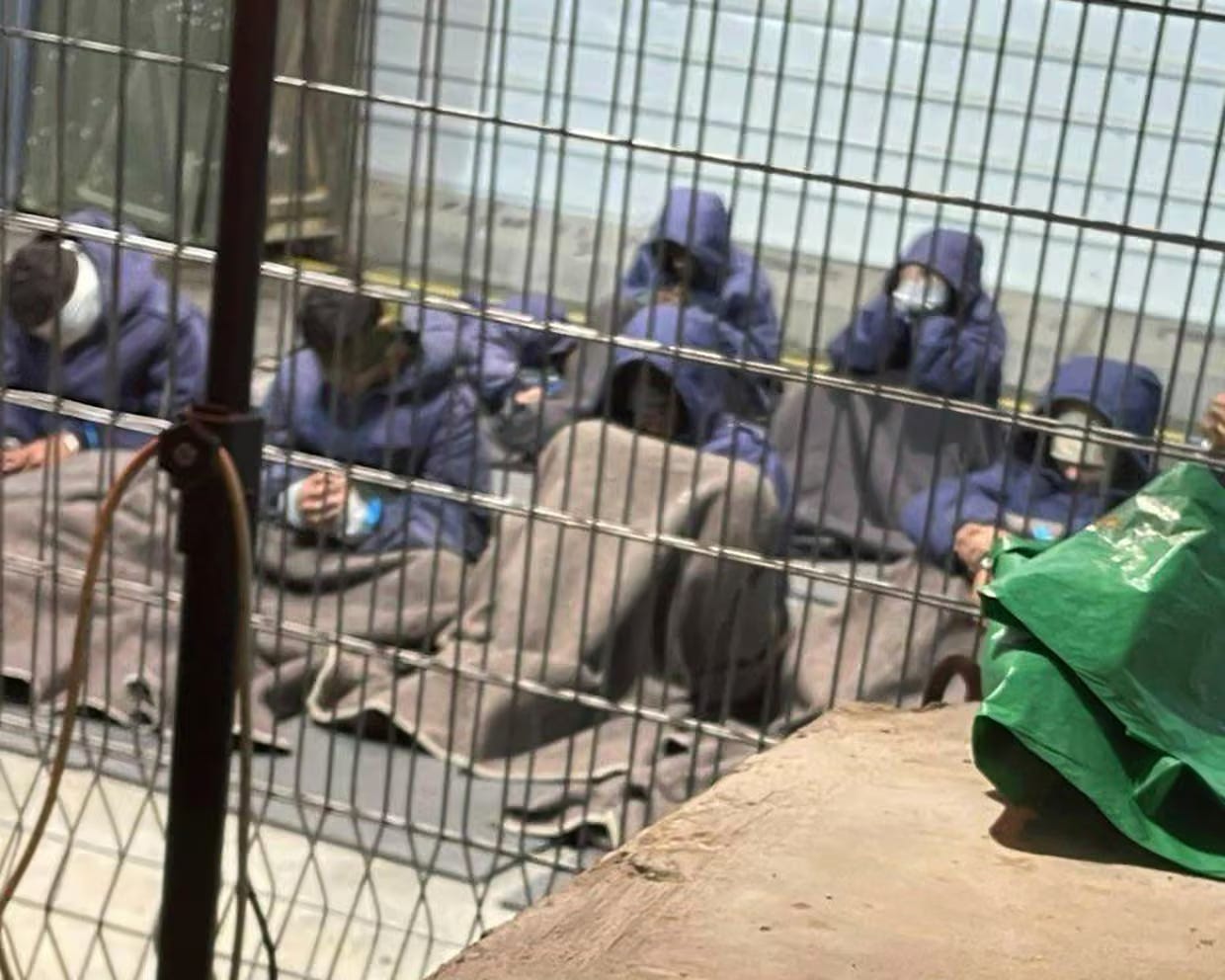
As repressive measures intensify inside Israeli prisons, there is a growing need for a legal and human rights-based analysis to examine the changing conditions faced by Palestinian prisoners. Among the most alarming developments is a proposed law recently approved in its first reading by the Knesset that would allow for the execution of Palestinian detainees.
Legal experts warn this move has far-reaching implications, not only in terms of Israel’s international obligations but also regarding the daily realities of those behind bars.
In this in-depth conversation with Noon Post, three prominent experts dissect the legal and humanitarian dimensions of the bill: Issam Aruri, Director General of the Jerusalem Legal Aid and Human Rights Center, explains the legal ramifications; Amani Sarahneh, Head of Media and Documentation at the Palestinian Prisoners’ Club, outlines the lived reality of prisoners amid this escalation; and Sahar Francis, a prominent human rights lawyer, offers a comprehensive analysis of the risks and violations this law could unleash.
How do you assess the Knesset’s first approval of the bill to execute prisoners?
Sahar Francis explains that the idea of executing Palestinian prisoners is not new it was first proposed years ago by Avigdor Lieberman but failed to pass at the time. “The Israeli occupation already carries out extrajudicial killings daily. It doesn’t need a legal framework to continue executing Palestinians,” she says.
Under existing Israeli civil law, capital punishment is limited to crimes related to Nazism and WWII. Military law has included provisions for capital punishment since 1967 but under strict conditions requiring a unanimous verdict by a panel of three or five judges.
Notably, military prosecutors have only sought the death penalty once, and the sentence was later reduced to life imprisonment.
This bill seeks to remove those safeguards. It proposes giving military commanders the authority to amend the orders and eliminate the requirement for a unanimous decision, thereby making capital punishment easier to impose. It also stipulates that execution sentences would be final and not subject to reduction.
Amani Sarahneh emphasizes that the bill cannot be viewed in isolation from Israel’s broader campaign against the Palestinian people. “This law is part of a long chain of military orders and legislation designed to suppress Palestinian existence,” she says. “We are entering a new phase that reflects the peak of Israeli escalation under a policy of extermination.”
Issam Aruri ties the bill to Israel’s rising extremism. “This approval is not surprising given the current climate of unchecked racism and hatred towards Palestinians,” he says. “It reflects a wider wave of incitement and violence that characterizes the state’s institutions today.”
What is driving this law, and what are the potential consequences if passed?
Aruri points out that the bill is part of an ongoing competition between Israel’s right-wing factions traditional Likud and more extreme religious Zionist groups especially as the country heads into an election year.
“Each side wants to appear more extreme to win over an increasingly radical electorate,” he says.
He also connects the bill to prisoner exchange deals, in which Israel was compelled to release Palestinians serving life sentences. This, he suggests, sparked resentment among Israeli officials, who had hoped to keep these prisoners incarcerated until death.
The law is seen as part of a broader system of punitive measures aimed at crushing Palestinian resistance and creating a deterrent effect.
Francis adds that the bill fits into Israel’s trajectory toward authoritarianism and institutionalized racism. “The real danger lies in normalizing state-sanctioned executions as a political tool,” she warns.
Sarahneh echoes this, noting that while Israel already carries out de facto executions, the bill seeks to legitimize them. “It’s no longer just about winning elections it’s about embedding systematic killing into law.”
Could the law apply retroactively to current or former prisoners?
Aruri explains that while laws typically don’t apply retroactively, Israel’s legal system may find loopholes to do so. “There’s concern the law could be applied to current inmates or even released prisoners,” he says, referencing previous cases where former prisoners were rearrested and resentenced after release.
Francis believes retroactive enforcement is unlikely but notes that extremist lawmakers have floated the idea of creating special courts particularly to handle cases from the October 7 events. These could provide legal cover for implementing the law retroactively.
Sarahneh points out that the most vulnerable are those detained after October 7, especially from Gaza and Jerusalem. “There’s still ambiguity surrounding how the law will be implemented, but the focus appears to be on Gaza detainees,” she says.
Does the law promote impunity and incite further violence against Palestinians?
Francis is blunt: “Israel doesn’t need another law to kill it does so every day.” Still, she acknowledges that this bill sends an additional message of incitement. Sarahneh agrees, pointing to parallel legislation targeting Gaza detainees, which could lead to special trials and retroactive executions.
Aruri warns that the bill could normalize extrajudicial killings not just of Palestinians, but by Israelis against each other. “This gives settlers and soldiers broader license to kill with impunity,” he says, noting the growing number of Palestinian children executed and denied proper burials.
What makes this law discriminatory?
Sarahneh argues that the bill transcends conventional definitions of racial discrimination. “It’s designed specifically to target Palestinians,” she says, adding that the law reflects Israel’s colonial project. Even in areas under Israeli civil law, she notes, Palestinians face systemic racism.
Francis highlights the clause that applies capital punishment to those whose actions “threaten the Jewish state’s existence.” This wording ensures that only Palestinians not Jewish settlers or soldiers will be subject to the law.
Aruri explains the law’s provisions are deeply biased. “The bill targets Palestinians exclusively,” he says, “and does not apply to Israelis, even if they commit the same acts.” Killings by settlers are often justified as self-defense, he adds, regardless of the evidence.
How dangerous is removing the requirement for unanimous judicial decisions on executions?
Aruri sees this change as a dangerous legal shortcut. “Most systems require unanimous or two-thirds decisions in capital cases,” he explains. “Reducing that to a simple majority lowers the threshold for executing someone.”
Francis underscores that the Knesset is not authorized to change military orders—that power lies with military commanders. The removal of unanimous decisions from panels of judges is a “serious regression” and a significant erosion of legal safeguards.
Sarahneh calls it “a deliberate attempt to ease the path to executions,” removing any barriers that might delay or prevent death sentences.
What are the implications of banning commutations or sentence reductions?
Sarahneh describes this provision as part of a broader plan to institutionalize state killings. “It deprives prisoners of any legal recourse,” she says, making death sentences final and unavoidable.
Francis calls it “a dangerous departure from global judicial norms,” noting that most developed nations have abolished the death penalty, or allow for sentence reviews.
Aruri adds that removing the possibility of pardon even from the president closes the door on prisoner exchanges or diplomatic negotiations. “This law locks in death, with no way out,” he says.
What are the psychological, social, and legal impacts on prisoners and their families?
Sarahneh says nothing is more harrowing than seeing your child targeted by state legislation. “Families are already paying a high price but this law adds unbearable psychological and emotional tolls,” she says.
Francis notes that over 98 prisoners have died in Israeli custody. “This bill intensifies the fear and anguish among prisoners and their families,” she says, warning it will lead to more abuse and torture to extract confessions.
Aruri describes current prison conditions as abysmal. “Prisoners receive the bare minimum food, medical care, even air and light,” he says. He warns that the bill will further erode these standards, giving cover to execute prisoners even without trial.
How does the law violate Israel’s international obligations?
Francis says the bill is a direct breach of the Geneva Conventions, which prohibit an occupying power from enacting harsher laws than those already in place. She stresses that Palestine has ratified these conventions, while Israel continues to flout them.
Sarahneh calls the law “a flagrant violation of international law,” saying it aims to legitimize the killing of civilians.
Aruri points to Israel’s reliance on British Mandate emergency regulations from the 1930s, which included the death penalty. However, he emphasizes that modern legal systems have moved away from capital punishment, especially in occupied territories.
He notes that the International Court of Justice recently declared Israel’s occupation unlawful and had called for its end by September two months ago. The failure of signatory states to act, he says, emboldens Israel to continue violating international norms with impunity.
As highlighted by Sarahneh, Francis, and Aruri, the bill to execute Palestinian prisoners represents more than just a legal shift it signals a systemic escalation targeting the Palestinian people as a whole.
It formalizes extrajudicial killings already practiced on the ground and deepens the legal apartheid framework that excludes Israeli soldiers and settlers from accountability.
The bill contributes to a climate of fear and psychological trauma, impacting prisoners, their families, and Palestinian society at large. It is part of a broader strategy to entrench Israel’s control and suppress resistance at the cost of human rights, legal norms, and international accountability.
The need for a coordinated legal, political, and diplomatic response both domestically and globally is more urgent than ever.
