

In a Facebook post dated January 28, 2026, Sudanese citizen Nancy Amer Mullah pleaded with her country’s government to intervene and stop the mistreatment of Sudanese refugees in Egypt. She claimed to have personally witnessed fellow Sudanese being rounded up “like sheep,” handcuffed and prepared for deportation without regard for age, gender, or vulnerability.
Such a post is rare. Sudanese refugees in Egypt are virtually voiceless, and when they do speak, they are expected to show gratitude or risk being accused by nationalist groups of lying or inciting unrest. Amer’s post, which includes no photos or video evidence, could easily be dismissed as fabricated another casualty of a silenced reality.
Yet a closer look at the increasingly precarious conditions of asylum in Egypt reveals a pattern backed by government actions, particularly targeting Sudanese refugees since 2023. This intensified in 2024 with Egypt’s controversial new asylum law. Though officially framed as protective, it has worsened the refugee experience, as confirmed by developments throughout 2025.
Sudanese Refugees: Presumed Guilty
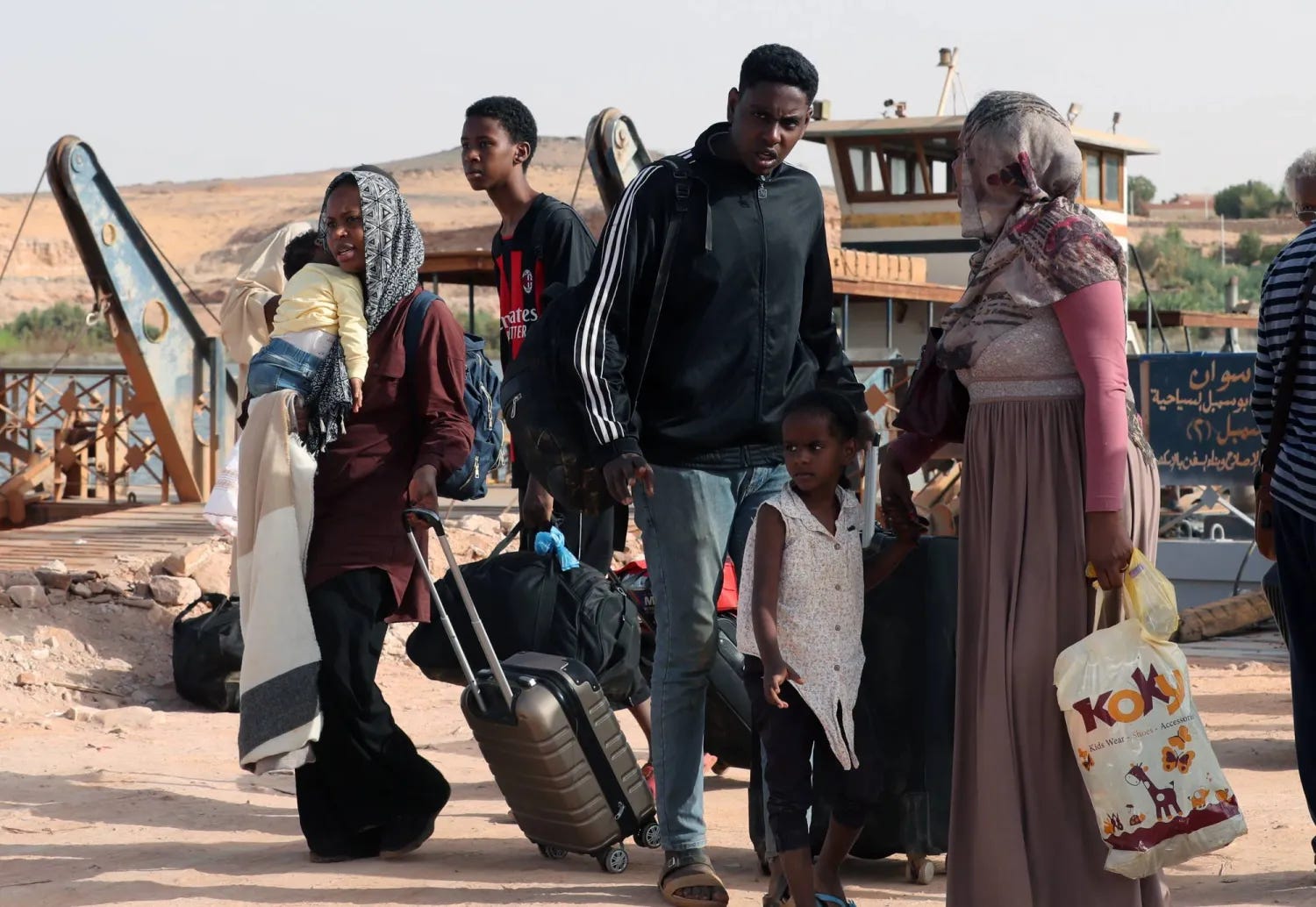
Of the 3 million Sudanese who fled war, Egypt absorbed the largest share about 1.2 million, with nearly 600,000 classified as refugees. Initially, Egypt was seen as a more hospitable destination due to shared historical and cultural ties. Neighborhoods like Sayeda Zeinab, Faisal, Maadi, and Heliopolis hosted thriving Sudanese communities.
But that relative safety has deteriorated. Increasingly, refugees face a Kafkaesque bureaucratic system, legal limbo, disrupted healthcare and education, arbitrary arrests, and deportations. In Cairo and other major cities, security raids instill daily fear among Sudanese communities.
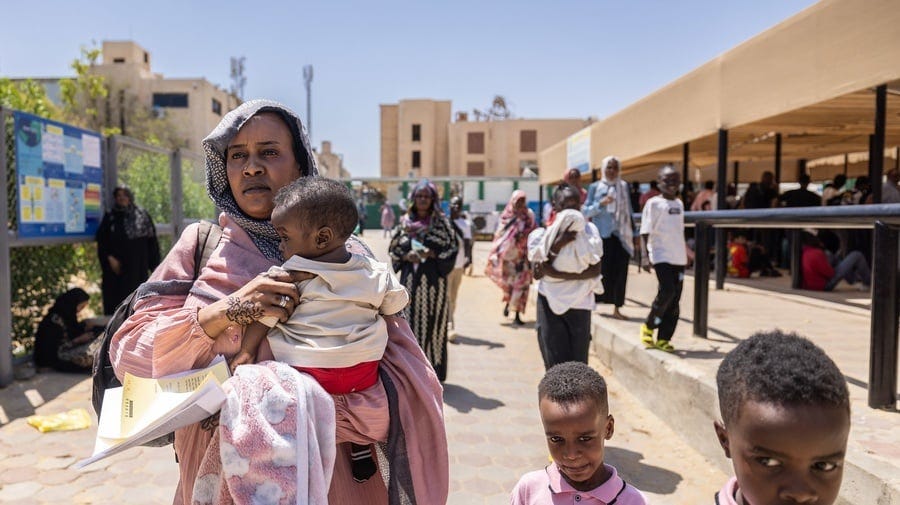
According to a 2024 Amnesty International letter to the Egyptian government, exact deportation figures are unclear, but over 5,000 cases were documented between April and September 2023 alone. These included individuals whose legal documents had expired or were still awaiting residency approval. In November 2023, some 1,600 Sudanese—many registered refugees—were deported.
Amnesty’s documentation of 27 Sudanese detainees, among a larger group of 260 arrested between October 2023 and March 2024, reveals that 800 people were expelled between January and March 2024.
Their report, titled “They Shackled Us Like Dangerous Criminals”, details dire conditions in Egypt’s border detention centers: overcrowded, unsanitary, and infested with rats.
Bureaucracy as a Weapon of Expulsion
By the end of 2024, Egypt had forcibly deported nearly 20,000 Sudanese, exploiting their legal vulnerability. The campaign escalated in 2025, targeting areas like Faisal, once considered a safe haven. In early 2025, more than 100 were arrested there in one sweep.
Even children were not spared: 21 minors were arrested, 42% of detainees held valid UNHCR cards, and 12% had upcoming appointments with the agency none of which protected them.
Many deportations cited a lack of valid residence permits. While this applies to all foreign nationals, Sudanese refugees face unique obstacles: severe delays in application processing, registration centers closed due to lack of funding, and appointments pushed to as late as 2029.
Moreover, even those holding valid asylum papers have had them confiscated. One 17-year-old student was stripped of his refugee card at a police checkpoint and deported days later, separated from his parents. Between January and March 2025, 54 children were forcibly removed 25 of them torn from their families.
Coerced “Voluntary” Departures
The Refugees Platform in Egypt (RPE) reported cases where refugees were forced to sign “voluntary departure” papers. In one example, four Sudanese were deported this way after their UNHCR cards were seized. Amnesty’s report describes detention centers where detainees sleep on the floor in freezing conditions without blankets or beds, consume meager food, and endure appalling sanitation.
Sudanese refugees are not the only targets. Eritreans and South Sudanese also face similar fates. One 16-year-old Eritrean girl was detained for five months without medical care and pressured into signing a voluntary exit form. A 19-year-old South Sudanese student and caregiver was deported despite being a registered refugee.
Syria’s Exiles Under Threat
Syrian refugees in Egypt—numbering over 100,000—face growing insecurity. Since the fall of Bashar al-Assad’s regime, Egypt has enforced a sweeping policy: any Syrian arrested is to be deported, regardless of legal status. This has already led to deportations, including three individuals expelled simply for celebrating Assad’s downfall.

After 2011, Syrians were initially allowed visa-free entry to Egypt. That changed after the 2013 ousting of President Mohamed Morsi. Further restrictions were imposed after Assad’s fall, requiring prior security clearance for all Syrian entrants, including those from the US, UK, or Schengen zone reversing earlier exemptions.
By late 2024, Egypt tied Syrian residency to rigid tracks like UN registration, study, or investment, creating what RPE described as a state of “forced legal irregularity.” This led to mass raids in Syrian-majority neighborhoods, especially in major cities.
In January 2026, several arrests were reported in Hurghada, even of registered refugees or those with upcoming permit appointments. While courts released many for lack of evidence, security services continued holding them, pressuring families to book exit flights.
Slow, Silent, Systematic
Refugee deportations in Egypt follow a distinct pattern: they are gradual, persistent, and largely ignored by media, the public, and even the refugees’ home governments. With Egypt facing economic turmoil, refugees have become scapegoats for unrelated crises, often targeted by right-wing propaganda.
This silence has pushed refugee advocacy to the margins, limited to elite circles and human rights NGOs like Amnesty International and RPE groups with little public backing. The absence of democratic mechanisms further weakens efforts to defend refugee rights, as access to data, archives, and documentation remains tightly controlled by the state.
The Egyptian government claims to host nine million refugees a number it manipulates as leverage with Europe. In contrast, the UNHCR records barely a million. Accurate deportation figures are elusive, leaving many injustices undocumented.
As researchers Neve Gordon and Nicola Perugini note in Human Rights as Domination, human rights defenders paradoxically rely on the very state they accuse of violations.
In Egypt’s case, the state plays judge and accused, undermining justice from the start. And without meaningful international pressure often blunted by EU migration deals refugees in Egypt are left to endure a bleak and uncertain future.