

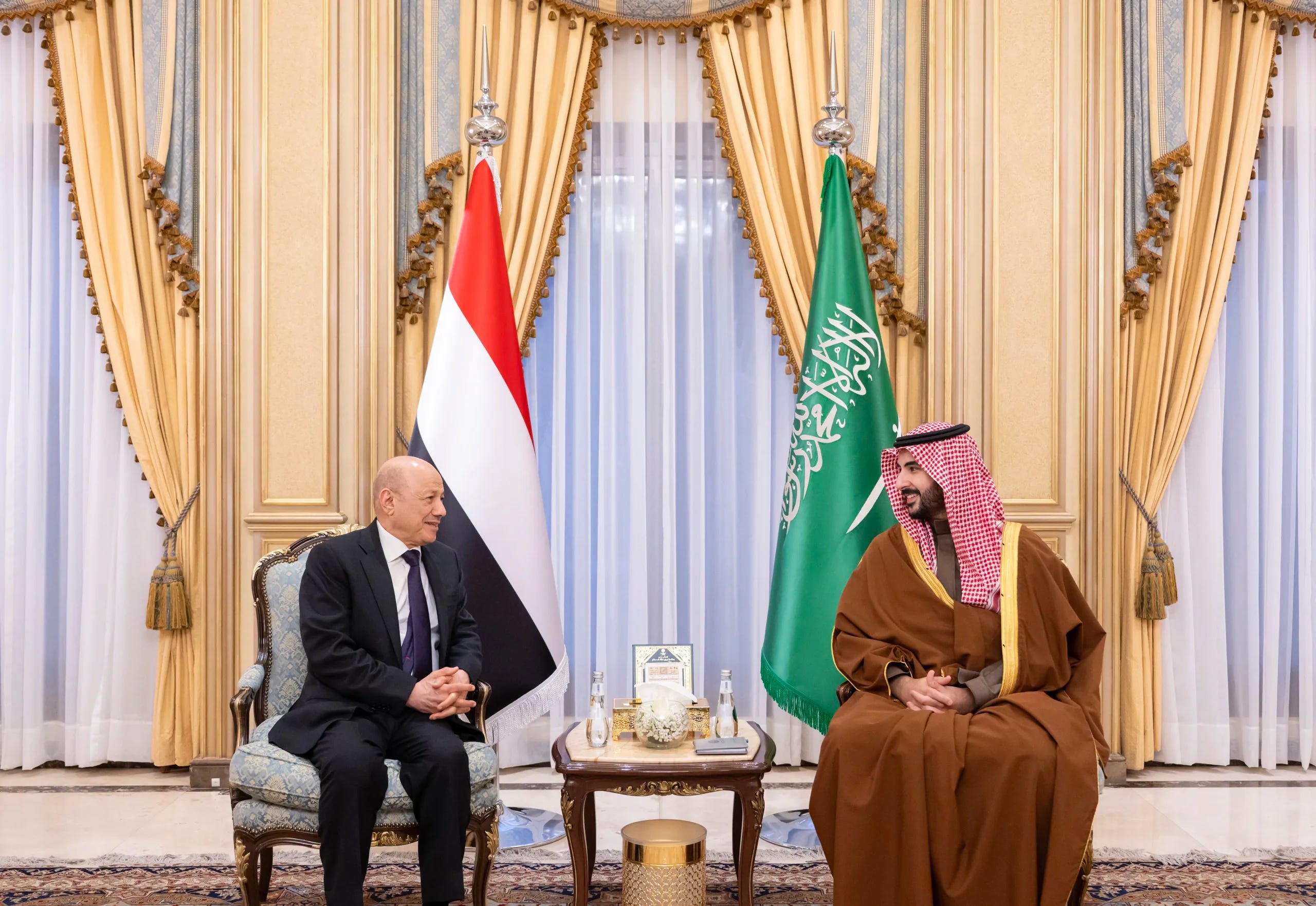
In the wake of dramatic developments reshaping the balance of power in southern Yemen, Saudi Arabia has unveiled an ambitious development package worth nearly $500 million, targeting the war-torn region. The initiative includes building hospitals and schools, paving roads, and supplying fuel to power stations across ten provinces.
The announcement comes just weeks after the UAE was expelled from Yemen and internationally recognized Yemeni government forces backed by Saudi Arabia launched a counteroffensive that reclaimed vast territories previously controlled by the Emirati-backed Southern Transitional Council (STC), a separatist movement.
The timing of Saudi Arabia’s generous pledges has sparked questions about the true objectives behind them: Are they a genuine response to urgent developmental needs in a country ravaged by war, or a strategic tool Riyadh is using to redraw the map of influence and consolidate its presence at the expense of former allies?
Where Are the Saudi Projects Concentrated?
The announced projects are focused on southern and eastern provinces of strategic significance, many of which were until recently strongholds of the UAE-aligned STC. Highlights of the initiative include:
Construction of new hospitals in several provinces, and the expansion of key roads, such as the Al-Abr road that links Marib to Saudi Arabia through Hadhramaut.
Support for the electricity sector through fuel provision and new generation stations, including a 30-megawatt plant in Taiz, to ensure uninterrupted power and improve basic services.
The construction of a grand mosque on the island of Socotra named after King Salman a strategic island long under direct Emirati influence.
Completion and launch of the King Salman Medical and Educational City in Al-Mahrah, near the Omani border, bolstering the province’s healthcare capacity.
The choice of these locations is far from arbitrary. They are resource-rich, strategically located with access to coasts, seaports, or borders or have been contested zones among rival factions.
Through these projects, Riyadh seeks to stabilize areas that have returned to government control and rebuild them in a way that earns the trust of local populations, long neglected amid war and turmoil.
The development drive also sends an implicit message: Saudi Arabia is positioning itself as the principal patron of reconstruction, at a time when the influence of regional rivals appears to be waning.
Government Support and STC Containment
These initiatives also reveal a great deal about Riyadh’s evolving relationship with local southern forces, particularly following recent events that saw the UAE and the STC lose ground. The STC had significantly expanded militarily in late 2025, signaling a renewed push for southern secession.
Saudi Arabia responded decisively, issuing an ultimatum to STC forces demanding immediate withdrawal. When ignored, it carried out limited airstrikes, followed by a swift advance by government forces, supported logistically and politically by Riyadh, to reclaim those areas within days.
The result: a complete rollback of the STC’s presence in southeastern Yemen, and its effective dissolution as both a political and military entity. Its leader, Aidarous al-Zubaidi, fled to Abu Dhabi, accused of treason by the Yemeni Presidential Leadership Council.
Following the STC’s containment, Riyadh moved quickly to co-opt remaining southern leaders and channel their energy into political dialogue rather than conflict. On January 18, 2026, Saudi Arabia hosted the first public gathering of southern leaders including former STC members to discuss the future of southern Yemen.
The group issued a joint statement affirming the “unity of southern will” and a commitment to a just and peaceful resolution to the southern issue within a comprehensive national framework. The event marked Riyadh’s success in bringing together a broad spectrum of southern actors under its sponsorship after dismantling the STC’s unilateral structure.
At the same time, Presidential Leadership Council Chairman Rashad al-Alimi announced the formation of a supreme military committee to unify armed forces under state control in preparation for a potential confrontation with the Houthis.
Al-Alimi praised the “strategic partnership” with Saudi Arabia and its “promising” support for rebuilding institutions and restoring stability in Yemen. He described the new development projects as the cornerstone of the country’s recovery and reconstruction phase.
These developments underscore Saudi Arabia’s intent to restructure the pro-government camp in the south, eliminating rival power centers and fostering new loyalties grounded in direct Saudi patronage whether through political dialogue or economic support.
Development for Loyalty and Security
Saudi Arabia’s decision to inject half a billion dollars into projects in another country reflects a strategy akin to what might be called a “patronage economy,” where development and service provision become tools for securing loyalty and ensuring security.
In its official announcement, Riyadh explicitly linked development aid to security, stating that its support reflects the Kingdom’s commitment to strengthening stability and building a better future for Yemen and its people.
In practice, this means Saudi Arabia expects political and security returns on its substantial investments. On one hand, improving essential services such as electricity, water, healthcare, and transportation aims to alleviate public discontent in long-neglected provinces.
On the other, the Kingdom expects local authorities in these areas to remain loyal to the Saudi-led coalition and align with its priorities particularly in fighting the Houthis and maintaining Yemen’s unity.
This approach is not new in Yemen. During the war years, the STC and its Emirati allies pursued a similar strategy of winning public support by funding humanitarian and development projects in Aden, Socotra, and other areas, in exchange for establishing loyal ground forces.
Today, with the UAE and its allies having exited the southern scene, Riyadh is moving quickly to fill the vacuum through its “Rebuild Yemen” program.
Analysts note that Saudi Arabia has shifted away from its traditional, behind-the-scenes role in Yemen toward direct engagement in state-building and service provision a strategy aimed at entrenching lasting influence.
Rather than leave a vacuum that could be exploited by adversarial forces, the Kingdom is investing in infrastructure and human development to ensure that liberated areas remain aligned with its political orbit.
In effect, Saudi aid is evolving into a form of new social contract in the south: roads, hospitals, and fuel in exchange for political loyalty and the creation of a secure environment free from separatist or extremist threats on the Kingdom’s southern border.
What Comes Next?
This strategy raises questions about its long-term sustainability and effectiveness. Will improved public services be enough to persuade southern factions to abandon secessionist aspirations and integrate into a unified Yemeni state under Saudi sponsorship? Or will loyalties based on material benefits prove fragile if support wanes or political tensions re-emerge?
The reality is that the idea of southern independence still resonates deeply in places like Aden and Hadhramaut, even if its political representation has weakened with the dissolution of the STC. Riyadh has tried to reassure southerners that their aspirations are not being ignored, promising to sponsor a southern dialogue conference aimed at reaching a “comprehensive vision and just solutions” to the southern issue.
As Saudi Arabia’s political and economic role in southern Yemen continues to grow, the landscape appears poised for a significant reshaping of the country’s war-and-peace dynamics. In the short term, Saudi support has enabled the Yemeni government to unify its southern front and secure its strategic depth, giving it a stronger hand in future peace talks with the Houthis or in a potential decisive military confrontation.
What is increasingly clear is that Riyadh has reordered its priorities in Yemen. After years of military stalemate, it has come to see development as a more effective tool for asserting influence than hard power alone.
The Kingdom’s massive investments also carry a broader strategic goal: to block the return of rival influence in southern Yemen, whether from Abu Dhabi or other global players seeking a foothold through post-war reconstruction.
Yet the challenges remain immense. Yemen continues to suffer one of the world’s worst humanitarian and economic crises, and rebuilding its shattered infrastructure will require far more than the currently pledged funds.