

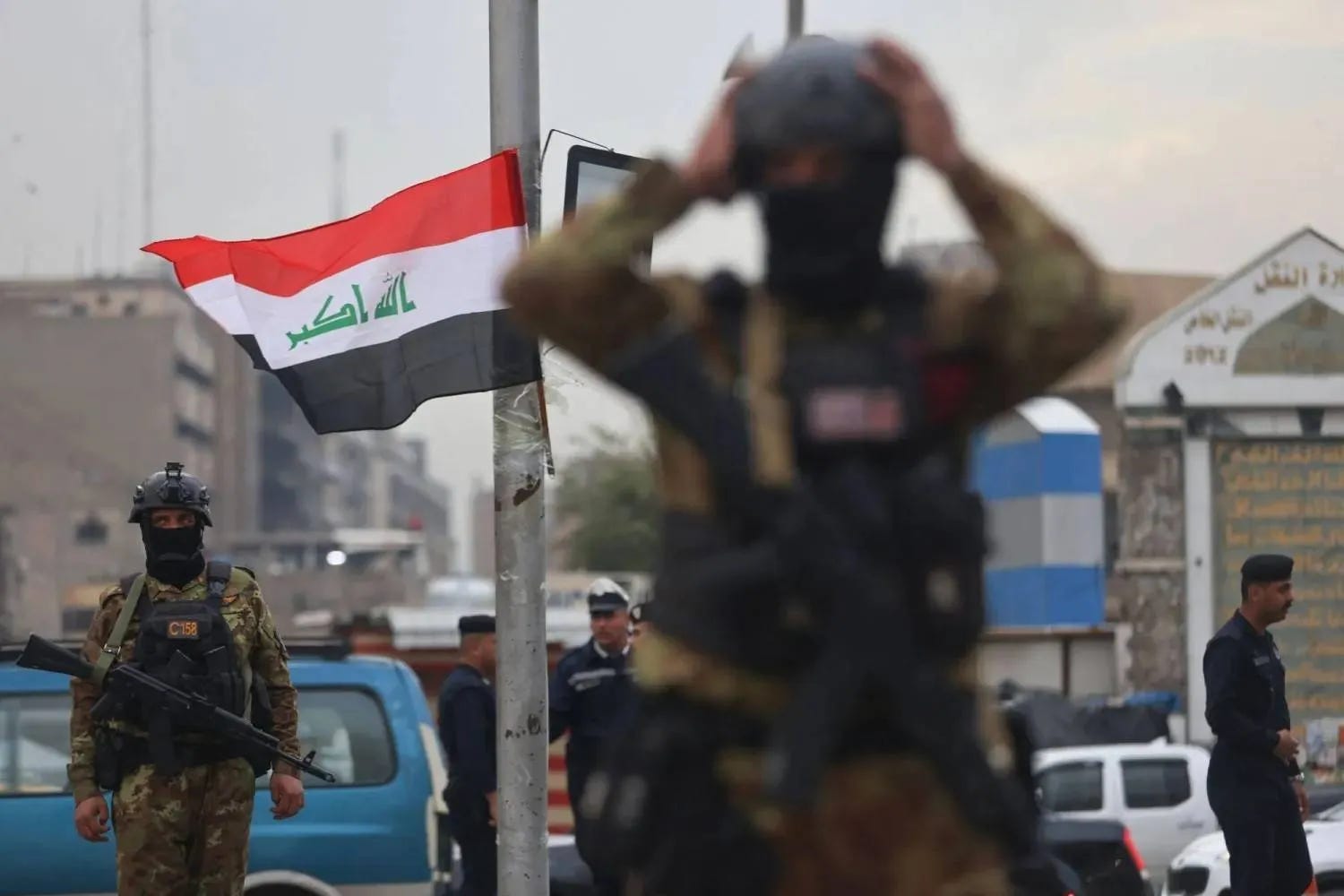
The entry of ISIS into Iraq in June 2014 was not a fleeting event; it marked a profound transformation in the country’s geography after the group seized more than a third of Iraqi territory, placing it entirely beyond government control.
This upheaval forced Iraq’s rival factions to come together to redefine their relationship one shaped by the urgency of the moment and shifting balances of power. Dialogue emerged as the primary means of overcoming differences and strengthening coordination among political and security actors to preserve internal stability.
Cooperation Against ISIS
Following a religious edict issued by the highest Shiite authority in Najaf and the formation of the Popular Mobilization Forces (PMF), the objective was to reinforce Iraq’s security institutions and repel the existential threat facing the country.
In this context, the PMF found itself fighting alongside Kurdish Peshmerga forces despite deep political and ideological divisions particularly as ISIS advanced toward the borders of the Kurdistan Region and threatened Erbil.
Security expert Mukhlid Hazem told Noon Post that cooperation between the Kurdistan Region and the PMF “emerged out of sheer necessity, despite profound disagreements over disputed territories.
Battlefield realities imposed military coordination to secure shared front lines, with international support to confront a common threat. This coordination was born of war, not of political convergence or long-term strategic alignment.”
Similarly, Hadi Jalo Marai, head of the Political Analysts Association, said that ISIS posed a sweeping threat to Iraq’s ethnic and religious communities, prompting all parties—without exception—to mobilize in response.
This period of coordination between Baghdad and Erbil provided a model for cooperation among actors with divergent agendas, helping to establish mechanisms for joint operations based on geographic deployment and reinforcing a sense of national responsibility in confronting terrorism.
The Beginning of Divergence
After the declaration of victory over ISIS in 2017, Peshmerga forces had extended their control over several disputed territories mixed areas inhabited by both Arabs and Kurds along the borders of the Kurdistan Region with provinces such as Nineveh and Kirkuk. From that point onward, relations with the PMF began to deteriorate.
Hazem attributed this to “competition over influence in areas reclaimed from ISIS, differing regional agendas, and the growing strength of the PMF as a political and security actor rivaling the authority of the Kurdistan Region.”
This competition and resulting security friction prompted the federal government, led at the time by Prime Minister Haider al-Abadi, to redeploy forces in those areas particularly in oil-rich Kirkuk in what was widely viewed as a significant political turning point.
Lieutenant General Jabbar Yawar, military and security adviser to the Kurdistan Regional Government, said instability stems from “the multiplicity of armed forces and leaderships, the absence of unified command, the failure to implement Article 140 of the constitution, and ongoing political disputes.”
In a further escalation, the Kurdistan Regional Government announced a date for an independence referendum in September 2017, despite international calls for postponement and continued dialogue with Baghdad.
On September 29, 2017, the U.S. State Department rejected the referendum results as illegitimate, further complicating relations. Baghdad likewise deemed the vote unconstitutional and threatened measures to safeguard Iraq’s unity, amid Erbil’s efforts to strengthen its prospects for statehood by consolidating control over economic resources and strategic border areas.
The PMF Law and Rising Tensions
Gradually, the language of partnership and coordination gave way to that of influence and control. The PMF law faced broad opposition, particularly from Sunni and Kurdish political forces.
Opponents argued that it expanded the power of armed factions, while supporters maintained that the PMF is an official institution under the commander-in-chief and cannot be dissolved though weapons must remain under state authority.
A report by the Stimson Center warned of the need for fundamental reform of the PMF to prevent it from undermining Iraq’s fragile stability, describing the country as facing a “critical juncture requiring decisive action.”
Yawar clarified that the Peshmerga’s disputes are not with the official PMF leadership but with certain armed factions targeting the Kurdistan Region and coalition forces operating with Baghdad’s approval.
In a July 22, 2025 phone call with Prime Minister Mohammed Shia al-Sudani, U.S. Secretary of State Marco Rubio expressed concern that proposed PMF legislation could entrench Iranian influence and empower armed groups that undermine Iraqi sovereignty.
Escalation and Exchange of Threats
Relations between the Kurdistan Region and the PMF have entered a new phase of escalation, marked by an exchange of political and security threats that risk pushing Iraq toward open confrontation.
On March 8, 2026, amid intensifying regional conflict between Iran on one side and Israel and the United States on the other, the so-called “Iraqi Resistance Coordination Committee” an umbrella group for several PMF factions issued a statement threatening Kurdish political leaders and their economic interests.
According to official Kurdish statements, the region has endured more than 450 missile and drone attacks targeting military sites and political figures, including repeated strikes on the home of Kurdistan Democratic Party leader Masoud Barzani and the residence of Kurdistan Region President Nechirvan Barzani in Duhok.
On March 29, 2026, Masoud Barzani called on Iraqi authorities to “take decisive action against these outlaw groups or move to protect the state,” warning that “the people of Kurdistan will defend themselves.” He added that political disagreements must not endanger civilians or lead to ethnic cleansing.
Conversely, Abu Alaa al-Walaei, secretary-general of Kataib Sayyid al-Shuhada, condemned the targeting of Nechirvan Barzani’s residence, calling it unacceptable, but suggested it was linked to alleged facilitation of Iranian opposition groups. Kataib Hezbollah also denied responsibility and rejected attacks on civilian areas.
Observers, however, maintain that armed factions remain involved in attacks on the Kurdistan Region, a claim echoed by Kurdish MP Majid Shankali.
Regional Conflict and Its Impact on Iraq
Amid shifting regional dynamics and competition among global powers, escalating tensions between Washington and Tehran have spilled into Iraq, particularly affecting Baghdad and the Kurdistan Region.
Political analyst Salah al-Kubaisi said external pressures are influencing Iraq’s sovereign decision-making, disrupting internal balances. The presence of multiple centers of power and armed groups lacking international legitimacy has directly affected political stability especially between Baghdad and Erbil.
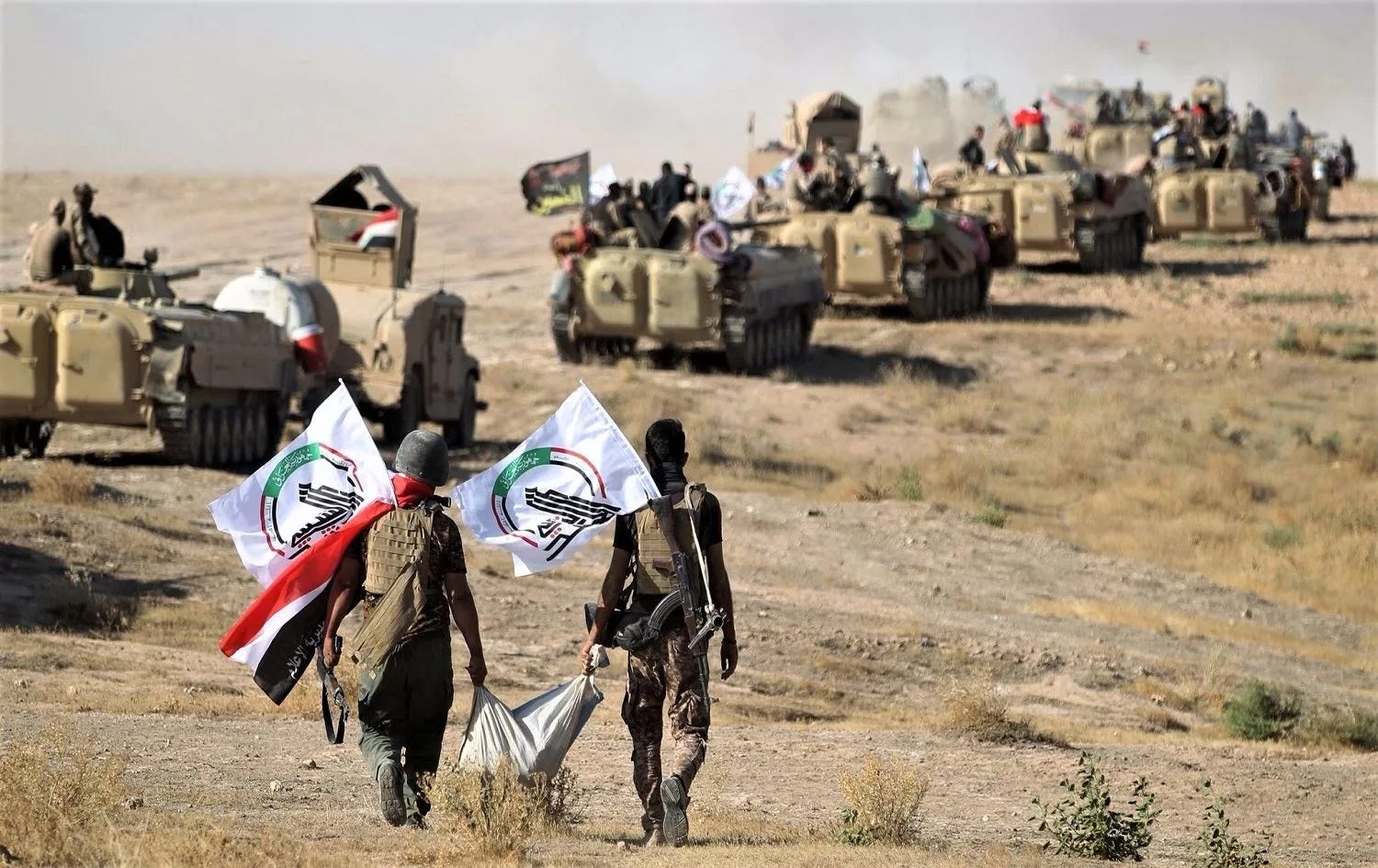
Experts warn that Iraq’s security environment remains fragile and highly vulnerable to regional spillover. Even limited incidents can quickly escalate when external interests intersect.
Hazem emphasized that political disputes have translated into security tensions, exacerbated by attempts to impose faits accomplis on the ground and the presence of armed actors operating outside formal state structures.
Political fragmentation, differing positions on regional conflicts, and the difficulty of forming a unified national stance continue to undermine governance and economic stability.
Foreign Minister Fuad Hussein, in a televised interview, criticized inconsistencies in the positions of Shiite political leaders toward international actors, calling for clearer and more coherent policies aligned with the government’s direction.
The Future of Baghdad–Erbil Relations
The roots of tension between Baghdad and Erbil are deep and intertwined: politically over authority and resources, in security terms due to fragmented command structures, and geographically because of disputed territories.
Jabbar Yawar noted that these disputes date back to the post-2005 period, including disagreements over oil revenues, budget allocations, border crossings, and the role of the Peshmerga.
Leaders within the PMF and allied armed factions accuse the Kurdistan Region of tolerating “unregulated” foreign activity linked to Israel and the United States allegations that Erbil consistently denies, insisting it does not allow its territory to be used to harm neighboring countries.
Internally, divisions among Kurdish political parties particularly between Erbil and Sulaymaniyah have further complicated the landscape, weakening Kurdish unity and giving external actors greater room to influence events.
Political analyst Abdul Jabbar Ahmed said tensions between Sulaymaniyah and Erbil have undermined the Kurdistan Democratic Party’s influence, particularly in Kirkuk.
He added that relations will likely remain strained as long as U.S.-Iran tensions persist, warning that post-war geopolitical shifts could further reshape relations between the Kurdistan Region, Baghdad, and armed actors.
Ultimately, relations between the federal government and the Kurdistan Region remain unstable oscillating between partnership and rupture shaped by political and security developments.
Misunderstandings over federalism, resistance to decentralization, and calls for greater centralization or even a presidential system have further deepened the crisis.