

“Social media is the weapon of the modern age. The most important purchase happening right now is TikTok. Number one. And I hope it happens, because it could be decisive. The second is X. If we get those two, we’ll win a lot. We have to fight this battle, to influence the Jewish people and our non‑Jewish friends.”
This statement by Israeli occupation Prime Minister Benjamin Netanyahu during a meeting with American influencers at the Israeli Consulate in New York in September 2025 can only be read as a frank admission of the decisive battle over reputation and awareness—one no longer fought just on battlefields but in the digital space where beliefs are formed and narratives defeated.
When Netanyahu speaks of social platforms as a “weapon” and frames owning or influencing them in terms of purchase and control, it reveals the depth of Israeli anxiety over losing control of public opinion, especially in the United States, where the image of occupation has eroded due to the war on Gaza.
The traditional Israeli narrative can no longer contain images of killing, starvation, and siege spreading unmediated across the very platforms Netanyahu seeks to dominate, weakening Israel’s ability to present itself as the perennial victim.
A Deep Shift in American Public Mood
Since the outbreak of the war on Gaza, the images that reached American consciousness have created a deep rift between Israel’s official narrative and American public expectations, leading to an unprecedented decline in popular support for Israel in the U.S. and Europe in modern history. This points to a reversal in American public sentiment toward the occupation and its official story.
This negative shift isn’t measured by numbers alone, but also by increasing rejection of the idea of unconditional support not only among Democrats accustomed to criticism but even within segments of Republicans, including youth within the “Make America Great Again” (MAGA) movement associated with Donald Trump, previously one of Israel’s safest support bases.
Multiple polls between 2024 and 2025 revealed erosion in traditional American support for Israel. In September 2025, a Pew Research Center survey showed that more than 53% of Americans held a negative view of Israel, up sharply from 42% in 2022 before the war. A separate Gallup poll in July 2025 found nearly 60% of Americans opposed Israeli military operations in Gaza, while only 32% supported them—low by historical support standards.
These shifts extend beyond military approval or disapproval to voter sympathy. A Quinnipiac University poll found that only 47% of Americans believed supporting Israel served U.S. national interests, while 41% believed the opposite marking a sharp reversal from December 2023, when 69% supported backing the occupation.
Alongside rising public opposition, attitudes toward how the war has been managed and Israel’s responsibility have also changed. An Associated Press–NORC Center poll found that nearly half of Americans believe Israel’s military response has gone beyond acceptable limits—a high proportion relative to previous measures.
The shifts in American sentiment are not confined to traditional partisan divides. According to Pew, the sharp decline in positive views of Israel is not limited to Democrats; Republicans under age 50 are now nearly evenly split between support and opposition, having previously been heavily tilted toward support.
Polling by University of Maryland political scientist Shibley Telhami supports this trend, showing that support for Palestinians has broadened across the Democratic Party spectrum, beyond progressive youth, and revealing a growing gap between older and younger Republicans regarding support for their party’s stance on Israel.
From Traditional Propaganda to Digital Warfare
The change in American public sentiment is more than a numerical decline; it’s an indicator of the deep erosion of the moral alliance between Americans and Israel’s traditional official narrative, long presented as self‑evident truth. That narrative now faces an existential dilemma: the traditional “hasbara”—public diplomacy—methods that Israel relied on for decades no longer suffice.
In response, Israel launched a broad plan to reengineer public discourse in the U.S. through propaganda campaigns that could be described as a “digital transformation of political messaging,” relying on political influence, digital media, generative artificial intelligence, and networks of influencers, and enlisting experts and companies closely tied to both Republican and Democratic parties and conservative evangelical circles, in an attempt to recalibrate discourse and reclaim lost influence.
The first step in this race was contracts with major American and European public relations firms, most notably the agreement between the Israeli government and Clock Tower X, led by Brad Parscale, former digital campaign director for Trump in 2016 and 2020 and current chief strategy officer at Salem Media, a conservative Christian media network operating more than 200 platforms.
Under a contract filed with the U.S. Department of Justice under the Foreign Agents Registration Act (FARA), the company committed to providing “strategic communications” services with a heavy focus on targeting young audiences through digital platforms like TikTok, Instagram, YouTube, and podcasts, aiming for at least 50 million monthly impressions of content reflecting a pro‑Israel narrative a high number by traditional digital campaign standards.
The registered documents show the contract was worth about $6 million over four months, to implement a broad campaign titled “Combating Anti‑Semitism” in America, supporting the role of Havas Media Network, a global advertising and PR intermediary that serves as the primary channel between Israel and multiple American firms executing Israeli campaigns on behalf of the occupation government.
According to the filings, Havas received more than $100 million since 2018 to manage campaigns related to promoting Israeli tourism within the U.S. market. Its intermediary role has enabled Israel to build a wide network of contracts without appearing directly on the implementation front, reflecting a shift from relying solely on political lobbying firms to employing media systems capable of operating globally, including data analysis, audience targeting, and algorithmic impact measurement.
This campaign, launched after Israel’s foreign ministry ended its contract with American PR firm SKDKnickerbocker known for its closeness to the Democratic Party and co‑founded by former White House communications director Anita Dunn following controversy over contracts aimed at “managing the digital narrative” about Israel sought to develop a bot‑based program to recruit civilian spokespeople for major international media and promote pro‑Israel narratives online, including content tied to the Israeli Peebas family killed by the occupation army in Gaza, whose bodies were returned by Hamas.
Beyond focusing on hostage stories and the narrative of Israeli suffering as a way to counterbalance suffering rather than contextualize occupation and siege, Israel’s reputation‑cleansing efforts rested on several core axes: reframing events in Gaza within a “war on terror” narrative with constant reference to the shock of October 7; polishing Israel’s image as an advanced democratic state; and wielding allegations of anti‑Semitism as a political and moral shield to silence radical criticism.
But Israel’s efforts extended beyond firms to innovations in recruiting influencers, celebrities, and digital personalities through the so‑called “Esther Project,” another facet of Israeli plans focused on enlisting and managing dozens of American influencers to publish pro‑Israel content over months, with a budget approaching $1 million.
In parallel, advertising contracts reveal Israeli attempts to revive marketing for the tourism sector most harmed since October 7, with the Tourism Ministry assigning Targeted Communications Global a $1.2 million campaign using influencers and commercial‑targeted content to promote travel to Israel.
Artificial Intelligence as a New Battlefield
The effort did not stop at firms and influencers but included attempts to influence generative AI systems themselves. Part of Clock Tower X’s strategy aimed to shape search engine results and AI chatbot outputs including systems like ChatGPT so that pro‑Israel answers and content would be prioritized for American users.
This approach was accompanied by massive spending on direct digital advertising. Israel spent tens of millions of dollars on campaigns across Google, YouTube, X, and Outbrain designed to ensure broad dissemination of carefully worded content that appears independent but uses terms such as “self‑defense,” “fighting terrorism,” “human shields,” and “humanitarian aid” vocabulary intended to become part of the algorithmic lexicon when processing Gaza‑related queries.
What makes these campaigns especially controversial is their speed and enormous financial scale. In 2025 alone, the occupation government allocated a massive budget exceeding 545 million shekels (about $145 million) under “Project 545,” a comprehensive initiative led by Iran Shuvitz, head of strategic communications at the Israeli Foreign Ministry.
The project aims to support Israeli diplomatic activities in the face of declining international support, especially in the U.S., but the scale of investment and breadth of tools reflect the depth of the crisis Israel faces regarding legitimacy and public opinion a battle no longer decided by military force alone but by control of the narrative itself.
Gen Z in the Crosshairs of Israeli Campaigns
Israeli campaigns clearly target Generation Z, seen as the most present on short‑video platforms, the most open to anti‑Israel discourse, and the most sympathetic to Palestinians. From this perspective, Israel views the real long‑term battle as one over the consciousness of this generation, which will be future voters, decision‑makers, and academics.
Digital campaigns designed specifically for platforms heavily used by Gen Z TikTok, Instagram, YouTube invest in fast, light content via individual influencers rather than direct government accounts, relying on personal storytelling, music, and visual effects to create emotional sympathy that precedes any political analysis.
In addition to digital campaigns, Israel has invested in interactive field projects targeting youth directly, the most prominent of which is a mobile virtual reality experience titled “October 7 Experience,” touring universities, churches, and Christian events to provide a form of “sensory simulation” of the attack using audio‑visual technologies aimed at placing the visitor in the position of an “Israeli victim.”
Contracts with PR and political marketing firms have played a pivotal role in this direction. Official American documents show that the occupation government directed a significant portion of its advertising budgets to firms specializing in youth communication, analyzing their digital behavior, and crafting messages aligned with their content consumption patterns.
These efforts come amid a tangible decline in popular support for Israel among American youth. Data shows younger generations exhibit lower levels of traditional support for Israel compared to older generations a trend confirmed by Gallup’s finding that support for Israeli military operations in Gaza among 18‑ to 34‑year‑olds has fallen below 10%, reflecting a clear shift in young people’s sentiments versus older groups.
Churches and Evangelical Christians: The Traditional Gate of Influence
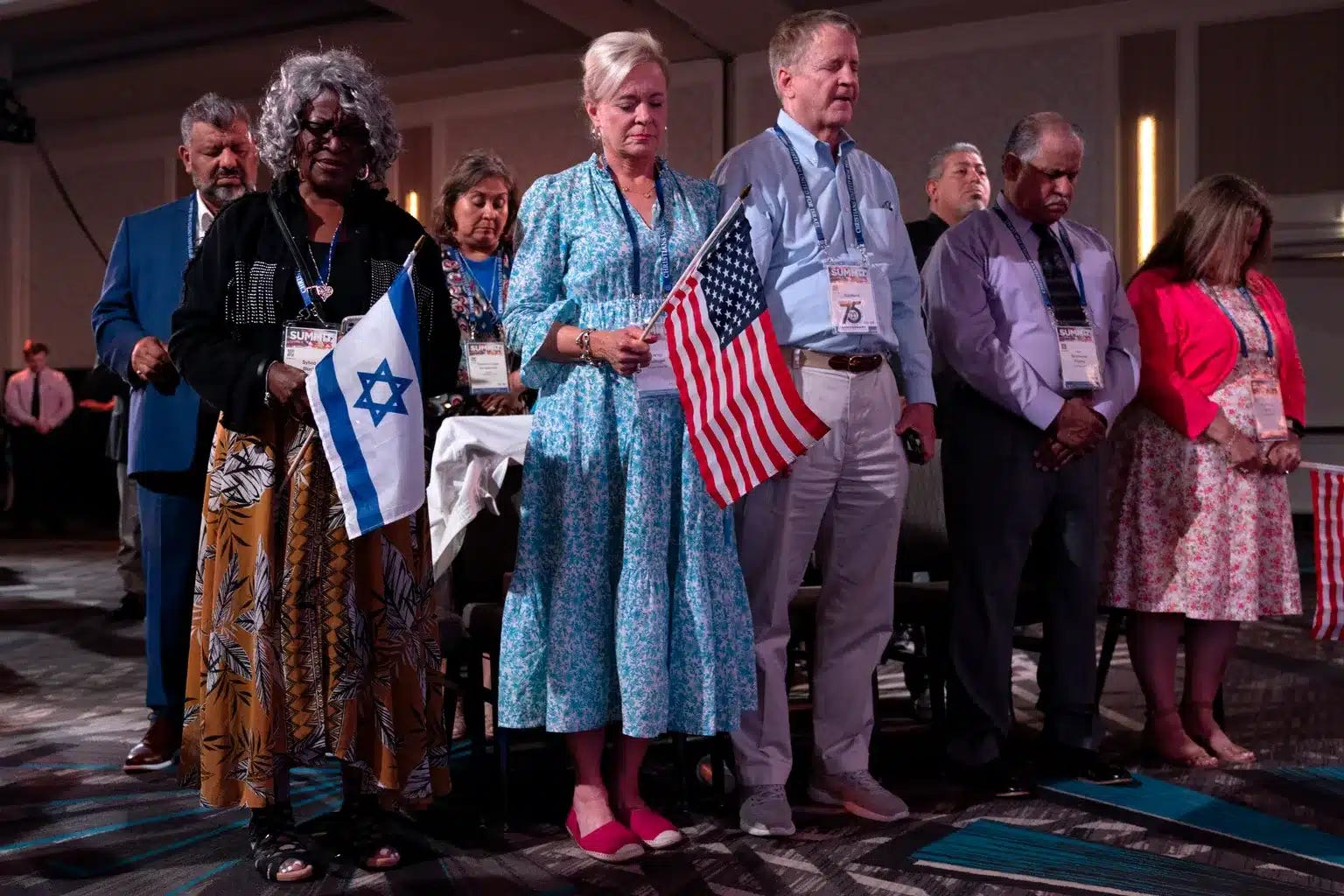
Beyond targeting young audiences, a new social group Israel seeks to fortify is evangelical Christians a remaining strong support base that itself faces internal changes and generational pressures. This has driven Israeli efforts into evangelical churches in an attempt to contain declining support within this influential Christian constituency.
More concerning to Israeli policymakers are polls showing that declining support for Israel has extended even within the evangelical base, with growing sympathy for Palestinians among young evangelicals and rising opposition to the Gaza war among groups traditionally considered Israel’s most steadfast supporters. Consequently, Israel has embarked on what can be described as a re‑occupation of the evangelical religious domain, this time with more advanced and daring tools.
Under FARA disclosures, contracts worth millions were signed with specialized Christian marketing firms, notably the newly founded “Faith Through Works,” to execute a $3.2 million digital campaign targeting evangelical churches and Christian universities directly on behalf of the occupation government, using ethical narratives that recast Israel as the eternal victim and link Palestinians to extremism and terrorism.
The most alarming aspect of these contracts is the use of geo‑fencing technology in what was described as “the largest geographic targeting campaign in U.S. history.” This technique draws digital boundaries around churches and Christian universities and tracks smartphones within them during worship or religious events, later targeting those users with ads and messages crafted specifically for them.
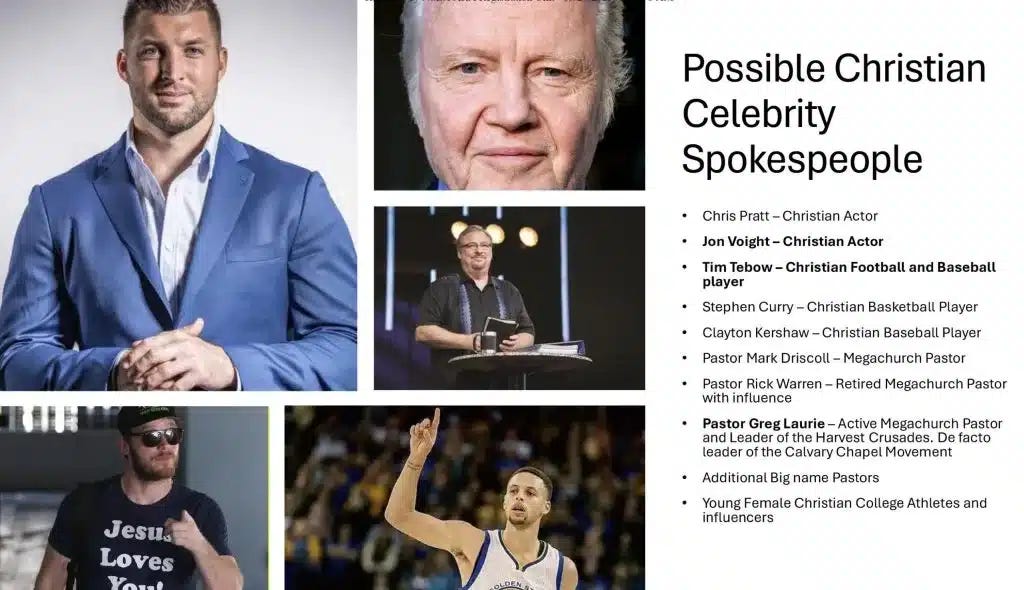
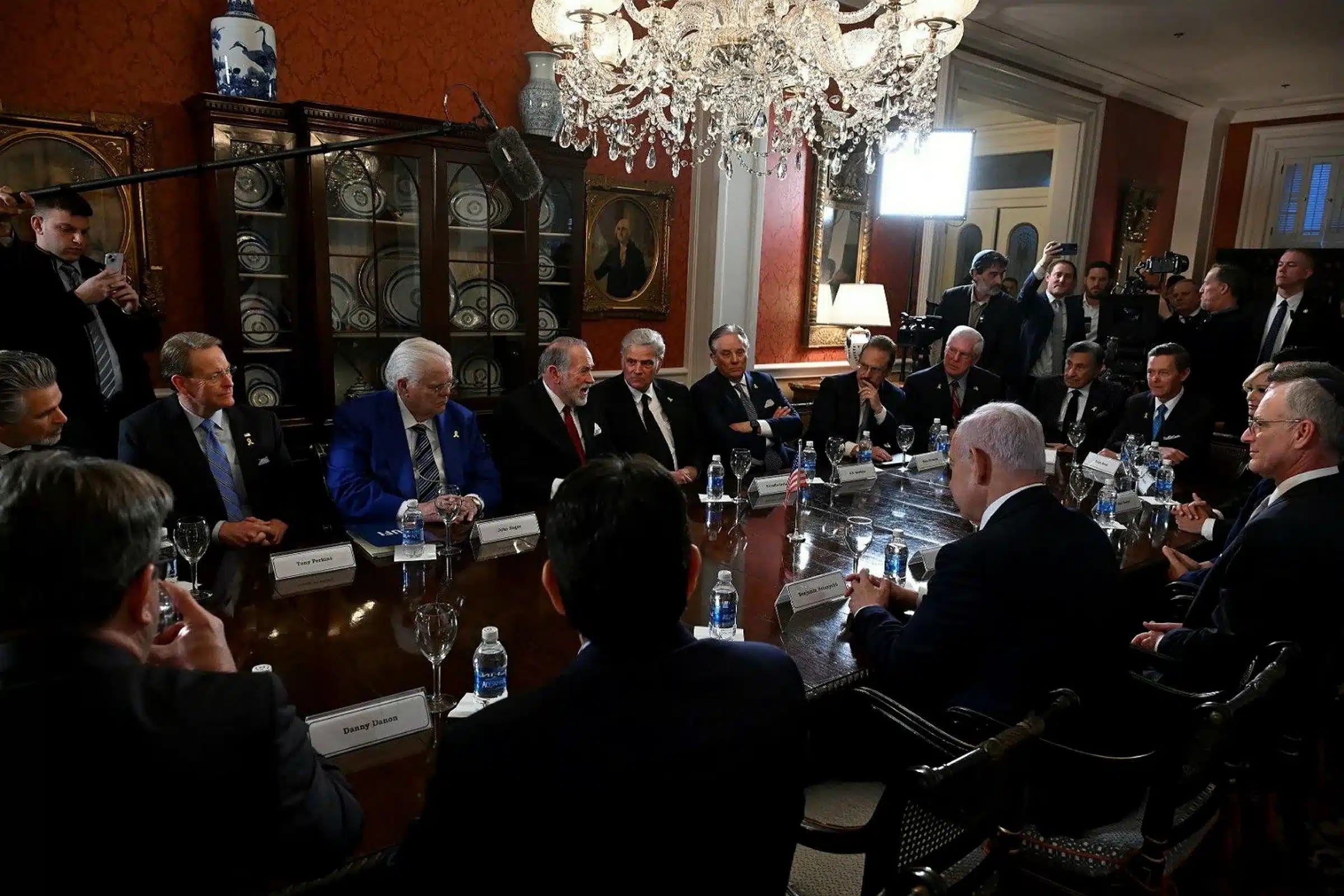
As part of a deeper, more stable strategy, targeting did not stop at congregations but extended to clergy themselves, viewed as the most influential mediators in shaping collective awareness among worshippers. Documents indicate funding for special trips for Christian influencers and religious leaders—including pastors—to Tel Aviv and settlements, carefully curated tours that obscure the reality of occupation while highlighting the narrative of “besieged democratic Israel.”
Most significantly, over a thousand American pastors were brought to Israel as part of training and orientation programs intended to equip them with ready‑made promotional discourse to be reproduced later within American churches sermons cloaked as spiritual guidance but carrying explicit political content.
In this sense, Israel’s goal isn’t only to win the sympathy of evangelical Christians, who represent a huge electoral base in the U.S. grounded in theological as much as political convictions but to transform the church itself into a political propaganda platform and pastors into “narrative agents” operating within a relatively closed social fabric resistant to alternative narratives.
Is This Enough to Cleanse Israel’s Image?
Despite its enormity, multiplicity of tools, and broad scope, Israel’s campaigns in America raise a fundamental question about the effectiveness of millions of dollars in “washing” Israel’s reputation after its war on Gaza a war that marked a sharp turning point in global perceptions of the occupation, not only because of the scale of destruction and number of victims but because the Israeli narrative lost its ability to monopolize meaning.
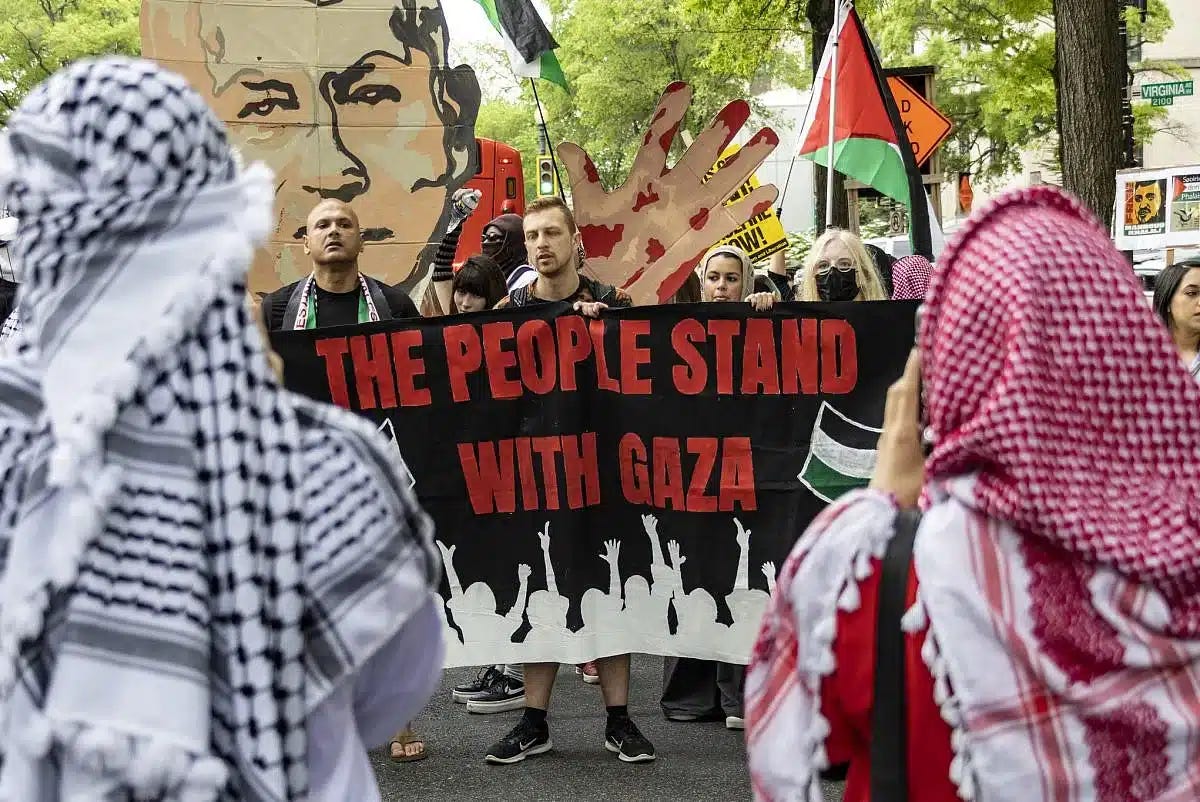
These campaigns operate on the central assumption that what happened in Gaza can be linguistically and morally reframed through the injection of alternative narratives. But this assumption collides with the fact that the Gaza war was broadcast not only via official statements or media reports but moment‑by‑moment on phone screens in real time, with images that require no interpretation.
While Israel is betting not on Western governments which still provide it political and military cover but on long‑term public sentiment, these campaigns are bounded by reality’s constraints. Generative AI systems, no matter how influenced by concentrated content, don’t work in a vacuum; they also rely on UN and rights‑based reports and documented testimonies that are difficult to erase.
This makes the battle for control of digital knowledge uncertain in outcome and potentially liable to backfire on those who try to manipulate it.
Even the intensive targeting of Gen Z has not gone unchallenged: the very youth these campaigns aim at are often the most capable of deconstructing them, exposing contradictions, and questioning motives. Many Israeli campaigns have faced sharp backlash, with influencers suffering severe criticism once their cooperation with entities tied to the occupation government became known; some have been forced to delete content or issue public apologies.
Ultimately, the intense effort reveals a deeper predicament. Israel, which for decades relied on automatic evangelical support, now finds itself compelled to spend millions to convince an audience once presumed “guaranteed.” This shift reflects not influence, but fear of losing one of the pillars of political protection within the American system.
In that sense, these campaigns don’t so much cleanse Israel’s reputation as they expose its fragility: a state fighting a narrative survival battle, attempting to compensate for lost moral legitimacy with intensifying technical and financial tools. But legitimacy, once lost, cannot be bought with advertisements, restored through influencers, or repaired by artificial intelligence.
