

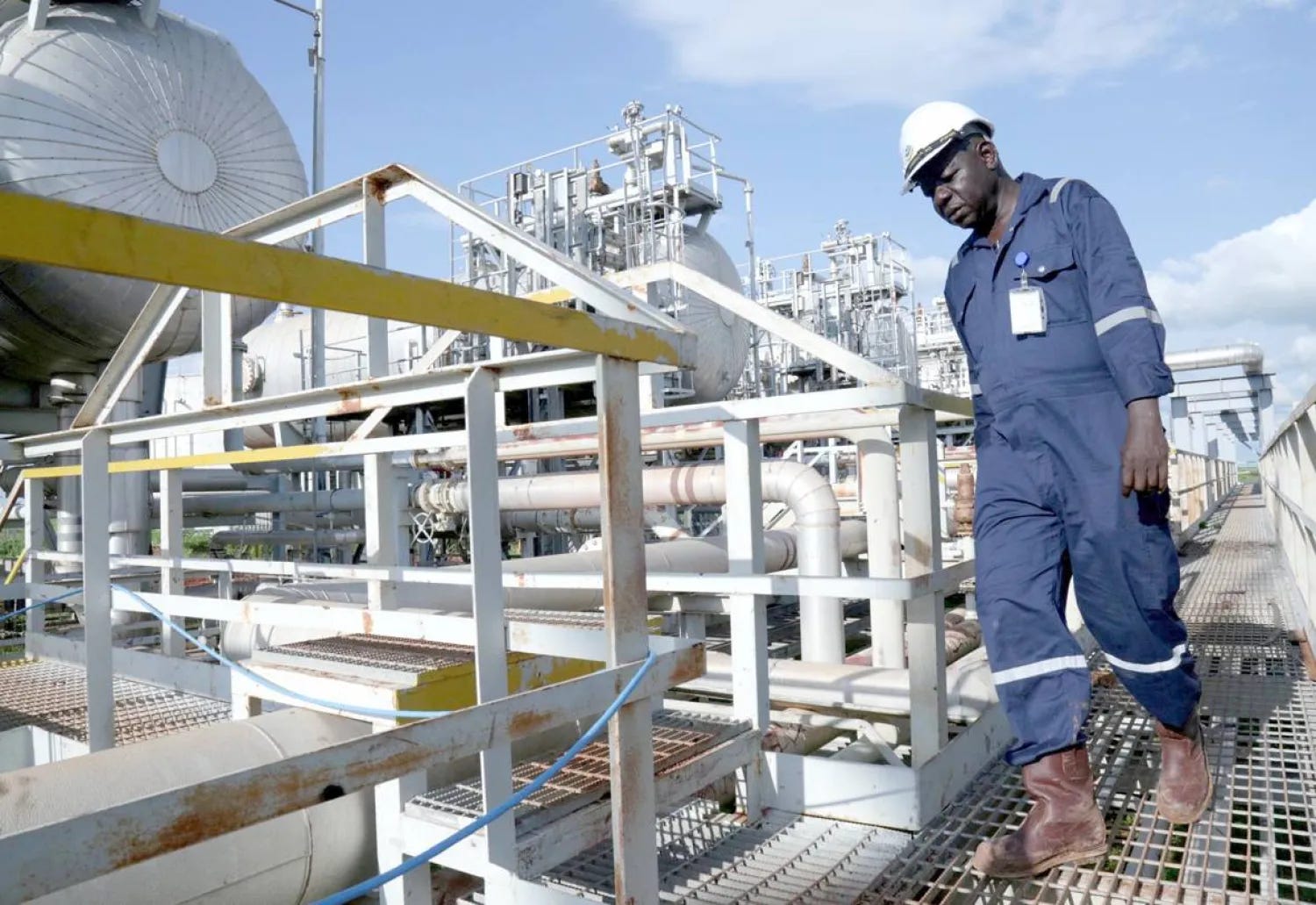
The deployment of South Sudanese forces in the Heglig oil field based on an agreement between the Sudanese army and the Rapid Support Forces (RSF) has stirred controversy. But the implications extend far beyond the immediate uproar: this development could set a precedent for neighboring countries to intervene directly in Sudan’s affairs.
The forces were deployed in Heglig, located near the border between Khartoum and Juba, after the RSF seized control of the area on December 8, following a full withdrawal by the Sudanese army, which relocated with all its equipment to South Sudan.
Juba relies on a central processing facility in Heglig that handles 130,000 barrels of oil produced in South Sudan and exported via pipelines owned by Sudan to the port of Port Sudan in the east for which Sudan receives transit fees. The Heglig field contains about 75 oil wells.
The agreement allowing South Sudanese troops into Heglig stipulates the neutralization of the field from military operations, protection of the oil infrastructure from destruction, and uninterrupted oil flow without specifying a timeframe for the presence of foreign forces on Sudanese soil.
This deployment, coupled with the quiet overlooking of South Sudan’s past ambitions having occupied the region briefly in 2012 marks a pivotal moment in Sudan’s ongoing conflict. It constitutes the first overt foreign intervention that shifts control of national resources from the central government to the forces dominating the ground.
This initial erosion of Sudan’s sovereignty through an agreement to safeguard oil installations could pave the way for similar concessions to other neighboring countries with vested interests such as Egypt, Ethiopia, and possibly Chad and the Central African Republic under pretexts ranging from securing economic assets and borders to protecting national security.
From Secrecy to Open Intervention
While neither the Sudanese army nor the RSF has publicly disclosed the details of their agreement with South Sudan, their tacit approval highlights a shared interest in safeguarding revenue sources despite the ongoing battles in regions like West Darfur and South Kordofan.
This approval, however, does not signify political rapprochement or an attempt to rebuild trust. The Sudanese government still insists on the complete withdrawal of RSF fighters from urban areas, their disarmament under international supervision, and their regrouping in agreed-upon camps ahead of disarmament and reintegration alongside holding perpetrators of crimes accountable. Thus, the agreement seems focused purely on securing financial lifelines.
The United Nations has criticized both the army and the RSF for prioritizing revenue preservation over civilian protection. It has also voiced concern over the growing instability along the Khartoum-Juba border due to militia movements, warning that the conflict’s increasingly complex and regionalized nature could draw Sudan’s neighbors into the fray if left unaddressed.
The silence surrounding the South Sudanese troop deployment may suggest it is seen as the lesser of two evils. RSF control over oil fields producing 20,000 barrels per day strengthens its hand. But more significantly, Sudan’s resources from oil to water and borderlands are now bargaining chips, pushing foreign intervention into the open, no longer hidden or officially denied.
The UAE has consistently denied providing support to the RSF, including shipments of advanced weaponry and equipment delivered via Nyala airport, makeshift airstrips in Darfur, Chad, and eastern Libya despite extensive investigative reporting supported by concrete evidence.
Ethiopia’s Calculated Involvement
Ethiopia’s initial foray into Sudan’s conflict began with its allowance of military training for RSF fighters and SPLM-North forces loyal to Abdelaziz al-Hilu its ally within the “Tasis” coalition, which includes armed, political, and civil groups. These trainings occurred on Ethiopian soil with a continuous supply line.
The SPLM-North is positioned in a narrow strip of Blue Nile State bordering both South Sudan and Ethiopia. After suffering military defeats, the RSF regrouped in this area, turning it into a staging ground for future offensives.
According to Sudanese sources cited by Al Jazeera, Ethiopia established training camps for the RSF and foreign mercenaries from South Sudan and Colombia to launch attacks on Blue Nile. Addis Ababa is reportedly coordinating with the RSF through regional allies, managing supply lines, constructing training camps, and building airstrips.
Sources indicate intelligence coordination between the Ethiopian military, the RSF, and SPLM-North forces led by Joseph Tuka along the Sudan–South Sudan border. Weapons, combat gear, and logistics support flow to the RSF and its allies via Ethiopia’s Benishangul region, the site of the Grand Ethiopian Renaissance Dam (GERD).
These developments suggest that Ethiopia is preparing the RSF to open a new front in Blue Nile to protect its interests around the GERD, putting pressure on both Khartoum and Cairo. Any threat to the nearby Roseires Dam in Sudan, critical to Egypt’s water security given the Blue Nile’s role as a key Nile tributary, raises serious concerns in Cairo.
Egypt perceives any Ethiopian-backed RSF advance into Blue Nile as a direct threat to its water security. This has prompted increasingly stern rhetoric and a declared readiness to act if necessary.
During Sudanese army chief Abdel Fattah al-Burhan’s visit to Cairo on December 18, Egypt released a statement asserting its right to take “all measures permitted under international law and the Joint Defense Agreement” with Sudan to protect its red lines.
These red lines include preserving Sudan’s territorial integrity and unity, preventing any secession, and safeguarding the state’s institutions.
Signed in 1976, the Egypt–Sudan Joint Defense Agreement aims to coordinate military efforts and ensure mutual security. It was updated in 2021 to include joint training, border security, and military cooperation, according to Mada Masr.
The Future of Foreign Intervention
The entry of South Sudanese forces under the guise of infrastructure protection without a clear political framework or a timeline underscores how Sudan’s war has ceased to be a purely domestic matter. Countries are no longer reluctant to intervene openly.
Similarly, Ethiopia’s ambitions go beyond defending its dam project, as it seeks near-total control over the Blue Nile through its local allies preparing for a fresh offensive. This dynamic will likely prompt Egypt to escalate its support for the Sudanese army, potentially leading to direct intervention.
In the past, RSF leader Mohamed Hamdan Dagalo (“Hemedti”) accused Egypt of bombing his forces in Jabal Muya, where the RSF had set up a base to launch an attack on Sennar a city hosting the Sennar Dam. Though he soon recaptured the area, the RSF’s rapid collapse in Blue Nile, Gezira, and Khartoum followed.
Egypt is now expected to continue supporting the army with political backing, intelligence, weapons, and limited airstrikes paving the way for a formal military intervention should Ethiopia persist in hosting RSF forces and allowing its territory to be used for attacks on Blue Nile.
Sudan has already become a battleground for competing factions, with control of cities and economic resources increasingly fragmented. The conditions are now ripe for the legitimization of regional intervention, as the state steadily loses its grip on border regions, oil fields, and even some gold mines that fuel the conflict.
None of Sudan’s actors military or political appear willing to set aside their disputes, even temporarily, to preserve the country. As the war continues, Sudan risks becoming an open arena for regional power plays, with little regard for the humanitarian cost.
Now that foreign intervention has shifted from covert to overt, and with no signs of peace in sight, neighboring countries are redrawing the map of influence potentially redrawing borders as well.

South Sudan, Ethiopia, and several East African states have not been neutral bystanders in Sudan’s war; they have been structural enablers. Ethiopia has benefited most from a weakened Khartoum—gaining strategic depth on Nile negotiations, border disputes, and Red Sea access—while maintaining a posture of mediation that coincides with outcomes favorable to its interests. South Sudan, driven by regime survival and oil revenue continuity, has tolerated a permissive border ecosystem where armed movements, recruitment, and transactional arrangements flourish as long as pipelines and cash flows are protected. Across the bloc, East African states operating through IGAD have prioritized process over enforcement, normalizing militia bargaining and managing instability rather than imposing costs on spoilers.