

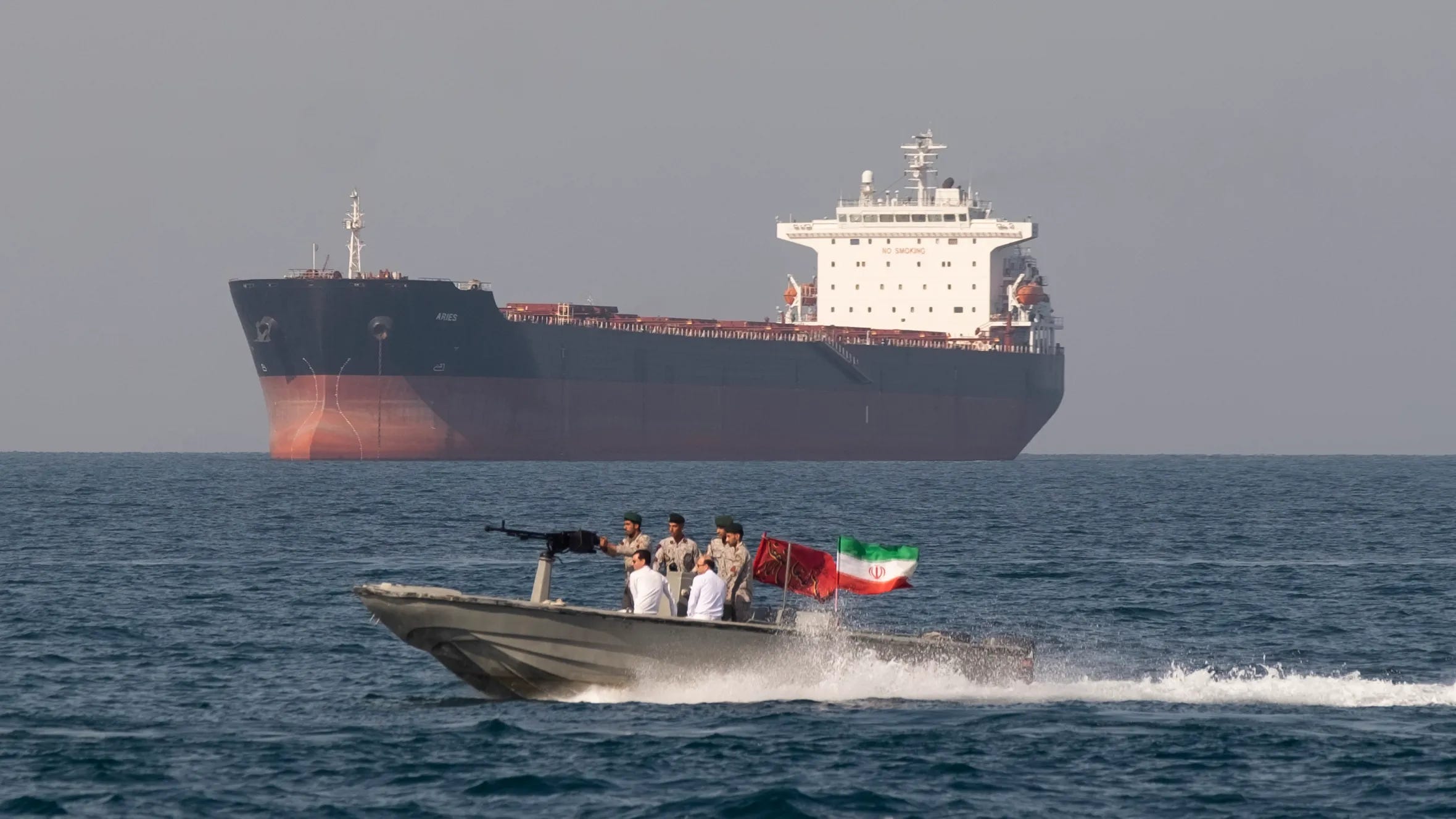
The US-Israeli war on Iran is entering its most dangerous and sensitive phase, as it shifts into direct contact with the global economy through the energy market and oil supplies passing via the Strait of Hormuz. From the earliest days of the assault, maritime traffic in the strait has faced mounting disruptions at a geographic chokepoint through which roughly one-fifth of global oil consumption and its derivatives flows making any disturbance there immediately felt across international markets.
As tensions move toward maritime geography, the logic of confining the crisis to a single chokepoint is giving way to a broader and more complex escalation path. The triangle formed by Kharg Island, the Strait of Hormuz, and Bab al-Mandab is emerging as a connected theater of conflict, where military considerations intersect with energy and trade calculations.
This places the war within an expanded regional framework, reshaping the map of engagement across the Middle East.
Within this shift, a new escalation trajectory is emerging one that extends beyond direct military strikes to target the arteries of global trade. As pressure mounts on the Strait of Hormuz, control over shipping lanes and oil flows is becoming a central tool in managing the confrontation.
Transport routes are thus turning into multifaceted battlefields, blending the legacy of the “Tanker War” with what might now be called a “War of Straits,” amid stalled military resolution options and the absence of a political horizon capable of containing the conflict before it penetrates deeper into the global economy.
The Strait of Hormuz: A Detonator or a Gateway to Resolution?
The Strait of Hormuz remains one of the world’s most critical energy corridors, channeling oil and gas flows from the Gulf to international markets. It is a central node in global trade, handling approximately 11% of total global trade volume, over a quarter of seaborne oil trade, and nearly one-fifth of global oil consumption equivalent to around 20 million barrels per day alongside roughly 20% of global liquefied natural gas trade, according to US Energy Information Administration data for 2024 and early 2025.
Historically, the strait has been closely tied to major regional conflicts, evolving since the 1980s into a space where regional and international interests converge and a strategic pressure point in global energy equations.
With the outbreak of war on Iran, the strait has once again become a focal point of tension. The navigation crisis effectively began with warnings issued by the Islamic Revolutionary Guard Corps to commercial vessels, alongside restrictions on some ships, leading to a noticeable decline in transit activity and driving shipping and insurance costs to unprecedented levels.
In this context, Iran treats the Strait of Hormuz as one of its most critical strategic assets—not merely as a waterway, but as a tool for managing conflict and reshaping its costs. Iranian doctrine is based on “flexible control” of maritime traffic, avoiding a full closure while disrupting flows and sustaining uncertainty in energy markets.
This approach allows Tehran to convert any escalation against it into direct pressure on the global economy, expanding the battlefield beyond a narrow military dimension into a broad international economic arena.
To reinforce this equation, Iran has developed an asymmetric deterrence system designed to complicate any attempt to forcibly reopen the strait without its consent. This system includes fast-attack craft operating in swarm tactics, low-cost yet high-impact naval mines, coastal anti-ship missiles, and surveillance and strike drones.
The aim is to transform the strait into a complex and hazardous operational environment that is difficult to fully secure, raising the cost of military intervention to potentially prohibitive levels.
Rather than seeking conventional naval superiority, this approach focuses on disorienting and exhausting the adversary by targeting vulnerabilities in ships and maritime systems whether by damaging critical infrastructure or disrupting command-and-control systems sufficient to disable vessels without necessarily sinking them. This reflects a doctrine of “maximum impact at minimal cost.”
At the same time, Iran maintains a calibrated international narrative that the strait remains “open,” while linking its stability to the broader context of the war. It frames any disruption to navigation as a direct consequence of what it describes as US and Israeli aggression.
Through a policy of “edge maneuvering,” Tehran balances gradual escalation with avoiding a declared full closure, keeping the strait as a calibrated pressure tool to impose new political and security equations while attempting to delay reaching a point of no return, unless existential threats emerge.
Limited US Options
In contrast to Iran’s flexible-control doctrine, the US approach appears marked by hesitation and inconsistency in defining both objectives and the trajectory of the war. Despite US President Donald Trump’s assertion that joint US-Israeli strikes have neutralized Iran’s naval capabilities, this assessment overlooks the essence of Iran’s strategy, which does not rely on conventional naval confrontation but on low-cost, high-impact tools capable of disrupting navigation without achieving naval superiority.
To overcome this dilemma, Washington has moved to internationalize the Strait of Hormuz crisis by pushing for a multinational maritime coalition. Trump explicitly stated that “countries will send warships in coordination with the United States to ensure the Strait of Hormuz remains open and secure,” indicating that states affected by Iranian restrictions on navigation would participate.
This reflects a US effort to share the burden of confrontation, strip it of its bilateral character, and confer international legitimacy on any potential military action in the vital corridor.
However, this approach quickly encountered its limits amid widening international divergences. Washington sought to draw in major powers such as China, Japan, South Korea, and European states given their reliance on energy flows through the strait but Beijing’s call for de-escalation and cessation of military operations underscored its reluctance to embrace a military approach. China reaffirmed that maritime stability depends on ending the war, not expanding it.
Simultaneously, under US pressure, a joint statement signed by 21 countries provided political cover for this approach, describing Iranian threats to navigation in the Strait of Hormuz as a threat to international peace and security, calling for an end to attacks and mine-laying operations, and affirming readiness to contribute to ensuring safe passage.
On the ground, the US has bolstered its military presence by deploying Marine units to the region, expanding its operational options while escalating political rhetoric. Trump has threatened to target Iranian energy facilities warning they would be “wiped out” if the strait is not reopened within a specified timeframe.
Yet this escalation combining military pressure with economic threats ultimately reflects a structural shortcoming in the US approach: an inability to effectively address the asymmetric nature of Iran’s strategy. Rather than imposing control over the strait, Washington appears caught between costly escalation and an internationalization strategy that has failed to generate genuine consensus granting Tehran greater room to wield the strait as a strategic lever tied to global economic interests.
What Does History Tell Us?
The current scenario evokes a recent historical parallel: the “Tanker War” of the 1980s during the Iran-Iraq War (1980–1988). Over four years, the Gulf became an open battlefield for targeting oil tankers, with nearly 200 vessels subjected to direct attacks using missiles and naval mines one of the most impactful phases of the conflict on global energy markets.
Both sides employed tactics similar to those seen today, from mining vital waterways to deploying anti-ship missiles such as Exocet and Silkworm, leading to a significant escalation in attacks on maritime traffic.
These developments ultimately prompted direct US intervention, including the deployment of dozens of naval vessels to escort tankers. Kuwaiti ships were even reflagged under the US flag to ensure protection. Although oil flows were not halted, they continued at significant human and material cost in a highly hazardous maritime environment.
Invoking this experience highlights the potential trajectory of the current conflict. While there are similarities in tools, today’s context differs in the scale of actors involved and the degree of global dependence on these routes making any disruption more impactful and complex.
A drift toward a prolonged, low-intensity war of attrition characterized by reciprocal strikes and partial disruption of navigation rather than full closure could recreate a long-term scenario that resists decisive military resolution. Such a dynamic would expand the scope of damage while giving Iran a relative advantage in leveraging its asymmetric tools to prolong the confrontation.
The tanker war experience suggests that using military force to impose the reopening of the strait does not necessarily resolve the crisis; rather, it may trigger a prolonged cycle of attrition that keeps energy markets under pressure and turns the Gulf into a persistent conflict zone.
Global Energy as a Weapon
The Strait of Hormuz stands at the center of Iran’s broader battle over the global economy and the use of energy as a strategic weapon. As tensions rise, signs of disruption are already evident. Maritime estimates This indicates the accumulation of hundreds of tankers in the Gulf waters, with many unable to depart due to heightened security risks illustrating the degree of congestion affecting one of the world’s most vital energy arteries.
This reality has directly impacted shipping and insurance markets. Insurers have moved to cancel or sharply increase war-risk premiums, while London’s marine insurance market has expanded high-risk zones to include most Gulf ports.
Meanwhile, oil tanker charter rates have surged dramatically: some have doubled in cost, and the Argus index for crude transport rose to around $10.39 per barrel per day its highest level since tracking began in 2010. Some supertanker voyages have reached costs of approximately $29.5 million per trip, reflecting the scale of the spike in transport costs.
The impact extends beyond shipping costs to global supply chains, as cargo is rerouted along longer, more expensive routes placing additional pressure on international markets and raising the specter of a new wave of energy- and transport-driven inflation.
In this context, Iran’s strategy becomes clearer: leveraging energy as a central pressure tool through a simple equation “If Iran is prevented from exporting its oil, the region’s oil will not flow smoothly.” This strategy does not necessarily aim for total closure but rather sustained disruption that raises costs to a level where continued flows depend on political agreements rather than military enforcement.
Yet this approach is not without constraints. Despite wielding energy as a weapon, Iran remains dependent on its revenues, requiring a calibrated balance between escalation and maintaining minimal flows. Meanwhile, growing international discussions regarding navigation insurance reflect increasing recognition that the Hormuz crisis has evolved into a complex challenge affecting the stability of the global economic system.
A War of Straits and Expanding Fronts
Maritime tensions are no longer confined to the Gulf and the Strait of Hormuz. Signs of expansion are emerging in the Red Sea, with increasing indications that the Bab al-Mandab Strait is being drawn into the conflict equation.
The US deployment of the aircraft carrier USS Gerald Ford to the Red Sea carries significant strategic implications, prompting a direct Iranian response. The Revolutionary Guard indicated that logistical hubs in the Red Sea could become potential targets, signaling an expansion of the conflict beyond its traditional geography.
Iran’s Tasnim News Agency quoted a military source warning that “insecurity in Bab al-Mandab and the Red Sea is among the options on the table if Kharg is targeted.”
This coincides with rising international concern, reflected in a joint Gulf-UK statement condemning threats to navigation in both the Strait of Hormuz and Bab al-Mandab, emphasizing the importance of protecting maritime routes, supply chains, and energy market stability.
This convergence of military movements and political messaging reflects growing awareness that the conflict is entering a more complex phase, where maritime geography—from the Gulf to the Red Sea—forms a single interconnected theater of operations.
Bab al-Mandab, in particular, gains heightened importance as a critical link between Asia and Europe and a key route for global trade and energy flows. With the potential involvement of Yemen’s Ansar Allah (Houthis) in maritime pressure tactics, the trend toward shifting part of the confrontation to this strait is becoming more pronounced.
Ultimately, these developments suggest that continued escalation may push the crisis beyond the Strait of Hormuz into a broader “War of Straits,” where global energy corridors intersect within a single conflict arena.
In such a scenario, confrontation evolves into a complex pattern combining wider tanker targeting with threats to vital maritime passages from the Gulf to the Red Sea amplifying the impact on global energy markets.
This trajectory points toward a prolonged conflict that is difficult to control or resolve through conventional military means alone, given the overlapping geography, multiplicity of actors, and the expanding economic cost of disruption.
