

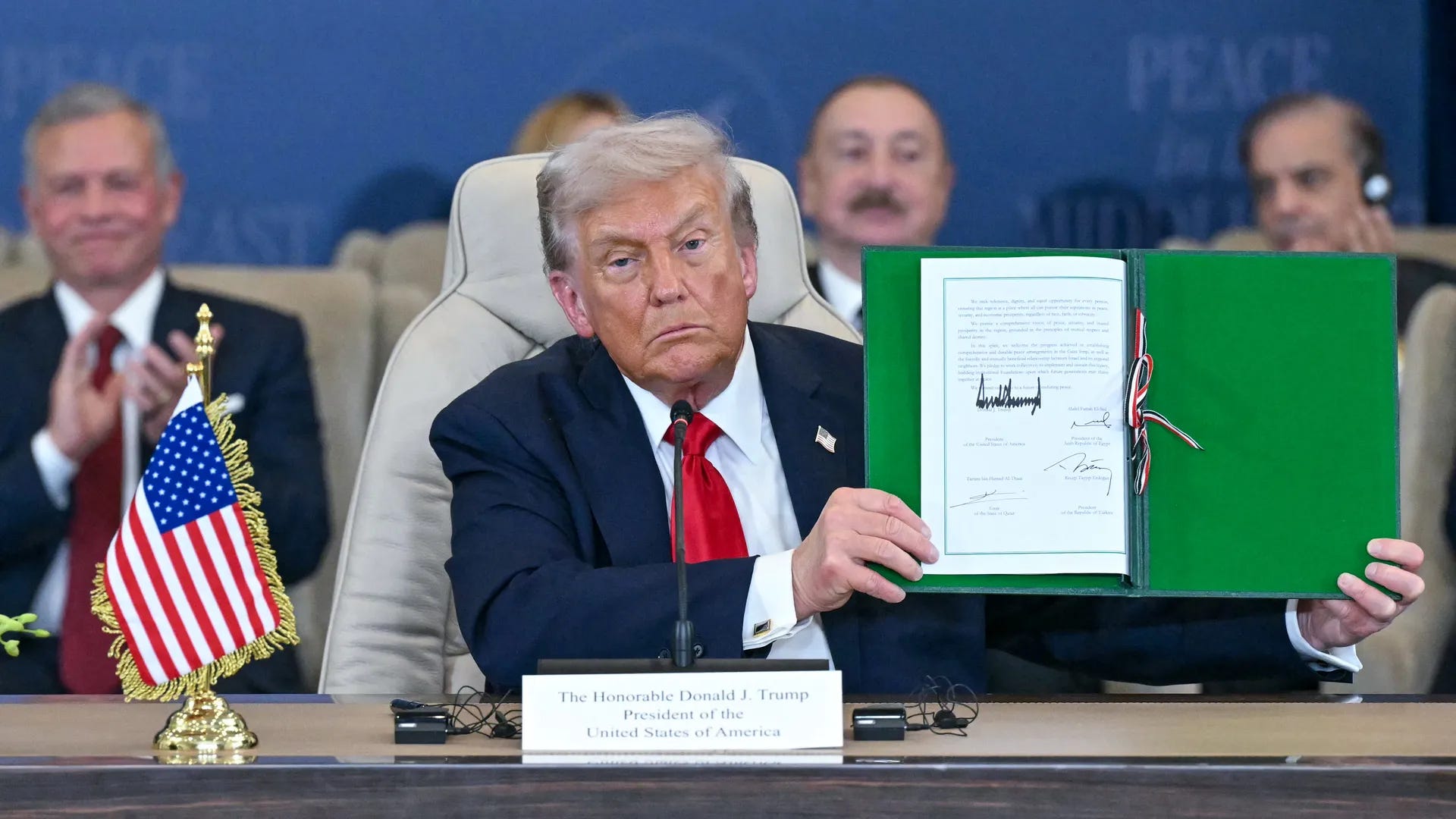
The steps taken by the United States, which appear to be the gradual implementation of President Donald Trump’s twenty-point plan, have sparked a wide array of interpretations, placing them in the realm of complex political risk.
These developments cannot be viewed as merely procedural measures or technical mechanisms for post-ceasefire management or traditional reconstruction. Instead, they require acute political awareness that goes far beyond a superficial reading of abstract data.
An analysis of the plan’s details from the texts and implementation mechanisms to the adopted terminology and official designations reveals that it is evolving into its most dangerous form yet. It not only reproduces the objectives of Israel’s war, but also reorganizes them under an international diplomatic veneer, effectively recasting the assault on the Palestinian people and their rights within a legalized global framework.
Strategically, this trajectory poses a fundamental threat to the Palestinians’ right to a unified political entity and a comprehensive political system. It distances any prospect of statehood, independence, or the right to self-determination.
This danger echoes earlier Zionist proposals, such as those found in the “Decisive Plan” advanced by religious Zionist factions, which openly advocate dismantling Palestinian political identity into fragmented, tribal-based representations.
It also coincides with efforts to forcibly strip Gaza’s residents of political representation by re-internationalizing the territory and subjecting it to an external governance model reminiscent of the British Mandate’s “High Commissioner” invoking the era of direct colonial rule and drawing a historical parallel to the British-led path that culminated in the 1948 Nakba.
American Monopoly on International Authority
On November 17, 2025, the UN Security Council adopted Resolution 2803, endorsing Trump’s twenty-point Gaza plan following weeks of intense political pressure and lobbying by Washington. The resolution passed with 13 votes in favor, and two abstentions—Russia and China.
The resolution welcomed the establishment of a so-called “Peace Council” as a transitional governing body with international legal standing. This body is tasked with outlining the general framework and coordinating reconstruction funding for Gaza in line with the broader plan, ostensibly aligned with relevant international legal principles.
The council is mandated to oversee this phase until the Palestinian Authority satisfactorily completes its “reform” program, as referenced in several proposals, including Trump’s 2020 peace plan and the Saudi-French initiative. At that point, the Authority would be deemed capable of “safely and effectively” resuming control over the Strip.
Following this, and once reconstruction progresses, the resolution assumes that conditions will be ripe for a “credible” path toward Palestinian self-determination and statehood. The United States would then facilitate dialogue between Israelis and Palestinians to agree on a political vision for peaceful coexistence and prosperity.
Yet a closer reading reveals that the resolution effectively grants the United States exclusive authority over the legal mandate bestowed by the Security Council whether through the “Peace Council,” which has been endowed with international legal status, or by allowing the U.S. president and administration to form and manage it without recourse to any other international institution.
The only oversight is a Council politically redefined as a vehicle for executing Washington’s agenda. Thus, rather than a multilateral international body, the Peace Council is effectively a U.S. instrument with UN cover.
Moreover, the resolution links the required Palestinian “reform” to references widely rejected by the Palestinian people, particularly the “Deal of the Century” and the Saudi-French proposals, which fundamentally undermine the Palestinian right to resistance and the legitimacy of their arms.
This track also explicitly mandates the international force to disarm Palestinian factions—contradicting international law principles that guarantee occupied peoples the right to resist through all legitimate means.
At its core, the resolution repackages colonial domination over the Palestinian people in Gaza, who have endured over two years of genocidal warfare by the Israeli regime. Rather than pursuing justice, accountability, or establishing a legal precedent against genocide, the UN under U.S. pressure once again veers away from its foundational principles, with much of the international community following Trump’s lead.
The resolution also gives the Peace Council centralized authority over the distribution of humanitarian aid inside Gaza. All international organizations and UN agencies, including UNRWA, are mandated to operate under its supervision. This effectively grants the Council the power to decide who receives aid, under what conditions, and on what timeline.
Given Gaza’s near-total dependence on aid amid ongoing genocide, suffocating blockade, and dire reconstruction needs, placing such control in the hands of this Council has extremely dangerous consequences. It allows for unprecedented external manipulation—determining who lives, who starves, who receives basic services, and who is allowed to rebuild.
With the U.S. announcement of the Peace Council’s leadership and executive board, it has become clear that it is dominated by figures from President Trump’s political circle both American and non-American. Notably, Tony Blair re-emerges as one of its key architects, reviving his legacy of championing distorted and interventionist projects in the region, particularly those aimed at eroding sovereignty and hollowing out political representation.
Reinstating the Mandate Model
A striking development was the designation given to Nikolay Mladenov, appointed as the main liaison between the Palestinian professional committee on the ground and the Peace Council’s bodies. He was granted the title of “High Commissioner” in the Palestinian territories.
This title goes beyond symbolism or protocol. It grants Mladenov practical authority over governance, reconstruction, development, and coordination between civil and security tracks effectively making him the de facto governor, mandated by the Peace Council, to administer Gaza’s affairs.
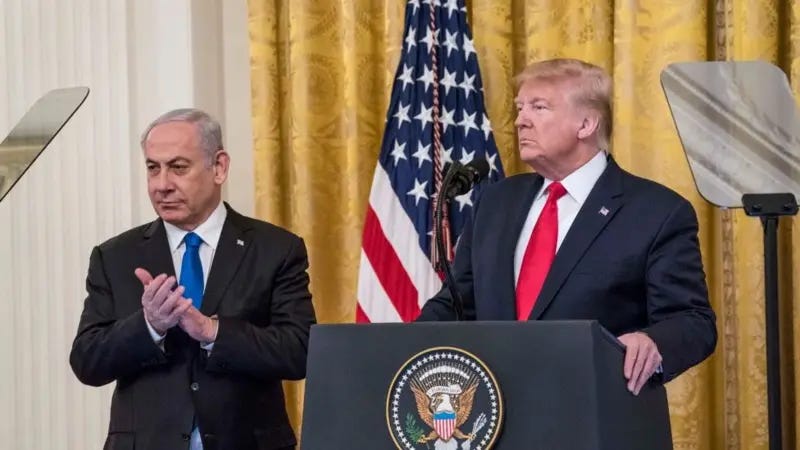
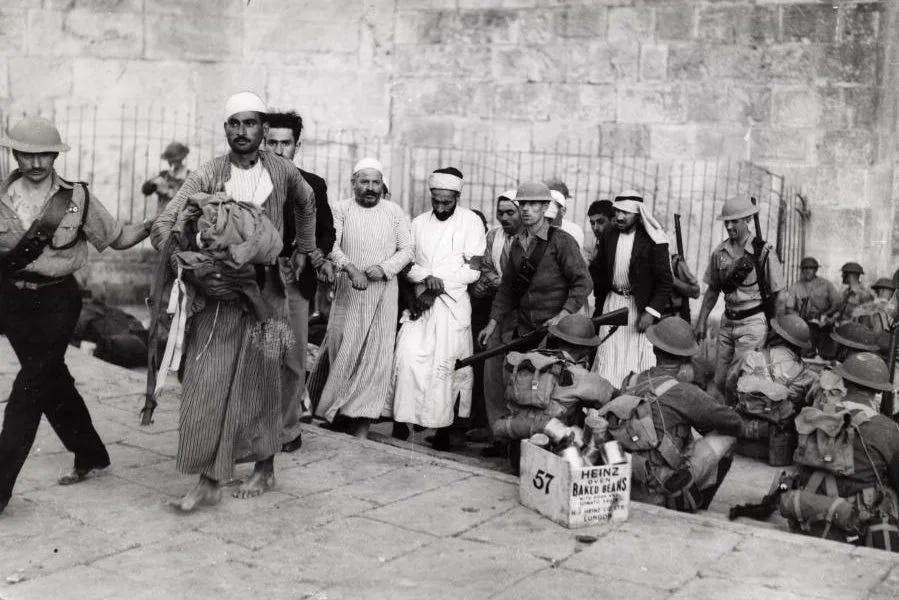
The historical and functional weight of this title evokes the classical colonial era, where similar designations were used to justify the denial of peoples’ rights to self-determination and political representation under the guise of “transitional administration” or “preparation for independence.” This echoes the post–World War I international order, when the global political map was redrawn outside Europe.
In 1919, the Paris Peace Conference convened, where the victorious Allied powers signed five treaties with the defeated states, including the Treaty of Versailles with Germany. Beyond merely ending the war, the conference aimed to structure a new form of colonialism using sanitized language and refined terminology to present control plans over former Ottoman and German-influenced territories as “reformist.”
At the time, Britain introduced a proposal titled “The League of Nations – A Practical Suggestion,” outlining a vision based on a “mandate” logic that required legal and political codification to transform into a recognized international system. This led to the mandate system, which divided the Middle East and paved the way for the occupation of Palestine and the establishment of Israel.
The mandate’s public rhetoric centered on “guiding each territory toward full independence.” In practice, however, mandates were allocated among the victorious powers through public and secret agreements the most famous being the 1916 Sykes-Picot Agreement and the 1917 Balfour Declaration exposing the gap between declared intent and actual practice.
The same justifications resurface today through the American initiative to internationalize Gaza’s administration, stripping its people of political agency. The new administrative committee is confined to a form of local governance, limited to managing daily affairs without sovereign authority or any defined linkage to the formal Palestinian political system.
Thus, these arrangements resemble a modern reproduction of the mandate system dressed in contemporary language and global legal frameworks, but grounded in the same principle: managing populations rather than empowering them, regulating political space rather than recognizing the right to self-determination, and suppressing the political momentum generated by growing global sympathy for the Palestinian cause.
Structural Distortions and Official Evasion
Conversely, the Palestinian political system itself is far from ideal or cohesive. On the contrary, it suffers from deep structural flaws and chronic avoidance of difficult national questions.
These issues have been exacerbated by the prolonged political division, which has evolved over two decades into a full institutional schism: two self-rule authorities, one in Gaza and another in the West Bank, each with its own structure, priorities, and paths.
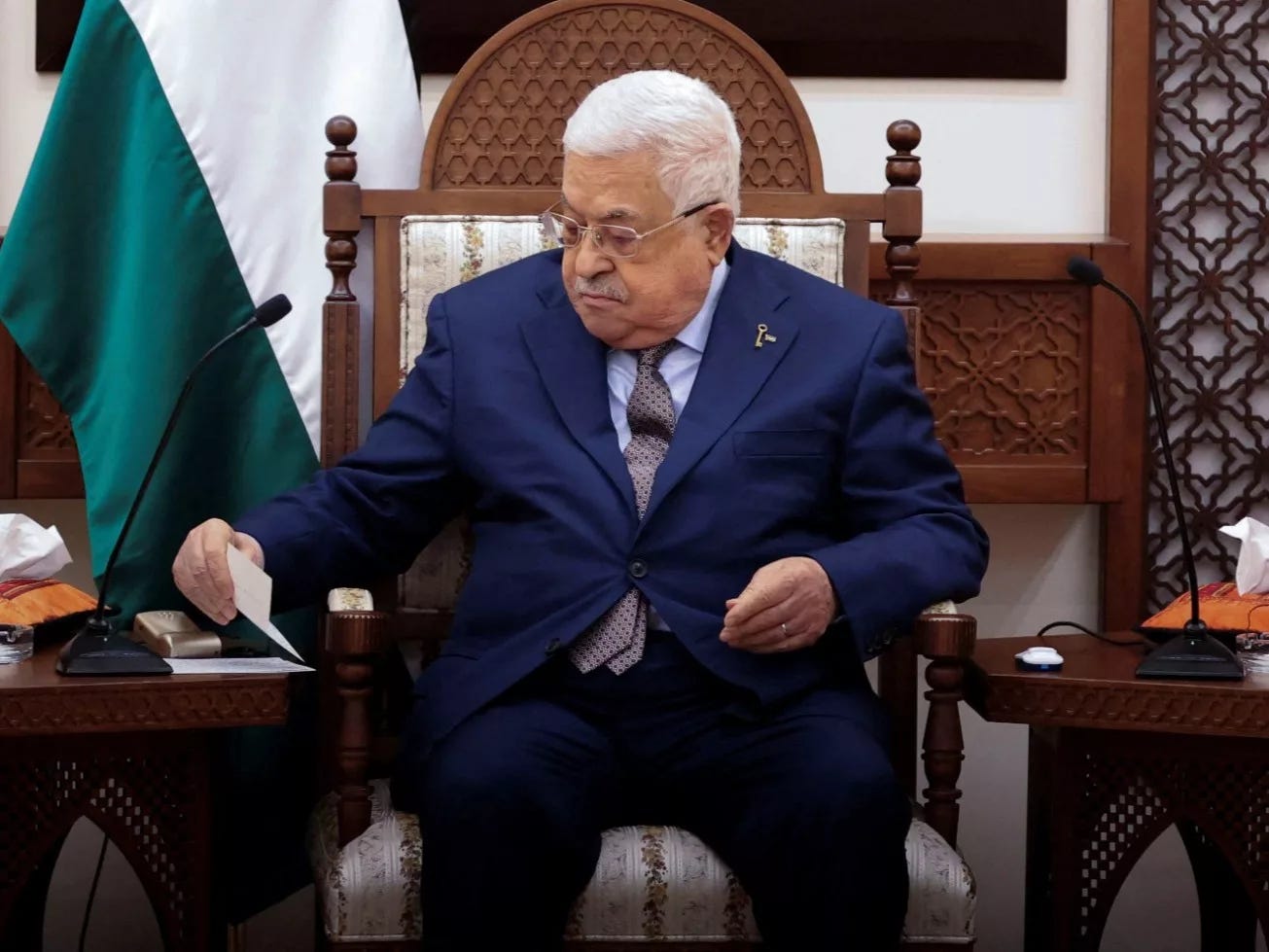
In broader political terms, the Palestine Liberation Organization (PLO) long dominated by a single faction that has gradually shrunk the space for collective action does not face questions over its historical legitimacy as the representative of the Palestinian people. Rather, it faces a profound crisis over the legitimacy of its leadership and its monopolization of representation.
Successive national milestones that could have rebuilt the PLO as a truly representative umbrella for all Palestinians were bypassed. Instead, it was turned into a closed structure governed by control rather than partnership.
The PLO’s legitimacy has thus become a tool selectively invoked to justify continued dominance over power and representation. Gradual replacements of elected bodies with appointed ones have become the norm, most notably the Palestinian Legislative Council, which was either suspended or expired.
The Palestinian National Council was revived without elections or national consensus, and its powers were transferred to the Central Council neither of which hold electoral or representative legitimacy. These maneuvers culminated in the reshaping of the PLO Executive Committee and the creation of a Vice President post outside any national framework.
Another core problem is the lack of clarity in the relationship between the PLO and the Palestinian Authority both in their definitions and their functions. There is no procedural separation between the Authority, as a limited administrative entity under occupation, and the PLO, which is supposed to embody the national liberation project. This ambiguity has directly impacted institutional and political performance, further deepening dysfunction.
Parallel to this, President Mahmoud Abbas has championed the “Palestinian State” track, focusing on state-building, establishing “state institutions,” joining international bodies, and securing symbolic recognitions. Yet this approach sharply contradicts on-the-ground realities: continued land grabs, eroded sovereignty, diminished political relevance, and deteriorating legitimacy and institutional unity. Rather than prompting a reassessment, this contradiction has added another layer of distortion without addressing its roots.
Meanwhile, opposition forces, though diverse, lack a coherent practical program to pursue national unity and end the division both politically and institutionally. They also lack the leverage to impose this agenda or even coordinate a unified action plan to address a complex and ambiguous political landscape.
Most alarmingly, the genocide in Gaza has failed to generate sufficient Palestinian political mobilization to counter this trajectory. Despite a clear Zionist plan of decisive resolution and a war of annihilation against Gaza unfolding before the world, Palestinian leadership remains largely inactive.
The assault is targeting not just Gaza, but the entire Palestinian national structure, including the West Bank, effectively extinguishing even the two-state solution the very foundation of the official Palestinian political program.
In the face of this challenge, the notion that “the day after” the war on Gaza will be confined to the ravaged Strip is naïve. The official Palestinian leadership has remained in a state of political inertia, gambling on self-reproduction or the collapse of its political rival, rather than engaging seriously with the ideas on the table.
This has led to an imposed trajectory with the current configuration, which still fails to address a fundamental question: what is the nature of the relationship between the entity managing Gaza and the formal Palestinian political system? What are the limits of its powers, who holds sovereign authority, and within what national framework?
Closing Off Palestinian National Options
The internationalization of Gaza’s governance, the revival of mandate-style arrangements, and the fragmentation of the Palestinian political system cannot be seen as isolated steps or ad hoc responses to a post-war reality. They must be viewed as part of a broader context, where the U.S. project to manage the conflict regionally intersects with a Zionist project aimed not at managing, but at ending the Palestinian cause altogether.
What is now being proposed under the guise of the American twenty-point plan is merely a repackaging of Israel’s war objectives, shifting them from the military to the political and diplomatic arenas. It aims to internationalize control over Palestinians, strip them of political agency, and recast them from a people with a cause and national rights to mere populations managed through internationally controlled frameworks dominated by U.S. and Israeli interests.
In this context, the externally imposed structures for Gaza, the proliferation of internationally themed councils and bodies, and the roles of “High Commissioners” or professional administrators are nothing more than modern iterations of the old mandate model cloaked in updated terminology and legal jargon, but driven by the same goal: managing, not empowering; ignoring rights, not honoring them.
What’s most dangerous is that these arrangements don’t emerge in a vacuum. They align directly with Israel’s internal “conflict resolution” project, led by religious Zionism, which seeks not just territorial control, but the defeat of Palestinian consciousness and hope by dismantling institutions, erasing political representation, and forcing Palestinians into a corner where their only choices are submission, exile, or repression.
The ongoing sidelining of Palestinian political frameworks, negotiating over the people’s future as if they lack a political identity, and accepting vague rhetoric about a “Palestinian state” devoid of definition or substance, are all integral to a final agenda that seeks to close the Palestinian political horizon and reduce the entire cause to an internationally managed humanitarian-security file resolved on Israel’s terms.
Faced with this intricate reality, Palestinians find themselves forced into narrow corridors at a historic moment that should have triggered a sweeping national reevaluation—not inertia or self-preservation.
The battle is no longer just about how Gaza is governed, but about the very survival of Palestinian political representation and whether Palestinians will continue to be a people with a national project, or be reduced to administratively managed groups under an international scheme tailored to the Zionist resolution project.
