

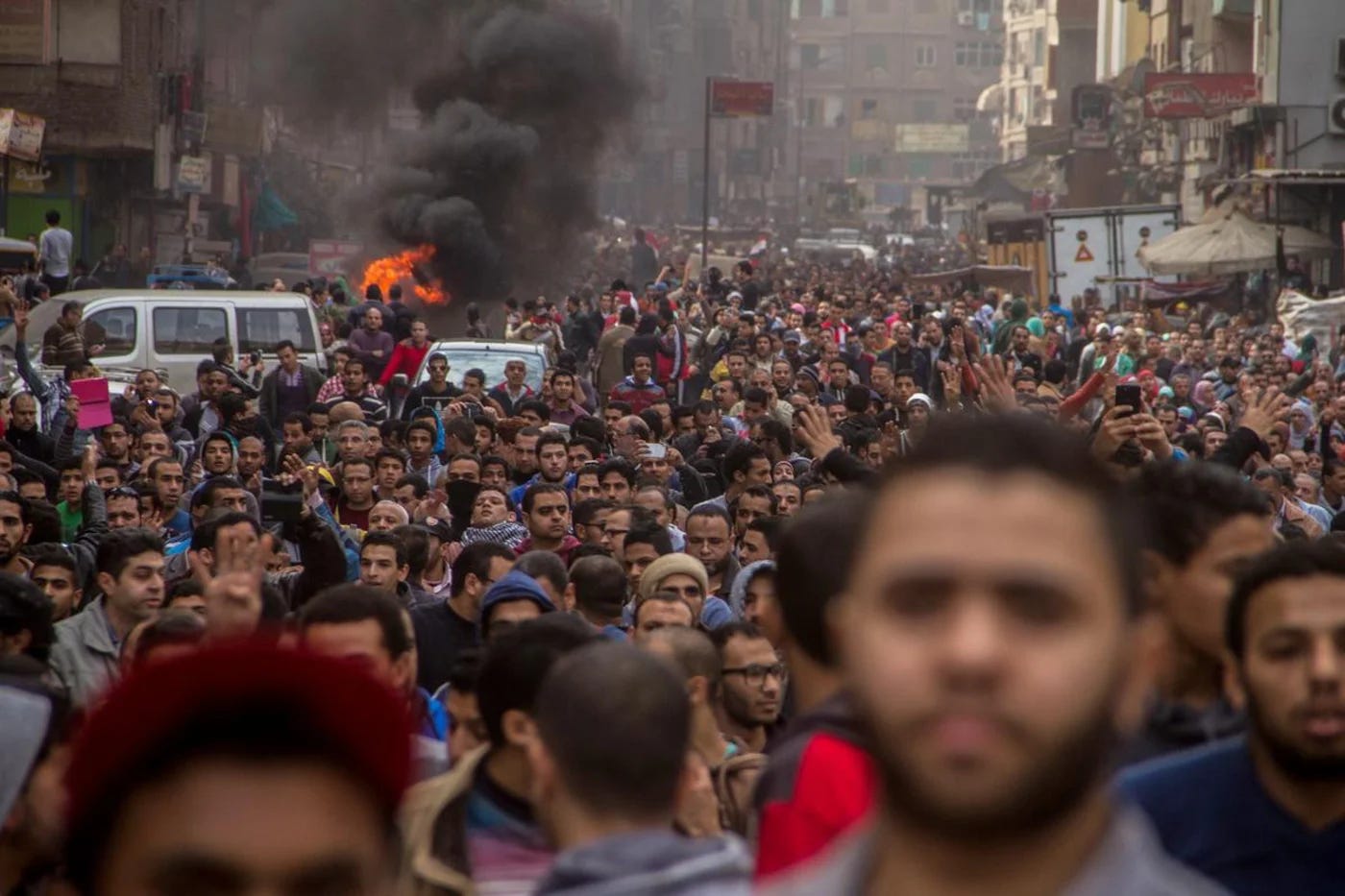
The Egyptian Network for Human Rights, an independent organization, has revealed what it described as surveillance and infiltration operations carried out by Egypt’s security apparatus targeting a number of websites and groups on digital communication platforms, including private groups on the app Discord.
According to the information obtained by the network, these operations led to the arrest of several participants in those groups.
Based on the available data, some of the detainees have been presented to the relevant investigative authorities, while others remain victims of enforced disappearance, with no official statements disclosing their legal status to date. Reports indicate that most of those arrested are young people, raising growing concerns about the nature and scope of this crackdown.
Although the network was unable to verify the specific tools or technologies used in these surveillance operations, it confirmed based on its sources that the arrests did take place.
Discord is a digital communication platform that allows users to create private or public groups, known as “servers,” to communicate via text, voice, or video. It is widely used, particularly among gamers and digitally savvy youth.
These developments come amid a palpable sense of unease in Egypt following protests by Generation Z (born between 1997 and 2012) in Morocco, amid growing fears among Egyptian authorities of a potential “revolutionary contagion.”
With their digital fluency and ability to organize outside traditional structures, Gen Z is increasingly seen as a serious concern for authoritarian regimes not just in the Arab world, but globally.
Statistics show that Egypt is home to around 21.3 million young people aged 15 to 29, accounting for 19.9% of the population, with 51.9% male and 48.1% female. Those aged 15 to 24 number around 18.8 million, or 17.5% of the population, according to UN definitions.
These figures represent not only a demographic weight but also a major political gamble and growing anxiety about youth’s role in shaping the present and future.
Why Is Cairo Afraid of Gen Z?
Generation Z represents the latest link in the human chain descendants of Generation X and heirs to the millennials, paving the way for Generation Alpha. Today, Gen Zers range in age from 13 to 26, but their impact far exceeds their years.
According to 2021 statistics, Gen Z includes about 1.86 billion people nearly a quarter of the world’s 7.8 billion population. In Africa alone, over 428 million members of this generation reside, according to 2022 UN estimates.
In just a few short years, these youth have transformed from mere statistical entries to nightmares haunting authoritarian regimes. Unlike previous generations, they possess exceptional abilities to organize swiftly and mobilize smartly, operating outside conventional frameworks and utilizing the digital space as an open arena for protest and accountability.
Their demands are no longer political luxuries but collective cries against corruption, poverty, unemployment, and the stifling of their aspirations.
Just last year, Gen Z led waves of protests in countries like Kenya, Bangladesh, Indonesia, and Nepal, before the spark ignited Morocco in October. There, youthful dreams clashed with the machinery of power, prompting what Amnesty International documented as brutal state responses involving live ammunition and rubber bullets.
The global anxiety of authoritarian regimes stems from the fact that Gen Z is no longer content to watch in silence. This is a generation writing its own chapter in the history of global protest—on its own terms—and asserting its presence with force, no matter the cost.
What Worries the Egyptian Regime?
The Egyptian state has long managed its relationship with dissent across political and demographic lines using a familiar arsenal: repression, public space restrictions, arrests, and military trials. These tactics once allowed the regime to maintain a tight grip; surveillance tools were in place, control mechanisms were accessible, and any movement—however small—could be swiftly neutralized.
But that equation has shifted dramatically with the rise of Gen Z. For years, this generation was off the regime’s radar. It does not recognize political parties, nor does it view unions or traditional civil society organizations as vehicles of expression. From the outset, it opted to act outside inherited frameworks, leveraging borderless digital networks immune to classical control structures.
This new configuration has made the generation resistant to conventional repression tools. Intimidation alone no longer deters them. State media cannot absorb or shape their political consciousness, which has been shaped in part by the openness of the digital age and further sharpened by suffocating economic realities such as unemployment, poverty, and systemic marginalization. This is also a generation that is more educated and more exposed to global and regional protest experiences.
As a result, the Egyptian regime like many authoritarian governments views Gen Z as a “political enigma”: a youth bloc capable of turning a small spark into a mass movement. They are what might be called a post-institutional generation one that is not disengaged or apathetic, but driven by a deep desire to redefine civic engagement and forge a new political horizon outside exhausted traditional structures.
Here lies the authoritarian dilemma: the old levers no longer work. Political parties have lost their intermediary role. Labor unions can no longer absorb public anger.
A whole generation is operating outside the networks that once ensured state control and stability. It is a clash between a state thinking with yesterday’s logic and a generation living entirely in a different time.
Recently, Egyptian users have reported growing difficulties accessing the Discord platform, despite it functioning properly across all major operating systems Windows, Mac, Linux, Android, iOS and web browsers, since its widespread launch in May 2018.
These unexplained technical barriers are widely interpreted as a deliberate security-driven response favoring censorship and restriction over dialogue and openness reinforcing perceptions that the state continues to rely on repression rather than engagement when dealing with digital youth spaces.
Morocco: A Scenario Not to Be Repeated
This is not the first time young Egyptians have engaged with Discord or other social media platforms, whether private or public. For years, this digital activity was dismissed by the authorities as background noise virtual chatter posing no real threat to the existing balance of power.
But the situation flipped after the events in Morocco, where youth groups coordinated via Discord translated online discussions into real-life protest. That moment rang alarm bells. Discord shifted from a casual platform to a political suspicion, from a communication space to a potential threat.
Since then, the state’s attitude toward the platform has changed, and the subsequent security crackdown has been driven by one primary fear: preventing a repeat of the Moroccan scenario.
This fear is not unfounded. The social fuel feeding public anger in Morocco and Egypt is strikingly similar: crushing economic conditions, deteriorating living standards, systemic marginalization of youth, deliberate suppression of political awareness, and mismanagement of resources. All of these have turned frustration into a generalized condition.
In Morocco, the protests were ignited by austerity policies cutting spending on health and education, leading to declines in medical services and educational quality, particularly for youth. In Egypt, many believe the situation is even more bleak making the possibility of unrest real, even if its form and path differ due to contextual differences.
Thus, the issue goes beyond a single app. What troubles the state is a generation communicating beyond its reach, organizing outside institutions, and boiling with anger in a reality that can no longer contain them. The threat isn’t Discord per se it’s what Discord becomes when anger, awareness, and organization converge.
2011: The Nightmare That Haunts the Egyptian State
Since Abdel Fattah el-Sisi assumed power in 2014, his regime has treated every potential protest with a permanent state-of-emergency mindset reaching for its prisons and security forces at the slightest tremor. The ghost of the 2011 revolution has never left. Even after more than 14 years, it remains an open wound haunting the regime’s psyche and behavior.
Each new wave of protest abroad throws Cairo into political disarray, as if the voices of youth in Kenya, Nepal, Indonesia and more recently Morocco and Tunisia are speaking directly to Egypt.
The Egyptian regime appears stuck in an “eternal January,” a moment that has never truly ended, despite official efforts to erase or rewrite it. Every successful protest, no matter how small, reawakens the forbidden question in the halls of power: Could the impossible happen again?
State and pro-regime media adopt a clear narrative not treating these uprisings as isolated local events, but rather as unsettling mirrors reflecting what could unfold if similar conditions were to converge inside Egypt. This preemptive reading is driven more by fear than by sober analysis.
Which raises the central question: Are the state’s traditional methods of repression and restriction still effective in quelling a Gen Z-led uprising, should one arise? Has the Egyptian state updated its toolkit to match a generation that moves outside institutions and breathes in the digital realm?
The latest wave of arrests may not act as a safety valve, but rather as more fuel for the fire—threatening to heighten frustration and drive an uncontainable generation toward greater defiance.
All signs point to a deepening gap between the tools of Gen Z and the strategies of the Egyptian state a gap that leaves Cairo perched atop a volcano of anxiety, ready to erupt at any moment. And when it does, the outcome won’t be limited to a single scenario it will be open to all possibilities.