

Read the interview in Arabic
The year 2026 has been marked by acute political tensions since its very first days. In its opening week, U.S. soldiers abducted the Venezuelan president and transferred him to New York on the direct orders of U.S. President Donald Trump.
At the same time, Iran has been witnessing unprecedented protests, which Washington has seized upon as an opportunity to threaten military intervention, amid mobilizations suggesting an imminent new U.S. strike, encouraged and driven by Israel.
These developments have reopened debate over the erosion of international law and the emerging shape of the global order, particularly following the U.S. president’s announcement of a “Peace Council” as a potential alternative to international law and the global institutions that emerged after World War II.
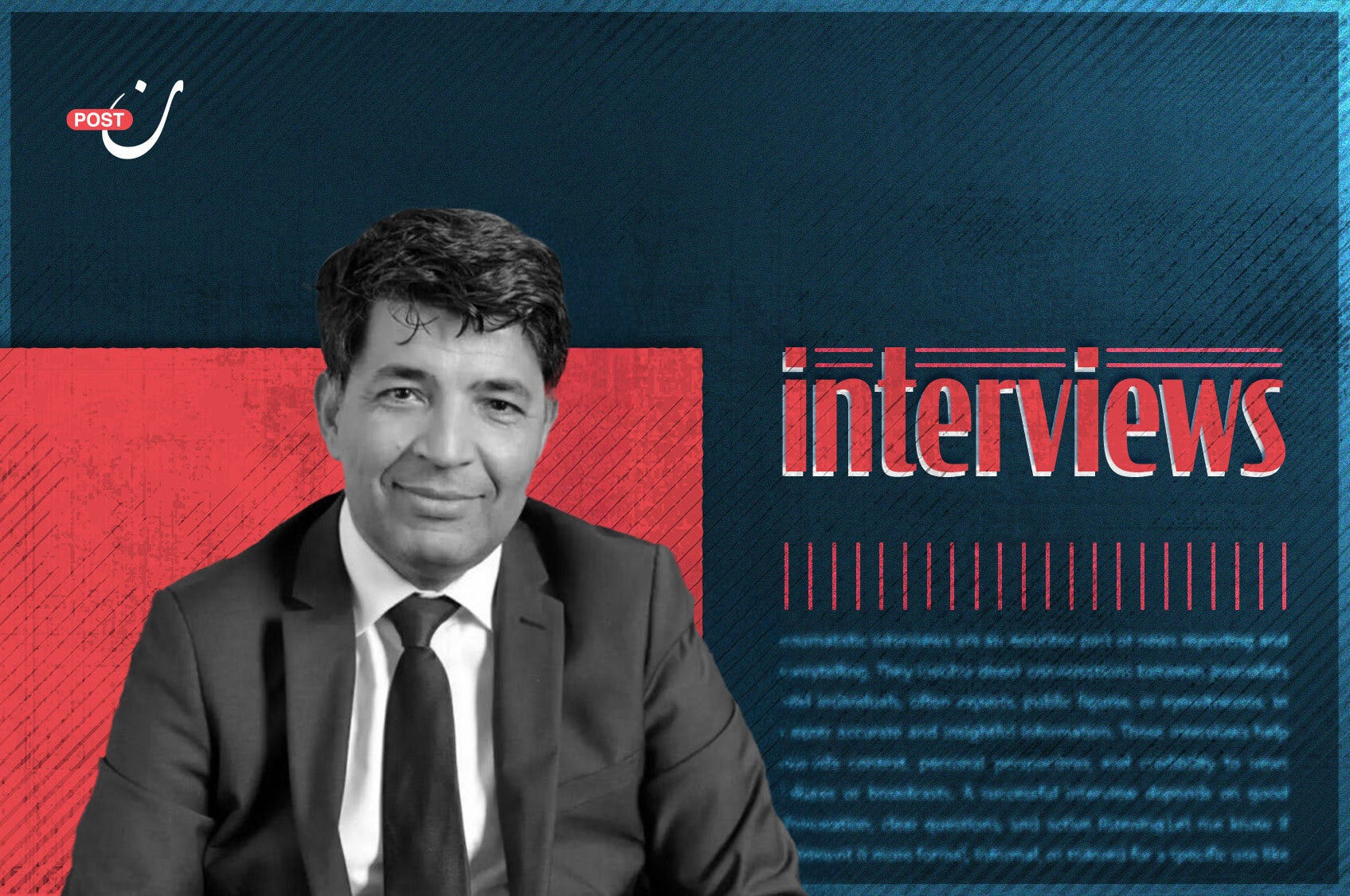
To decode this complex landscape, we spoke with veteran political researcher Dr. Housni Abidi. In this wide-ranging discussion, we delve into new U.S. strategies, the declining effectiveness of international law, the exposure of multilateral institutions’ limitations, and the rise of what can be described as “geopolitical transactionalism” an approach that treats states and regions as bargaining chips and tradable assets.
This conversation does not merely describe the crisis; it seeks to unpack its roots, assess its trajectories, and anticipate the shape of a world being formed on the ruins of the old international order.
Who Is Housni Abidi?
Housni Abidi is a researcher born in 1964 in the city of El Ouenza, Tebessa Province, Algeria. He is currently based in Switzerland. He holds a PhD in political science from the University of Geneva and serves as director of the Center for Research and Studies on the Arab and Mediterranean World (CERMAM).
He has worked as a consultant for several international institutions, including the International Committee of the Red Cross (ICRC), UNESCO, the United Nations Conference on Trade and Development (UNCTAD), and the United Nations Alliance of Civilizations.
From Israel’s grave violations of international law in Gaza to the U.S. military operation in Venezuela, are we witnessing the collapse of international law in favor of the rule of military force?
International law has been one of the foundational pillars of the international community since the failure of the League of Nations. Multilateral diplomacy emerged as an inevitable outcome of the creation of the United Nations, built on the principle that every state—large or small, rich or poor—has the right to vote, with the exception of the Security Council, which was shaped by the conditions prevailing at the end of World War II.
When the law is violated without being enforced, the international system loses its balance. This is not limited to Gaza; it dates back to the Iraq war, which was the first successful attempt to circumvent international law. The same logic applies to Russia, which argues that it is not the first state to bypass international law and undertake military action causing major disruptions without facing punishment.
What happened in Gaza represents a qualitative shift in international law. The United States went so far as to punish those who sought to hold violators of international law accountable, imposing sanctions on judges of the International Criminal Court. This constitutes a direct threat to international law and to what remains of the legitimacy institutions built since the end of World War II.
Today, we are living through a profound imbalance resulting from the collapse of the post–World War II international order and the refusal of permanent members of the Security Council who possess veto power—to respect international legitimacy. The United States does not want international organizations to play any effective role.
When it withdraws from these bodies and the U.S. president creates alternative institutions of his own, we are witnessing a radical transformation in which military power and bargaining become the two main pillars of what could be called a new international order.
However, it is still too early to define the nature of this order. While the foundations of the old system are eroding and increasingly questioned, it is extremely difficult to build a new, acceptable international order through force alone.
To what extent does Trump’s approach to Greenland reflect a broader pattern of “geopolitical transactionalism,” in which territorial sovereignty is treated as a negotiable asset rather than a fixed principle of international law?
I believe President Donald Trump’s strategy toward Greenland is a natural extension of his foreign policy approach, which is based on power politics and the imposition of sanctions, particularly through tariffs. Intimidation and threats have become a consistent method for the U.S. president, enabling him to weaken all opposing forces. It has become difficult for Congress, the Senate, the federal judiciary, the media, civil society, or the Democratic Party to form an effective counterforce capable of standing up to Trump.
He follows the same path in international politics. There is no state or organization capable of blocking his ambitions, even when he attempts to seize by force a territory belonging to Denmark a NATO member and a U.S. ally. This represents a blatant violation of sovereignty and international law, as well as a shirking of responsibilities toward an allied state.
Given that NATO members theoretically cannot enter into direct war with one another, does the current tension over Greenland and Ukraine signal a fundamental shift in Western alliances and the structure of the international system?
What is happening between the United States and the European Union mirrors the intellectual and political structures of each side. Europe still believes that the United States is not defined solely by President Trump and that it must adopt a cautious, balanced approach toward him to avoid fueling anti-European sentiment among the American public. Trump’s presidency will eventually end, which compels Europe to invest in the future.
Europe possesses powerful economic tools but is reluctant to deploy them, as doing so could further entrench “Trumpism” even after Trump leaves the White House. The core issue is that European states have come to question whether the United States views them as genuine partners and allies or merely as customers who pay well for American weapons.
This moment offers Europe an opportunity to rethink military and strategic autonomy an idea long advocated by Trump himself, though it originally traces back to former French President Charles de Gaulle.
Regarding Iran from the 2022 protests following Mahsa Amini’s death, to war with Israel, to the recent escalating demonstrations how has the Iranian regime managed to endure despite mounting internal and external crises?
The Iranian regime has faced significant social upheavals of varying intensity over time, but the latest protests are the most severe for two main reasons.
First, they originated in the traditional bazaar, historically conservative and close to the regime, and the same social force that helped bring down the Shah and usher in the Islamic Revolution.
Second, they were driven by urgent economic and social grievances: declining purchasing power and the collapse of the Iranian rial issues that enjoy broad consensus among Iranians regarding the legitimacy of protesting them.
What makes these protests particularly alarming for the regime is their unprecedented geographic spread, extending from major cities to remote villages that had never witnessed protests before. Their momentum was further reinforced by overt external intervention, particularly by Israel and the United States, as President Trump directly addressed Iranians, telling them: “Hold on, protest we are coming.”
Despite this, the regime retains a support base whose size and nature are difficult to define. It draws backing from multiple quarters: the Revolutionary Guard, business figures, governmental and semi-governmental institutions, various social groups, and possibly even segments of the regular army. It also possesses financial resources that enable it to absorb current shocks. However, this does not mean the protests have ended or that the regime can endure indefinitely.
While the regime has succeeded in suppressing calls for its overthrow, this success is temporary rather than definitive. The United States, Israel, and Western states seeking regime change understand that the cost of an uncertain military operation would be extremely high, whereas internal change through popular uprising represents a less costly and more politically acceptable option from a Western perspective.
There has been persistent talk since the start of the year about potential U.S. military intervention in Iran. How do today’s U.S. strategic calculations differ from past experiences in Iraq and Afghanistan?
The United States suffered failures in Iraq and Afghanistan despite years of heavy military presence, bearing enormous costs alongside its NATO and Western allies.
President Trump, however, differs fundamentally from his predecessors. Although he presents himself as an isolationist president focused on domestic priorities, reality suggests otherwise. In less than a year, the United States has carried out more than five military interventions abroad without legislative authorization. Trump prefers highly limited military interventions and does not act without assurances of decisive military outcomes.
Does Western support for Iranian protesters represent a genuine commitment to human rights, or merely a desire to overthrow a political and ideological adversary?
There are many examples of double standards, particularly regarding human rights. With the exception of some sincere Western NGOs and international organizations working to improve governance and combat corruption, Western states often use human rights rhetoric as a weapon for pressure and blackmail rather than as a genuine objective.
For example, President Trump has not demanded improvements in human rights in Iran; instead, he demands negotiations from a position of weakness, the dismantling of Iran’s nuclear program, and regime change itself. In both Venezuela and Iran, human rights are not a true priority for Western governments.
What does the contrast between swift U.S. intervention in Venezuela and relative hesitation toward Iran reveal about the real criteria guiding U.S. military decisions?
Venezuela represents a practical application of Trump’s interpretation of the Monroe Doctrine, which treats Central and Latin America as the United States’ backyard and an extension of its national security. When factors such as Maduro’s policies, ties with China, Russia, or Iran, or the success of leftist movements emerge, Trump considers intervention justified, citing drugs or proximity to hostile regimes.
This marks a radical shift in international relations. Traditionally, a newly elected U.S. president would visit Canada and Mexico, underscoring the strategic importance of neighboring states—just as a French president visits Berlin. Today, however, we are witnessing fractures between geographically adjacent countries, despite the assumption that geographic proximity should translate into strategic proximity.
Has the Iran-Israel conflict moved beyond proxy warfare toward a direct existential confrontation?
The confrontation between Iran and Israel has surpassed the proxy war stage and become an open conflict. Iran has suffered the assassination of senior figures nuclear scientists and military leaders confirming the direct nature of the war.
Iran expanded its reach through influence rather than geography, extending into southern Lebanon, Palestine, Yemen, and Iraq. In response, the United States and Israel have sought to dismantle what they call “shared arenas,” targeting Hezbollah, striking inside Iran, and encouraging Syria’s new leadership following the fall of Bashar al-Assad, who was considered an Iranian instrument.
This conflict is not ideological so much as a struggle over interests and influence. Israel seeks lasting influence in southern Lebanon and Syria, while the United States pursues similar expansionist goals. How this geographic and strategic expansion ultimately unfolds remains to be seen.
Are international institutions failing because of their structure, or because major powers have hollowed them out?
When international law is not enforced, the role of global institutions diminishes. The UN Security Council is paralyzed by vetoes from the United States, Russia, and China. When the U.S. withdraws from key organizations such as UNESCO and the World Health Organization, it cripples their effectiveness, seeking to prevent any institution from constraining the new approach adopted by the Trump administration.
As dysfunction worsens, smaller states and those committed to international legitimacy must defend the United Nations and multilateral diplomacy. Major powers, having discovered the limited political utility of these institutions, now seek to disable or replace them just as Trump is attempting through his proposed “Executive Peace Council.”
Does this turbulent start to the year entrench U.S. dominance, or signal a shift toward a multipolar world?
The year 2025 was Trump’s year par excellence, and 2026 will be no different. He has dominated media, politics, and economics, severely damaging international relations and sowing doubt even among close allies such as Britain, Germany, and Canada.
Trump offers no genuine alternative. Any alternative must possess legitimacy and broad international acceptance. Instead, Trump views international relations as business deals offers, counteroffers, negotiations, and price agreements where the strongest economic actor wins.
The world is undergoing a profound transformation. Major responsibilities now fall on the Global South, BRICS, Arab states, and the Middle East, which must prepare for deep disruptions in international relations that the current global system will be unable to resolve. This moment presents an opportunity to rethink the foundations of global governance.