

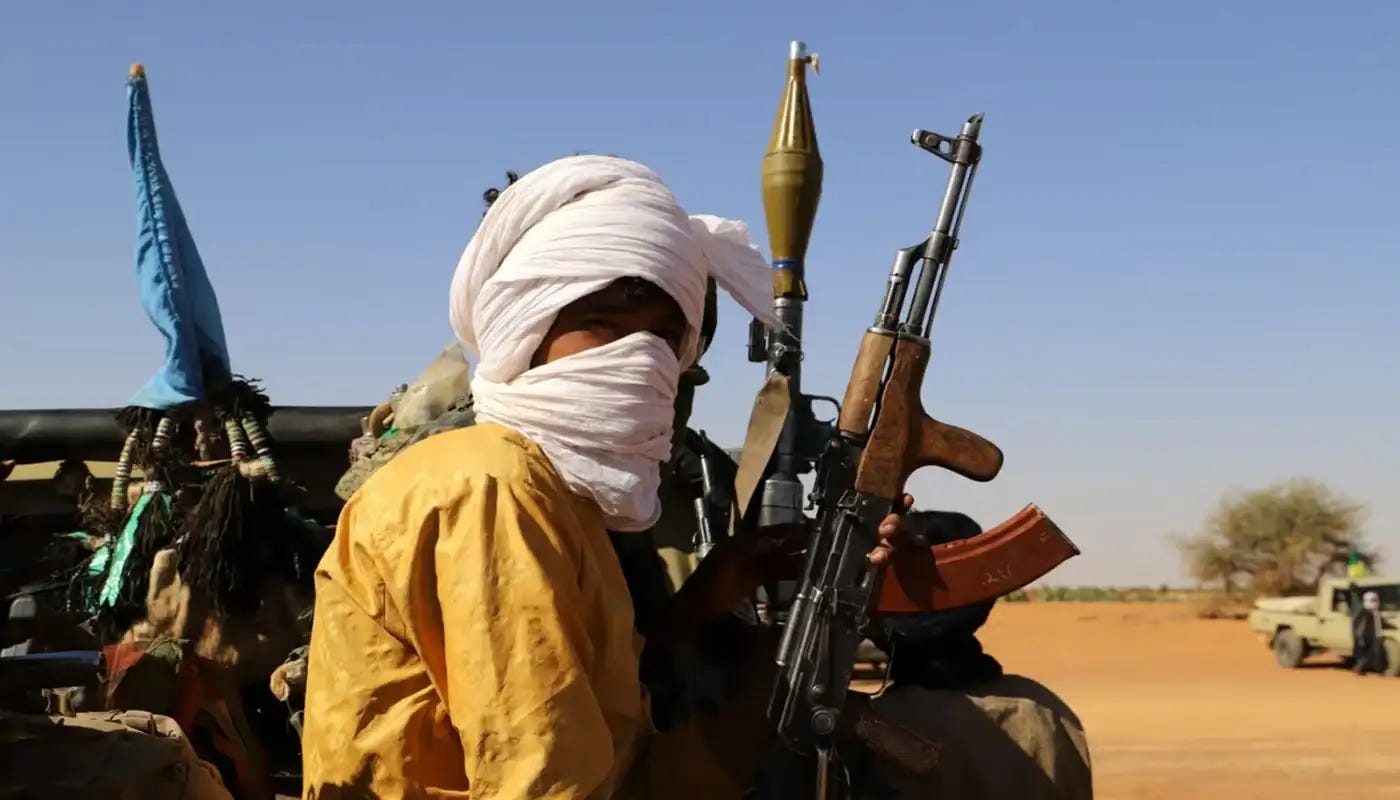
A new indicator has underscored the Sahel region’s enduring status as a hub for terrorism. On March 19, 2026, the Institute for Economics and Peace released its Global Terrorism Index report, revealing that the African Sahel primarily comprising Mali, Niger, Chad, Mauritania, and Burkina Faso continues to account for more than half of terrorism-related deaths worldwide. This comes amid a growing security vacuum following the near-total withdrawal of French and Western forces from the region.
This wave of terrorism also poses a threat to Arab states. Although the 2025 Global Terrorism Index recorded the lowest levels of attacks and fatalities since 2007—with deaths down 28% and attacks down 22% this apparent decline masks a sharp geographic concentration of violence in Sahelian countries bordering the Arab world, such as Niger, which shares a frontier with Algeria.
This article seeks to unpack a central dilemma: despite the Sahel emerging as one of the world’s most volatile epicenters of terrorism, questions persist about the operational map drawn by armed groups in the region, as well as the consequences of Western withdrawal in fueling security chaos and expanding extremism.
What the Global Terrorism Index Reveals About the Sahel
According to the Institute for Economics and Peace, the Sahel accounted for 51% of global terrorism deaths, with six of the ten most affected countries located in sub-Saharan Africa.
Steve Killelea, founder of the Institute, warned that the structural drivers of terrorism are deepening despite seemingly reassuring figures. “2026 marks a dangerous convergence: a potential Iranian collapse creating fertile ground for armed groups, Western economic decline, and the growing use of drones by terrorist organizations,” he noted.
Mohamed Tourchine, a researcher specializing in African affairs, told Noon Post that terrorism is widespread in Sahelian countries due to the prevailing security vacuum and governments’ inability particularly within the Alliance of Sahel States (Mali, Niger, and Burkina Faso) to exercise full territorial control.
Meanwhile, Aziz Ahlawi, an anthropologist and terrorism expert, emphasized that the absence of a strong central state enables tribal, ethnic, and linguistic groups to easily foster and adopt extremist ideologies.
Ahlawi added: “Alongside the absence of authority, civil law, and constitutional governance, there is a legacy of systematic impoverishment dating back to French colonial rule. This is compounded by political dictatorships that have left populations in extreme poverty and in dire need of institutions and social services. The absence of such services allows extremist narratives to easily penetrate these vulnerable communities.”
The Map of Armed Groups in the Sahel
The Group for the Support of Islam and Muslims (JNIM), affiliated with al-Qaeda, dominates the Sahelian landscape. It is primarily based in Mali but has expanded operations into Burkina Faso and Niger. Competing for influence are Islamic State affiliates in the Greater Sahara.
Other groups pursue political objectives, such as the Coordination of Azawad Movements, which seeks independence for the Azawad region. Although it signed the 2015 Algiers Agreement with the Malian government, Bamako officially withdrew from the accord in January 2024.
According to Tourchine, another politically driven group is the Macina Liberation Front, which draws heavily from the Fulani ethnic group one of West Africa’s largest. After concluding that the government would not meet its demands, it allied with Ansar Dine and the Sahara Emirate. These factions eventually merged under al-Qaeda in the Islamic Maghreb and later rebranded as JNIM, pledging allegiance to al-Qaeda.
Tourchine added that Islamic State-linked groups maintain a strong presence and coordinate with Boko Haram in northern Nigeria. These networks including politically oriented factions conduct joint operations across eastern, northern, and central regions of Mali and Burkina Faso.
What Threat Does This Pose to Arab States?
Among the countries most affected by Sahelian terrorism are Morocco, Algeria, Tunisia, and Egypt (via Libya), with Libya representing the most critical node in this equation. It has become a key transit hub for weapons, fighters, and financial flows into the Sahel, amid a security vacuum that allows armed groups to regroup and expand.
The threat extends beyond Libya’s borders. The vast Fezzan desert region has become a safe haven for ISIS and al-Qaeda in the Islamic Maghreb cells, which exploit arms smuggling and human trafficking to finance operations and move fighters deeper into the Sahel.
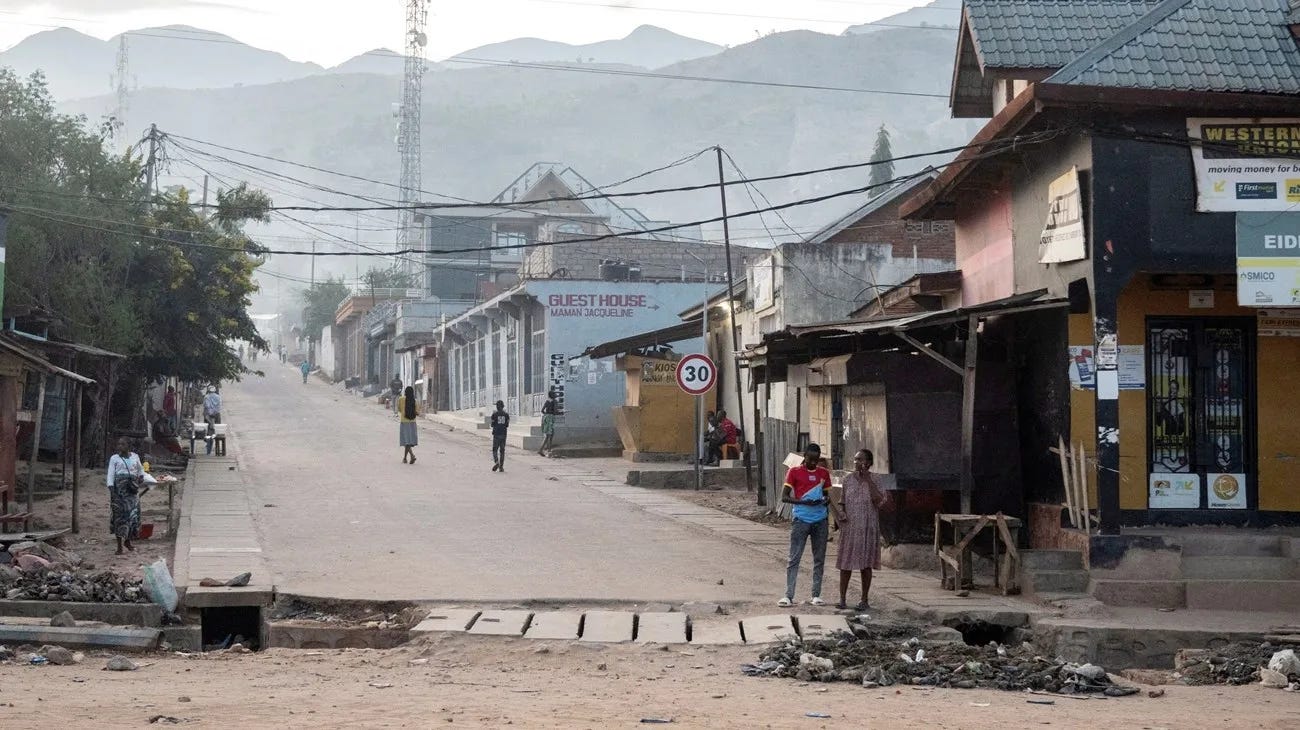
Despite these risks, Ahlawi points to significant sociological and anthropological shifts among Arab youth, including declining recruitment into extremist groups particularly in the Maghreb due to reduced susceptibility to emotionally charged religious rhetoric.
He explains: “The evolution of the digital world and easier access to information have weakened the influence of extremist discourse in recent years. Extremist platforms no longer monopolize information as they once did; the digital space has fostered skepticism toward these narratives, leading many young men to refrain from joining such movements.”
Nevertheless, Tourchine warns that Arab states especially those neighboring the Sahel, such as Libya, Algeria, and Morocco face substantial risks.
“It is entirely plausible that these groups will infiltrate the Maghreb to carry out operations,” he said. “Jihadist organizations, whether aligned with ISIS or al-Qaeda, are not constrained by borders. Some young men may travel to the Sahel for training and later be deployed to destabilize security in Maghreb countries.”
Who Fills the Security Vacuum?
France withdrew from Mali, Burkina Faso, and Niger under pressure from successive military coups, while Washington announced a reduction of its military presence—leaving behind a significant security vacuum.
Russia quickly moved to fill this gap through the Wagner Group—now replaced by “Africa Corps” under the direct supervision of the Russian Ministry of Defense. However, according to observers, its approach appears focused more on regime protection than counterterrorism.
French involvement had previously taken shape through Operation Serval, launched under President François Hollande, which Paris claims helped contain militants and prevent the fall of Bamako, followed by the broader Operation Barkhane under President Emmanuel Macron, covering multiple Sahelian states.
The withdrawal of French and UN forces has left a major security void, particularly as local governments and ruling military councils blamed France for security failures.
Tourchine argues that the vacuum persists despite Sahel states turning to Russia and Turkish military expertise particularly in acquiring advanced combat drones. However, their ability to curb terrorism remains limited due to the strong social base supporting jihadist groups and the inability of states to deliver development projects.
“This confirms that terrorism will remain entrenched,” he concluded.