

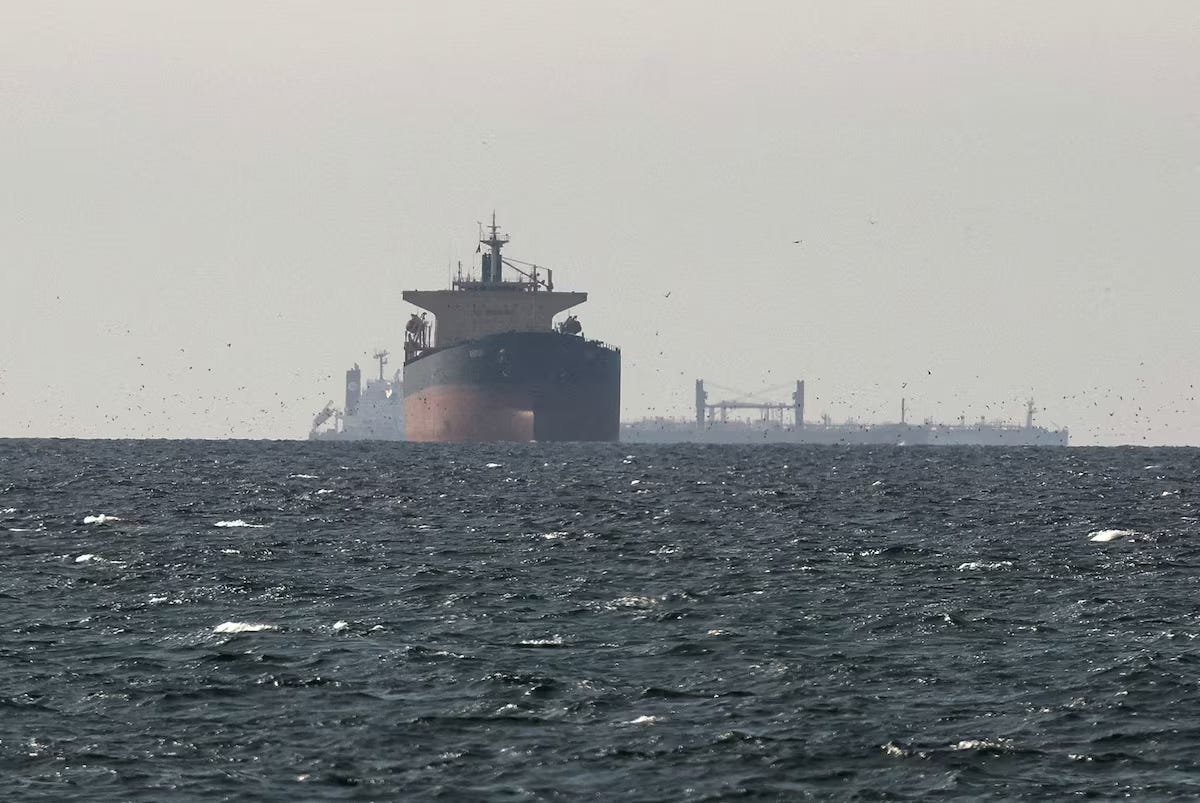
Since the outbreak of the U.S.–Israeli war against Iran, the phrase “reopening the Strait of Hormuz” has become a daily refrain, underscoring Washington’s inability to resolve a crisis affecting one of the world’s most critical maritime corridors.
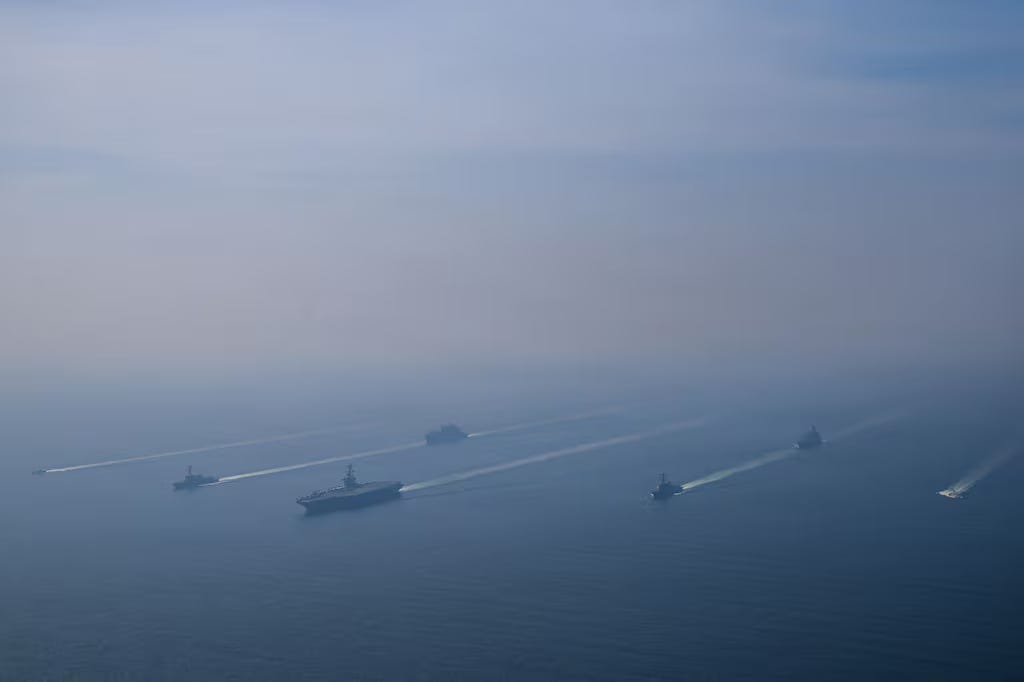
In theory, the U.S. Navy commands the largest naval force in the world, with ships and aircraft deployed across the Gulf, the Red Sea, and the Mediterranean. Yet the reality on the ground suggests that this superiority does not necessarily translate into a rapid restoration of commercial shipping through the Strait of Hormuz.
The equation is not merely about the presence of aircraft carriers and destroyers. It hinges on persuading shipping companies, insurers, and maritime crews that risks have become acceptable and ensuring that the daily passage of dozens of tankers does not trigger another catastrophe that could drive oil prices to record highs.
How Large Is U.S. Naval Power, Really?
The U.S. Navy operates 292 warships and logistical vessels within what is known as the battle force, including 233 combat ships and 59 support vessels.
This fleet includes 11 nuclear-powered aircraft carriers 10 of the Nimitz class and one of the Gerald R. Ford class. Each carrier carries around 60 aircraft capable of launching hundreds of strikes per day.
American submarines form the backbone of nuclear deterrence. The fleet includes 14 Ohio-class ballistic missile submarines armed with Trident nuclear missiles, four converted Ohio-class submarines capable of launching 154 Tomahawk missiles each, and 48 attack submarines from the Virginia and Los Angeles classes, among others.
The surface fleet comprises roughly 90 destroyers and cruisers equipped with air and missile defense systems and land-strike capabilities, alongside smaller vessels such as frigates, coastal patrol ships, and landing craft.
In the Middle East, deployments have surged since January 2026. An analysis by the Center for Strategic and International Studies (CSIS) in Washington noted that the U.S. Navy had assembled:
Two aircraft carriers, 13 cruisers and destroyers, and three smaller vessels the largest regional deployment since the 2003 Iraq War.
With the arrival of the USS Gerald R. Ford in mid-February, the total rose to around 20 ships in or near the region more than 40% of U.S. naval assets ready for operations.
Following the launch of attacks on Iran, Washington dispatched the USS Abraham Lincoln and three destroyers to the Gulf, followed by the Gerald R. Ford and three additional destroyers, bringing the total to 16 vessels, including two carriers, alongside more than 100 fighter jets (F-35, F-22, and F-15).
These forces are supported by forward bases in Bahrain, Qatar, and Djibouti, as well as early warning aircraft and air defense systems such as Patriot and THAAD deployed across the Gulf.
Why Isn’t This Force Enough to Reopen Hormuz Easily?
1. Gradual Deterrence
Despite the massive U.S. naval presence, deploying warships alone appears insufficient to restore commercial navigation—even without Iran resorting to widespread mine-laying or declaring a formal blockade.
Tehran appears to rely on what could be described as a “gradual deterrence” strategy: limited drone and missile strikes against oil tankers and commercial vessels just enough to raise risk levels and disrupt commercial decision-making, without requiring a full, declared closure of the strait.
This approach has proven highly effective. According to an analysis by the UK-based Royal United Services Institute (RUSI), maritime traffic has dropped by 90%, while Iranian and affiliated vessels account for roughly 60% of the remaining movement.
Control of the strait, therefore, is no longer determined solely by who possesses superior military power, but by who can impose an environment of fear that forces much of the market to withdraw.
2. Multiple Threat Vectors
The military challenge lies in the diversity of Iranian threats: drones, missiles, and naval mines, all of which strain U.S. defensive capabilities.
Iran is believed to be capable of producing around 10,000 drones per month and possesses a stockpile of between 2,500 and 6,000 missiles, in addition to 5,000–6,000 naval mines that could be deployed in the strait.
These mines vary between bottom, drifting, and rocket-propelled types. Experts warn that clearing even a portion of them could take months, turning any effort to secure navigation into a prolonged and complex operation rather than a swift military task.
3. High Operational Costs
The problem is compounded by the fact that even the most advanced U.S. destroyer cannot perform all missions simultaneously. A Reuters analysis noted that protecting a single convoy may require around 12 major warships, supported by fighter jets, drones, and helicopters.
A single vessel may intercept missiles but cannot simultaneously clear mines, counter armed boats, and defend against swarms of drones. As a result, theoretical military superiority becomes a heavy operational burden when tasked with securing a narrow and congested waterway like Hormuz.
4. Harsh Geography
The challenge is not just about weaponry, but also geography. The strait, approximately 30 kilometers wide, places large U.S. vessels in a confined space exposed to simultaneous threats, making destroyers highly vulnerable targets.
Even in the absence of evidence of large-scale mine deployment with reports indicating only about ten mines laid as of March 25 the greater risk lies in Iran’s ability to use limited tools to produce a disproportionate impact on shipping decisions.
What Does It Cost to Secure Hormuz?
The cost of “reopening Hormuz” is enormous. Restoring navigation is not simply a matter of deploying more naval assets it also requires reducing risk levels that have driven insurance premiums from around 0.25% before the war to as high as 3% in some cases equivalent to $7.5 million to insure a $250 million tanker.
Major insurers estimate that around 1,000 vessels in the Gulf, worth a combined $25 billion, require separate war-risk coverage. Many have anchored outside the strait, placing the transport of roughly 20 million barrels of oil per day at risk.
Even efforts to reassure the market have fallen short. Despite U.S. insurer Chubb announcing a $20 billion government-backed reinsurance program to enable vessel transit, shipping companies have remained reluctant—highlighting that the issue is not purely financial, but fundamentally security-driven.
The Red Sea offers a cautionary lesson:
The United States and its partners have spent over $1 billion in operations against the Houthis since 2023.
Hundreds of drones have been intercepted, yet four ships have been sunk, and most commercial shipping continues to avoid the Bab al-Mandab Strait.
Military escorts alone, therefore, do not automatically restore commercial traffic or reduce insurance premiums as long as core risks persist.
In Hormuz, the challenge is even greater. The risk zone is five times larger than Bab al-Mandab, and the Iranian adversary is more experienced and better armed.
Operational Constraints
The United States also lacks abundant mine-clearing assets in the Gulf:
Avenger-class mine countermeasure ships were withdrawn from Bahrain and replaced with littoral combat ships adaptable for mine warfare, though two were under maintenance in Singapore as of March.
A U.S. official acknowledged that the Navy “does not have many options,” with current capabilities limited to four mine countermeasure vessels, unmanned surface vehicles, helicopters, and divers.
Meanwhile, Iran’s Islamic Revolutionary Guard Corps operates fast boats, drones, and anti-ship missiles such as Noor and Qader, deployed from caves and mountainous terrain overlooking the strait.
This imbalance does not imply Iranian naval superiority, but rather highlights the high cost and complexity of neutralizing its dispersed coastal capabilities—particularly in a narrow and strategically vital corridor like Hormuz.
It also explains Washington’s reluctance to act unilaterally and its calls for allies to participate in reopening the strait.
Sending additional ships not only raises financial costs but also increases the risk of human losses. The loss of a single destroyer could mean the deaths of around 300 sailors—an outcome that would significantly affect U.S. public opinion. Moreover, concentrating forces in the Gulf exposes other theaters in the Pacific and Europe.
For this reason, RUSI experts argue that the most realistic path to restoring safe navigation lies not in military power alone, but in a political settlement with Iran that persuades it to halt attacks.