

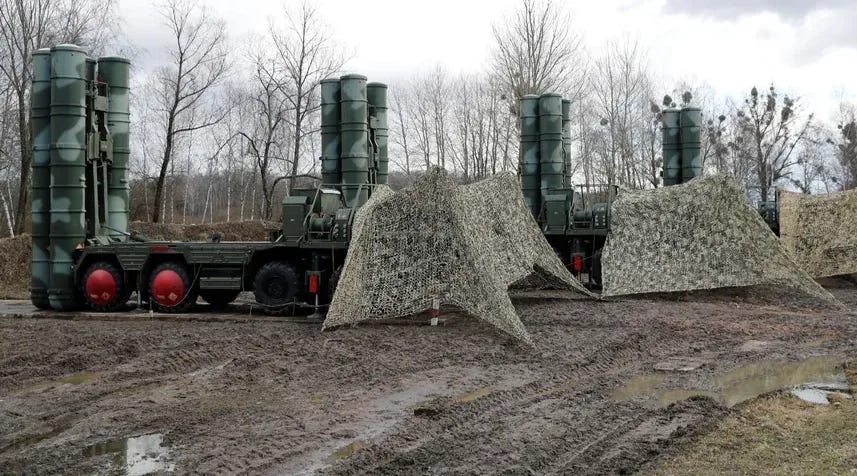
After years of stagnation, defense relations between Ankara and Washington are witnessing renewed momentum aimed at reopening the file on Turkey’s participation in the U.S. F-35 stealth fighter jet program.
The Turkish Ministry of Defense confirms that ongoing talks with the American side are focused on lifting sanctions and overcoming the obstacles that have prevented Ankara’s return to the program while simultaneously affirming that Turkey’s position on the Russian S-400 air defense system remains unchanged.
Meanwhile, Washington insists that U.S. laws prohibit any coexistence between operating the S-400 system and rejoining the F-35 program.
This debate is unfolding in a more positive political climate between Turkish President Recep Tayyip Erdoğan and his American counterpart, Donald Trump. The two sides have engaged in what have been described as the most serious talks in nearly a decade, raising mutual hopes of a breakthrough that could resolve the dispute and pave the way for lifting sanctions on Turkey’s defense industry.
Ankara’s 2017 purchase of the Russian S-400 missile system marked a turning point in its defense relationship with Washington, setting off a prolonged crisis that culminated in Turkey’s expulsion from the F-35 program in 2019. Turkey had turned to the Russian system after protracted negotiations with the United States over the Patriot air defense system fell through, prompting Ankara to seek alternative solutions to address urgent national security needs.
Washington, however, viewed Turkey’s acquisition of the S-400 as a direct threat to the security of its advanced fighter jets and responded by suspending Turkey’s participation in the F-35 program and imposing sanctions on its defense industry under the Countering America’s Adversaries Through Sanctions Act (CAATSA).
As a result, Turkey lost its position as a key partner in the development of the U.S. Air Force’s most advanced fighter jet, despite having invested approximately $1.4 billion in the project and contributed to the production of various components. Six F-35 jets built for Turkey were withheld and never delivered.
In the years that followed, Ankara consistently described its removal from the program as unfair and formally contested the decision, demanding either re-entry into the program or compensation for its financial losses.
Why Is a Return to the F-35 Still on the Table?
Despite the complexity of the dispute and the intertwined political and legal dimensions, Turkey’s desire to rejoin the F-35 program remains a fixed priority on Ankara’s strategic agenda, driven by both practical and security imperatives.
Foremost among these is the central role the F-35 plays in Turkey’s air force doctrine. As a fifth-generation fighter jet, the F-35 forms the backbone of air power among NATO allies, offering unmatched combat and technological capabilities.
Without access to such a platform, Turkey risks losing its relative air superiority within NATO especially as other regional actors may acquire similar stealth fighters in the coming years.
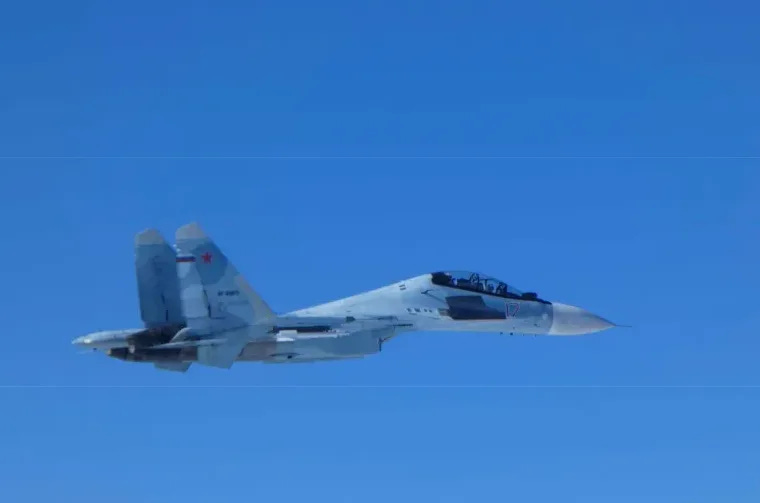
Additionally, Turkey’s significant investment in the program bolsters its argument. Ankara was a founding partner in the joint production project, making financial and logistical contributions that included $1.4 billion in advance payments.
Turkish companies were also involved in manufacturing key components of the aircraft. From Ankara’s perspective, its exclusion from the program deprived it of rightful returns on its investment and dealt a direct blow to its defense capabilities.
President Erdoğan has repeatedly asserted that Turkey will not relinquish its rights to the aircraft it paid for or the funds it contributed.
Simultaneously, the improving political atmosphere between Ankara and Washington has kept the F-35 file alive at the negotiating table. Following years of tension, Turkey is banking on the personal rapport between Erdoğan and President Trump now in his second term to soften Washington’s position.
This hope has translated into intensified high-level communication since the beginning of the year, including a direct request from Erdoğan in a March phone call to revisit the F-35 issue. That was followed by the mobilization of technical and legal teams from both sides to explore potential resolutions to the S-400 dispute that could lead to lifting sanctions.
Ankara emphasizes that it is seeking a balanced diplomatic solution that preserves its strategic partnership with the United States without compromising its sovereign defense decisions. Turkish Foreign Minister Hakan Fidan expressed confidence that a framework for lifting sanctions could be reached “very soon” as part of the ongoing dialogue.
Operational necessity also compels Turkey to keep pursuing the F-35. Its air force still relies heavily on F-16 fighter jets, many of which are approaching the end of their operational life. Meanwhile, Turkey’s own fifth-generation fighter project, the TF-X (also known as “Kaan”), is still years away from becoming operational.
Other international alternatives such as Russia’s Su-57 or China’s J-31 are either not yet technically mature or carry steep geopolitical costs that could further complicate Turkey’s relations with the West.
Consequently, the F-35 remains Turkey’s most realistic option for bolstering its long-range defense capabilities, explaining Ankara’s insistence on keeping the door to negotiations open, in hopes of eventually rejoining the program.
The Scenarios Facing Ankara
Given the zero-sum dynamic between the F-35 and the S-400, Ankara faces a range of scenarios, each with distinct political and security costs and direct implications for the future of its defense relationship with Washington.
1. Full Abandonment of the Russian S-400 System
This is the only option fully aligned with Washington’s publicly stated conditions: Turkey would have to permanently relinquish the S-400, either by returning it to Russia or transferring it to a third party with international approval.
Reports suggest the Turkish government is actively exploring this possibility as part of a broader effort to repair ties with Washington. Some sources claim President Erdoğan even raised the issue directly with Russian President Vladimir Putin during a meeting in Turkmenistan.
If Ankara takes this route, it would eliminate the primary obstacle to rejoining the F-35 program and could lead to the lifting of U.S. sanctions, the resumption of Turkish involvement in the project, and possibly the delivery of the jets already produced for Turkey.
However, this path is difficult to implement. It would require delicate negotiations with Moscow to avoid damaging bilateral ties and would also necessitate a financial settlement over the $2.5 billion S-400 deal potentially involving energy trade offsets to cover part of Turkey’s Russian gas imports.
2. Retaining the S-400 Without Activating It
Ankara has implicitly floated a middle-ground proposal: keeping the S-400 but not activating it or integrating it into NATO’s defense network, aiming to ease U.S. concerns without fully surrendering the system.
Turkey has repeatedly stated that the S-400 batteries will remain separate from NATO infrastructure. Nonetheless, Washington has flatly rejected this option. U.S. Ambassador to Turkey Jeff Flake emphasized that merely possessing the S-400 even without operational deployment violates U.S. laws governing re-entry into the F-35 program.
Thus, the U.S. continues to demand the complete removal of the S-400 as a precondition for any discussion about Turkey’s return to the program. While Ankara may still hope for a high-level political negotiation or special exemption especially given the favorable tone of the Trump administration the prospects for this scenario remain slim unless U.S. laws are amended or the perceived threat of the S-400 is redefined, which appears unlikely at present.
3. Seeking Alternatives and Enhancing Capabilities Outside the F-35
If no agreement with Washington is reached, Turkey may be forced to expand its search for alternatives to compensate for the absence of the F-35. It has already taken preliminary steps, including exploring options for European jets like the Eurofighter Typhoon and negotiating with Qatar and Oman for secondhand aircraft while waiting for new deliveries from the United Kingdom.
Simultaneously, Ankara has pursued a deal to acquire F-16 Viper jets and upgrade its current fleet. However, this effort has faced political obstacles in the U.S. Congress, prompting Turkey to proceed cautiously suggesting that its top priority remains regaining access to the F-35.
In the longer term, Turkey is investing in its indigenous fighter jet program, TF-X (Kaan), which has shown initial technical progress but is unlikely to reach combat readiness before the 2030s.
Given this timeline, the currently available alternatives cannot fully replace the F-35’s capabilities, but they may serve as stopgaps to maintain Turkey’s air power if the American path remains closed.
The Most Likely Scenario
Based on current indicators and the increasingly optimistic tone from both sides, the most plausible near-term outcome is a negotiated settlement under which Turkey agrees to part with the S-400 in exchange for a phased return to the F-35 program and the lifting of U.S. sanctions.
In recent weeks, several signs have emerged suggesting a meaningful shift in Ankara’s stance. U.S. Ambassador Jeff Flake said Turkey appears to be moving closer to giving up the Russian system and anticipated that the issue could be resolved within four to six months.
In parallel, Turkish media have reported advanced internal deliberations in Ankara about making a final political decision to dispose of the S-400 widely seen as the primary roadblock to restoring strategic defense cooperation with Washington.
These reports have been reinforced by official Turkish statements suggesting the system has already been deactivated, while the matter of ownership remains under review—an indication, many believe, of a de facto freeze.
Foreign Minister Fidan also stated that technical teams are exploring scenarios to lift the sanctions “very soon,” implying that practical steps are already underway to close the file.
Still, this scenario hinges on two critical factors: Turkey’s ability to follow through on its commitments, and the Trump administration’s capacity to secure congressional support for the deal.
On the Turkish side, this would likely involve a formal announcement that the S-400 batteries have been dismantled or returned to Russia, possibly accompanied by moves to acquire alternative systems such as the Patriot to address domestic political concerns and avoid weakening national defense.
In Washington, the White House may seek to issue temporary waivers for parts of the sanctions as Turkey initiates these steps, with a view to permanently lifting them through legislation once the process is complete.
If these steps proceed as planned, Turkey could return to the F-35 program as early as next year either by receiving the six jets already built or by resuming previously suspended manufacturing contracts. This would bring an end to one of the most contentious episodes in the history of the Turkish-American alliance.
Nonetheless, caution remains warranted. Key uncertainties persist. Moscow may not welcome the removal of its advanced system from Turkish soil without a political or strategic concession and could seek to influence the process if it perceives a threat to its interests.
