

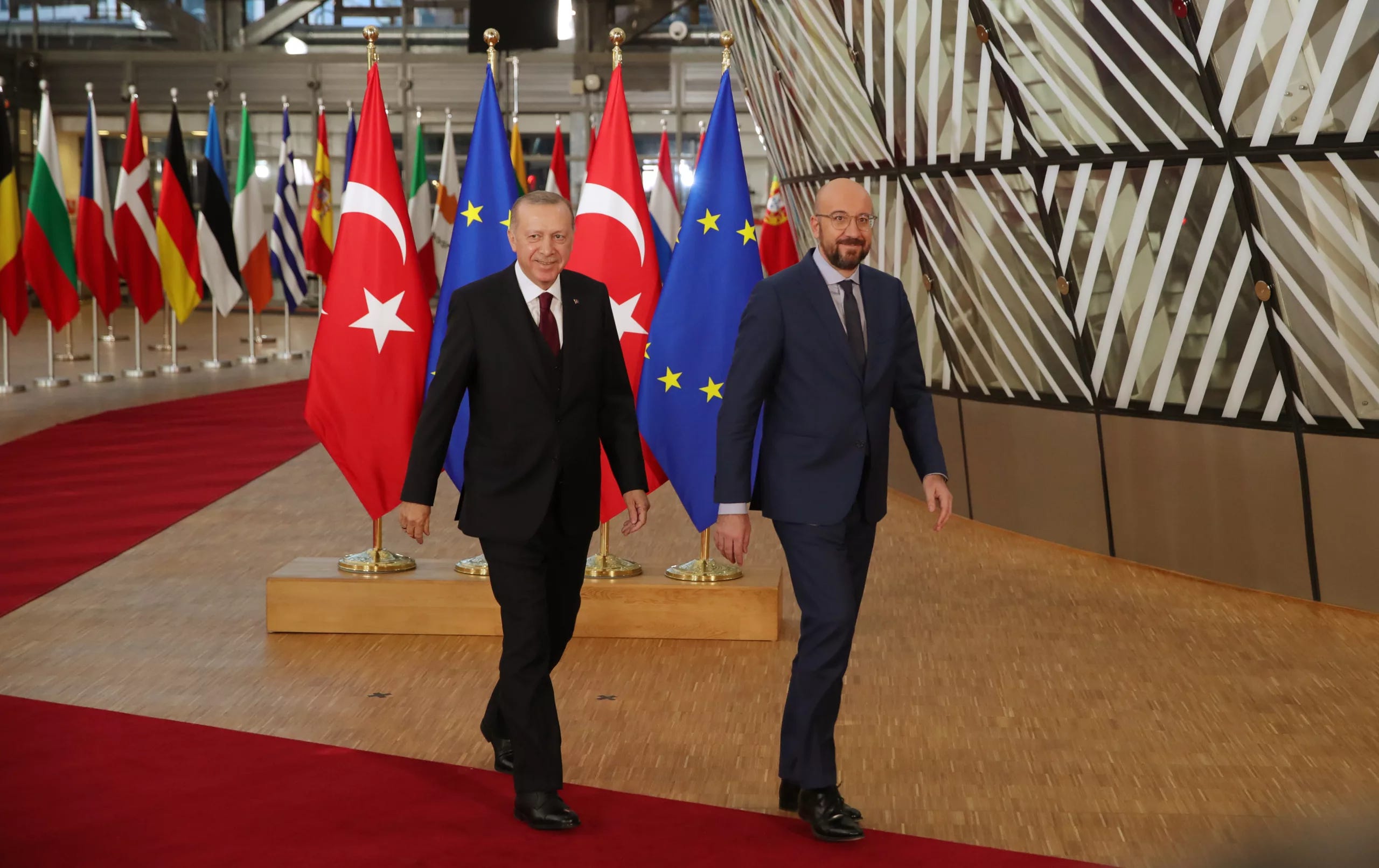
In a move marking the most stringent shift in European asylum policy in decades, EU interior and justice ministers have approved a sweeping set of measures aimed at tightening control over irregular migration and redrawing the map of how asylum seekers are processed.
Although the package still awaits ratification by the European Parliament, it effectively paves the way for a new era one that prioritizes deterrence and rapid screening over traditional principles of protection and asylum.
The adopted measures fall under several key pillars that together form a new framework for Europe’s migration system:
External Return Centers: These allow for the establishment of reception and deportation facilities outside EU borders, modeled after the Rome-Tirana agreement to build a center in Albania. This would enable rejected asylum seekers to be returned without setting foot in Europe.
Stricter Deportation Mechanisms: Binding rules will accelerate the removal of rejected applicants and allow for the imprisonment of those who refuse to leave.
Expanded Definition of “Safe Third Country”: This would permit processing asylum applications in countries that have no direct connection to the applicant, enabling rejection based solely on prior transit or bilateral agreements.
Unified List of Safe Countries of Origin: For the first time, the EU agreed on a common list of seven countries deemed safe including Tunisia, Egypt, India, and all EU candidate countries, among them Turkey.
Financial Solidarity Mechanism: Countries that refuse to accept their quota of asylum seekers can instead pay €20,000 per case, to help support frontline states like Greece and Italy.
These decisions have drawn sharp criticism from over 200 European human rights organizations, which labeled them a betrayal of humanitarian protection principles and a legal mandate for pushing migrants out of Europe.
Still, the swift consensus among European capitals points to a growing trend toward formalizing collective deterrence, with the new rules expected to take effect in 2026 ushering in a new reality at Europe’s borders.
Turkey as a “Safe Country”: What Does It Mean in Practice?
The EU has included Turkey on its list of “safe countries of origin,” a designation that procedurally means asylum claims filed by Turkish citizens in EU states are now more likely to be swiftly rejected, unless the applicants can provide compelling evidence of facing individual and imminent danger.
This classification is based on a set of criteria, including the absence of armed conflict, a basic level of respect for democracy and human rights, and a low asylum approval rate below 20% for nationals of the designated country.
In Turkey’s case, data from the European Union Agency for Asylum (EUAA) shows that by the end of 2024, only 17% of Turkish applications were approved down sharply from 54% in 2019, signaling a notable shift in how Europe views Turkey’s eligibility for international protection. By comparison, approval rates were 90% for Syrians and 63% for Afghans during the same period.
The European Commission defended the inclusion of Turkey, citing its EU candidacy status, which implies a basic commitment to rule-of-law and civil liberties. A Commission official noted there was no legal basis to exclude Turkey from the list unless it were under EU sanctions or if its asylum approval rates exceeded the permissible threshold. Currently, Ukraine is the only EU candidate country not on the list due to the ongoing war.
This decision is expected to directly affect tens of thousands of Turkish citizens who have applied for asylum in recent years most notably in Germany, France, and Greece including journalists, political dissidents, and minority group members.
With a unified EU list now in effect, Turkish asylum seekers can no longer “shop around” for more lenient countries; all member states are bound to apply the same strict procedures.
Politically, Ankara is unlikely to object to the designation in fact, it may interpret it as a diplomatic win. Turkish officials have long criticized European capitals for sheltering individuals it labels “terrorists fleeing justice,” referring to Kurdish dissidents and members of the Gülen movement. Now, with Turkey labeled a “safe country,” such asylum requests will likely be rejected unless exceptional personal circumstances are proven.
However, human rights organizations have warned that the classification ignores Turkey’s steady backslide on civil liberties and human rights, in exchange for its cooperation in curbing migration flows.
Notably, the EU had attempted to place Turkey on the safe list as far back as 2015, but political and rights-based disputes scuttled those efforts. Today, a surge in hardline politics across Europe and mounting pressure on migration have created the political conditions to pass the measure after nearly a decade of debate.
Turkey as a Migration Corridor: A New Game for Europe?
Turkey’s geography has never been peripheral to the migration map; over the past decade, it has played a central strategic role in managing one of Europe’s most complex refugee crises. Its proximity to Syria, Iraq, and Iran and its position as a crossroads between Asia and Europe have made it a natural gateway for asylum seekers.
Following the Syrian war in 2011 and the major migrant crisis in 2015, Turkey became an indispensable transit hub for millions seeking passage across the Aegean to Europe’s shores.
The EU quickly recognized Turkey’s pivotal role, leading to the landmark March 2016 Agreement. Under this deal, Turkey committed to stemming irregular departures toward the Greek islands and to readmitting migrants reaching EU territory from its coasts.
In return, Brussels pledged over €6 billion in financial support, promises of visa liberalization, and renewed momentum for Turkey’s EU accession process.
Despite political and legal controversies, the agreement was successful in drastically reducing migrant flows.
Now, with a new European migration policy package in place, it’s clear that Brussels is doubling down on the idea of “externalizing border control.” Expanding the “safe third country” concept to include transit countries—chiefly Turkey—means that any asylum seeker who passed through Turkish territory could be barred from filing their application in Europe, on the grounds that they should have sought protection there.
In essence, Turkey is being positioned as a buffer zone, tasked with intercepting waves of migrants before they reach the EU.
To operationalize this vision, options are being explored such as signing new agreements or updating existing frameworks to return or process asylum applications within Turkey.
Denmark’s immigration minister recently hinted at this direction, openly discussing deals with “safe countries outside the EU” to handle asylum cases, a veiled nod to Turkey’s potential role.
But implementing this strategy faces several hurdles chief among them, Ankara’s consent. International law prohibits returning asylum seekers to third countries unless those countries explicitly agree to receive them and can guarantee adequate protection.
Past experience suggests Turkish cooperation isn’t guaranteed. In 2020, Turkey opened its border with Greece as a political pressure tactic, exposing the fragility of existing arrangements. In 2025, Greek courts invalidated Turkey’s safe country designation though Athens later reaffirmed it, defying the ruling, illustrating the internal dissonance within the EU.
Brussels is now working to establish a unified legal framework binding all member states and circumventing national objections. But everything ultimately depends on Ankara’s willingness and capacity to absorb more deportees. Previous readmission deals have been frozen or stalled in recent years, and reviving them will require renewed political and operational momentum.
Future Scenarios: Partnership or Confrontation?
As the EU’s new migration and asylum policies prepare to take effect in 2026, both Brussels and Ankara face a critical crossroads where geopolitical calculations intersect with domestic pressures and cross-border challenges.
Three potential scenarios could define the future of EU-Turkey relations on migration:
1. Stability in Exchange for Strategic Gains
In this optimistic scenario, both sides reach a comprehensive new agreement restructuring migration cooperation. Turkey continues to control its land and sea borders and agrees to accept asylum seekers rejected by the EU under the “safe third country” principle. In return, the EU provides a third major funding package worth billions of euros to strengthen Turkey’s refugee infrastructure.
Concrete progress is also made on visa-free travel and updating the customs union providing a meaningful boost to Turkey’s economy. This path could stabilize migration flows and cement Turkey as a pivotal EU partner. But it depends on two rare ingredients: mutual trust and Europe’s willingness to unblock long-stalled political files both still uncertain.
2. Fragile Cooperation and Tactical Arrangements
Here, Turkish-EU cooperation continues, but at a minimum level. The EU enforces its new rules, including the swift rejection of Turkish asylum applications and the €20,000 solidarity payments by member states refusing to accept refugees.
Turkey, for its part, limits its role to border control, avoiding deeper commitments like accepting returned migrants.
The result: a fragile status quo that averts chaos but fails to address root issues. Any sudden crisis diplomatic or on the ground could trigger renewed escalation, especially if Turkey’s domestic politics shift or public pressure mounts to expel refugees.
3. Borders Without Agreement, Europe on the Brink
In the worst-case scenario, negotiations collapse, and efforts to renew cooperation fail. The European Parliament or certain capitals may block deals over human rights concerns or geopolitical tensions.
Simultaneously, Turkey may face internal crises political or economic that deprioritize migration cooperation. Ankara could then renege on its commitments and stop policing its borders, opening the door to large-scale migration into Europe.
In response, the EU might deploy unprecedented military reinforcement using Frontex forces and physical barriers while scrambling to strike alternative deals with countries like Tunisia, Libya, or Albania. This scenario evokes the 2015 crisis, but in a far more hostile political environment, both within and beyond Europe.
In short, both the EU and Turkey are facing a high-stakes test. For Europe, the challenge is to transform solidarity rhetoric into coherent, principled policy—without sacrificing its core values. For Turkey, it must decide whether to remain Europe’s gatekeeper in exchange for real partnership, or to recalibrate its priorities amid internal and regional shifts.
The next two years will be critical. As the new EU migration pact comes into force and the post-war landscape in Syria becomes clearer, the nature of the roles and the limits of power will emerge. Europe may yet succeed in legally fortifying its borders, but the root causes of migration may still lie far deeper than any wall or regulation can reach.
In all cases, Turkey will remain at the heart of the equation either as a strategic partner or the next flashpoint on Europe’s edge.
