

Amid an unprecedented catastrophe that has engulfed the Gaza Strip one of the fiercest and most destructive wars in its history medical students found themselves thrust into emergency rooms and operating theaters. A profound sense of duty and an unshakable humanitarian call pushed them forward.
Years before graduation, donning nothing but their white coats and sheer determination, they faced grueling shifts and life-or-death decisions in the middle of a genocidal war that decimated healthcare infrastructure and depleted already scarce resources.
These students weren’t training they were saving lives, racing against time to rescue whoever they could. In doing so, they wrote new chapters of courage and resilience during one of the darkest humanitarian moments Gaza has ever faced.
From Classrooms to Emergency Rooms
Azzedine Al-Loulu, a fifth-year medical student specializing in human medicine, is one of many students who moved between emergency rooms and surgical theaters, tending to the wounded and injured, offering medical care to his fellow citizens.
On November 13, 2024, Azzedine received a phone call informing him that his family home had been bombed. Twenty members of his family were killed, including his brother and his father, Dr. Samir Al-Loulu. His mother was the sole survivor but sustained critical injuries.
He recalls that this massacre was the most devastating event he experienced during the war he received his own family members at the hospital as martyrs. Yet, he was not the only doctor in Gaza to suffer such heartbreak. Many physicians have paid a steep price: some killed, others arrested, beaten, or tortured for their dedication to their people and profession.

In memory of his father, Dr. Samir Al-Loulu, Azzedine established the “Samir Foundation” to support and assist medical students an initiative to help realize the dreams of aspiring doctors, offer knowledge and aid, and serve as an ongoing charitable tribute to his father’s legacy.
Likewise, fifth-year medical student Dr. Donia Abu Moussa told Noon Post that while watching images and videos of the massacres carried out by the Israeli military against civilians during the war, she felt compelled to act. Her place, she believed, was not at home but alongside the wounded and the dying.
“I went as a human being, not just as a medical student,” she said. “I studied medicine for a noble cause, and this was the moment to fulfill that mission the professional, humanitarian, and national duty I owe my people.”
She describes her first time entering the emergency department as a moment of shock and disbelief, overwhelmed by the sheer number and severity of injuries: a man breathing his last at the ER door, a bleeding child whose limbs had been amputated, a young man reduced to fragments.
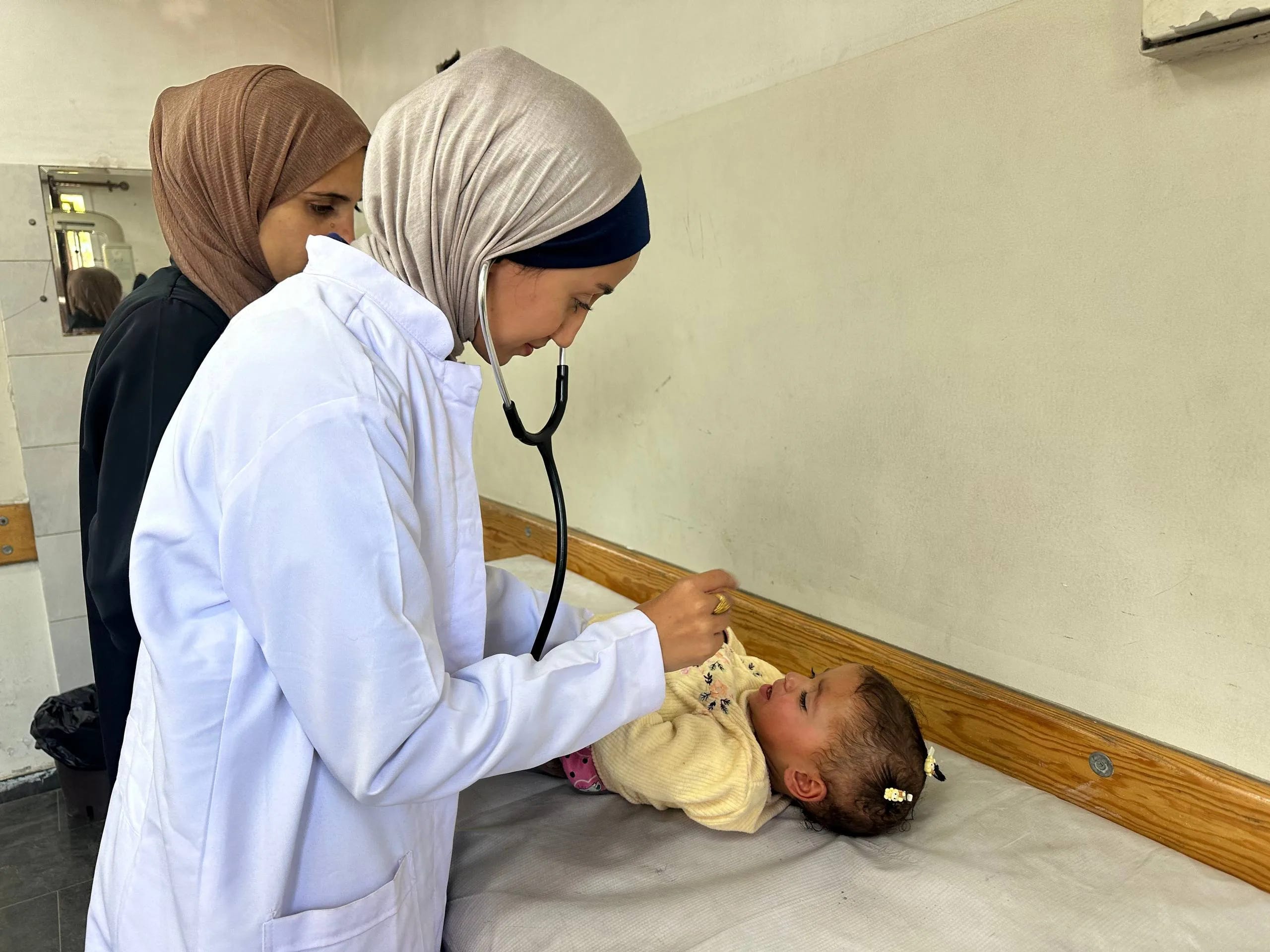
Reflecting on the mental toll of learning in such conditions, Dr. Dounia explained: “Every piece of knowledge we gained in the field came at a high price our time, our psychological well-being, our fear for our families, and the dread of possibly receiving them as martyrs, God forbid.
Beyond the bombs, we were fighting wars within ourselves. But despite everything, we pressed on, fulfilling our duty and delivering care to all.”
She added that her family’s repeated displacement in search of safety left them with nowhere to go, forcing them to sleep on the streets. She also suffered fainting spells from malnutrition during the famine, further complicating her ability to reach the hospital.
The Return of In-Person Learning at Some Universities
Professor Bassam Al-Saqqa, Vice President for Academic Affairs at the Islamic University of Gaza, stated that the institution is primarily an in-person university and that online education had been an emergency measure forced by war.
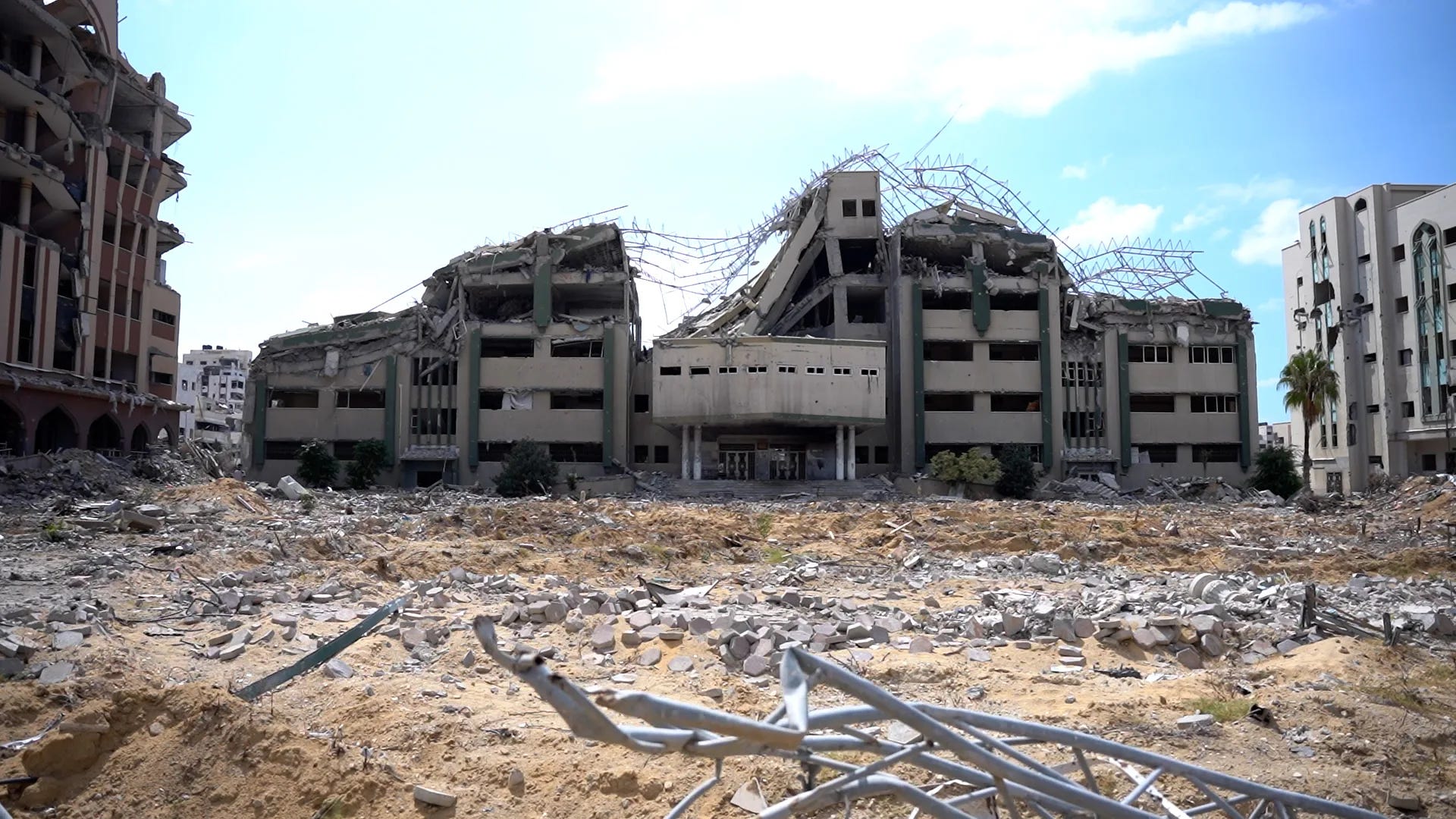
The decision to resume in-person classes was made despite near-total destruction of university buildings and the collapse of academic infrastructure, including labs, internet networks, and electricity.

He emphasized that the return to campus was not only an academic goal but also a humanitarian and social imperative. Education, he said, remains a core priority for the Palestinian people, and the students’ return helped breathe life back into many facets of daily life in Gaza.
Twelve out of sixteen university buildings were completely destroyed in the bombardment, while the remaining four were partially damaged. A large number of academic and administrative staff were killed, including the university’s president, Professor Sofian Tayeh.
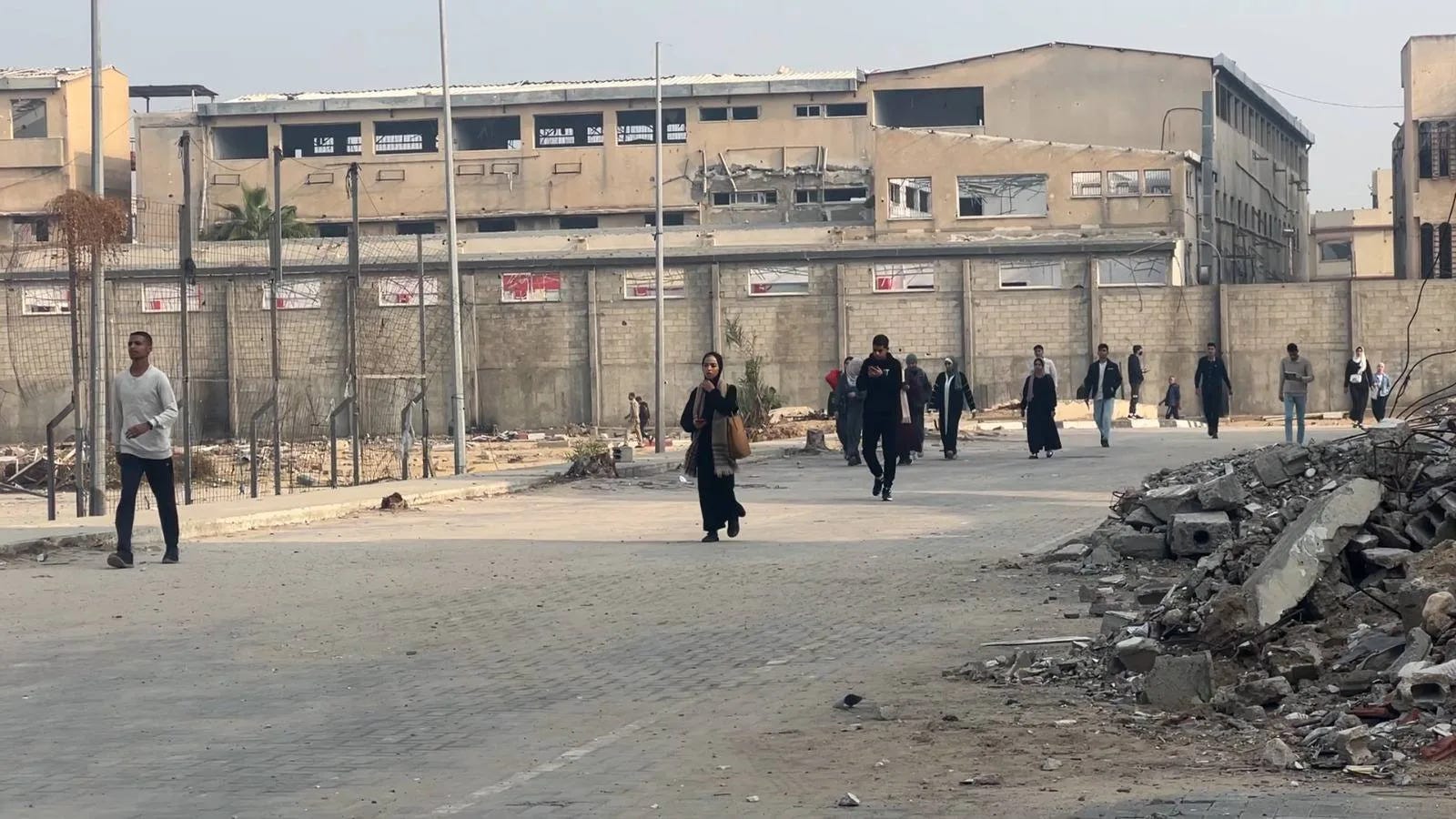
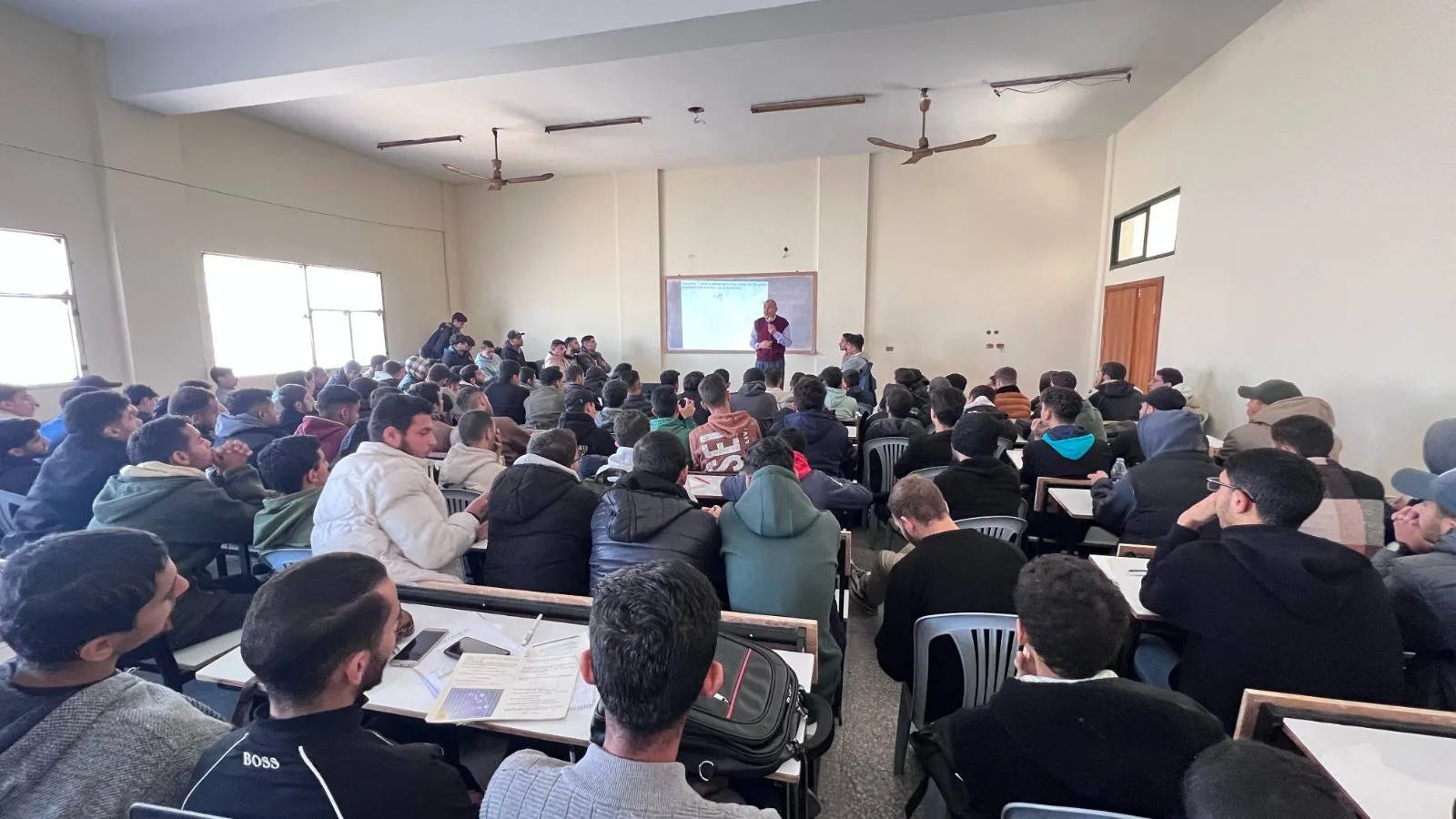
Despite these devastating losses, the university managed using very limited resources to restore five classrooms and some administrative offices, enabling a partial return to in-person learning.
Prof. Al-Saqqa noted that the university was taken aback by the overwhelming response from students and their families. The palpable enthusiasm led the administration to open two new teaching halls in the central region near Al-Nuseirat refugee camp, and another in the southern city of Khan Younis.
During the first semester, in-person learning was limited to selected first-year disciplines, including medicine, nursing, engineering, science, health sciences, information technology, Islamic law, and legal studies.
More than 4,000 students returned to in-person learning during the first phase. Plans are in place to expand this number gradually in the coming semester. Other disciplines have temporarily continued online.
Given Gaza’s dire economic circumstances and the collapse of most household incomes, the university has waived all tuition fees. Al-Saqqa expressed hope that friendly nations, donors, and partner universities would step in to help cover the costs and support students in continuing their education in a society that has lost a generation of doctors, lawyers, engineers, teachers, and scholars critical minds needed to rebuild Gaza.
The State of Higher Education in Gaza
Dr. Abdelhamid Al-Yaacoubi, spokesperson for the Ministry of Higher Education in Gaza, described the current crisis as the most perilous period for higher education in the Strip’s history. Since the onset of the war on October 7, 2023, universities have shifted from striving to develop to simply struggling to survive under systematic destruction.
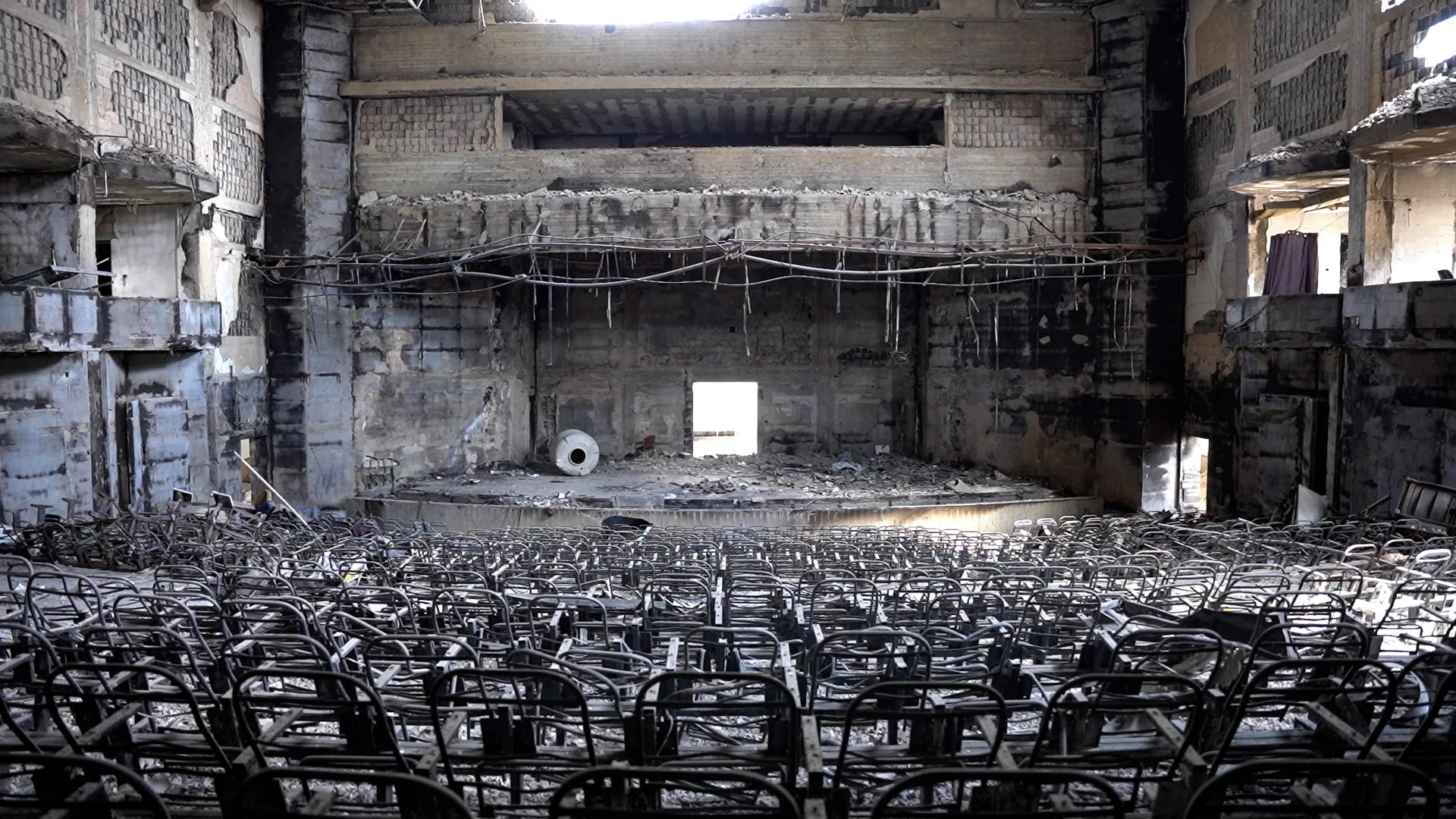
According to official assessments by the ministry, in collaboration with UNESCO, more than 63 university campuses and facilities have been damaged or destroyed rendered completely unusable. These include colleges, labs, libraries, and administrative centers.
The human toll is staggering. Nearly 88,000 students have had their studies disrupted. More than 1,362 students have been killed, and over 2,931 wounded. An estimated 246 members of academic and administrative staff have been killed, and 1,491 injured. The numbers of those detained or missing remain unknown.
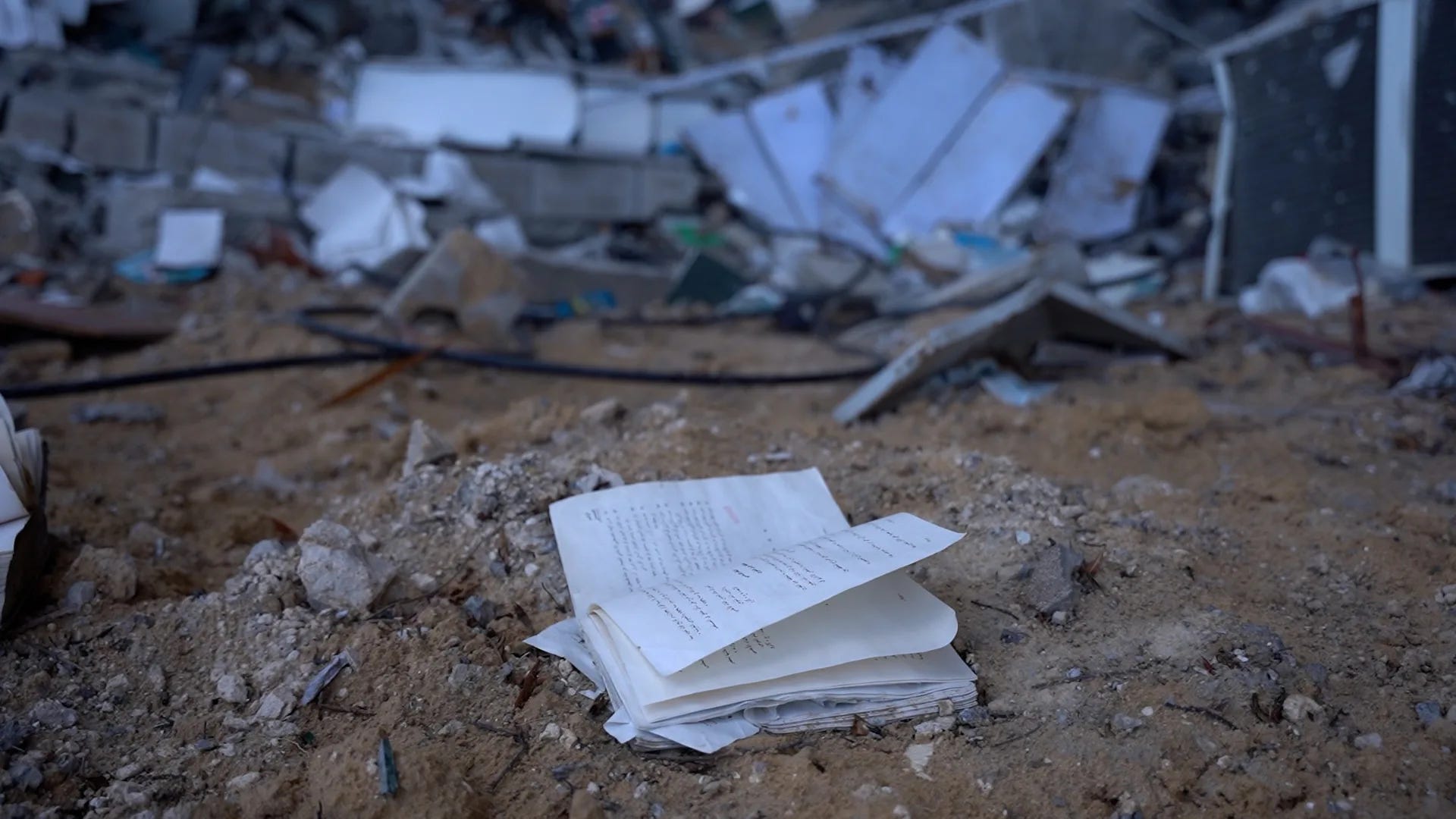
Material losses exceed $373 million in direct damages, including the destruction of hundreds of labs, research facilities, and the loss of thousands of computers, educational devices, and digital servers. These figures do not account for the long-term damage to scientific research and human development.
Most universities have ceased in-person instruction entirely, with only limited, makeshift returns in some cases. Emergency solutions have included partial reliance on online learning, though it only reaches a fraction of students.
The Ministry has launched emergency plans to rescue students particularly those from the 2006 and 2007 cohorts by boosting digital education through partnerships with UNESCO and international organizations, facilitating academic support through external training agreements, and helping students graduate by settling overdue tuition and debt.
Although some students secured scholarships abroad, many remain stranded due to closed crossings and delayed visa and travel procedures. Domestic scholarship programs have also dried up amid economic collapse and institutional strain.
Still, a few universities including the Islamic University, Al-Azhar University, the University of Palestine, and the University College of Applied Sciences have resumed hybrid or in-person instruction, particularly in medical and engineering faculties.
Dr. Al-Yaacoubi concluded by emphasizing that this is not merely a material assault on education but a direct attack on the future of an entire generation. It is a flagrant violation of the right to education enshrined in international law.
By targeting Gaza’s education sector, Israel is not only destroying the present, but deliberately undermining the capacity of future generations to learn, build, and rise again. It is a strike on Palestinian consciousness and a blow to the very foundations of a society’s future. The only question that remains: how long will it take Gaza to rise again academically, socially, and economically?