

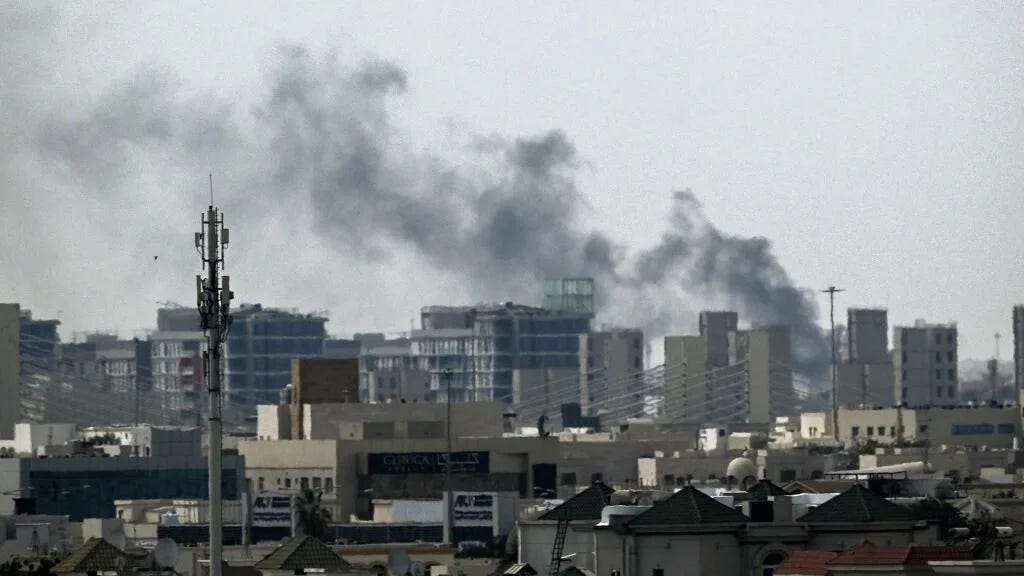
Amid mounting warnings of reciprocal strikes on infrastructure between Iran on one side and the United States and Israel on the other, a more chilling scenario looms: what if Iran’s military leadership were to turn its threats against Gulf water and electricity facilities into reality?
Should such threats be carried out, targeting desalination plants and refineries across the Gulf, a creeping paralysis would begin to seep into every facet of daily life. Major cities would be plunged into darkness within days. The disruption would extend far beyond power outages, crippling the digital backbone as internet and telecommunications networks collapse.
Airports, ports, and factories would grind to a halt, while hospitals would face existential challenges in operating critical equipment.
Water, however, poses the gravest risk. In one of the driest regions on earth, Gulf states rely on desalination for up to 90 percent of their water supply. Facilities such as Ras Al-Khair, Shuaiba, Jebel Ali, and Taweelah depend on energy-intensive reverse osmosis technologies.
Any damage to water infrastructure or the power plants that sustain it would sever the region’s lifeline instantly compounded by the risk of radioactive contamination in seawater and its associated health consequences.
Eye of the Storm
The confrontation was sparked by a thunderous geopolitical explosion following joint U.S.-Israeli strikes targeting Iran’s military and institutional core. Tehran’s response was swift but it went beyond military targets, shifting the battlefield to the heart of the Gulf’s civilian and economic infrastructure. Energy and water facilities, long considered among the safest in the world, became central targets.
Iran launched thousands of ballistic missiles and drones toward Gulf states, not merely to destroy military barracks but to paralyze the region’s civilian and economic systems. Targets included international airports, energy facilities, ports, civilian assets, residential compounds, hotels, and government buildings.
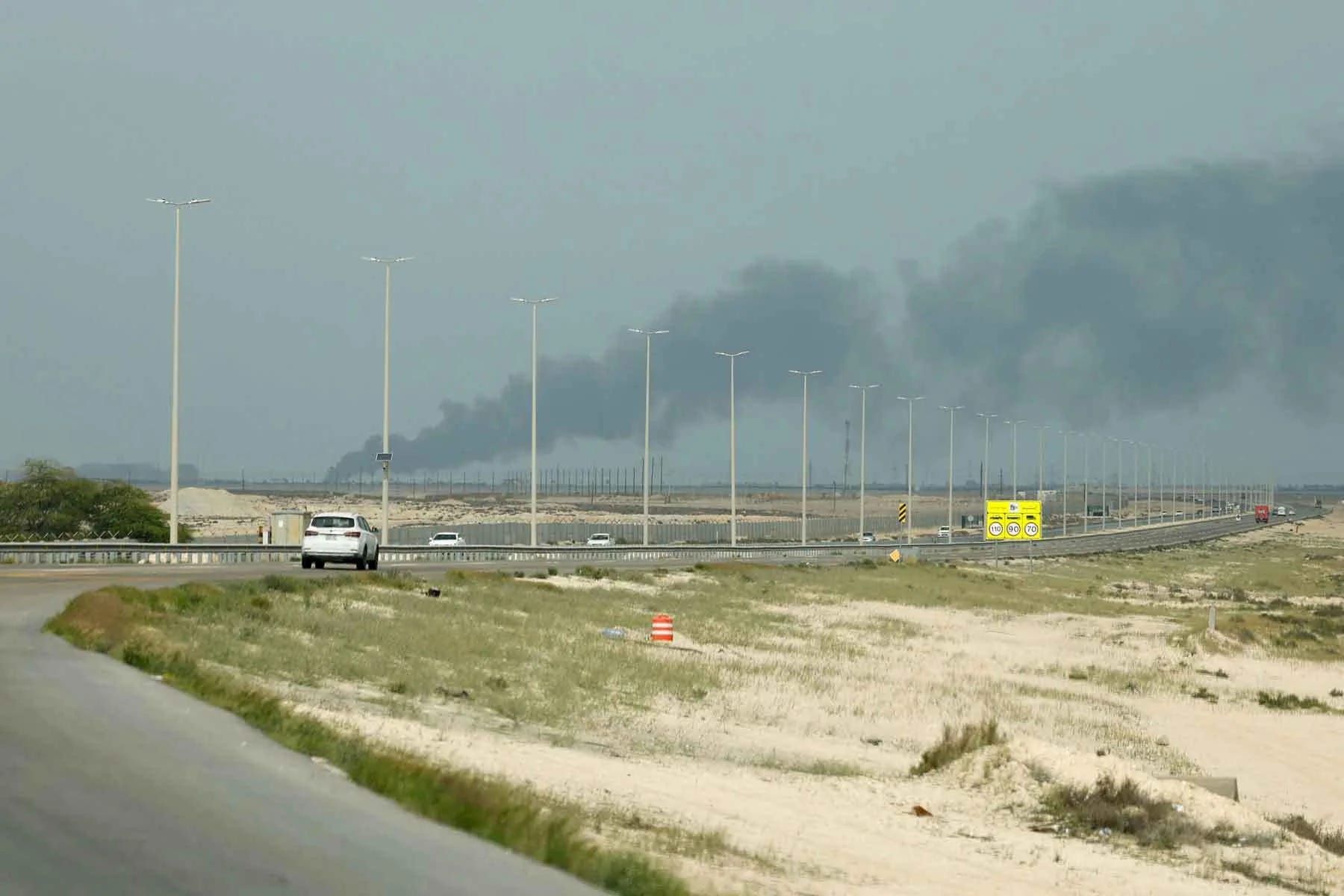
The confrontation entered a phase of “bone-breaking” escalation in early March, with strikes on critical Gulf infrastructure. Iranian attacks on oil facilities in Ras Laffan and Mesaieed in Qatar halted liquefied natural gas production entirely representing one-fifth of global supply.
Strikes also hit Saudi Arabia’s Ras Tanura refinery and an onshore Aramco field, extending to the Bab and Habshan oil fields and strategic storage facilities in Fujairah, UAE, and reaching refineries at Mina Al-Ahmadi and Mina Abdullah in Kuwait. Although air defense systems intercepted some attacks, falling drone debris ignited widespread fires, forcing immediate suspension of operations.
Parallel to this, a cyber and technological war unfolded. Iran targeted major Gulf data centers, including two Amazon Web Services (AWS) facilities in the UAE and another in Bahrain. Reports suggest that full restoration of these centers may take considerable time. Meanwhile, Meta announced a halt to a major subsea cable project in the Gulf due to the conflict.
In fact, Iran had threatened to sever submarine cables and communication lines in retaliation for any attack on its coasts. Sabotage of these cables critical conduits for global data traffic could trigger widespread internet outages.
This development reinforces the notion that the war is no longer confined to export-bound oil barrels but now strikes at the “internal nodes” of the energy system, as described by economic expert Amer Al-Shobaki.
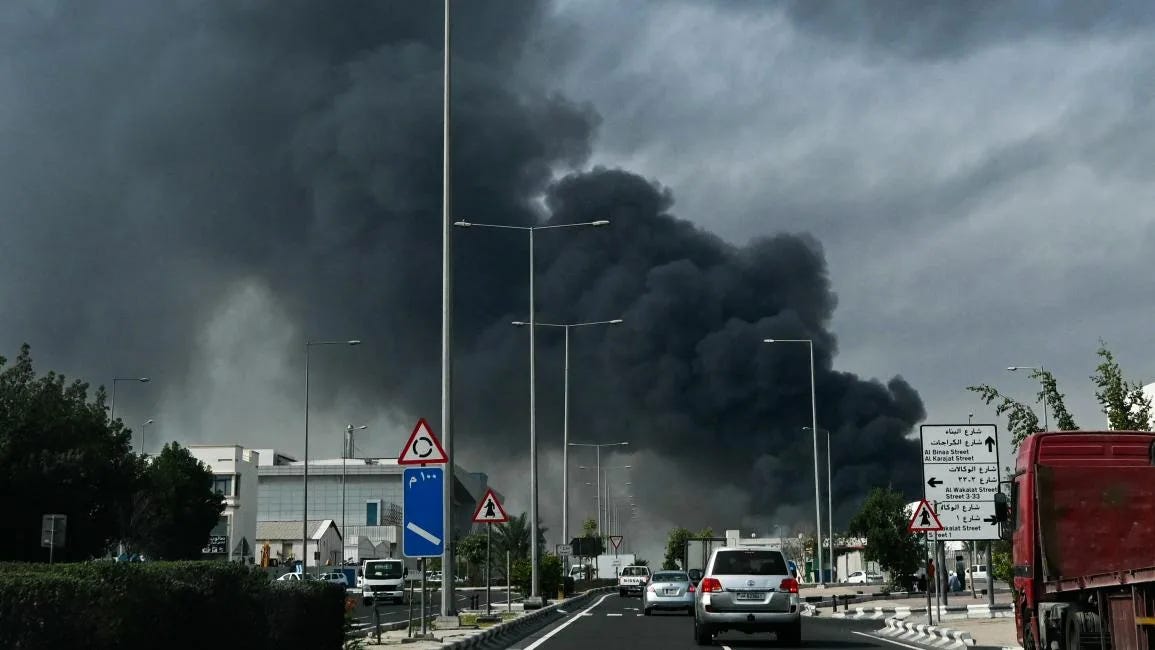
By March 8, the crisis reached its peak with attacks extending to the most dangerous link in the infrastructure chain: water. Drone strikes hit the Muharraq desalination plant in Bahrain. Tehran justified the attack as retaliation for a prior U.S. strike on a water facility on Qeshm Island, which had disrupted supplies to around 30 villages.
Iranian Foreign Minister Abbas Araghchi stated, “The United States set this precedent, not Iran.” Threats soon expanded to include other vital desalination plants, such as Jebel Ali in Dubai and the Doha West plant in Kuwait.
Iranian strikes also hit key infrastructure in Kuwait, including the international airport, oil facilities, and Mina Al-Ahmadi refinery, as well as a power and water distillation plant. In Bahrain, the Bapco refinery in Sitra was struck twice, alongside hotels, maritime facilities, and residential buildings. In the UAE, attacks focused on airports and tourism and maritime infrastructure, including Abu Dhabi and Dubai airports, as well as industrial and oil facilities.
The Gulf aviation sector—one of the pillars of the region’s economic strategy—faced severe disruption. Dubai International Airport, one of the world’s busiest for international passengers, was forced to suspend operations indefinitely after strikes near Jebel Ali Port. Kuwait International Airport’s terminal sustained damage from a drone attack, while Qatar halted all air navigation services.
Escalation extended further to strategic maritime corridors and gateways, including the Port of Duqm in Oman, which was targeted by two drones. Iranian strikes also hit oil sites and airports in Basra, Iraq, prompting Governor Asaad Al-Eidani to declare emergency measures to secure the evacuation of foreign workers via Kuwait and Jordan.
On March 12, the Iranian military claimed responsibility for targeting two fuel tankers in Iraqi waters using an explosive-laden boat. A drone attack on the Rumaila oil field dealt a heavy blow to Iraq’s economy, which depends almost entirely on oil exports to fund its budget and public spending.
How Dependent Are Gulf States on Infrastructure for Daily Life?
Desalination and energy plants represent the Achilles’ heel of Gulf national security. Any disruption to this system would trigger a cascading collapse, paralyzing health and industrial sectors within days.
Water: The Weakest Link in Regional Conflict
Gulf Cooperation Council countries lie in one of the most water-scarce regions in the world. With the exception of Oman, they face acute shortages of freshwater resources. Per capita natural water availability is among the lowest globally below 100 cubic meters annually, far beneath the water poverty line of 500 cubic meters.
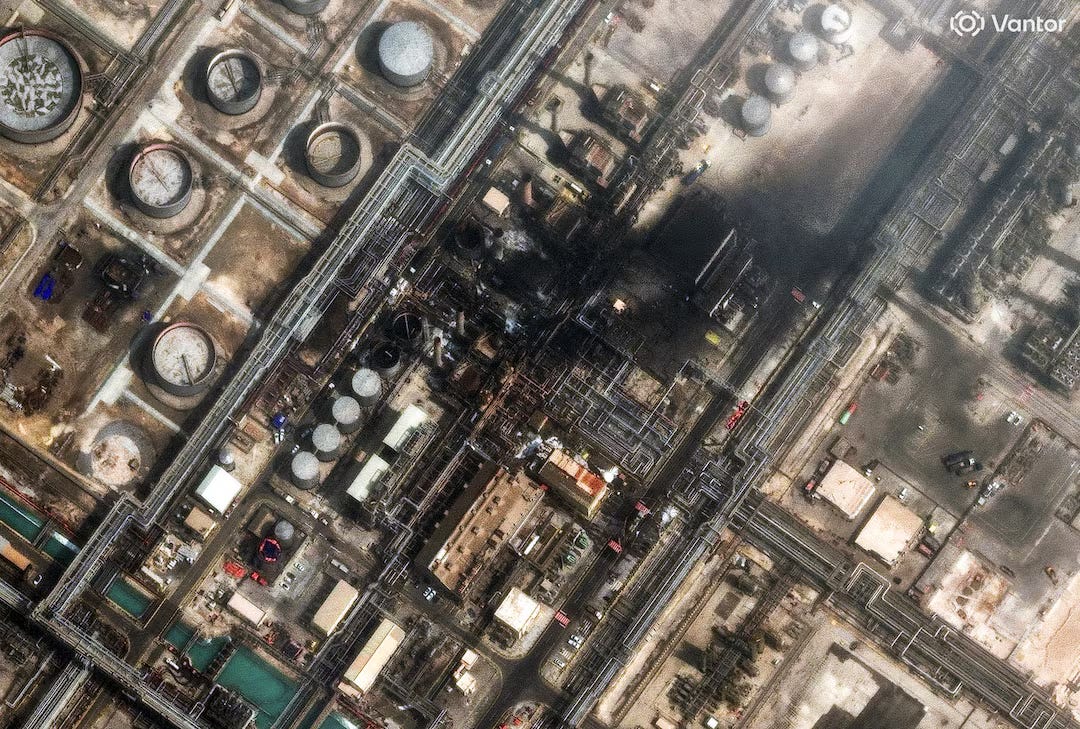
In a harsh desert environment with minimal rainfall and no major rivers, the Gulf relies almost entirely on seawater desalination to meet its needs. Desalinated water is essential not only for drinking but also for municipal and household use, and for supplying hospitals, schools, government buildings, and service facilities.
Recent reports indicate that modern life in the Gulf from daily consumption to industry and even parts of agriculture depends almost entirely on this vast desalination network.
According to the French Institute of International Relations, reliance has reached critical levels: 90% of Kuwait’s water comes from desalination, followed by Oman at 86%, Saudi Arabia at 70%, and the UAE at 42%.
Analysts therefore view water as the most fragile link in Gulf security. The region possesses only about 2% of the world’s renewable freshwater supplies and relies heavily on desalination. Moreover, urban water reserves typically last no more than two days.
The Associated Press has warned that water may become the most vulnerable resource in the Gulf, as many desalination plants are located along coastlines directly facing Iran and within range of missiles and drones. Academic and political analyst Dr. Aayed Al-Manaa described any Iranian targeting of desalination plants as “extremely painful and potentially decisive.”
Power Outages: A Strategic Threat to Daily Life
Gulf countries rank among the highest in global energy consumption, in some cases exceeding three times the world average. This is largely due to the hot climate and the heavy use of energy in desalination and industry.
Electric grids form the backbone powering all sectors from homes to hospitals but they are deeply intertwined with water systems. Most desalination plants depend on electricity and pumping systems, while power plants require desalinated water for cooling and turbine operation. This interdependence means that failure in one sector inevitably leads to collapse in the other.
Experts warn that targeting energy infrastructure would not only cause blackouts but would immediately disrupt water production and vice versa. With limited water reserves lasting only days, such disruption could quickly deprive major cities of water and destabilize electricity supply.
The Gulf and the World: Who Suffers More from Infrastructure Warfare?
Stability and security have long underpinned the Gulf’s transformation into a global economic hub. Yet recent events have shaken this image. Iranian strikes now threaten not only oil production but also the region’s capacity for storage, export, and transit.
Gulf states bear the immediate and most severe costs. Preliminary estimates suggest that repairing damaged energy assets alone exceeds $25 billion. This staggering bill does not account for operational losses caused by the shutdown of essential services, which have already contracted local economic activity and frozen major development projects.
The costs of war extend far beyond the Gulf, striking at the heart of the global economy. As a cornerstone of global energy markets, Gulf countries hold 32.7% of the world’s oil reserves and supply nearly 19% of global demand, producing around 18 million barrels per day. Any disruption to oil and gas flows thus translates into global market shocks and rising energy and shipping costs.
While Gulf states absorb immediate economic losses due to infrastructure disruptions and declining local activity, the global economy faces broader medium- and long-term repercussions. Experts warn that supply chain disruptions could ripple through multiple channels, most notably rising inflation and increased industrial production costs potentially triggering one of the largest energy shocks in decades.
