

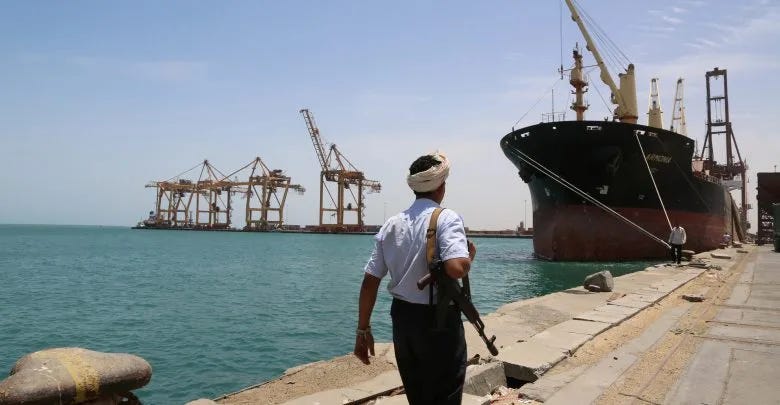
Global trade doesn’t just pass through the waterways of the Middle East the region’s political and security dynamics are increasingly defined by who controls its strategic ports.
These ports serve as linchpins for both regional and global powers. They govern the flow of global commerce with over 10% of the world’s maritime trade passing through the Red Sea alone and function as launch points for naval fleets and platforms for forging military alliances.
Over the past decade, the significance of ports has been starkly evident in the region’s conflicts. Control over Yemen’s Hodeidah port, for instance, proved pivotal during the war there. Meanwhile, Red Sea ports have emerged as battlegrounds for regional influence.
In the Mediterranean, Russia’s longstanding presence at Syria’s Tartus port became a symbol of its regional clout a position now under threat following recent developments in Syria. In short, today’s map of Middle Eastern alliances and conflicts is being drawn through the region’s ports.
The Red Sea: A Regional Race for Straits and Ports
The Red Sea is a vital artery connecting the Mediterranean to the Indian Ocean and has become a theater of intense rivalry along both its shores. After the outbreak of the Yemen war in 2015, military activity surged around the strategic Bab al-Mandab Strait.
United Arab Emirates: Established a base at Eritrea’s Assab port in 2015 and sought to build a foothold in Berbera port in Somaliland, though it abandoned the plan in 2020.
Saudi Arabia: Alongside the UAE, seized control of western Yemeni ports like Mocha and al-Khawkhah in 2019, bolstering Saudi maritime presence.
Turkey: Signed a 2017 agreement with Sudan to rehabilitate Suakin port on the Red Sea, aiming for a strategic position near vital waterways.
Iran: Attempted to establish a permanent naval presence in the Red Sea to counter Gulf rivals but has seen limited success.
Gulf States: Raced to sign port operation and management deals along Africa’s Red Sea coast in Sudan, Djibouti, and Somalia.
Russia: Announced plans in 2020 to build a naval base in Sudan’s Port Sudan its first African foothold on the Red Sea.
China: Opened its first overseas military base in Djibouti in 2017, within Doraleh port, operated by Chinese firms.
United States: Strengthened its presence with a new multinational naval task force launched in 2022 to secure the Red Sea and Gulf of Aden.
Israel, India, and the UAE: Began cooperating with Washington under the I2U2 grouping, a new strategic alliance for economic and security coordination.
The Gulf and Arabian Sea: Ports of Power and Influence
In the Gulf region, the United States has maintained a firm naval presence for decades through bases and allied ports, including:
Bahrain’s Port of Manama, home to the U.S. Fifth Fleet since 1995, a critical hub for securing the Gulf and Strait of Hormuz.
Jebel Ali port in the UAE, used as a primary logistics stop by the U.S. Navy.
Additional bases in Qatar and Kuwait, part of a longstanding security umbrella ensuring free navigation and safeguarding oil flows.
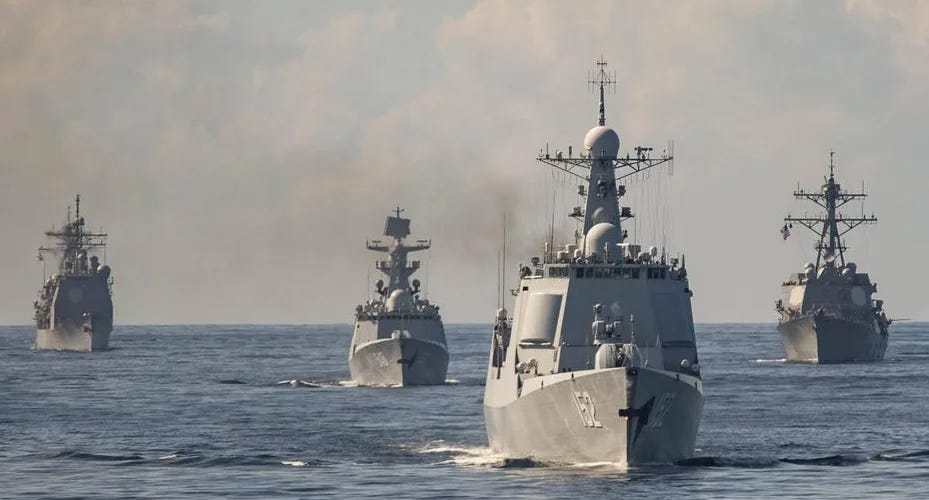
The Red Sea represents a vital artery linking the Mediterranean to the Indian Ocean and has recently become an arena of fierce competition.
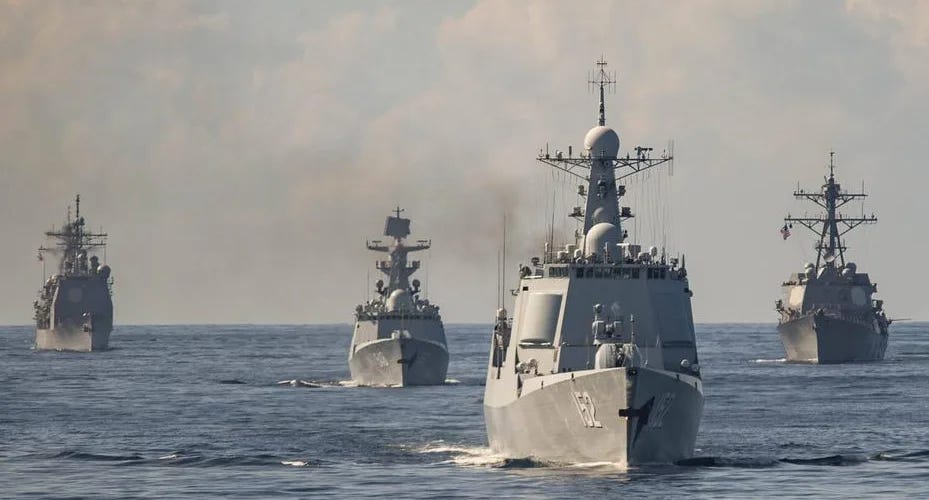
In recent years, other global powers have moved to secure access to Gulf ports, leveraging commercial ties to advance strategic aims.
China, in particular, has ramped up maritime investments in the Gulf through its Belt and Road Initiative, seeking to convert economic presence into military leverage.
At Khalifa Port in Abu Dhabi, U.S. intelligence in 2021 revealed secret construction activities within a Chinese-operated zone, suspected to be the foundation of a military base under commercial cover.
The Biden administration swiftly pressed the UAE to halt construction and the project was suspended following high-level interventions.
This development followed China’s 2017 opening of its Djibouti military base inside a commercial port, affirming Beijing’s model of transforming trade infrastructure into strategic strongholds.
Oman, by contrast, presents a model of balanced neutrality forging ties with all sides. In 2019, Muscat signed a strategic framework agreement with Washington granting U.S. forces regular access to Duqm port on the Arabian Sea and Salalah port on the Indian Ocean offering vital proximity to the Strait of Hormuz and regional flashpoints like Yemen.
Simultaneously, Oman welcomed major foreign investment:
In 2016, it awarded a 50-year concession to a Chinese company to develop a massive industrial zone in Duqm, with investments exceeding $10 billion.
In 2018, it partnered with the UK to open a Royal Navy logistics support center in Duqm.
It granted India access to port facilities for its naval operations in the Indian Ocean.
Nearby, Iran’s Chabahar Port, located on the Arabian Sea, has emerged as a strategic project with regional dimensions. Backed by India, Tehran has sought to develop the port to access Asian markets without relying on routes controlled by its rivals.
For New Delhi, the port enables access to Afghanistan and Central Asia via sea, bypassing Pakistan seen as a counterweight to Chinese influence at nearby Gwadar Port in Pakistan.
Despite sanctions and hurdles, Chabahar has remained a critical geopolitical lever for both Iran and India a case study in how infrastructure projects intertwine with regional rivalries over trade routes and influence.
Eastern Mediterranean: Naval Bases and Gateways of Power
In the eastern Mediterranean, ports have likewise become arenas of influence where regional and global interests converge.
In Syria, Russia maintained a military foothold at Tartus Port its only access to the Mediterranean for decades. It solidified this with a 2019 agreement with the now-deposed Syrian regime to operate the port for 49 years, backed by substantial Russian investments in its expansion.
However, the sudden collapse of Bashar al-Assad’s regime in December 2024 dealt a major blow to Moscow’s strategic posture. The new Syrian authorities annulled the Tartus port management deal with the Russian company in January 2025, further constricting Russia’s presence.
Amid fears of losing its maritime foothold, Russia evacuated equipment and forces from Tartus, reportedly relocating assets to alternative bases in neighboring Libya, according to Al-Monitor.
Although Tartus still operates temporarily as a base for the Russian navy, the revocation of Moscow’s privileges and partial withdrawal of forces casts serious doubt over its long-term position in the eastern Mediterranean.
For Iran, Syria’s Latakia port served as a critical logistics hub facilitating both arms transfers and the trafficking of Captagon, a synthetic drug that helped finance the Syrian regime.
But post-2024 shifts in Damascus sharply curtailed Tehran’s ability to move supplies through Syria, signaling the loss of a key corridor of regional influence.
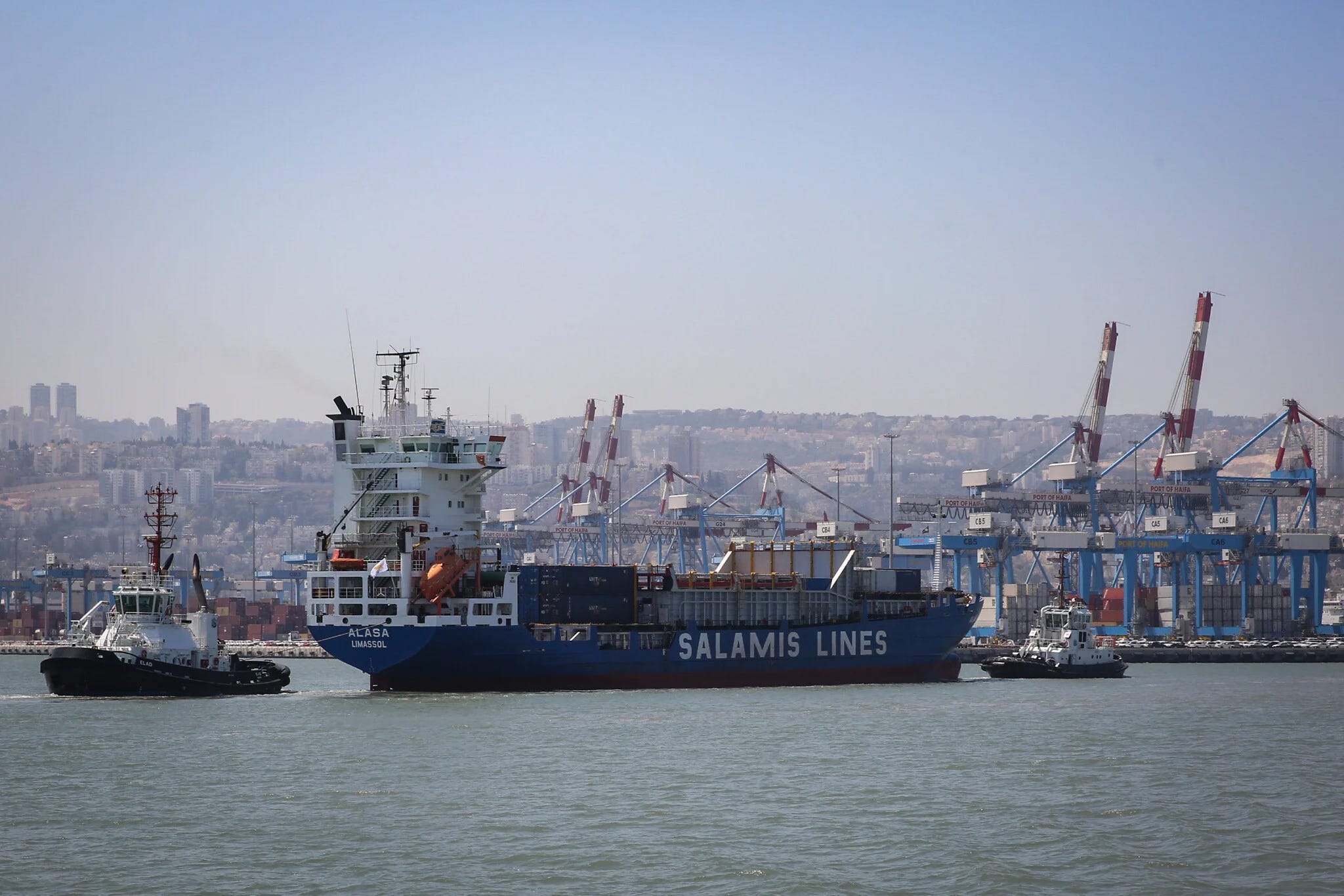
On the opposite shore, Israel has been expanding the role of its ports in regional trade and security. Haifa port, in particular, gained strategic importance following the 2021 opening of a new container terminal operated under a 25-year concession by China’s Shanghai International Port Group.
Israel views port development as a pathway to becoming a regional commercial hub a prospect boosted by normalization agreements with Gulf states that opened new maritime trade routes.
In early 2023, an Adani Ports–led consortium, including an Israeli partner, won the $1.2 billion privatization deal for Haifa Port edging out competitors such as DP World, which had shown interest in investing.
The influx of Indian and Gulf capital into Israeli ports marks the emergence of new economic alliances linking the eastern Mediterranean with the Gulf and India, giving Israeli ports a geopolitical relevance beyond their traditional roles.
Meanwhile in Lebanon, Beirut Port once the Middle East’s maritime gateway to Europe was crippled by the catastrophic 2020 explosion, rendering much of its capacity inoperable and sparking debates about its reconstruction.
Regional and international players are likely to compete to rebuild and operate the port, given its pivotal location. But progress hinges on Lebanon’s political and economic stability.
As for Turkey, it has concentrated naval power through its domestic bases and its fleet, with a focus on Libya, where Ankara backs the Tripoli-based government and collaborates on maritime operations in western Libyan ports.
Still, port competition in the eastern Mediterranean remains less intense than in the Red Sea or Gulf, largely due to the internal crises that have plagued key coastal states like Syria and Lebanon in recent years creating openings for external actors like Russia, Iran, and Israel.
As states scramble for maritime influence, the Middle East increasingly resembles a strategic chessboard where ports are the most coveted pieces. Each major port has become a site of leverage: controlling one provides a strategic edge; losing one means forfeiting a vital gateway.