

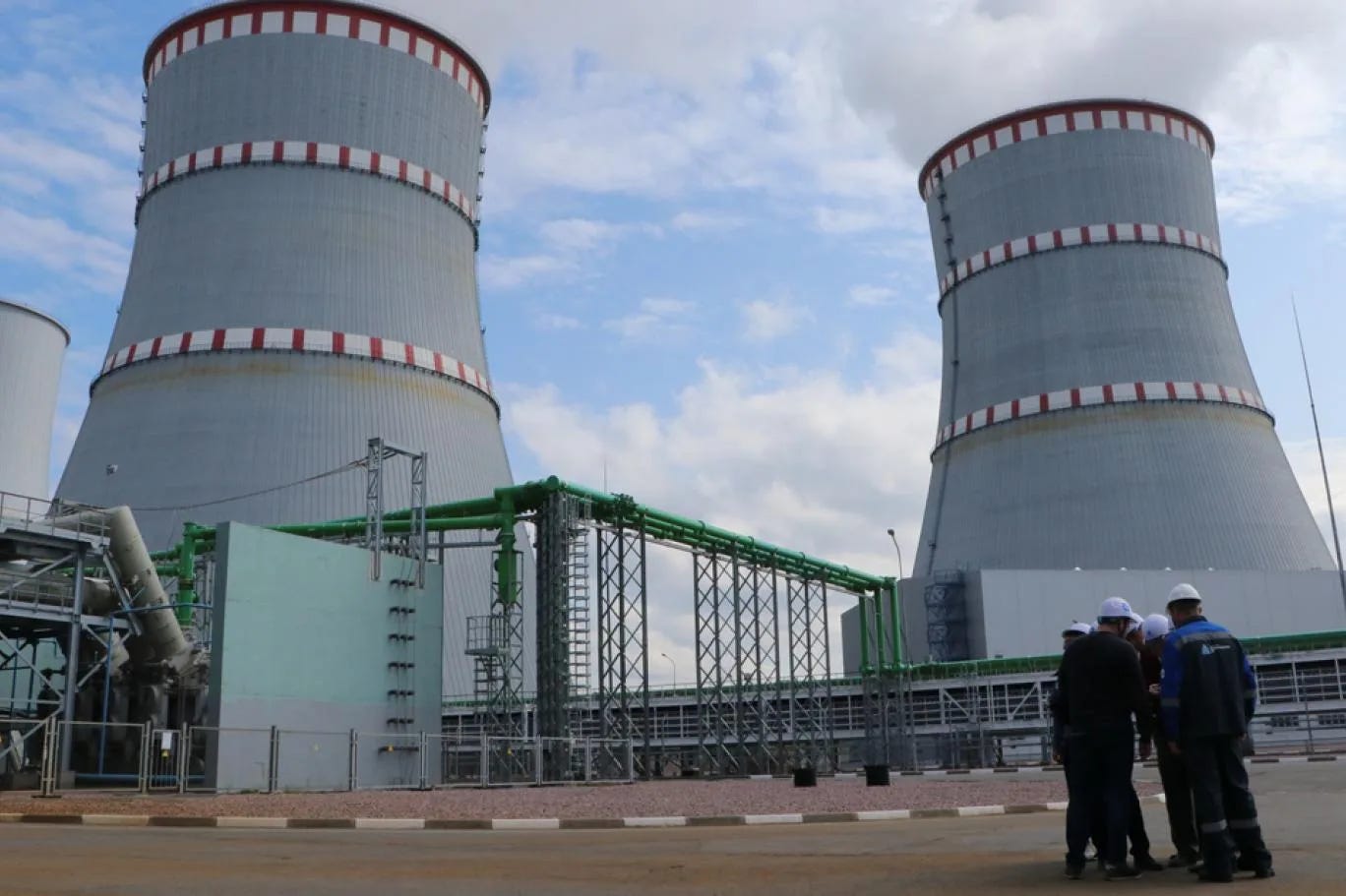
As the first unit of the Akkuyu Nuclear Power Plant nears operation, Turkey’s energy ambitions are clearly not confined to conventional large-scale reactors. Instead, Ankara is setting its sights on a more flexible and forward-looking path: small modular reactors (SMRs).
Alongside its massive nuclear ventures, Turkey is seriously considering this standardized technology as a strategic tool to accelerate energy self-sufficiency, bolster electricity security, and reduce its dependence on imported fuel.
This shift also paves the way for a fundamental reshaping of Turkey’s industrial and geopolitical energy landscape empowering local industries and cementing the country’s role as a key player in regional and global energy dynamics.
Why Now?
For decades, Turkey has faced a structural energy dilemma: a heavy reliance on imports to meet the bulk of its needs. In 2022, the country imported nearly all its natural gas, 91% of its oil products, and 77% of its coal much of it from Russia.
This deep dependency has left Turkish energy security exposed to global price swings and geopolitical turbulence, as seen during the Ukraine war and the recent spikes in gas prices.
Meanwhile, energy demand in Turkey is rising sharply, driven by both economic and demographic growth. At the same time, some domestic sources chiefly hydropower have reached their natural limits. Despite a rapid expansion in renewables like solar and wind, these sources alone cannot provide the stable, around-the-clock electricity needed to power Turkey’s vast industrial base.
In response, Ankara has made nuclear energy central to its long-term energy strategy. It aims to increase installed nuclear capacity to 20 gigawatts by 2050, as part of its broader vision to achieve carbon neutrality by 2053. In this context, the Akkuyu plant built in partnership with Russia is underway, with additional large-scale nuclear projects planned in Sinop and Thrace.
However, the most notable shift in this phase is Turkey’s growing focus on small modular reactors. These next-generation technologies promise to overcome many of the limitations historically associated with large-scale nuclear power offering enhanced energy security, improved economic viability, and greater technological autonomy.
Enhancing Energy Security and Reducing Import Dependence
SMRs are emerging as a practical solution to support Turkey’s goals of energy security and reducing import costs. Unlike traditional reactors, SMRs come with a unique set of advantages.
Chief among them is the lower upfront investment. SMRs require significantly less capital than conventional plants, allowing for phased construction and easier financing. This flexible model enables Turkey to gradually expand capacity based on actual demand and available funding without placing undue strain on public finances.
SMRs also offer greater geographical and operational flexibility. Their compact design and simpler safety protocols mean they can be installed closer to demand centers, such as industrial zones or urban areas, reducing the need for large-scale transmission infrastructure.
This flexibility also allows SMRs to supply power to remote or off-grid regions that have traditionally relied on imported fuels like diesel. In addition, they can be tailored to the specific energy needs of different regions.
Another key benefit is the shorter construction and deployment time. SMRs are modular and can be pre-fabricated in factories, speeding up deployment and enabling faster integration into the grid. This can be crucial during energy crunches or emergencies when quick solutions are needed.
Operationally, SMRs provide stable, low-carbon baseload electricity around the clock. As a result, Turkey can reduce its reliance on imported natural gas, whose price and availability are often at the mercy of international developments. The larger the share of domestic nuclear energy in Turkey’s energy mix, the smaller the role fossil fuel imports will play.
The Akkuyu plant alone is expected to cover around 10% of Turkey’s electricity demand once fully operational. Adding a future SMR fleet with a total capacity of up to 5 gigawatts could significantly raise that figure.
To support this direction, the Turkish government is also working on the legal and institutional frameworks needed for SMR deployment. Energy and Natural Resources Minister Alparslan Bayraktar recently announced that a new draft law is in preparation, aimed at regulating and promoting SMRs with incentives similar to those offered for solar and wind projects.
The legislation is designed to attract private sector investment and facilitate international partnerships, offering a more flexible structure than the large, state-backed nuclear model represented by Akkuyu.
“We are formulating an incentive model to encourage private sector leadership in deploying SMRs similar to what we achieved in expanding wind and solar capacity,” said Bayraktar, underlining Ankara’s commitment to this emerging technology as a pathway to market-based energy security.
Economic Gains
SMRs are not just about filling energy gaps or enhancing supply security they also play a strategic role in transforming Turkey’s industrial and technological landscape.
President Recep Tayyip Erdoğan underlined this ambition in March when he announced plans to establish a “nuclear technopark” and develop homegrown SMRs as a leap forward in Turkey’s nuclear program.
This strategy means a significant portion of SMR components from engineering to software would be developed domestically, strengthening Turkey’s technological sovereignty and laying the foundation for a high-value industrial sector.
The idea is already drawing interest from major Turkish industrial players. Baykar, the defense firm known for its pioneering drone technology, has launched a project to develop a 40-megawatt SMR enough to power more than 100,000 homes.
According to Minister Bayraktar, this initiative represents a technological seed for Turkey’s broader SMR strategy, which envisions a total capacity of up to 5 gigawatts. This would require building a domestic supply chain spanning engineering, manufacturing, mining, and nuclear fuel production.
Turkish officials believe that localizing a significant portion of SMR components and systems would generate high-skilled jobs, stimulate industrial growth, and position Turkey as a competitive exporter in the global nuclear technology market.
Moreover, SMRs can directly support Turkey’s existing industries by providing stable electricity and clean heat. Heavy industries like steel, cement, and petrochemicals require reliable, high-density energy for their operations something SMRs can provide on-site, with low-carbon emissions.
This model offers dual benefits: reducing energy costs for manufacturers and helping them cut emissions in line with global environmental standards. With the EU’s Carbon Border Adjustment Mechanism set to take effect soon posing a major challenge for Turkish exporters clean energy production is becoming a prerequisite for maintaining market access.
In this way, SMRs not only reduce Turkey’s energy import bill but also boost its industrial independence and strengthen its competitiveness in a world rapidly transitioning to a low-carbon economy.
Strategic and Geopolitical Implications
Turkey’s pivot toward SMRs is not just a technical or economic decision it carries significant geopolitical weight.
Every step away from imported energy sources expands Ankara’s room to maneuver in foreign policy. For years, Turkey has had to balance its diplomatic relationships with key oil and gas suppliers to ensure uninterrupted flows. As nuclear energy both conventional and modular becomes a larger part of the energy mix, that dependency starts to wane.
At the same time, SMRs offer Turkey the chance to diversify its international nuclear partnerships. After a largely exclusive reliance on Russia for Akkuyu, Ankara is now engaging with new partners in the West and Asia signing cooperation deals with the United States and South Korea on SMR technologies, and entering preliminary talks with Canada.
More broadly, the strategic choice between large-scale reactors and SMRs could shape Turkey’s role in the 21st century energy landscape. The traditional route, championed by Russian and Chinese proposals for new plants in Sinop and Thrace, could help meet local demand but would keep Turkey dependent on foreign financing and technology.
In contrast, the SMR model supported by the US and its allies promotes a more flexible and integrated path, rooted in domestic industrial development and technological self-reliance. It doesn’t just expand power generation capacity it lays the groundwork for a transformation in Turkey’s industrial base, climate strategy, and strategic autonomy.
Turkey is betting on small modular reactors to reshape its energy future and reduce its historic dependence on foreign suppliers. If this bet pays off, the country could transition from a net energy importer to a self-reliant producer contributing clean, stable power both at home and across the region.
