

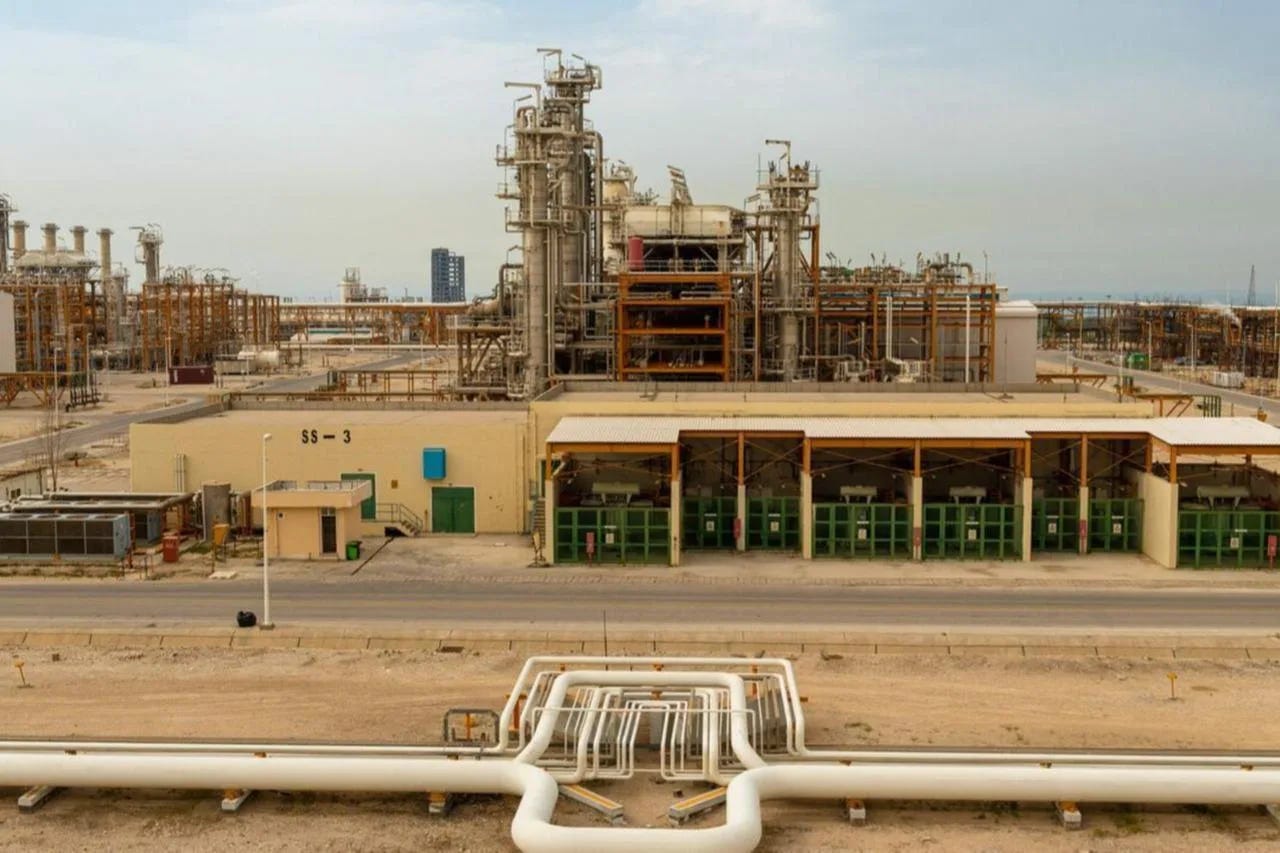
March 2026 witnessed a development that unsettled Turkey’s energy market after an Israeli strike targeted facilities in the South Pars field the backbone of Iran’s gas system.
Bloomberg and other outlets reported that Iran had halted gas exports to Turkey via the Tabriz–Ankara pipeline, prompting Ankara to prepare to draw from its reserves to offset a shortfall estimated at around 14% of its imports. However, Turkey’s Energy Minister, Alparslan Bayraktar, responded that flows were continuing and that storage facilities were 71% full.
Accounts diverged between those confirming an actual disruption and others describing a brief “tremor” or a threat that never materialized. Yet this moment is not merely a test of energy supply; it also reflects how Turkey is reshaping its “gas basket” as a long-term energy contract with Iran approaches expiration.
The Weight of Iranian Gas in Turkey’s Energy System
A gas supply agreement between the National Iranian Oil Company (NIOC) and Turkey’s BOTAŞ allows for the delivery of 9.6 billion cubic meters annually, with the contract set to expire on July 31, 2026.
In recent years, however, Ankara has not drawn the full contracted volumes. Data from Turkey’s Energy Market Regulatory Authority (EPDK) indicate that Turkey imported 52.2 billion cubic meters of gas in 2024, of which 7.04 billion cubic meters came from Iran about 13.4%.
In 2025, imports rose slightly to 8.17 billion cubic meters, according to Iranian statistics, but Iran’s share remained between 13% and 14% of Turkey’s total gas imports. While significantly lower than Ankara’s reliance in the 1990s, Iranian gas still represents a vital artery for sensitive sectors.
Turkey’s total gas consumption reached 60–61 billion cubic meters in 2025, including 21.5 billion for households, 16–17 billion for power plants, and 14–15 billion for industry.
If the Tabriz–Ankara pipeline were to halt for weeks, the industrial sector and gas-fired power plants would be most exposed to contraction, while households could be shielded through flexible pricing mechanisms used by the government to mitigate market volatility.
The importance of this pipeline was evident in January 2022, when Iranian gas supplies were cut due to a “technical fault” at a compression station. Turkey was then forced to request a 40% reduction in electricity generation at power plants and to scale back industrial gas supplies.
At that time, dependence on Iran stood at around 16% of imports, storage capacity was only 3.2 billion cubic meters, and floating LNG units were not operating at full capacity.
Today’s situation whether a short disruption or a serious threat is more of a political and security test than a technical malfunction.
It also comes at a time when storage capacity has expanded to 6.3 billion cubic meters, LNG regasification capacity has increased to 161 million cubic meters per day, and domestic gas production has begun making Turkey less vulnerable and more resilient.
How Turkey Is Building Shock Absorption Capacity
1. Underground Storage
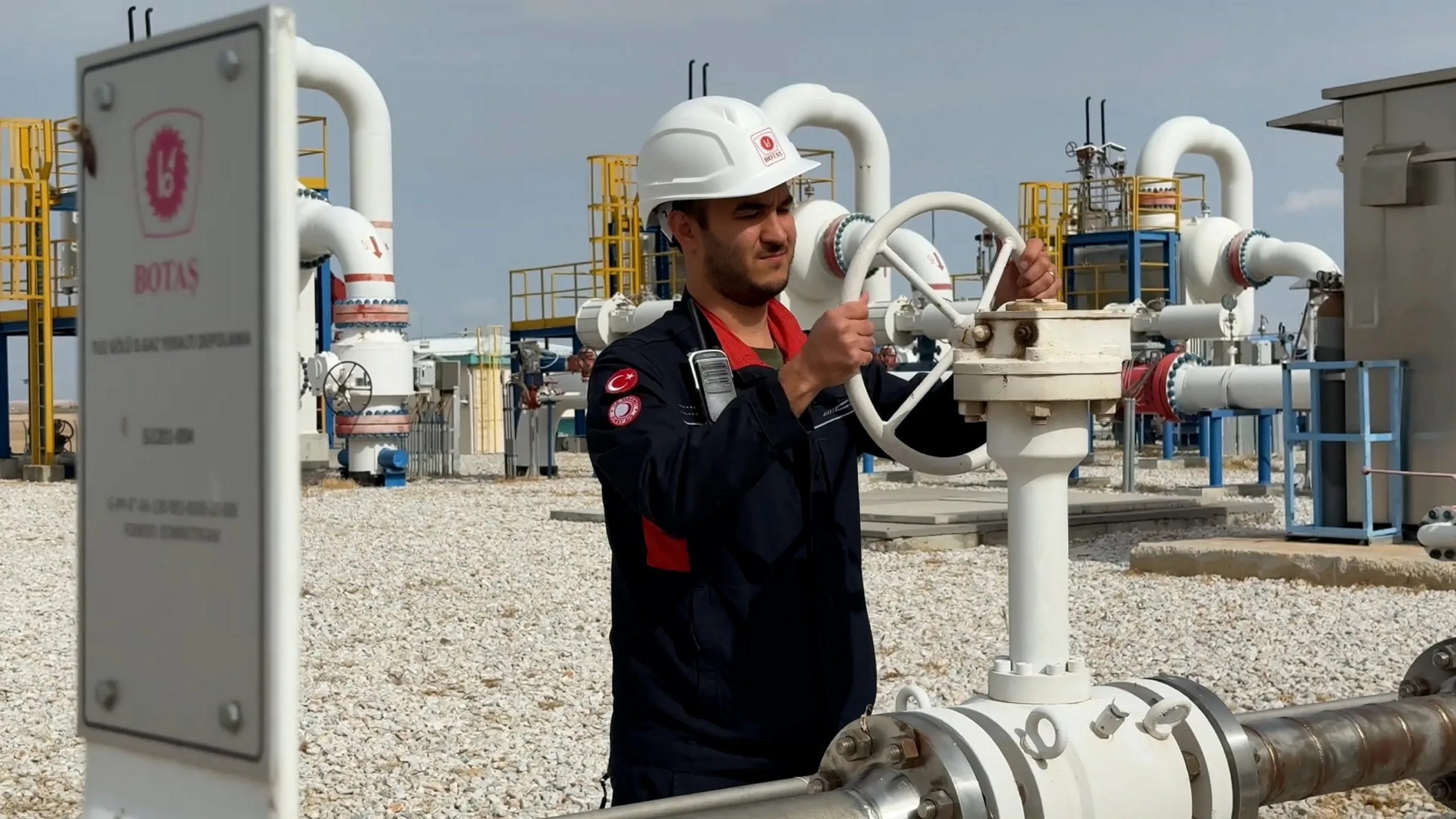
Turkey operates two main gas storage facilities: the Silivri site on the Sea of Marmara and salt caverns in Tuz Gölü (Lake Tuz) in Aksaray, central Anatolia.
The Silivri facility has been expanded to 4.6 billion cubic meters, with a daily withdrawal capacity of 75 million cubic meters.
The Tuz Gölü caverns can store about 1.2 billion cubic meters, bringing total capacity to roughly 6.3 billion cubic meters by the end of 2025.
Official reports confirmed that these facilities were 71% full in March 2026—around 4.5 billion cubic meters.
However, with daily consumption nearing 230 million cubic meters, these reserves would cover only a few weeks if used alone.
2. Liquefied Natural Gas (LNG)
One pillar of Turkey’s strategy is LNG. The country operates three floating storage and regasification units (FSRUs) and three onshore terminals, giving it a daily regasification capacity of 151 million cubic meters targeted to reach 200 million.
The floating unit Ertuğrul Gazi in Hatay on the Mediterranean can inject 28 million cubic meters per day into the grid. Plans are underway to add a second unit of similar capacity, doubling output.
Another project envisions building an additional FSRU on the Mediterranean coast with a capacity of 28 million cubic meters per day, meaning that three major units could meet more than half of daily demand.
On the contracting front, BOTAŞ has signed a series of short- and long-term agreements since 2024 with Oman, Algeria’s Sonatrach, ExxonMobil, Shell, TotalEnergies, and others. These deals total about 15.8 billion cubic meters annually and could rise to 25 billion by 2027.
Unlike the Iranian contract, these agreements are indexed to gas benchmarks such as Europe’s TTF or the U.S. Henry Hub, giving Ankara greater pricing flexibility.
3. Domestic Production from the Black Sea
The launch of the Sakarya gas field in 2023 marked a turning point. By April 2025, output reached 9.5 million cubic meters per day around 3.5 billion cubic meters annually enough to supply four million households.
In January 2026, the energy minister announced that production would double within the year, meeting the needs of eight million homes. By 2028, output is expected to reach 40 million cubic meters per day, covering roughly 30% of national demand.
While not an immediate solution to a March 2026 disruption, this development will significantly reduce Turkey’s dependence on Iranian and Russian imports in the coming years.
4. Russia, Azerbaijan, and Turkmenistan
Russian gas remains the backbone of Turkey’s supply, with imports reaching 21.16 billion cubic meters in 2025. Contracts for the Blue Stream and TurkStream pipelines have been extended for one year through the end of 2026 to allow negotiation flexibility.
Azerbaijani gas arrives via the TANAP pipeline, supplying about 10 billion cubic meters annually. While expansion is under discussion, it requires time and investment.
Turkmen gas, delivered through a swap arrangement involving Iran and Azerbaijan, amounts to roughly 2 billion cubic meters annually insufficient as a standalone alternative if disruptions occur within Iran’s network.
Scenarios of Disruption and Their Impact
If the March 2026 incident proves to be a brief disturbance in the Tabriz–Ankara pipeline, Turkey’s energy system can compensate through limited storage withdrawals and increased LNG imports.
If the pipeline were to halt entirely for several weeks, Turkey would rely on its 4.5 billion cubic meters of stored gas, using only enough to offset the missing Iranian volumes (around 8–9 billion cubic meters annually). This could sustain supply for roughly five to six weeks, assuming reserves are not diverted elsewhere.
A disruption lasting months considered unlikely by officials and experts would fundamentally alter the equation. Ankara would need to deploy a full mix of tools: drawing down reserves, maximizing LNG imports up to 200 million cubic meters per day, increasing reliance on Russia, and accelerating production from Sakarya.
The exposure of the Tabriz–Ankara pipeline comes just months before the Iranian contract expires, but the availability of alternatives gives Ankara unprecedented negotiating leverage.
First, Turkey now possesses substantial LNG import and regasification capacity, along with growing domestic production, providing greater room for maneuver.
Second, newer contracts have shifted from oil-indexed pricing to gas-based benchmarks, while the Iranian contract remains tied to Brent crude and long-term formulas making Iranian gas comparatively more expensive.
Nevertheless, other considerations may prevent Turkey from fully abandoning the pipeline. Geographically, Iranian gas remains the closest source, directly supplying eastern Anatolia and reducing transportation costs compared to LNG delivered via coastal terminals.
Moreover, increased output from Sakarya and additional Russian or Azerbaijani imports may not fully meet peak winter demand during cold spells.
As a result, Turkey may seek to reduce contracted volumes, convert the agreement into a seasonal arrangement, or demand more flexible pricing terms. Ankara could also leverage its political rapprochement with Tehran to negotiate larger volumes of Turkmen gas transiting through Iran.