

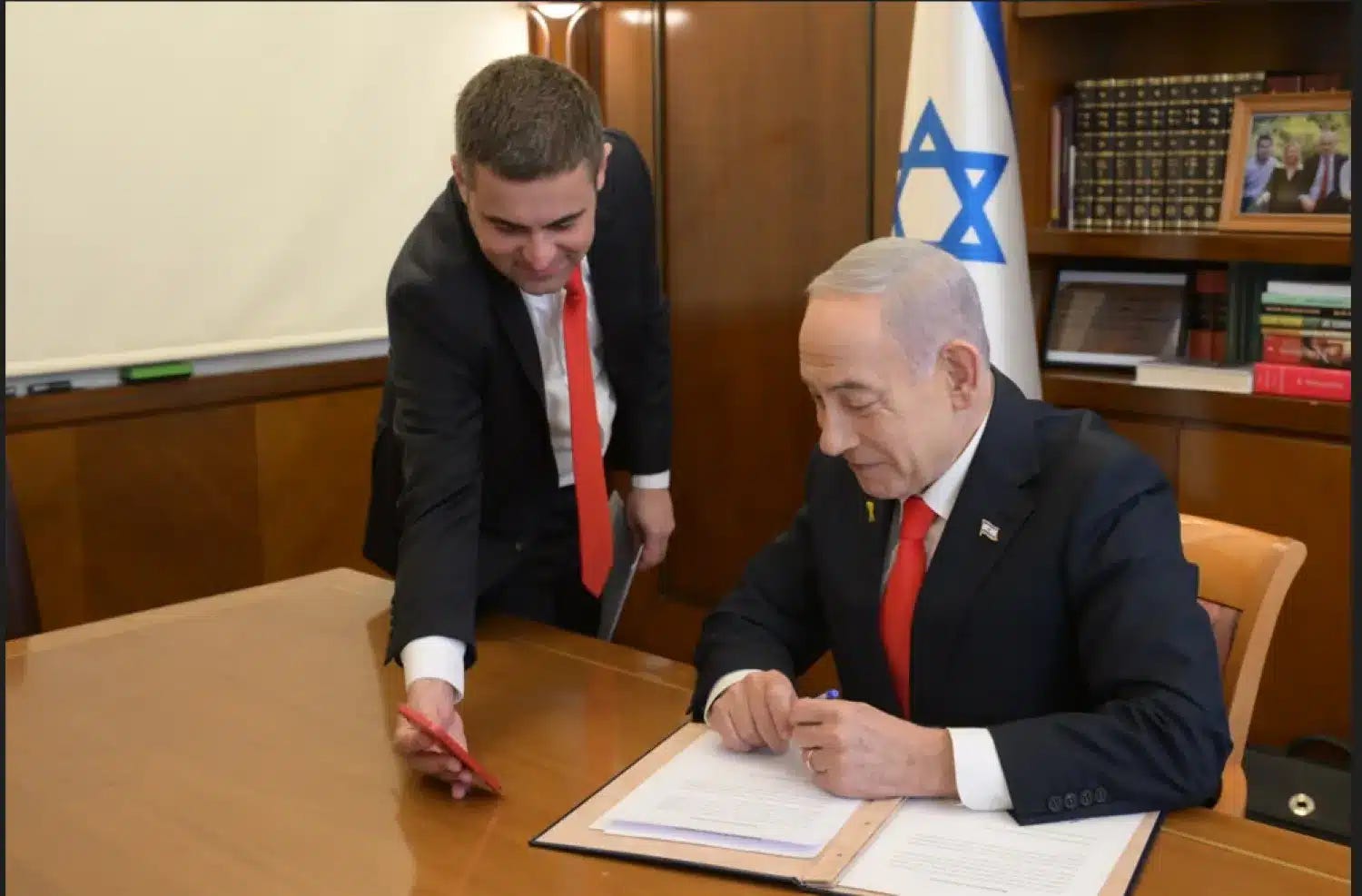
In a statement that reignited the debate over the forced displacement of Palestinians, Somali Defense Minister Ahmed Moalim Fiqi revealed that Mogadishu possesses credible intelligence indicating that Israel is planning to forcibly relocate residents of the Gaza Strip to the breakaway region of Somaliland in northern Somalia.
Speaking to Al Jazeera, Fiqi said he had “confirmed information” about an Israeli plan to “transfer Palestinians and send them to Somaliland,” calling it a “serious violation” of international law.
The minister warned that any such forced displacement would amount to a direct assault on Somalia’s territorial integrity, accusing Tel Aviv of exploiting separatist leaders in Somaliland to advance its agenda.
He also urged Israel to immediately revoke its recognition of the breakaway region, asserting that Prime Minister Benjamin Netanyahu has “no legal or legitimate authority to confer legitimacy on an entity within a sovereign state.”
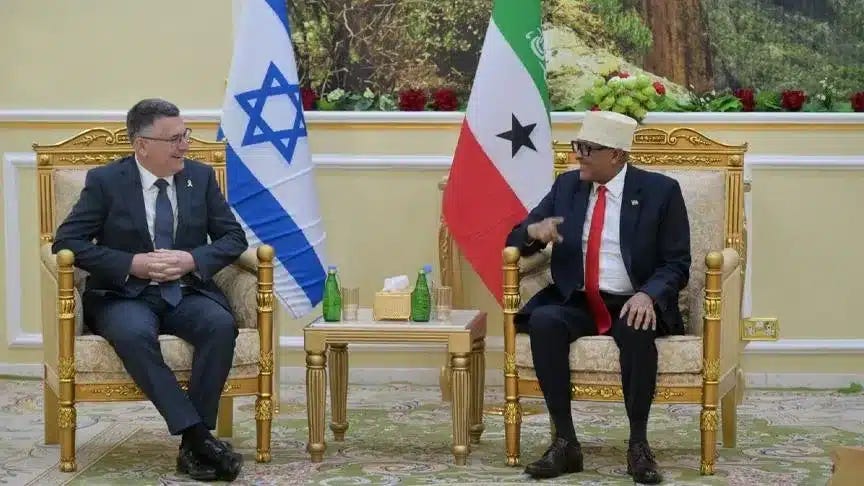
The warning comes as Israel deepens its diplomatic presence in Somaliland, including a recent visit by Israeli Foreign Minister Gideon Sa’ar to Hargeisa his first since Israel formally recognized the region. The move has sparked fears that besieged Gazans could become pawns in a geopolitical power play in the Horn of Africa.
A Resurrected Plan
The idea of relocating Palestinians has gained renewed traction amid the ongoing war on Gaza. Former U.S. President Donald Trump floated what he called a “peace plan” that proposed the permanent relocation of over two million Palestinians from Gaza to alternative territories.
Netanyahu publicly praised what he described as the plan’s “bold vision,” and called for it to be seriously considered, despite widespread international condemnation.
As part of efforts to find potential host countries for such mass displacement, senior U.S. and Israeli sources confirmed that covert talks had been held with three East African entities—Sudan, Somalia, and Somaliland—to explore the possibility of resettling Gazans there.
Israeli officials reportedly led these behind-the-scenes negotiations in coordination with Trump’s team, offering financial and diplomatic incentives to countries willing to take part in the project.
Some Israeli ministers have not concealed their intentions. Finance Minister Bezalel Smotrich, for instance, stated openly that Israel was identifying countries willing to absorb Palestinians, and revealed the formation of a “large immigration department” within the Ministry of Defense to oversee the effort.
However, the plan has met with widespread Arab and international rejection, with many condemning it as an act of “ethnic cleansing.” Rather than relocation, Arab leaders have put forward a reconstruction initiative aimed at rebuilding Gaza while ensuring its people remain on their land.
This global opposition even prompted the Trump administration to officially backtrack, stating that any departure by Gazans—if it occurred—would be voluntary and temporary.
Israeli media reports later revealed that, by early 2026, the relocation plan had effectively been shelved after no country agreed to host Gaza’s population.
Why Somaliland?
Israel’s interest in Somaliland stems from both strategic geography and the region’s isolation. Located in the Horn of Africa, Somaliland offers a unique position to contain displaced Palestinians in a remote area, far from their homeland, with little prospect of return.
On December 26, 2025, Israel became the first UN member state to officially recognize Somaliland as an independent country a decision laden with geopolitical implications.
Although Israel claimed the recognition was not an act of hostility toward Somalia but rather an “opportunity for partnership,” the timing and context of the move raised serious doubts about its true motivations.
According to Somali Information Minister Daud Aweis, reliable intelligence indicated that Israel’s recognition came with strings attached specifically, that Somaliland would agree to host resettled Gazans on its territory.
Israel reportedly envisions placing hundreds of thousands of Palestinians in a volatile area bordered by Djibouti to the north (home to French and U.S. military bases), Ethiopia to the south and west, and the internationally unrecognized Somaliland government to the east.
Observers have described this potential scenario as a plan to trap Gazans in a “giant prison,” effectively cut off from the outside world and subject to strict political and security controls.
The Arab League, speaking before the United Nations, warned against any consequences arising from this “illegitimate” recognition, whether to forcibly transfer Palestinians or to establish military outposts at northern Somali ports.
Pakistan’s UN envoy also voiced deep concern, citing recent proposals that named Somaliland as a potential destination for deported Palestinians from Gaza.
The Strategic Lure
Beyond the relocation scheme, “Israel’s” growing interest in Somaliland is driven by several key strategic factors:
The region boasts nearly 460 miles of coastline along the Gulf of Aden near the Bab el-Mandeb Strait, a vital chokepoint for global maritime trade.
This makes it a prime location for monitoring international shipping lanes and countering militant threats in the region.
“Israel” has openly declared its intent to confront Yemen’s Iran-backed Houthi movement, which has targeted Red Sea shipping and engaged in direct fire with Israel during the recent Gaza war.
In this context, Somali Defense Minister Fiqi revealed that “Israel” is seeking to establish a military base in Somaliland, leveraging its proximity to Bab el-Mandeb, the Red Sea, and the Arabian Sea.
Analysts believe such a base would grant “Israel” unprecedented strategic depth in the Horn of Africa, and a forward-operating position to monitor and control regional trade and maritime routes.
As diplomatic pressure mounts on Israel to abandon its relocation plans, all eyes are now on how this latest geopolitical gambit in the Horn of Africa will unfold especially given the repeated failure of previous resettlement schemes and the universal refusal of countries to accept Gaza’s population.