

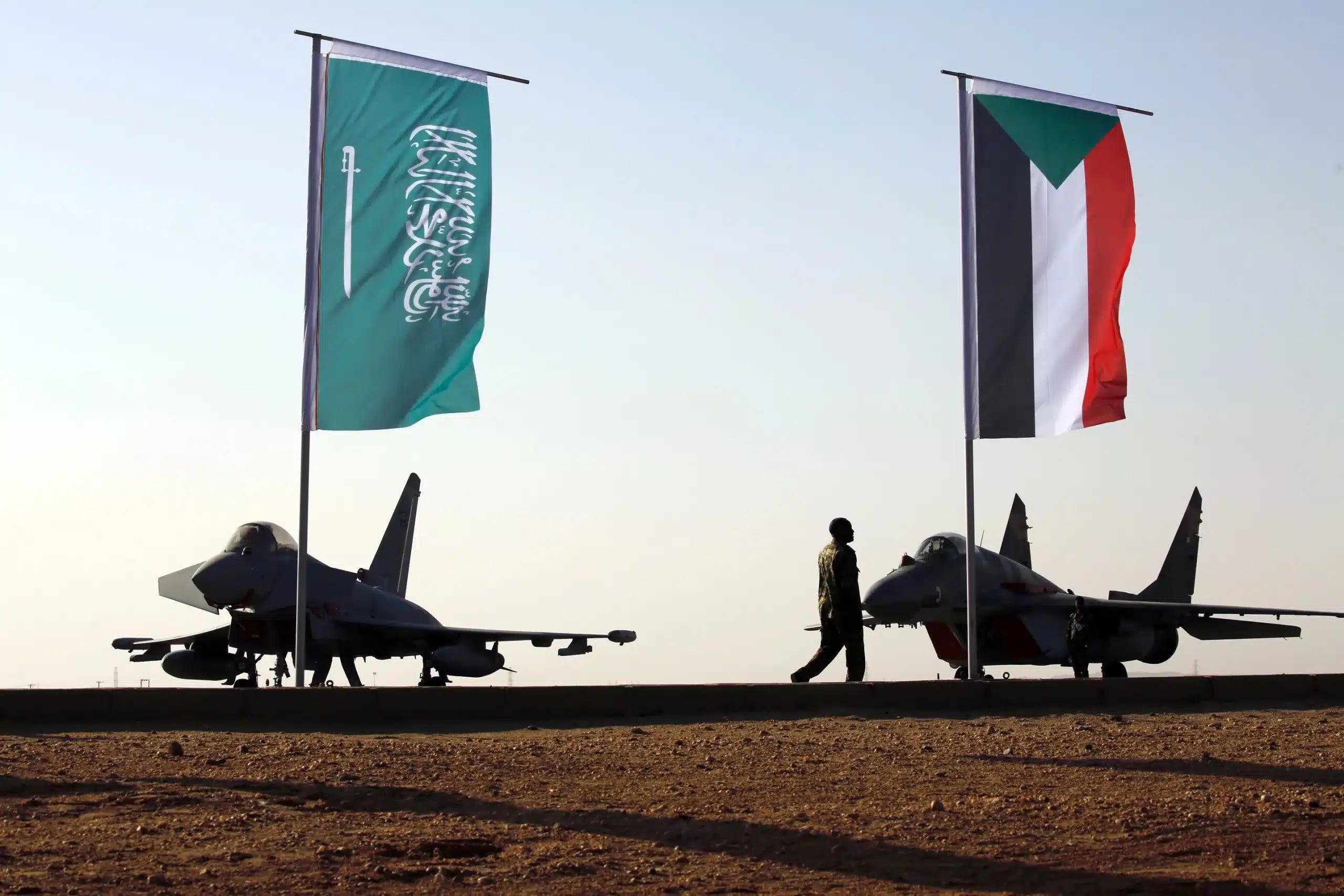
It would be a mistake to view the events in Yemen merely as an isolated power struggle between Saudi Arabia and the United Arab Emirates one that concluded with Abu Dhabi retreating under Riyadh’s pressure and the matter now closed. In truth, Yemen represents only one chapter in a broader trajectory that is likely to unfold across other regional arenas.
For years, Saudi Arabia has attempted to contain Emirati maneuvers that have undermined Arab national security across multiple fronts, from Yemen and Sudan to Somalia, Libya, and the Horn of Africa. This restraint was guided by a desire to avoid a direct confrontation that could damage the cohesion and influence of the Gulf alliance.
However, Abu Dhabi’s crossing of red lines lines Saudi Arabia regards as vital to its national security—marked a turning point. Riyadh has since adopted a firmer approach, signaling a new phase of resistance to Emirati policies now seen as posing a direct threat not only to Saudi security but to Arab national security as a whole.
Within this context, Sudan emerges as the next likely arena of confrontation following Yemen. Emirati actions in Sudan are widely perceived as bolstering separatist tendencies and endangering the country’s territorial integrity an outcome with repercussions that extend beyond Sudan’s borders to impact regional security and maritime stability in the Red Sea.
Shifting the Balance of Power
Over the past year, the power dynamics in Sudan have notably shifted. The Rapid Support Forces (RSF) regained ground and demonstrated renewed military strength after earlier setbacks that had suggested the Sudanese army was on the verge of winning the conflict.
This reversal is widely attributed to direct and sustained Emirati support for the RSF, a connection documented in multiple international and media reports. Abu Dhabi’s backing of RSF leader Mohamed Hamdan Dagalo, known as Hemeti, and his militias, has significantly altered the battlefield, emboldening Hemeti to move beyond military engagement toward advancing overtly separatist political projects including proposals to form a parallel government. These moves have pushed Sudan closer to a dangerous path of fragmentation.
In response to this escalating crisis which threatens the unity of Sudan and, by extension, Arab national security Saudi Arabia and Egypt have launched a diplomatic initiative aimed at stabilizing the situation without resorting to direct military involvement.
Several reports suggest that Egypt has provided indirect support to the Sudanese army as part of its longstanding commitment to state institutions and national unity support that Hemeti has repeatedly condemned.
In a notable development, Pakistan recently announced it is close to finalizing a $1.5 billion arms deal with Sudan to boost the Sudanese army’s capabilities in its fight against the RSF. According to Reuters, the deal includes aerial equipment, drones, and advanced air defense systems.
Citing a former senior official in the Pakistani Air Force and three informed sources, Reuters reported that Islamabad is in the final stages of concluding the agreement. Two anonymous sources revealed that the package includes 10 Karakoram-8 light attack aircraft, over 200 surveillance and attack drones, and advanced air defense systems.
Retired Air Marshal Amir Masood, who previously served in the Pakistani Air Force, stated that the deal is essentially finalized. He added that it may also include Super Mushshak trainer aircraft and possibly a number of JF-17 fighter jets, developed in collaboration with China and produced in Pakistan, though he did not specify quantities or delivery timelines.
What Role Is Saudi Arabia Playing?
Following news of the Pakistan–Sudan arms deal, speculation has mounted that Saudi Arabia may be playing a key behind-the-scenes role despite the absence of concrete evidence or official confirmation of direct involvement.
Proponents of this view point to several plausible scenarios. The first is financial: Saudi Arabia could be partially or fully financing the deal. Given the Sudanese army’s financial constraints, the $1.5 billion price tag would be difficult to cover without external assistance.
Such support could take various forms credit guarantees, soft loans, or indirect payment mechanisms allowing Riyadh to avoid publicly appearing as a party arming one side in a civil war. General Amir Masood has been among the key voices suggesting this possibility.
The second scenario envisions Saudi Arabia as a political broker, using its strong relationships to facilitate the deal. Riyadh maintains close ties with Sudanese army chief General Abdel Fattah al-Burhan, who has visited the Kingdom three times since the outbreak of the war, most recently just days ago. Saudi Arabia also enjoys a deep strategic relationship with Pakistan’s military establishment, recently solidified by a joint defense agreement.
Some observers interpret the arms deal as a political reward to the Sudanese army an incentive to align with the Saudi-led Arab vision for Sudan’s future. The goal: reduce tensions and prevent further fragmentation.
Intelligence sources suggest that the deal may be part of a broader Saudi–Pakistani defense framework. The two countries are reportedly negotiating a larger agreement worth between $2 and $4 billion, which could include supplying Riyadh with JF-17 fighter jets and other military hardware, potentially incorporating Sudan as a third-party beneficiary.
Strategic Gains for All Sides
A deal of this magnitude offers overlapping benefits for all parties involved. For Pakistan, it presents an opportunity to expand its domestic defense industry particularly in drones and JF-series fighter jets and generate much-needed revenue for an economy under increasing structural pressure.
It also allows Pakistan to challenge the dominance of traditional arms suppliers in Africa, such as China, Turkey, and Iran, opening new markets for its military exports.
For Sudan, the deal could significantly enhance the army’s aerial and drone capabilities, addressing a critical gap that the RSF has recently exploited. This would restore some balance to the conflict and potentially help the army regain the battlefield initiative lost due to external support for the RSF.
As for Saudi Arabia, the deal fits into a broader strategy to deepen military and strategic cooperation with Pakistan. It reinforces their mutual defense pact and paves the way for enhanced coordination on key regional security issues.
Countering Emirati Influence
At its core, the deal appears aimed at curbing growing Emirati influence in Sudan. This influence, by many accounts, is driving the country toward division a trajectory that threatens the wider Arab security architecture. As such, Riyadh appears to be executing a calculated strategy to counter Abu Dhabi’s advance without engaging directly on the ground.
A direct military intervention would carry high political and military costs and risk triggering uncontrollable regional fallout. Supporting the Sudanese army through the Pakistani arms deal offers a less visible, yet potentially more effective alternative restoring military parity and undermining the RSF’s recent dominance.
Combined with Egypt’s indirect military and intelligence support, this assistance may enable the Sudanese army to reclaim key capabilities and engage the RSF on more equal footing. It could halt the RSF’s momentum and usher in a turning point either toward resolution or at least a strategic stalemate.
A New Saudi–UAE Flashpoint
Sudan cannot be viewed in isolation from broader regional dynamics particularly recent developments in Yemen. Saudi Arabia increasingly sees its rivalry with the UAE not as limited to one geography, but as a multi-front competition. Sudan, given its strategic weight, is now a top priority in Riyadh’s calculus.
Khartoum has never been peripheral to Saudi interests. It remains a pivotal player in Riyadh’s regional security architecture, owing to a complex mix of geopolitical, economic, and security considerations. Sudan’s stability is therefore seen as essential to safeguarding the Red Sea and maintaining the broader Arab strategic sphere.
From this perspective, Saudi policy toward the Sudan war is shaped by a deep understanding of the dangers of strategic vacuums and unchecked regional interference. The growing UAE role in Sudan especially when viewed alongside its expanding influence in the Horn of Africa has heightened Riyadh’s concerns about the regional balance of power and prompted more assertive action.
In conclusion, there is growing evidence that Sudan is becoming the second front in the Saudi–UAE rivalry, after Yemen. This raises serious questions about how Abu Dhabi will respond especially given parallel moves in Libya, where Pakistan signed a $4 billion arms deal with Khalifa Haftar’s forces just three weeks ago.
That deal could also challenge Emirati dominance in eastern Libya and further complicate the balance of power.
The key question now is whether the UAE will respond to Saudi maneuvers in Sudan as it did in Yemen or pursue a different strategy focused on resilience or repositioning. Either path carries significant political and strategic costs whether it means accepting a diminished role or escalating the rivalry.
These questions go beyond Sudan. They signal the potential opening of a new and volatile chapter in the Gulf rivalry, unfolding at a highly sensitive moment for the region one in which fears are growing that indirect conflicts may spiral into more direct and destabilizing confrontations.
