

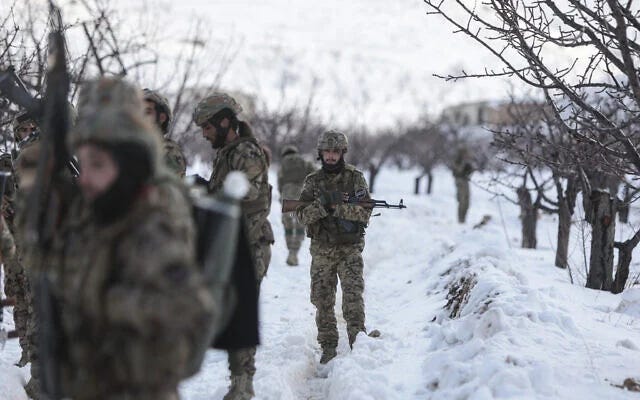
Speculation has intensified in recent weeks over a potential operation by the Syrian army inside Lebanese territory to assist in disarming Hezbollah. Conflicting statements and narratives have emerged regarding whether Damascus truly intends to participate in such a mission.
On February 5, just three days after Lebanon’s Hezbollah announced its entry into the conflict against Israel in support of Iran, the pro-Hezbollah Lebanese newspaper Al-Akhbar cited what it described as security sources claiming that Syrian President Ahmed al-Sharaa told officials in a closed meeting: “Hezbollah’s role has come now, and we will not forget our revenge.”
On March 3, a Syrian security source told Israel’s public broadcaster that Syria had informed the United States it was working to prevent any military activity against Israel from its territory.
Meanwhile, on March 17, Reuters reported—citing five informed sources—that the United States had encouraged Syria to consider deploying forces to eastern Lebanon to help disarm Hezbollah. However, Damascus remains hesitant to embark on such a mission, fearing it could be drawn into a broader Middle East war and inflame sectarian tensions.
Hours after the Reuters report, U.S. Special Envoy to Syria Thomas Barrack denied the claim. Syrian Defense Ministry spokesperson Hassan Abdel Ghani also told Lebanon’s An-Nahar newspaper that the Syrian army’s deployment along the Lebanese border is defensive in nature, and that it has not been asked to intervene in disarming Hezbollah.
Hezbollah Provocation or Syrian Maneuvering?
The Syrian government and Hezbollah have exchanged signals of pressure and warning. On February 1, Syria’s Interior Ministry announced the arrest of a Hezbollah-affiliated cell in the Damascus countryside, accused of carrying out several attacks targeting the Mezzeh area and its military airport.
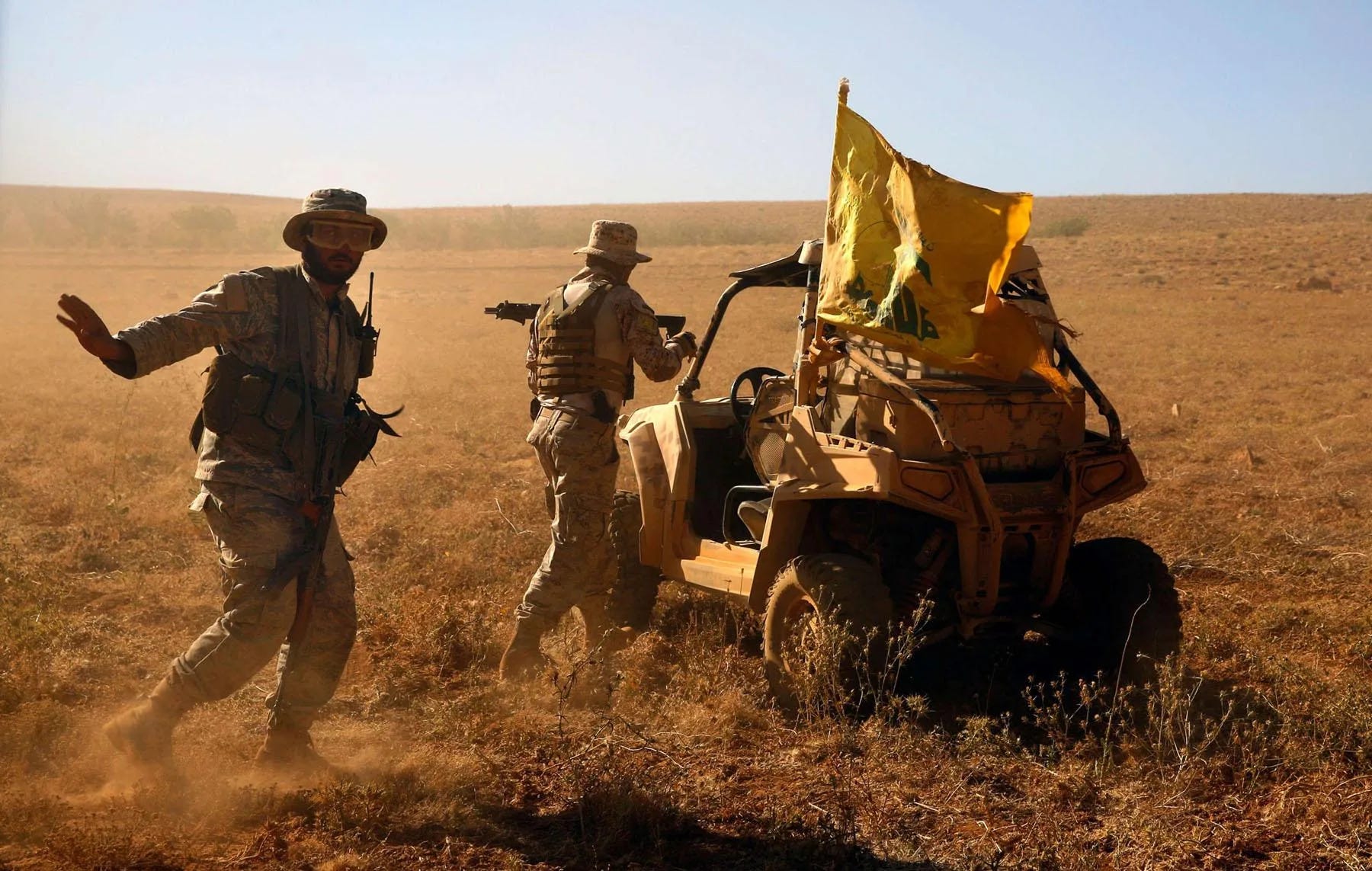
On March 10, the Syrian Arab Army’s operations command stated that Hezbollah had fired artillery shells into Syrian territory, targeting army positions near the town of Serghaya, west of Damascus.
In this context, political analyst Ayman al-Desouki told Noon Post that Hezbollah finds itself in an existential battle for survival. As such, it has sought to send messages to Damascus signaling readiness to escalate if Syria seriously considers confronting it.
According to al-Desouki, the group is prepared for a conflict that could destabilize Syria and strain its resources, weaken its border control capabilities which serve as a vital outlet for Hezbollah and undermine Damascus’s image in Arab and Islamic public opinion by portraying it as aligned with Israel in its war against Hezbollah and Iran.
Hezbollah, however, denied targeting Syrian army positions in Serghaya, stating instead that it had clashed with an Israeli force following an airborne operation by Israeli helicopters. The Israeli army, for its part, denied conducting any such operation or engaging Hezbollah in the area, while the Syrian government issued no official statement regarding the incident.
Lebanese journalist Abdullah Ali told Noon Post that the more precise question is not only whether Hezbollah seeks to open a front with Damascus, but also whether a third party might be attempting to exploit the region to ignite tensions or create a pretext for expanding the conflict.
This question gains further relevance amid reports of a U.S.-mediated security and political communication channel between Syria and Israel since the beginning of the year, alongside leaks suggesting possible Syrian-Israeli coordination or Israeli requests to prevent Hezbollah from using Syrian territory.
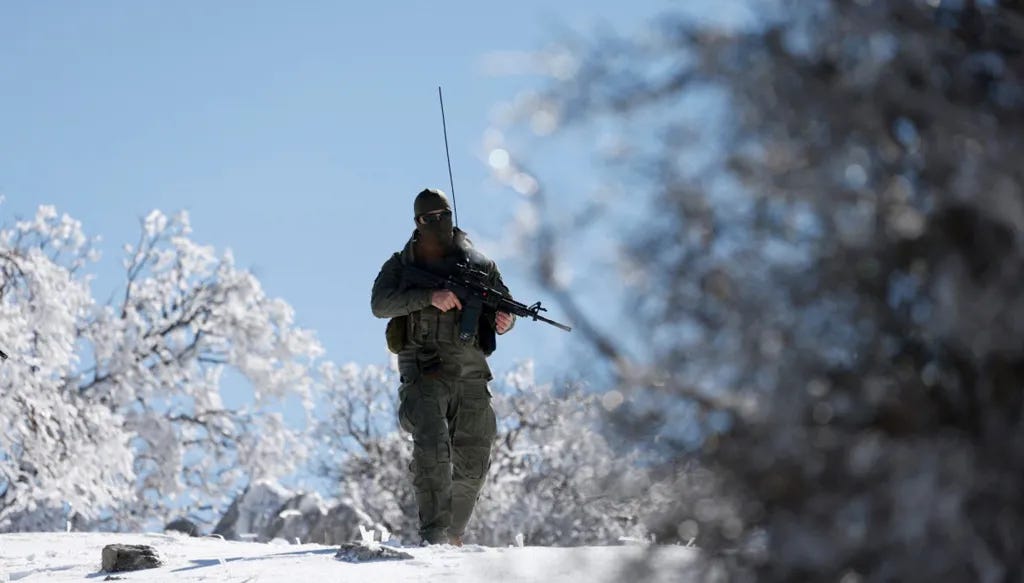
According to Ali, Hezbollah does not appear intent on dragging Syria into an open confrontation by targeting Syrian army positions, as such actions would justify a Syrian military response and could even trigger regional support for Damascus. Instead, developments along the border can be understood as a theater of mutual signaling, pressure, and testing rather than indicators of inevitable escalation.
Will Syria Enter a Campaign Against Hezbollah?
During a dialogue with French President Emmanuel Macron and Lebanese President Joseph Aoun, President Ahmed al-Sharaa affirmed Syria’s full support for the Lebanese government’s efforts to restore sovereignty and disarm Hezbollah.
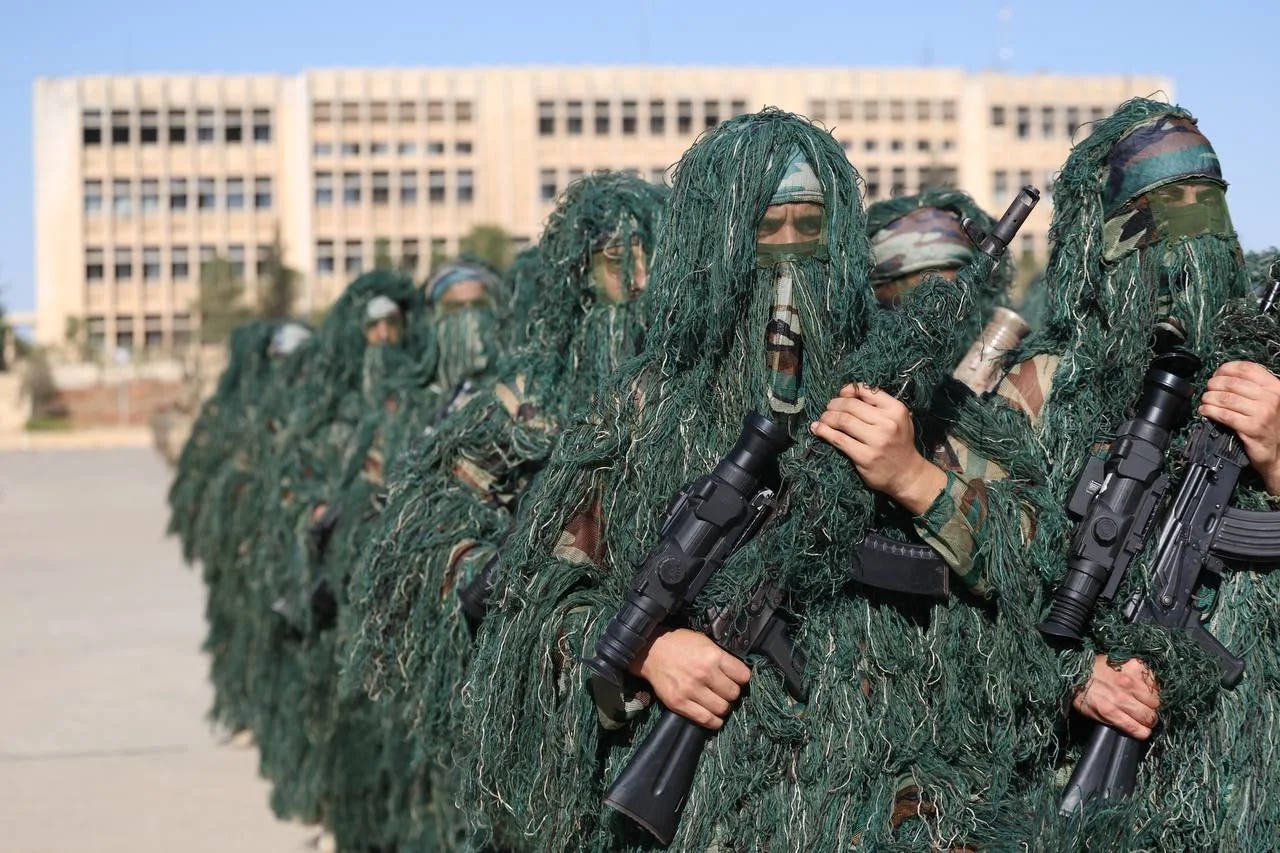
Sources cited by the Lebanese outlet Al-Modon said al-Sharaa proposed, in communications with Gulf leaders, the establishment of a joint Arab military operations room to address developments in the war. He warned of the potential expansion of the conflict to include Gulf states and impose significant costs on them, while expressing Syria’s readiness to help confront these risks.
These statements suggest that Damascus prefers any potential intervention to occur under a regional and collective umbrella, rather than as a unilateral move that would leave it bearing the political and military burden alone. This, Abdullah Ali noted, would prevent any Syrian involvement from appearing as an independent decision.
At the same time, the Syrian army has reinforced its presence along the Syrian-Lebanese border with rocket launchers and thousands of troops. Reuters reported, citing Syrian officers, that these reinforcements began in February but accelerated in early March.
According to the officers—including a senior official—these measures aim to curb the smuggling of weapons and narcotics, and to prevent Hezbollah or other armed groups from infiltrating Syrian territory.
Ayman al-Desouki believes that as Damascus becomes increasingly active in the Lebanese file through official meetings, statements, and military mobilization and as an international and regional climate more receptive to a Syrian role emerges intervention may become a more realistic option.
By contrast, Abdullah Ali argues that while Syria’s entry into a campaign to disarm Hezbollah is not impossible, it is neither a mature nor imminent decision in direct military terms.
Moreover, Syria’s absence from Iran’s list of direct targets constitutes a significant deterrent factor in Damascus’s calculations. This may encourage caution, as direct Syrian involvement could give Tehran a pretext to reinsert the Syrian arena into the conflict, either directly or through proxies.
Security and military analyst Nawar Shaaban contends that any Syrian involvement in Lebanon’s ongoing conflict would amount to a costly slide into a battle for which Damascus lacks both the tools and justification.
Official statements supporting the Lebanese government’s decision to disarm Hezbollah, Shaaban explained to Noon Post, fall within a broader regional political context and do not signal readiness to intervene. At most, Syria’s role at this stage is likely to focus on securing its borders, preventing its territory from becoming a corridor for arms or a battleground for proxy conflicts, and curbing any Hezbollah-linked activity within its borders.
Abdullah Ali similarly suggests that Syria will, for the foreseeable future, remain within the realm of political pressure and heightened security measures, rather than transitioning to a direct role unless a clear regional consensus and broader Arab backing emerge to reduce the cost of action compared to inaction.
What Would Syria Gain from Intervention in Lebanon?
Syrian forces withdrew from Lebanon on April 26, 2005, after then-President Hafez al-Assad had deployed troops there to regulate the balance of power and prevent scenarios that might disrupt regional equilibrium or allow hostile influence along Syria’s borders.
Circles close to Syria’s Baath Party have long viewed Lebanon as a potential source of threat, making it a strategic priority for the Syrian regime due to geopolitical and security considerations. Lebanon was historically regarded as a strategic depth for Syria’s national security.
Today, however, the situation differs markedly from the 1970s, when Syrian forces first intervened in Lebanon. President Ahmed al-Sharaa has repeatedly stated that Syria will not pose a threat to its neighbors and will instead focus on rebuilding institutions and advancing economic development.
Although Hezbollah fought alongside the former Syrian regime and committed numerous massacres in opposition-held areas, Syria’s new leadership appears unwilling to engage in further wars. Instead, it has limited its approach to securing its borders against arms smuggling and cross-border militant movement.
On December 22, 2024, al-Sharaa said he sought to open a new chapter with all Lebanese parties without exception. He described Syria’s past intervention in Lebanon as negative and disruptive, emphasizing that “the new Syria stands at equal distance from everyone,” and that the new era does not mean siding with one Lebanese faction over another.
In this context, Ayman al-Desouki argues that Syria could gain several advantages from participating in efforts to disarm Hezbollah. These include enhanced security by removing a threat tied to Iran’s regional project and remnants of the Assad regime, greater capacity to manage Lebanon’s file and balance its dynamics in line with Syrian interests, weakening Hezbollah as Lebanon’s dominant force, and reinforcing Syria’s regional role and legitimacy.
Conversely, Nawar Shaaban maintains that entering this conflict would yield little benefit for Syria and could expose it to retaliatory attacks from Iran and Hezbollah particularly in the absence of defense systems capable of withstanding potential missile strikes. As such, he argues that Syria should refrain from вмешательство in Lebanese affairs, which are fundamentally Lebanon’s concern, and instead focus on safeguarding its own borders.