

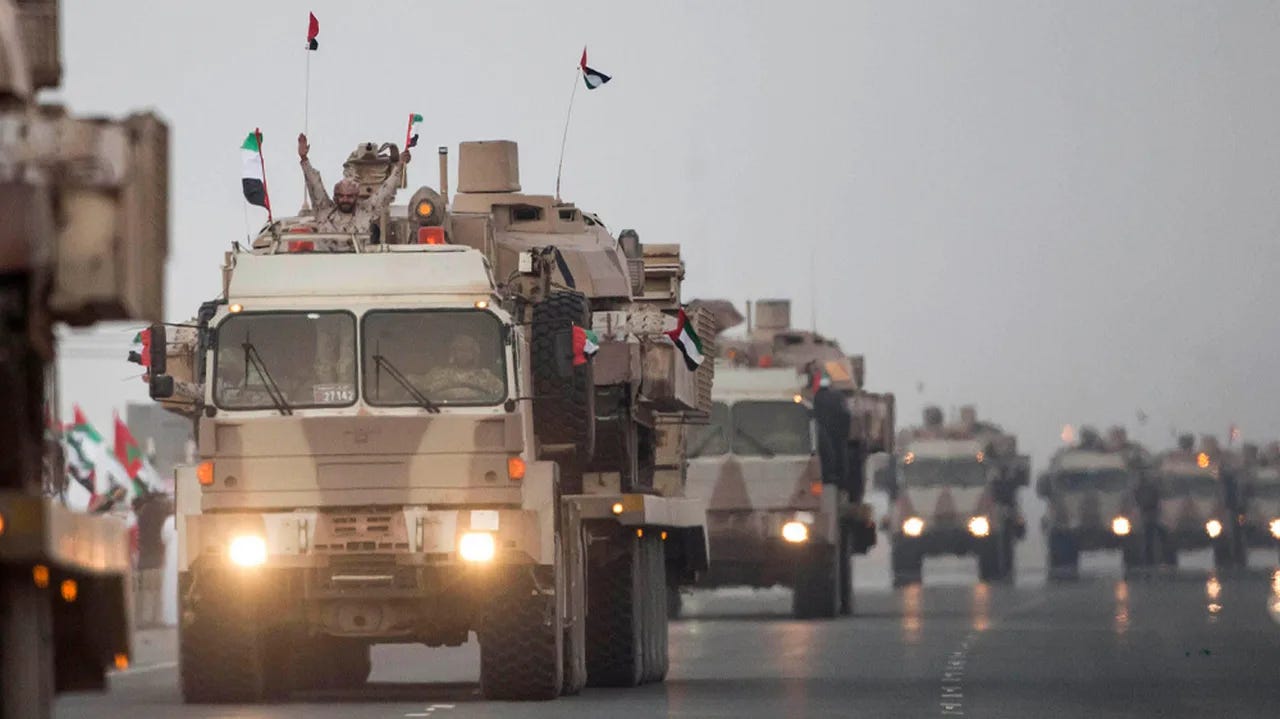
At the start of January 2026, the United Arab Emirates was compelled to rapidly dismantle its military presence in Yemen amid an unprecedented rift with its longtime ally, Saudi Arabia.
The Saudis backed the Yemeni government’s demand that the UAE withdraw its forces within 24 hours, after Riyadh accused Abu Dhabi of supporting the Southern Transitional Council’s (STC) rebellion against the legitimate Yemeni state.
Simultaneously, the STC Abu Dhabi’s most prominent local proxy collapsed. The group announced its dissolution and the disbanding of its institutions following the flight of its leader, Aidarous al-Zubaidi, to Abu Dhabi an act the Saudi-led coalition described as a necessary course correction for southern Yemen.
Within just one week of this abrupt exit, Abu Dhabi suffered severe strategic losses across Yemen.
1. The Strategic Socotra Archipelago
Socotra had long been the crown jewel of the UAE’s influence in Yemen, thanks to its unique strategic location in the Indian Ocean near the mouth of the Red Sea.
Abu Dhabi effectively took control of Socotra in 2018 by deploying troops and tanks without the Yemeni government’s approval. Capitalizing on the island’s relative calm far from the frontlines of the war the UAE began turning it into a long-term sphere of influence.
The UAE funded infrastructure and public services projects, linked the island economically to Abu Dhabi through exclusive tourist flights, and integrated Socotra into Emirati telecommunications networks by installing towers that connected the island to UAE-based mobile and internet services.
Military analysts likened Socotra to an “unsinkable aircraft carrier,” offering whoever controls it the ability to monitor and choke key international trade routes through the Bab al-Mandab Strait.
That control was dealt a crushing blow when UAE forces fully withdrew from Socotra in late December 2025, ending their direct military presence and halting flights between the island and Abu Dhabi.
Abu Dhabi also lost its local proxies. The STC militia that had administered the island became isolated and faced mounting Saudi military pressure, despite still having a nominal presence.
Reports indicate that the new authorities have begun dismantling the remnants of Emirati influence removing infrastructure tied to Emirati-sponsored festivals and shutting down UAE-funded tourism and fishing companies.
Crucially, the UAE’s covert military expansion in the rest of the archipelago has also been terminated. The islands of Abd al-Kuri and Samhah where Emirati forces had begun constructing airstrips and military facilities without the government’s knowledge have been fully restored to Yemeni state control.
In effect, Abu Dhabi lost a crucial maritime foothold that had allowed it to monitor the sea lanes between the Indian Ocean and the Red Sea and exert influence over one of the world’s most sensitive commercial corridors.
2. Mayun Island in the Bab al-Mandab
From the volcanic island of Mayun (also known as Perim), located in the Bab al-Mandab Strait, the UAE had positioned itself directly atop one of the world’s most vital maritime shipping lanes.
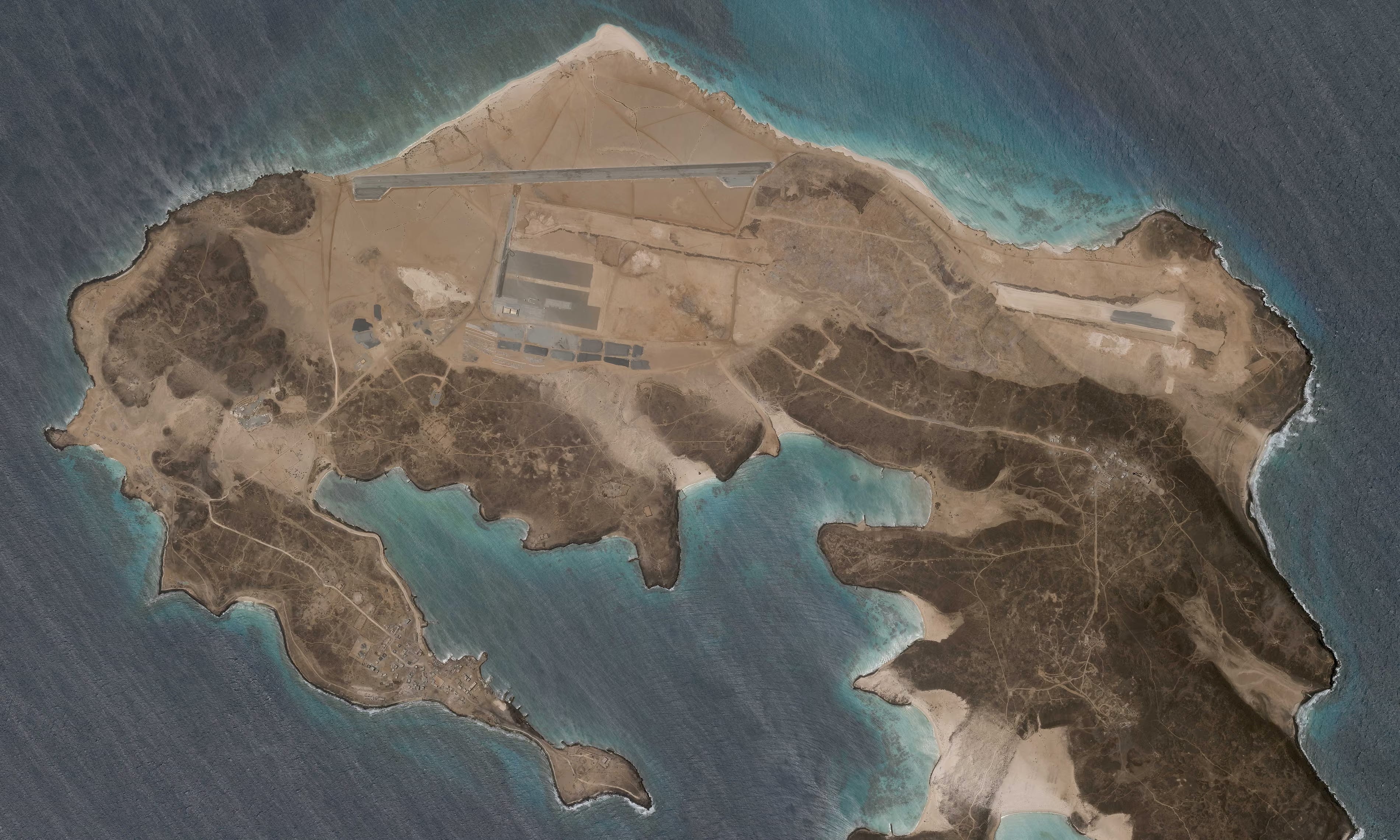
Although only a few square kilometers in size, Mayun controls maritime traffic between the Red Sea and the Gulf of Aden. Recognizing its strategic value, Abu Dhabi began covert construction of a massive military airstrip stretching the length of the island in 2016.
Satellite imagery from 2021 revealed the completion of an 1,800-meter runway along with aircraft hangars and military infrastructure. Although no country officially claimed the facility, officials from Yemen’s internationally recognized government confirmed the UAE was behind the project. They said Abu Dhabi leveraged its influence within the Saudi-led coalition to complete the base discreetly, even after publicly announcing a troop withdrawal in 2019.
The Mayun airstrip was seen as a major strategic prize, giving the UAE close surveillance and control over Bab al-Mandab, as well as a platform for launching military or intercept operations at will.
With the January 2026 crisis, the UAE’s presence on Mayun came to an end. The emergency withdrawal included all remaining Emirati officers and troops from various sites, including the airbase.
According to Yemeni government sources, full sovereignty over the island was restored immediately after the UAE’s departure. Yemeni Coast Guard and army units, with Saudi backing, took control to prevent any security vacuum.
3. Military Bases and Strategic Sites on Mainland Yemen
Beyond islands, the UAE also lost critical land-based military outposts in Yemen. Key among them:
Mocha Port, which had been turned into a closed military base receiving weapons shipments by sea.
The city and port of Aden, previously under the control of the UAE-backed STC.
Al-Anad Air Base, a historic military installation in southern Yemen that hosted Emirati advisors and personnel.
The city of Mukalla and Riyan International Airport in Hadhramaut, which the UAE had transformed into a closed military base and operations hub.
Balhaf gas facility on the Arabian Sea coast, converted into a military base nearly a decade ago.
4. Scrapping of Economic and Security Agreements
Abu Dhabi’s losses were not limited to military infrastructure. It also lost access to economic and security deals previously brokered in STC-held regions agreements widely seen as undermining Yemen’s sovereignty and national interest. Key among them:

Telecommunications Deal: A controversial agreement between the state-run AdenNet and UAE-based NX Digital Technology to operate telecom and internet services in government-controlled areas. Parliament strongly objected, describing it as a de facto sale of 70% of southern Yemen’s telecom sector to an obscure firm in exchange for generous tax breaks.
Security Agreements: Former deals signed under the pretext of counterterrorism had granted Emirati security agencies sweeping powers to detain Yemenis at international airports. Once leaked, the agreements sparked widespread outrage for violating national sovereignty and civil rights. The recent decision to nullify them marked a reassertion of Yemeni control over its internal security.
Qishn Port Contract: A 50-year concession in al-Mahra province to export minerals in exchange for a symbolic fee of just one dollar per square meter annually. The deal was seen as emblematic of exploitative agreements that sidelined Yemen’s economic interests. Following parliamentary review and public protests, it was officially revoked.
Oil and Gas Sector Agreements: Multiple contracts proposed or signed by UAE-aligned officials granted Emirati firms preferential rights to operate refineries in Mukalla and other parts of Hadhramaut. One long-term marketing deal would have given a UAE-linked company 35% of Yemen’s oil and gas profits for 50 years an agreement now annulled.
Aden Port: Rumors had circulated about Dubai Ports World seeking a new concession for Aden’s port. However, recent developments prompted the government to declare that any opaque agreements regarding the port were void. It affirmed the state’s full control and commitment to developing the port in partnership with international players under terms that safeguard national sovereignty.
The first week of January 2026 marked a turning point bringing an abrupt end to years of Emirati entrenchment in southern Yemen. In just eight days, Abu Dhabi lost what it had spent eight years building, a shift that may recalibrate regional dynamics in the Red Sea and the southern Arabian Peninsula in favor of Yemen’s internationally recognized government and its allies.