

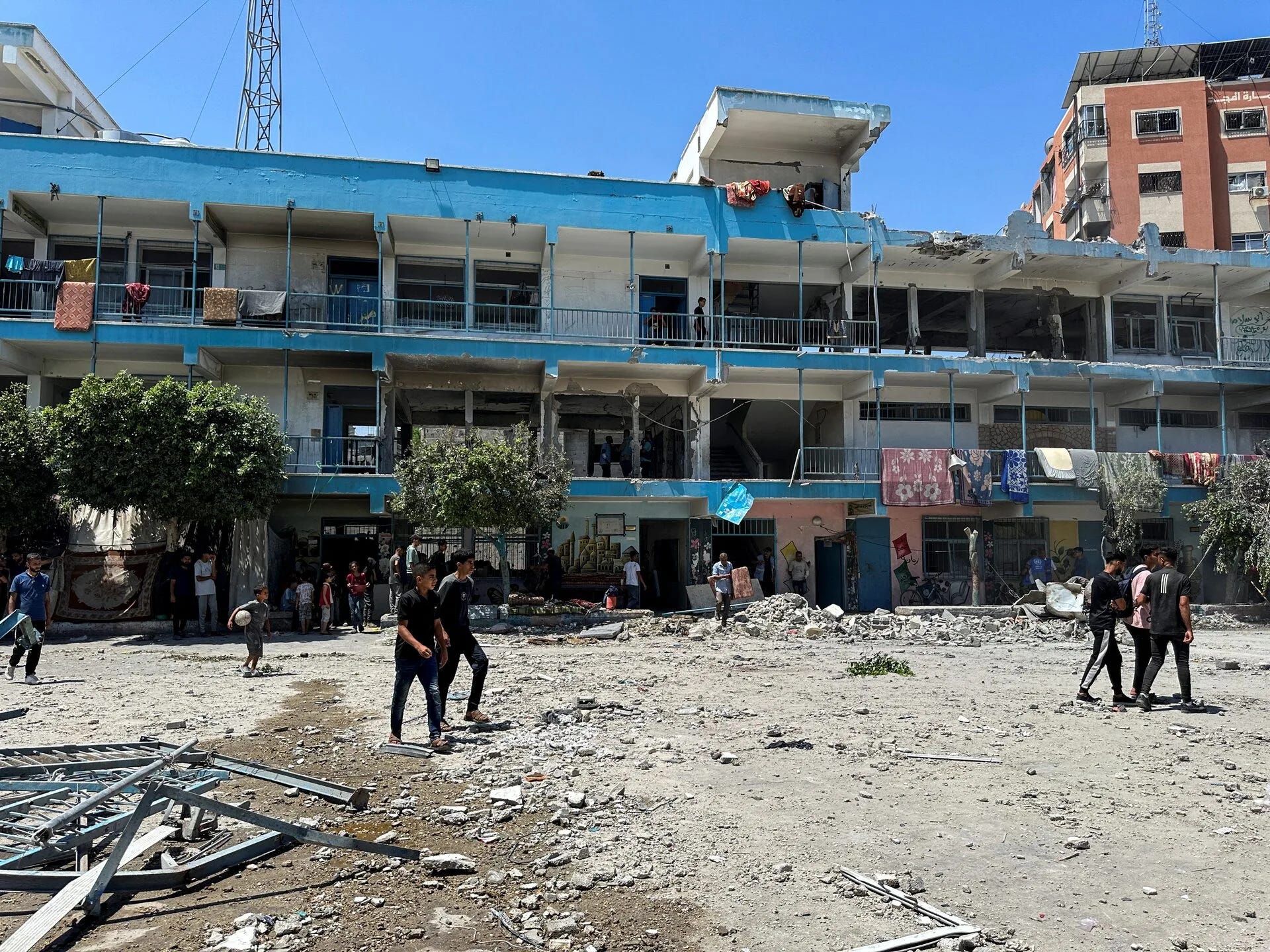
The United Nations Relief and Works Agency for Palestine Refugees (UNRWA) was meant to serve as a humanitarian shield, mitigating the devastation of Israel’s assault on Gaza. Yet the war has not only claimed the lives of tens of thousands of civilians; it has also struck at the very international institutions once relied upon to manage the catastrophe.
This reality prompted UNRWA Commissioner-General Philippe Lazzarini, in his final address in March 2026 ahead of the end of his mandate, to call for the formation of a “high-level UN committee” to investigate the killing of more than 390 agency staff and the destruction of its facilities.
In a letter to the UN General Assembly, Lazzarini further warned that continued attacks could render the agency “unsustainable,” and that its collapse would force Israel to assume the burden of humanitarian operations. What, then, are the organization’s most significant losses, and what lies ahead for it in the besieged enclave?
What Has UNRWA Actually Lost?
1. Staff fatalities and their implications:
From October 2023 to February 2026, UNRWA recorded the deaths of 391 of its personnel, including 310 staff members and 81 local workers or contractors.
For an organization employing roughly 11,000 people in Gaza, these losses mark the deadliest toll in UN history. Lazzarini described the conflict as “the most lethal in the history of the United Nations.”
By comparison, the 2011 attack on a UN office in Nigeria killed 46 staff members, while separate incidents in South Sudan and Afghanistan claimed 33 UN personnel underscoring the exceptional scale of the current war.
2. Damaged facilities and displaced civilians:
UNRWA reports documented more than 842 incidents targeting its facilities or personnel by May 2025, rising to 895 by August of that year.
These attacks damaged 311 agency installations, including schools, distribution centers, and food warehouses some struck multiple times. By January 2026, legal sources reported that 312 UN facilities had been affected, representing the bulk of UNRWA’s infrastructure in Gaza.
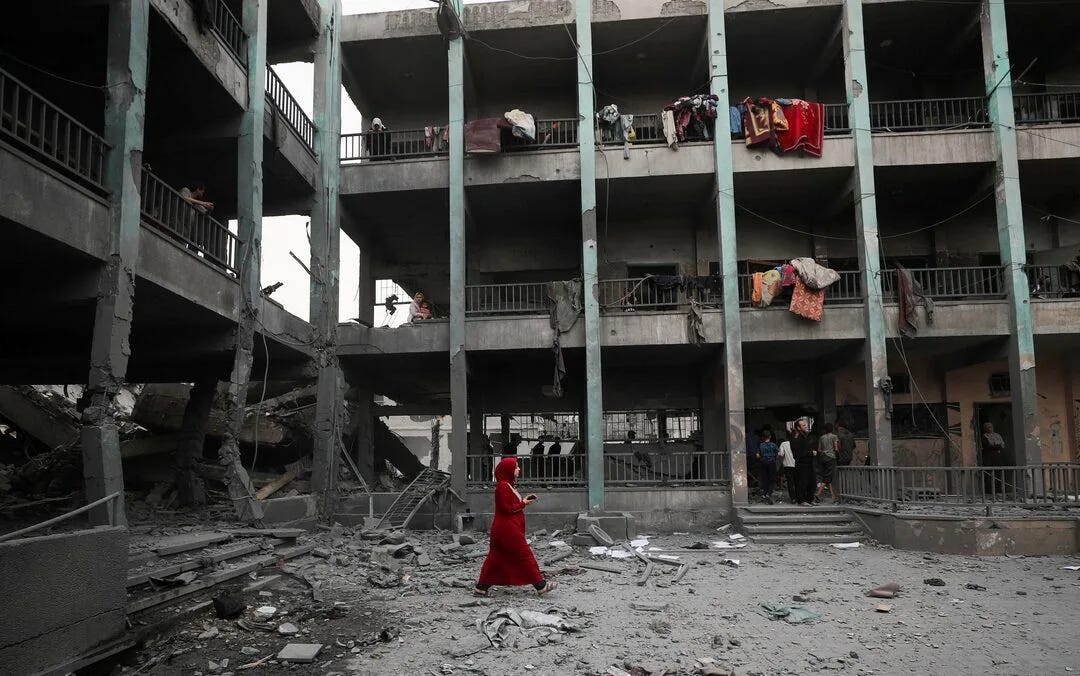
The losses extend beyond buildings. These facilities had been sheltering hundreds of thousands of displaced civilians. By August 2025, at least 845 people had been killed and 2,554 injured while taking refuge in UNRWA schools and centers.
In one example, in June 2024, Israeli forces struck a UNRWA school in Nuseirat refugee camp that was housing around 6,000 displaced people.
Lazzarini said the attack killed at least 35 individuals and injured others, condemning the targeting of UN facilities as a “blatant disregard for international humanitarian law.”
To date, no comprehensive official estimate has been published for UNRWA’s total material losses in Gaza. However, a joint interim assessment by the United Nations, the European Union, and the World Bank released in February 2025 and covering October 2023 through January 2025 estimated direct damage to UNRWA schools alone at approximately $196 million.
3. Impact on operational capacity:
The Israeli offensive has stripped the agency of large portions of its operational capacity.
By spring 2025, two-thirds of UNRWA health centers in Gaza were out of service, with only six of 22 facilities partially functioning. In response, the agency deployed 123 mobile medical teams and 37 temporary health points.
With Israeli forces not fully withdrawn, 127 UNRWA facilities fell within what Israel termed the “yellow line”—areas under Israeli control—making access extremely difficult.
Despite these challenges, roughly 11,000 Palestinian staff continued working, delivering healthcare to about 100,000 people weekly and education to more than 66,000 students through 73 alternative learning centers highlighting the population’s continued reliance on the agency even as it struggles to function.
What Could an Investigation Add?
In calling for a UN inquiry, Lazzarini said he had urged the Secretary-General and Security Council members to establish an independent committee “to uncover the circumstances behind the killing of more than 390 staff members,” acknowledging that ongoing hostilities complicate the effort but insisting it is essential to preserving the organization’s credibility.
At a practical level, such an investigation could gather testimonies and field data to determine patterns of attacks, assess whether systematic violations of international law occurred, and establish whether facilities were deliberately targeted or struck as collateral damage.
The UN has previously formed similar investigative bodies following attacks on its personnel or premises, such as the 2003 bombing of its headquarters in Baghdad or the killing of peacekeepers in Mali. However, it has never faced a conflict with casualties on this scale, making the prospective inquiry a new test of its resolve.
Still, the investigation would remain shaped by political realities. Past experiences suggest that UN inquiries often produce detailed documentation but fall short of accountability mechanisms when their findings clash with the positions of powerful states.
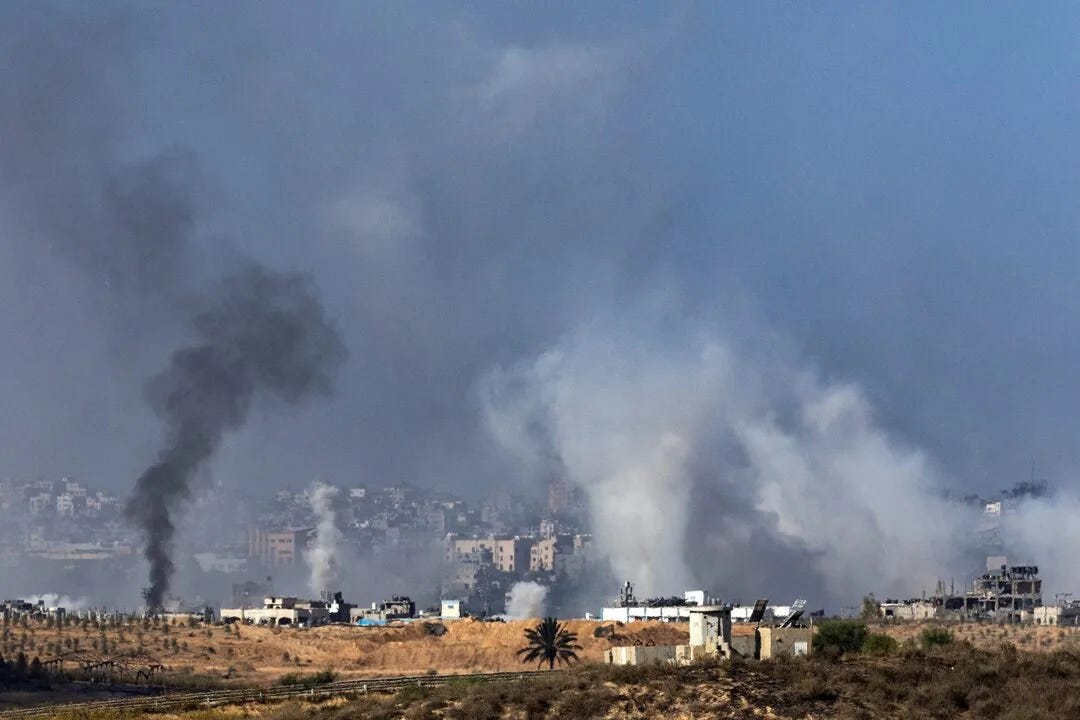
Israel, for its part, typically rejects international investigations beyond existing frameworks, arguing that strikes on UNRWA facilities are based on “intelligence” alleging their use for military purposes. As such, any inquiry risks becoming a battleground of competing narratives rather than an instrument of justice.
Lazzarini emphasized that the targeting of UNRWA staff cannot be dismissed merely as “collateral damage,” but constitutes an assault on the humanitarian and international values the agency represents.
This framing suggests that the investigation is not only about individual accountability, but about establishing that the killing of staff and destruction of facilities form part of a broader pattern aimed at weakening UNRWA itself.
What Is UNRWA’s Future in Gaza?
Lazzarini’s March 2026 warning about the agency’s future was striking. In a message to the President of the General Assembly, he cautioned that UNRWA “may soon become unsustainable.” What factors are driving this trajectory?
1. Financial and operational erosion:
For years, UNRWA has faced a funding crisis due to reduced US and European contributions, alongside political pressure to shrink its budget.
The latest Israeli offensive has dramatically increased expenses, forcing the agency to operate mobile medical teams and alternative schools amid the collapse of most of its infrastructure.
As attacks continue, reconstruction costs have soared, while donors grow increasingly uncertain about the agency’s ability to operate effectively in such a volatile environment.
2. Political pressure to end its role:
Beyond financial strain lies a broader political struggle. For decades, UNRWA has faced an Israeli campaign seeking its dissolution, arguing that it perpetuates the Palestinian refugee issue.
In October 2024, Israel’s Knesset passed a law banning UNRWA’s activities in occupied territories, followed by restrictions in early 2025 preventing international staff from entering Gaza.
As Israeli allegations regarding the use of UNRWA facilities for weapons storage or militant activity intensified, the war has been leveraged to justify calls for dismantling the agency.
Within this context, Lazzarini warned that the agency’s collapse would not eliminate humanitarian needs but shift responsibility onto the occupying power under the Geneva Conventions an outcome Israel appears keen to avoid.
Given this reality, two scenarios emerge: either UNRWA continues in a diminished, fragmented form with reduced capacity, or it is gradually dismantled, with its services distributed among other organizations or transferred formally or informally to “Israel”.
In both cases, the rights of Palestinian refugees risk further erosion.