

“O Zionist, why your armies? Tomorrow the revolution’s youth will trample you. We will chant it generation after generation: we hate you, Israel.” With these words, the voices of protesters resonated in the heart of Tahrir Square in January 2011, when Egyptians broke the barrier of fear and their chants in support of Palestine rose until they reached Tel Aviv after their voices had been stifled under the Mubarak regime affirming what the Egyptian collective conscience agreed on: that their principal enemy was “Israel.”
Fifteen years after the revolution that restored to Egyptians their lost pride and granted them freedom for the first time since the signing of the Camp David Accords to express their anger at the Israeli occupation without fear of arrest or security pursuit, the State of Occupation today possesses a new strategic asset that has restored to it everything the revolution took away and more. Yet even today it continues to lose popular normalization, which would pose a danger if its ally ever fell from power.
The Revolution That Frightened “Israel”
For thirty years, “Israel” found in the deposed President Hosni Mubarak a strategic treasure. During his tenure, relations gradually evolved from secret normalization behind closed doors and within narrow circles to economic normalization led by businessman Hussein Salem, owner of East Mediterranean Gas Company, through a project exporting Egyptian gas to “Israel” at a cheap price alongside granting the occupation security stability and Mubarak’s indifference toward the Palestinian cause.
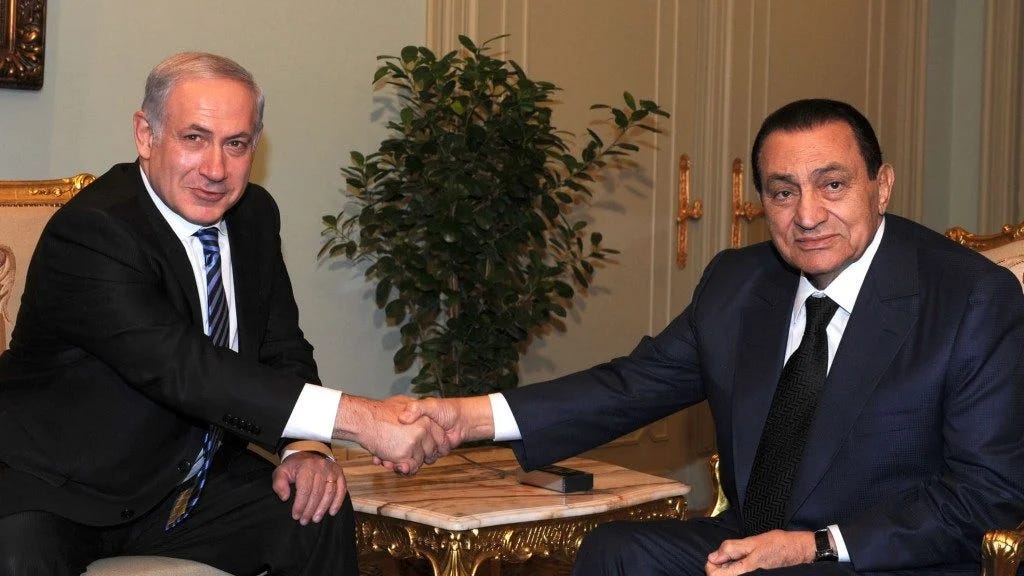
Thus, the Egyptian revolution was not only a heavy shock to Mubarak and his regime, but, equidistantly, a shock to Israeli society and the State of Occupation, which lost with Mubarak’s fall its security guardian and protector of its strategic interests. It hastened to convince the United States and Western states not to abandon him and to support him to the last moment by promoting scenarios of chaos and an “Iranian model.”
In the Israeli newspaper Haaretz, the revolution was described as a “nightmare for Israeli intelligence,” having come outside the calculations of Mossad, Shin Bet, and Aman, which had reassured the political class in Tel Aviv about their peace agreement with Cairo.
The paper cited remarks by the then‑new chief of military intelligence, Major General Aviv Kochavi, before the Knesset Foreign Affairs and Defense Committee about the stability of the Egyptian regime and the Muslim Brotherhood’s lack of readiness to assume power due to insufficient organization to unite their ranks.
But the Egyptian street betrayed the Israeli general’s prophecy and succeeded in imposing the will of change; the occupation was among the first to suffer from the possibility of a democratic system forming in the largest Arab state. For over about fifty years, the Israeli state failed to penetrate Egyptian society and impose normalization. It knows well that any elected president would strive to distance himself from it to satisfy his people.
The youth of the revolution who were born and whose consciousness formed during what was called “peace with Israel” never forgot the Palestinian cause, keeping it present in their collective conscience and slogans. Israel quickly saw that the Egyptian revolution aimed to establish a ruling system reflecting popular will inconsistent with its policies toward the Arabs.
Other Arab popular movements that weakened Israel’s strategic depth built on Arab divisions and lack of unity were seen as threats emerging from all directions that could weaken traditional Israeli bets on Arab fragmentation to pass its policies and influence international decisions.
The revolution also had worrying economic dimensions for “Israel” fears of changing Cairo’s policies, whether by reimposing restrictions on the passage of Israeli missiles through the Suez Canal or possible rapprochement between any new Egyptian authority and Hamas in Gaza scenarios Israel never imagined it would have to answer.
These fears were evident in the hysteria that afflicted the occupation government, its leaders continuously describing the revolution as an “earthquake shaking existing regimes and threatening a new Middle East,” hinting at growing Israeli anxiety that Egypt might return to its leading role as a political and cultural driver in the Arab world after being removed from the equation by Camp David. This explains the Israeli agitation against the revolution and its fears of a Muslim Brotherhood takeover.
Such suppositions reflected in occupation leaders’ meetings, which led to reconsideration of divisions dismantled after Camp David and deployment of the army on borders, especially with Egypt and Gaza. This stance was translated into a request by then‑Israeli Defense Minister Ehud Barak for an increase of about $20 billion in U.S. aid to address these changes only for him to express relief after receiving assurances from the Egyptian military establishment through channels maintained by military intelligence headed by Abdel Fattah el‑Sisi at the time.
From that point, “Israel” sought ways to stop the transformation that threatened long‑standing ties with the Mubarak regime. But it made a miscalculation when Israeli warplanes killed five Egyptian soldiers in Sinai in the autumn of the revolution, claiming the incident was unintentional. For January revolution crowds, that incident was a blatant challenge to Egypt’s sovereignty and dignity, demanding an urgent and firm response.
Understanding the Egyptian response—officially and popularly—to this sudden incident can only be seen in the context of post‑revolution Egypt, which sought a definitive break from the past internally and externally. The incident became an opportunity to gauge the depth of the revolution’s impact and to understand how much “Israel” realized that Egypt was no longer as it was before Mubarak’s departure.
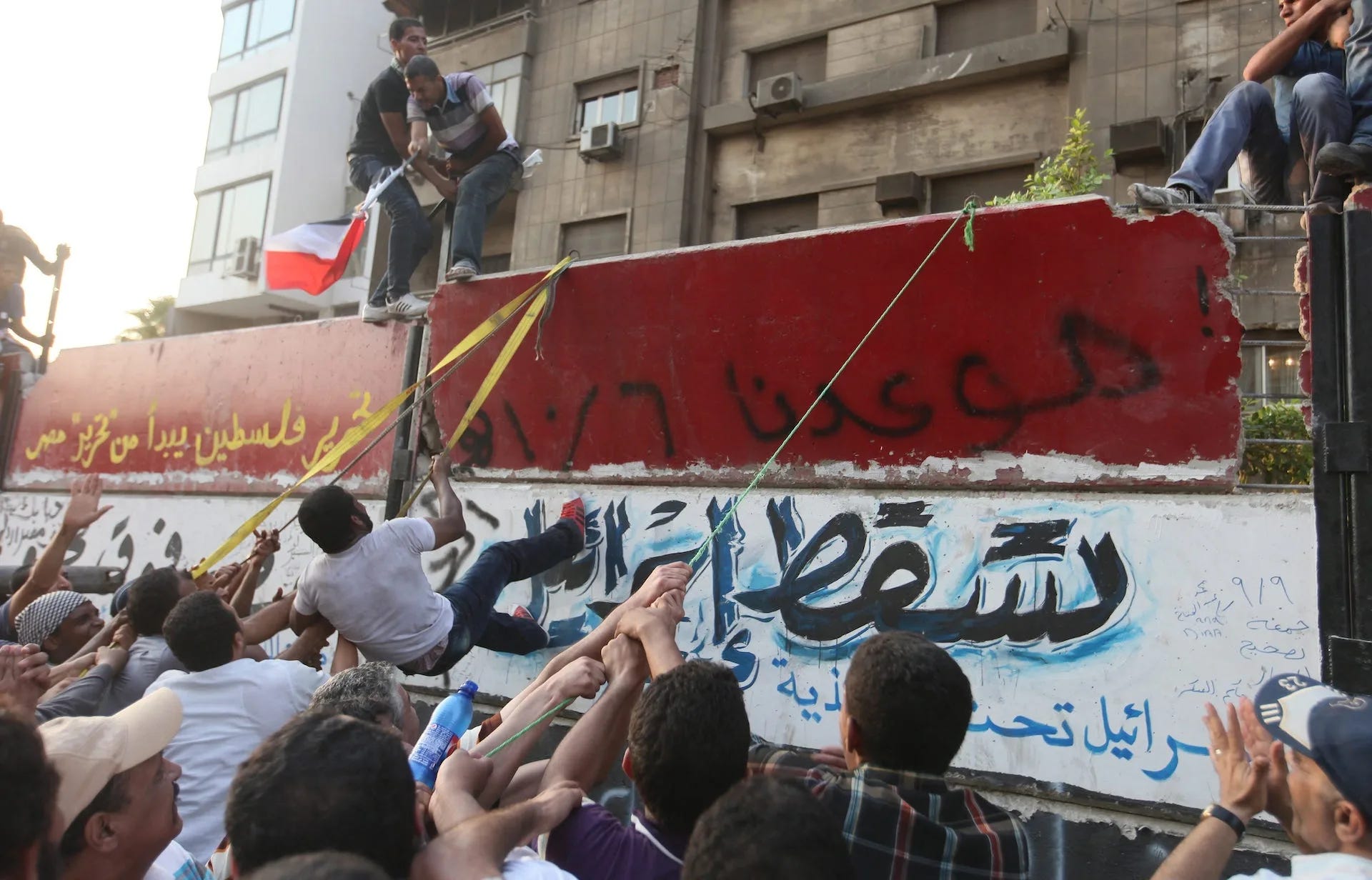
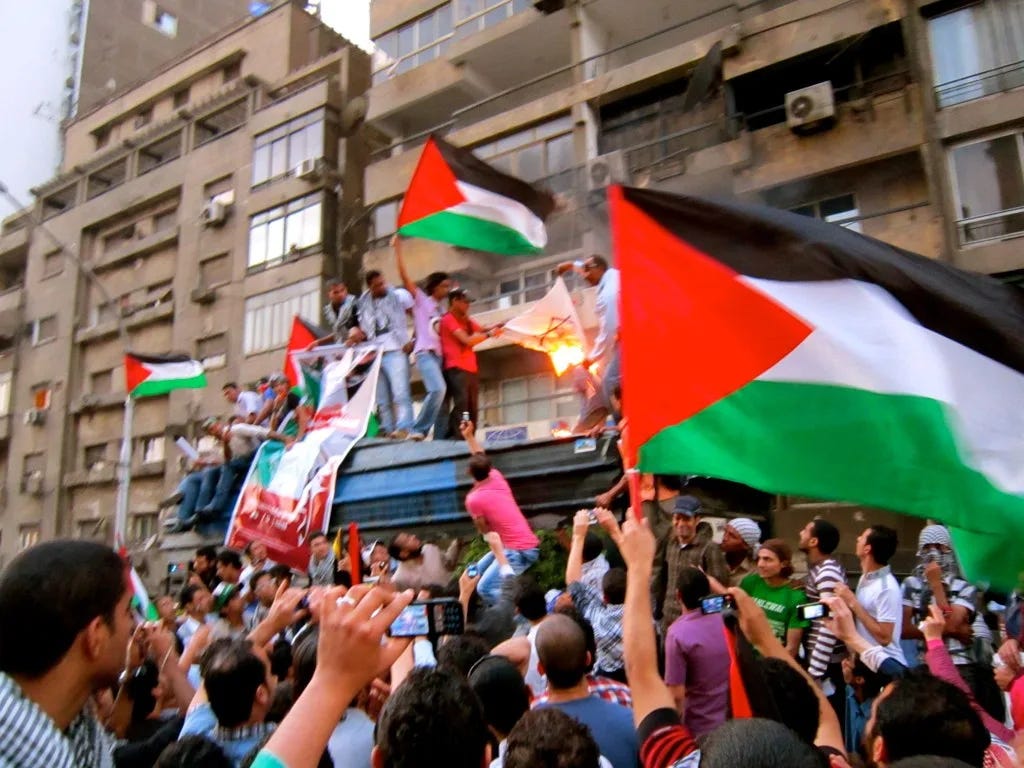
Popularly, there were no party flags or political slogans only feelings of hostility toward “Israel” and boundless pride in revolutionary Egypt. The scale of anger that brought people into the streets was remarkable; for the first time, protesters found themselves face‑to‑face with the Israeli Embassy in Cairo, overcoming concrete walls and scattering its papers in full view of security forces and army personnel who stood by silently.
In a moment that encapsulated much of Egyptians’ deep resentment toward their historical enemy, protesters lowered the Israeli flag from the embassy for the first time since its opening. Their anger continued to rise, with demands to expel the Israeli ambassador and recall the Egyptian ambassador from Tel Aviv and then to cancel or amend the Camp David Accords.
Officially, the transitional military council and interim government’s handling of the aftermath was hesitant and confused, but it was still a marked departure from Mubarak’s era. Importantly, the transitional leadership’s reaction to the soldiers’ killing a formal summons of the Israeli ambassador and a firm statement demanding an immediate investigation was different from how Cairo previously responded.
On the other hand, Israel’s reaction was no less unusual: Tel Aviv, which had been accustomed to dealing with such incidents with arrogance as it did with the Freedom Flotilla months before the revolution used a softer language this time, departing from its long‑standing tone of haughtiness, and made unprecedented efforts to contain escalation.
Israel did not offer an apology but clearly expressed regret over the actions of its soldiers, and its leaders repeatedly affirmed the strength of strategic ties with Cairo. Still, attempts at diplomatic circumvention that might have been accepted pre‑revolution could not go uncontested afterward, opening the way for renewed debate about modifying the Camp David Accords, which limit Egyptian troop presence in Sinai.
A few months later, Israel lost its long‑term gas contracts with Mubarak’s government, and relations between the two parties reached their worst point especially amid presidential elections where the future of the Camp David Accords was discussed.
The Coup Against the Revolution
With the election of the late President Mohamed Morsi in the year following the revolution, Israel suffered another blow. The absence of any mention of it in his speeches was not the main threat; the danger was that his rise could upend decades of strategic relationship building and perhaps close the door on partnership.
Moreover, Morsi’s stance during the Gaza war was a warning Israel heard clearly: he expressed the people’s rejection of Israeli aggression, forced a halt to it, opened the Rafah crossing to allow in aid and evacuate the sick, warned Tel Aviv about Egyptians’ fury, and sent his prime minister to support Palestinians in Gaza who saw in the success of the revolution the potential start of a real path toward establishing their long‑awaited state.
Egyptian anger toward the occupation then was not limited to a specific faction or current, explaining the popular rejection of a protocol message that included the phrase “Dear Peres” which Israel leaked to embarrass Morsi by portraying pragmatic dealings as inconsistent with the Muslim Brotherhood’s beliefs, which considers Israel an enemy after its leader called for jihad against it.
These fears pushed the occupation government and its security apparatus to support the counter‑revolution with all their might to prevent Egyptians from mobilizing. They sought an alternative that would at least provide what Mubarak did, and signals came from those who viewed the real regional threat as Morsi and his ilk, placing their alternative plan beyond everyone’s sight including Morsi’s, who spent only one year in power, insufficient to establish a political system or define relations with “Israel.”
Not more than two and a half years after the revolution, el‑Sisi seized power on July 3, 2013, imprisoning the elected president, and hesitant signals came from Tel Aviv until the coup was described as a “miracle for Israel.”
Ehud Barak publicly expressed his relief at the scene, urging the U.S. to support el‑Sisi in the presidential race saying Israeli endorsement could embarrass him reinforcing what appeared as a strategic plan to control Egypt’s governance.
Intimacy Between the Coup and the Occupation
Once el‑Sisi came to power, the trade‑offs he offered in exchange for Israeli support strengthened his rule so thoroughly that the relationship between the coup and the occupation became more intimate than under Mubarak.
British Middle East journalist Robert Fisk described this relationship as “more important to el‑Sisi than democracy in Egypt,” and the Israeli newspaper Maariv headlined its editorial by calling el‑Sisi “Israel’s strategic treasure.”
Unlike Mubarak, who managed relations with Israel out of sight and through intermediaries perhaps aware of the danger of seeming too close to Tel Aviv el‑Sisi’s ties with the occupation were no longer behind closed doors.
Security coordination and strategic cooperation reached unprecedented heights, culminating in the return of the Egyptian ambassador to Israel in June 2015, and the Israeli embassy in Cairo resuming work with greater freedom.
Months later, in the first Egyptian foreign minister visit to Israel since 2007, Samah Shukri stood beside Netanyahu under the statue of Theodor Herzl, celebrating the July 23, 1952 Revolution.
Repeating this visit two months later at the funeral of former Israeli President Shimon Peres sparked astonishment, with Israeli journalist Dan Margalit saying: “We will weep blood for generations if we allow the coup to fail and the Brotherhood return.”
For the first time since January, the Israeli embassy in Cairo held a celebration of the founding of the State of Israel in the heart of Cairo, mere meters from Tahrir Square the site of revolutionaries who never imagined that a military coup would so swiftly reverse their revolution’s gains and reinstate relations with the occupation beyond even Mubarak’s era.
Normalization, once a victim of the January revolution that toppled one of Israel’s staunchest allies, saw normalization advocates breach the wall of rejection built since Camp David. This extended into parliament when controversial MP Tawfiq Okasha hosted Israeli Ambassador Haim Korin in his home under the pretext of discussions on cooperation opportunities.
Beyond Okasha’s incident, much of the rush toward Israel traces back to el‑Sisi himself, who hosted a delegation of American Jewish leaders, lavishing praise on Israel’s prime minister calling Netanyahu a leader whose capabilities not only qualify him to lead Israel but to secure regional progress and global advancement.
If Cairo does more than it announces in this context, Israelis do not hesitate to reveal it. Former Israeli Energy Minister Yuval Steinitz announced that Egypt flooded tunnels between Gaza and its territory at Israel’s request and under its pressure.
This is no secret, especially against the backdrop of accelerating security and intelligence coordination in Sinai under the pretext of combating terrorism, where Egypt conceded significant border prerogatives even beyond the Camp David Accords, alongside economic normalization through gas deals and education curriculum changes tailored to Israeli preferences steps the occupation bets will achieve what it couldn’t in decades of cold peace.
In political maneuvering, el‑Sisi said Egypt was on path to deeper intimacy with “Israel” if the Palestinian cause was resolved. Yet, in his view, that resolution meant closing crossings, digging trenches along the Gaza border, and strangling Palestinian resistance—paired with diplomatic moves including voting in favor of Israel whenever possible. Israeli journalist Avi Sasskurov even predicted seeing el‑Sisi someday inside the Knesset.
This was perhaps far beyond what Israel ever dreamed. Israeli media celebrated el‑Sisi; Maariv reported praise from right‑wing politician Avigdor Lieberman calling him a real opportunity for Israel. Former Housing Minister Yoav Galant likened him to “Hosni Mubarak after cosmetic surgery,” and former ambassador to Cairo Tzvi Mazel spoke of a close el‑Sisi–Netanyahu relationship with weekly communications.
The most brazen statement came from former military spokesman Avi Benayahu, who said that el‑Sisi coordinated with Israel to protect its interests, prevent arms smuggling, and disrupt tunnels in Gaza.
These developments created a new reality imposed on Egyptians, with the biggest loser being the Palestinian cause. Once teeming squares turned into military barracks where protests were banned, prisons opened for Gaza supporters instead of borders opening for them to enter the besieged enclave.
The Rafah crossing was left to the occupation’s discretion to open and close as it wished once under Egyptian‑Palestinian control.
Thus, Egypt transformed from a cold peace to a warm peace that granted “Israel” more than Netanyahu himself envisioned when he wrote in his memoir A Place Under the Sun in the 1990s, seeking a place for Israel among nations only to find a man who exempted it from that quest and secured its stability.
Yet history recalls that every ship that sailed to its shores seeking safety is doomed to perish, no matter how high its sails once stood.