

In a country exhausted by war and fractured by political divisions, the legal system has not been spared this fragmentation. On the contrary, it has been among the sectors most deeply affected, as overlapping security, political, and economic factors have undermined the performance of justice institutions, weakening their ability to uphold the rule of law and protect rights.
The Ministry of Legal Affairs stands out as one of the key bodies tasked with reassessing the legislative framework reviewing existing laws and updating them to keep pace with rapid transformations, whether in the evolution of crime patterns or the social and economic changes imposed by years of conflict.
Between the need for structural reform, the pressures of reality, and limited resources, a central question persists: can trust in the law be rebuilt as a unifying umbrella?
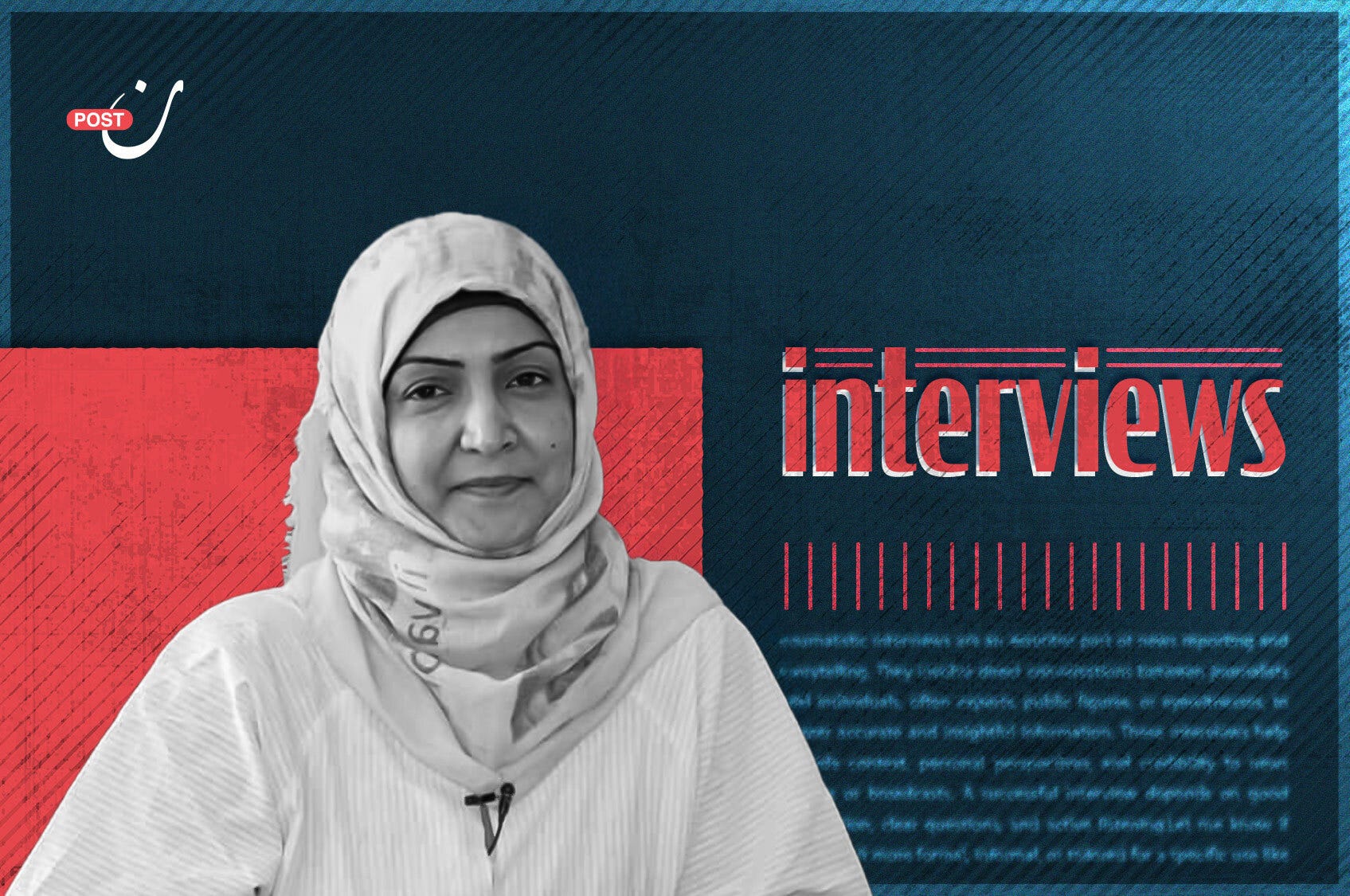
In this interview with Yemen’s Minister of Legal Affairs, Judge Ishraq Fadl Abdullah Al-Maqtari, we explore a range of issues related to the current state of the legal system, the challenges of administering justice, as well as corruption, transitional justice, women’s rights, and the role of law in supporting paths toward stability.
Al-Maqtari is a well-known legal figure with extensive experience in the judiciary and human rights, having participated in several missions related to investigating violations and legal work at both the national and international levels, alongside a strong interest in justice and women’s rights.
In the following lines, the minister part of the government formed in February 2026 outlines her vision on these issues, reviewing existing challenges, priorities, and the limits of possible reform under current conditions.
Minister, how do you assess the current state of Yemen’s legal system amid political division and multiple authorities?
Frankly, Yemen’s legal system is in urgent need of modernization and development. The current situation cannot be separated from political fragmentation and the multiplicity of authorities. However, regarding the legislative branch, it remains unified in the parliament, most of whose members are based in areas under the internationally recognized government or aligned with it.
That said, the real challenge lies in the fact that many laws have become outdated and worn out, no longer aligned with current realities. This necessitates their urgent review and amendment, in addition to the need for new legislation that keeps pace with evolving crime patterns and changing economic and social conditions, and their impact on rights.
What are the Ministry of Legal Affairs’ priorities at this sensitive stage?
At this stage, the ministry has prioritized reviewing outdated and inadequate legislation and working to modernize it. We are also focused on drafting new laws that have become urgently necessary, particularly those addressing crimes that affect fundamental rights, including the right to life. Additionally, we are working on laws related to investment and private sector empowerment to support economic growth.
We have already launched a work program for 2026 aimed at identifying weaknesses in legislation through the formation of specialized legal teams.
Can we speak of the rule of law in Yemen today? What conditions are necessary to achieve it?
Yes, we can speak of the rule of law as long as there are clear national objectives within the government’s program, grounded in governance principles where all state institutions operate according to the law. The rule of law is achieved when decisions, contracts, and procedures are issued within clear legal frameworks, and when law enforcement and judicial bodies adhere strictly to the law without overreach. The presence of a government and a Presidential Leadership Council committed to this approach strengthens the prospects of achieving it.
What challenges currently face the implementation of justice?
The challenges are significant and multifaceted. Foremost among them is the security challenge, particularly the existence of armed groups operating outside state authority. There is also the issue of outdated laws that no longer keep pace with reality.
Moreover, there is an urgent need to train security and judicial personnel to align with international developments, especially in defining crimes and violations and how to handle them. Modern crimes particularly cybercrime pose a major challenge due to the absence of adequate legislation and technical tools. It must also be noted that the continuation of war across many governorates remains a major obstacle to the implementation of justice.
How does the ministry deal with human rights violations, especially in light of repeated international reports?
The ministry is not the primary body responsible for this file, but it plays an important legal role by working on national legislation that criminalizes such violations, prevents impunity, and guarantees victims’ rights.
There is also a renewed focus on revisiting the draft transitional justice law, which has been under discussion since 2013. We are currently reviewing it and listening to the views of civil society, victims, and organizations.
Are there concrete steps toward achieving transitional justice, or is this file still postponed?
The file is no longer entirely postponed. There is a clear direction to reintroduce and seriously examine it, especially in light of the push toward peace. Achieving comprehensive peace requires a legal framework that guarantees victims’ rights, making transitional justice a fundamental component of any peace process.
Which laws are you currently working to amend or introduce?
We are working on amending the Crimes and Penalties Law, given the emergence of new crimes that did not previously exist, such as cybercrime and racism. Current penalties are no longer sufficiently deterrent, and there are contradictions in some provisions. These amendments aim to keep pace with social developments and better protect rights.
To what extent do Yemeni laws keep pace with political and social transformations?
Current legislation does not adequately keep pace with these transformations, especially given the profound changes in social relations and the spread of social media. There is an urgent need to update laws to regulate these relationships and protect rights amid this social, economic, and intellectual diversity.
Is there a clear plan for judicial reform, or do current challenges hinder it?
Judicial reform begins with legislative reform, but that alone is insufficient. There is a need to train judges and update their knowledge, particularly in handling modern cases. Security challenges also hinder the judiciary’s work, in addition to the need to develop curricula at the Judicial Institute.
What role does your ministry play in combating corruption? Do you have effective legal tools?
The ministry plays an important legal and oversight role by ensuring the integrity of legal procedures within state institutions. We have already begun correcting some mechanisms, particularly those related to legal opinions, legislation, and decisions on appointments and promotions.
How do you respond to criticism that the legal system is sometimes used as a cover to justify corruption?
The problem does not lie in legal texts themselves, but in weak implementation and the absence of oversight in previous periods, which allowed corruption to spread. Procedural legal systems were not properly activated, particularly within oversight institutions.
Have any major corruption cases been recently pursued? What are the results so far?
This file is primarily handled by oversight bodies such as the Central Organization for Control and Auditing. I do not have precise details regarding major cases recently pursued.
To what extent does your ministry enjoy independence from the executive branch?
The ministry enjoys relative independence through its own laws and internal regulations, but it ultimately operates within an integrated government framework, requiring coordination with other ministries to achieve broader goals.
Do you face political pressure when dealing with sensitive issues? How can balance be achieved?
Political reality naturally imposes challenges and pressures, but balance can be achieved through adherence to the law, institutional work, and cooperation among various government bodies.
How do you assess the status of women within Yemen’s legal system?
There is a clear need for fundamental reforms, particularly in personal status and criminal laws. Despite the presence of some positive provisions, practical application still reflects discrimination due to the absence of clear strategies to address these issues.
Do current laws do justice to women, or are fundamental reforms needed?
Fundamental reforms are needed to ensure justice for women, both in legal texts and in their application.
What is your stance on issues such as child marriage and domestic violence?
Child marriage constitutes a serious violation of rights and must be criminalized through clear legal provisions that set a minimum age for marriage. Domestic violence, in all its forms, must also be explicitly criminalized due to its severe impact on women and society.
How has the war affected the structure of Yemen’s legal system?
The war has significantly impacted legal institutions, including the judiciary, prosecution, and security agencies, weakening their ability to perform their duties and halting modernization and development efforts.
Is there legal coordination among different parties, or does each region operate under a separate system?
There is coordination within state institutions in areas under government control, but political division limits the existence of a unified legal system nationwide.
What is the role of law in paving the way toward peace?
Law plays a central role in building peace by guaranteeing rights and establishing a legal framework for any peace agreement, thereby achieving justice and stability.
What challenges have you personally faced in this position?
The most prominent challenges are limited resources—both financial and human—alongside the heavy workload compared to available capacities, in addition to political and security challenges.
What have you not yet been able to achieve, and why?
We are still in the institutional-building phase and have not yet achieved our full ambitions due to limited resources and the complexity of the overall situation.
Do you feel you have the real ability to effect change, or does political reality impose constraints?
Change is possible, but it requires collective effort and cooperation among various state institutions, despite the challenges and pressures.
What message would you like to convey to Yemeni citizens who have lost faith in justice?
We understand the loss of trust, but there are genuine efforts underway to rebuild it. This will take time, along with societal cooperation to raise awareness and support reforms.
