

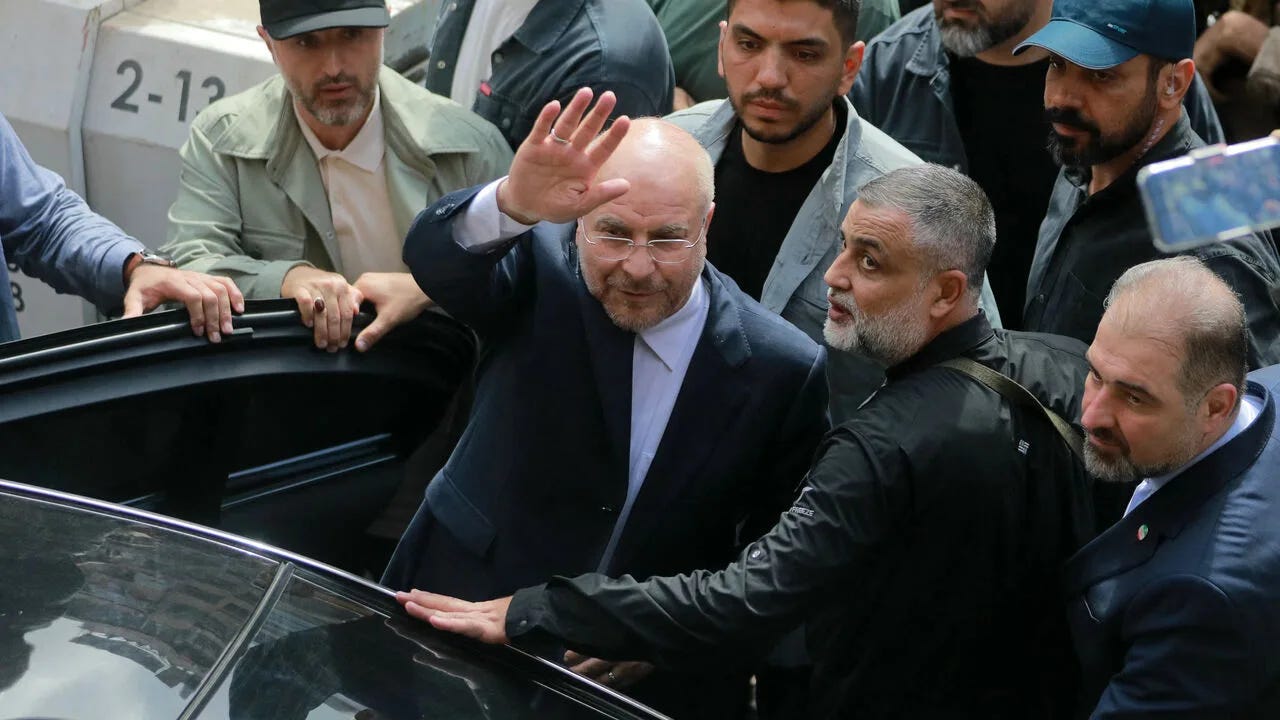
Wars have a way of reshaping leadership structures, creating space for the re-sorting of elites according to criteria that blend resilience with pragmatism. In such moments, some actors recede while others rise to the forefront. Within this context, Mohammad Bagher Ghalibaf emerges as a figure who has successfully repositioned himself within Iran’s political system, drawing on a cumulative career that spans military, administrative, and political domains.
Although his electoral bids never secured him the presidency, his ascent to the speakership of parliament during one of the most sensitive periods in Iran’s history placed him at the heart of power.
His standing was further consolidated by surviving a wave of targeted strikes against decision-making centers, elevating him into one of the most prominent figures to emerge from the transformations imposed by war.
Ghalibaf’s stature is also tied to his network within the system. He maintains familial ties to former Supreme Leader Ali Khamenei and a close personal relationship with the current leader, Mojtaba Khamenei, reinforcing his position within the most influential conservative circles.
This proximity has been reflected in his recent role as one of the key figures managing the regime’s public political presence amid a complex wartime environment.
Within this framework, Ghalibaf has advanced to a leading role in the negotiation track, articulating an approach that combines firmness on sovereign issues with calculated engagement in diplomacy, in line with the strategic vision set by leadership institutions.
His role has also drawn increasing international attention, as a figure capable of bridging instruments of power with the demands of politics at a time when both domestic and regional balances are being recalibrated.
Early Life and Formation
Mohammad Bagher Ghalibaf was born in August 1961 in the town of Torqabeh, northeast of Iran, to a Kurdish father of the Kermanch origin, Hossein Ghalibaf, and a Persian mother, Khair al-Nisa Boujmehrani, in a setting close to the city of Mashhad.
His political and social awareness took shape early, influenced by the atmosphere surrounding the 1979 Iranian Revolution. As a teenager, he regularly attended religious lectures in mosques, an experience that fostered his engagement with public affairs and facilitated his early entry into political life.
On the personal front, he married Zahra Sadat Moshir in 1982, who later played a prominent advisory role alongside him, particularly during his tenure as mayor of Tehran, where she was involved in women’s affairs. Ghalibaf was also deeply affected by the Iran-Iraq War; his brother, Hassan Ghalibaf, was killed during Operation Karbala-4 an event that left a lasting imprint on his trajectory.
Academically, he holds a master’s degree in political geography from the University of Tehran and a PhD in the same field from Tarbiat Modares University, where his dissertation examined the evolution of local governance institutions in contemporary Iran.
In addition to his academic path, Ghalibaf has a professional background in aviation and is a certified pilot on certain Airbus aircraft, adding a technical dimension to a profile that blends administrative expertise with specialized knowledge.
Military Career and Rise Within the Revolutionary Guard
Ghalibaf joined the military at the outbreak of the Iran-Iraq War in 1980, enlisting in the Islamic Revolutionary Guard Corps (IRGC), then still in the process of consolidating itself as the regime’s primary protective force. Within a short period, he rose rapidly through the ranks, attaining the rank of general in just three years.
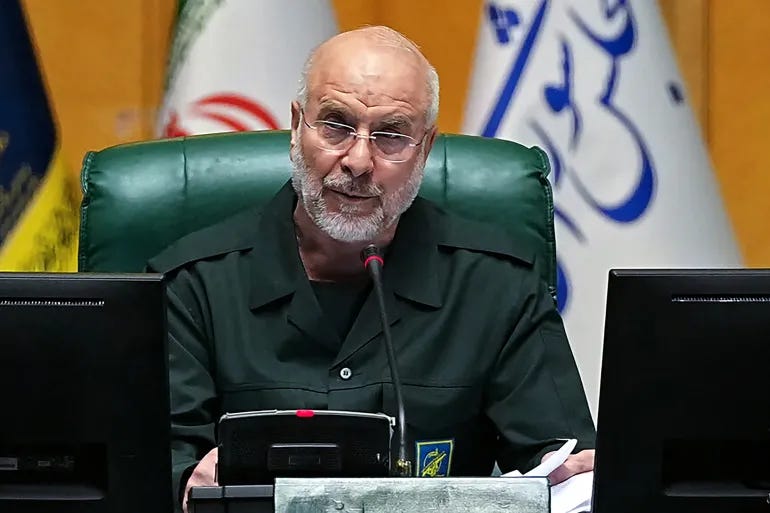
In 1982, he assumed command of the Imam Reza Forces, followed by leadership of the “Nasr” Forces between 1983 and 1984. He later commanded the 25th Karbala Division, a unit known for operating beyond conventional battlefronts. These early positions formed the backbone of his military experience and solidified his standing within the IRGC.
During this period, he developed a close relationship with Qassem Soleimani, then commander of the “Thar Allah” brigade and later head of the Quds Force. Their shared battlefield experience laid the foundation for a long-standing relationship that endured until Soleimani’s assassination years later.
After the war, Ghalibaf continued his service within the IRGC and obtained a military pilot’s license, further enhancing his credentials. Following the transition of IRGC leadership from Mohsen Rezaei to Yahya Rahim Safavi, he was appointed commander of the IRGC Air Force in 1996, reflecting his elevated status within the institution.
His tenure also intersected with the 1999 student protests, during which he was among 24 commanders who signed a letter to then-President Mohammad Khatami urging a firm response an episode that underscored his hardline stance on internal security issues.
From Reconstruction to Internal Security Consolidation
Ghalibaf’s career extended beyond the military sphere into executive roles with economic and security dimensions. In 1994, he was appointed head of Khatam al-Anbiya Construction Headquarters, the IRGC’s engineering arm. Under his leadership, the institution expanded significantly, evolving from a limited construction firm into a major economic actor within Iran.
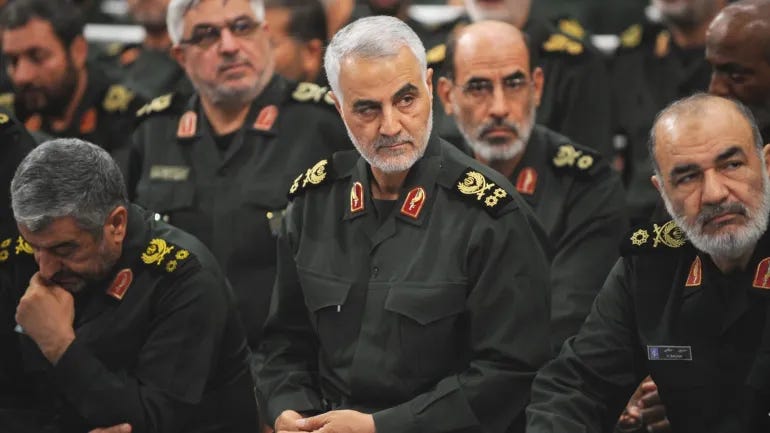
This role was closely tied to the post-war reconstruction phase, framed within what was known as the “Jihad of Reconstruction” initiated by Ruhollah Khomeini a process that produced overlapping institutional networks blending economic and security functions, with Khatam al-Anbiya at their core.
Following the 1999 unrest, Ali Khamenei appointed him chief of Iran’s national police, succeeding General Hedayat Lotfian. In this position, he worked to modernize the force through structural and technological reforms, including the launch of the “Police 110” emergency service.
His tenure also saw measures aimed at recalibrating the relationship between security institutions and the public sphere, including the dismissal of legal cases against several newspapers.
He later transitioned into municipal governance, succeeding Mahmoud Ahmadinejad as mayor of Tehran, a position he held for twelve years. During this period, he became closely associated with the capital’s urban transformation, as well as with managing the fallout of the 2009 presidential election protests, which triggered months of widespread unrest.
Repeated Electoral Setbacks, Steady Rise
Ghalibaf ran multiple presidential campaigns, reflecting his ambition to reach the executive apex, though without success. In the 2005 election, he focused on attracting middle- and lower-income constituencies, but the race ultimately favored Mahmoud Ahmadinejad, who benefited from decisive backing by Ali Khamenei.
He ran again in 2013, finishing second behind Hassan Rouhani with over six million votes, at a time when the political climate leaned toward engagement and negotiation a trajectory that culminated in the nuclear agreement with world powers.
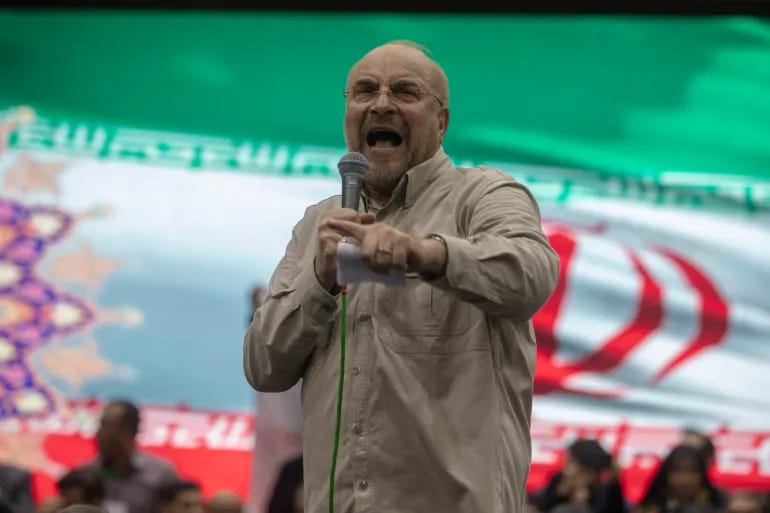
In 2017, he adopted a different strategy, prioritizing conservative unity and withdrawing from the race to avoid splitting the vote. He made another attempt in the 2024 election, held after the death of President Ebrahim Raisi in a helicopter crash, but once again fell short.
However, Ghalibaf succeeded in consolidating his position within the political system through the legislative branch. He was elected to parliament and became its speaker in 2020 a role that represents a key lever of influence within Iran’s governance structure.
Reconfiguring Power in Wartime
On June 13, 2025, Israel launched a large-scale air campaign targeting dozens of sites inside Iran, including nuclear facilities, military bases, and senior leadership figures, under an operation dubbed “Rising Lion.” These strikes marked the beginning of what became known as the “Twelve-Day War,” opening a new phase of regional confrontation.
Within this context, Ghalibaf sought to position himself as a symbol of resilience within state institutions, framing the confrontation as an opportunity to enhance preparedness and achieve long-term strategic gains.
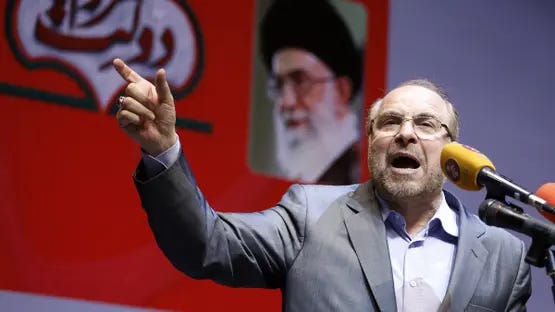
As the conflict escalated, a precise intelligence strike in February 2026 targeted a high-level meeting at the residence of Ali Khamenei, killing several senior political and military figures, including Khamenei himself a development that marked a turning point in the system’s structure. Ghalibaf was among the few senior figures who survived.
These developments led to a reordering of power centers within the conservative camp, amid the absence of a traditional decision-making hub and the emergence of a more fragmented leadership model. In this environment, Ghalibaf rose as a key actor, extending his role beyond the legislative sphere to become a bridge between military institutions and political and religious circles, particularly in the absence of figures such as Ali Shamkhani and Ali Larijani.
On March 1, 2026, Ghalibaf issued a sharply worded message to Donald Trump and Benjamin Netanyahu, warning of the consequences of escalation. The message carried both external and internal dimensions projecting Iran’s stance abroad while reinforcing an image of cohesion at home.
Gradually, Ghalibaf emerged as one of the principal voices articulating Iran’s official wartime discourse, leveraging his position as parliament speaker and his institutional networks. Amid leadership shifts, he has positioned himself as a leading candidate to steer negotiation tracks tied to the future of the confrontation, bolstered by his close relationship with Mojtaba Khamenei, now the Supreme Leader.
Adaptive Pragmatism: Managing Multiple Roles
Ghalibaf’s political trajectory defies simple categorization, revealing a consistent ability to reshape his public persona in response to shifting political environments. In 2005, he presented himself as a “technocratic pilot”; by 2013, he adopted a more security-oriented profile aligned with conservative rhetoric; in 2017, he embraced a populist tone framed around the “96% versus 4%” dichotomy.
By 2024, his tone had softened, projecting the image of a pragmatic politician capable of tactical maneuvering within the system’s boundaries.
This adaptability has earned him labels such as “the man in the shadows” and “the crisis commander,” particularly in managing internal unrest and external tensions. He reinforces this image through carefully crafted symbolism, including his recurring portrayal as a pilot, often appearing in cockpits blending technical authority with leadership imagery.
Compared with figures such as Ali Larijani and Saeed Jalili, Ghalibaf stands out as a hybrid model combining rigidity with pragmatism, security expertise with political maneuverability. Some Western circles view him as a figure capable of operating both within and beyond the system, precisely because of this duality.
His tenure as police chief reflected this blend, combining strict policies toward protests with efforts to modernize the force’s structure and public image. His dual background—military and administrative—anchors his influence within the Islamic Republic as a conduit between hard power institutions and civilian governance.
Domestically, he is positioned within what might be described as the “deep state,” maintaining a firm stance toward protests and defending security institutions against what he characterizes as externally driven threats.
Despite this cohesive image, he has faced criticism tied to a family-related controversy involving Iran’s “sensitive positions” law, after reports surfaced of a relative seeking foreign residency raising questions about the gap between legislation and practice.
Internationally, Ghalibaf’s discourse reflects a dual approach: readiness for confrontation paired with conditional openness to negotiation. He emphasizes Iran’s support for the “Axis of Resistance” against Israel while keeping diplomatic channels open when strategic conditions permit. In this light, some international observers regard him as a decision-maker capable of adapting to negotiation dynamics.
From participation in global forums such as Davos to negotiation engagements in regional capitals like Islamabad, Ghalibaf appears as a multifaceted actor navigating the intersections of economics, politics, and security maintaining a central role in Iran’s relations with major powers, particularly the United States.
Ultimately, his strength lies in his ability to adapt without losing his footing within the system, drawing on a composite profile that merges military experience, executive management, and legislative authority.
Complex Negotiations: Consolidating Gains and Repositioning
Ghalibaf now leads one of the most sensitive missions within Iran, heading the negotiating delegation in talks with the United States following a costly military confrontation that has reshaped regional power balances. Iran has demonstrated its capacity for resilience and for accumulating leverage on the ground factors that directly influence its negotiating ceiling.
Tehran’s approach is anchored in a dual objective: safeguarding the system’s structure while consolidating wartime gains, particularly in strategic corridors such as the Strait of Hormuz, alongside seeking a de facto end to confrontation and an opportunity to recalibrate.
The negotiation track is thus highly complex, given the overlap of military, political, and economic dimensions. Iran aims to solidify its regional influence, break the sanctions regime, and create space for internal reordering while mindful of a negotiating legacy shaped by previous dealings with the Trump administration, which were marked by volatility and the use of diplomacy as a prelude to military escalation.
Against this backdrop, Ghalibaf understands that any durable agreement that secures Iran’s interests and translates wartime gains into political equations would significantly enhance his standing within the system and potentially position him for the highest office, drawing on a career-long accumulation of political and security capital at a moment that is redefining Iran’s leadership landscape.
